unEARTHED, the Earthjustice Blog

unEARTHED. The Earthjustice Blog

Blogs


    SIGN-UP for our latest news and action alerts:
   Please leave this field empty

Facebook Fans

Earthjustice on Twitter

Featured Campaigns

Everyone has The Right To Breathe clean air. Watch a video featuring Earthjustice Attorney Jim Pew and two Pennsylvanians—Marti Blake and Martin Garrigan—who know firsthand what it means to live in the shadow of a coal plant's smokestack, breathing in daily lungfuls of toxic air for more than two decades.

Coal Ash Contaminates Our Lives. Coal ash is the hazardous waste that remains after coal is burned. Dumped into unlined ponds or mines, the toxins readily leach into drinking water supplies. Watch the video above and take action to support federally enforceable safeguards for coal ash disposal.

ABOUT EARTHJUSTICE'S BLOG

unEARTHED is a forum for the voices and stories of the people behind Earthjustice's work. The views and opinions expressed in this blog do not necessarily represent the opinion or position of Earthjustice or its board, clients, or funders.

Learn more about Earthjustice.

View Tom Turner's blog posts
25 June 2009, 4:39 PM
A thumping for environmental cases

Two long and thoughtful pieces today, one from the Daily Journal, the other from Greenwire, discuss in painful detail the thumping environmental cases suffered at the hands of the Supreme Court this term. In each case, the court overturned a pro-environment ruling from a court of appeals.

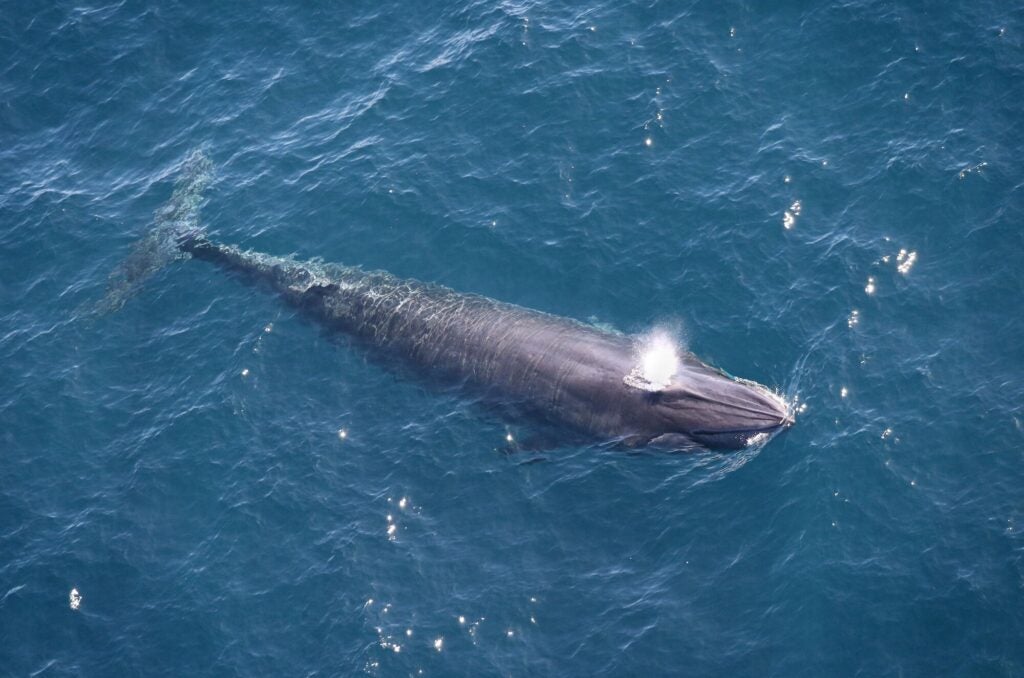
The first case involved whether the Navy must protect whales and dolphins from the effects of loud noises. The most recent case, an Earthjustice case as it happens, revolved around a permit the Corps of Engineers awarded to a mining company that allows the company to dispose of toxic mining wastes in an Alaskan lake. In between, the court found that environmental groups didn't have the right to challenge certain Forest Service regulations, that Shell Oil was not responsible for cleaning up a Superfund site in California, and that cost-benefit calculation at a New England powerplant was legal. The decision the court overturned in the last case, incidentally, was written by Sonia Sotomayor, who looks likely to become the next associate justice. In all five cases, the court upheld rules put forward by the Bush administration.

View Jared Saylor's blog posts
25 June 2009, 4:29 PM
 

Dr. Margaret Palmer is a world renowned water biologist who works at the university of Maryland, but has a home in West Virginia and family from the Appalachia region. "Headwater streams are exponentially more important than their size would suggest," said Dr. Palmer in testimony before the Senate. She compared headwater streams to the small capillaries in our lungs that distribute the oxygen necessary for life to our bodies. Without those capillaries (and similarly, without the headwaters) we (and the surrounding environment) would not be able to live.

View Jared Saylor's blog posts
25 June 2009, 4:27 PM
 

The first witness, an EPA official, was questioned extensively about the impacts both locally and globally of destroying entire forests, flattening mountains, and increasing flooding as a result of mountaintop removal mining.

In the second witness panel are: Paul Sloan, Deputy Commissioner of the Tennessee Department of Environment and Conservation; Randy Huffman, Cabinet Secretary of the West Virginia Department of Environmental Protection; Dr. Margaret Palmer, Laboratory Director of the Chesapeake Biological Laboratory at the University of Maryland; and Maria Gunnoe, coalfield activist and winner of the prestigious 2009 Goldman Environmental Prize.

View Jared Saylor's blog posts
25 June 2009, 4:16 PM
 

The hearing started promptly at 3:30 pm with Sen. Ben Cardin (D-MD), a cosponsor of the Appalachia Restoration Act, stating that mountaintop removal mining "adversely effects the economies of the region."

Sen. Lamar Alexander (R-TN), also a cosponsor of the Appalachia Restoration Act, offered opening remarks including, "it's not necessary to destroy our mountaintops in order to have enough coal...saving our mountaintops is important to me."

View Raviya Ismail's blog posts
25 June 2009, 11:31 AM
 

Last week the U.S. Senate moved forward on important legislation that ensures our streams, lakes, rivers and wetlands remain clean and safe. By a vote of 12-7, the Senate Environment and Public Works Committee advanced a compromise version of the Clean Water Restoration Act, important legislation that reinforces the scope of the Clean Water Act by guaranteeing that our nation's waterways are clean to swim and fish in and safe to drink.

While Earthjustice supports the original version of the bill—as introduced in April by Senator Russ Feingold (D-WI) and 23 other Senators—we appreciate the work the Committee did to advance the legislation, and will continue to work with the Committee and the rest of Congress to pass the strongest possible bill.

View Tom Turner's blog posts
23 June 2009, 2:14 PM
High court clears way for mining company to destroy Alaskan lake

On June 22 the Supreme Court handed down a 6-3 decision that makes lakes and other waterways across the country vulnerable to being used as waste dumps for mining operations and other industrial processes. The case involved the Kensington mine, a gold mine north of Juneau, Alaska. The owner of the mine, Coeur Alaska, was awarded a permit by the Army Corps of Engineers that allows the company to deposit mine tailings into Lower Slate Lake as long as the mine operates, killing all aquatic life in the lake. The company promises to restore the lake to its former state, a process that would take several decades if it is possible at all.

Earthjustice sued to block the permit, arguing that it is in blatant violation of the Clean Water Act and that other methods are available for disposing of the tailings.

View Tom Turner's blog posts
22 June 2009, 2:32 PM
 

The other day I happened to tune in to the Diane Rehm show on NPR to hear John Holdren, the president's science advisor, talk about the new climate change report that made stark headlines last week, reporting that warming is here, is having serious negative effects already, and is largely caused by human activity.

There is actually no original news in the report; rather it is the most comprehensive and up-to-date survey yet released. It was put together by representatives from some 30 government agencies who reviewed dozens, probably hundreds, of research papers from all over the world. As always, John's commentary was clear, direct, and sober. So far, so good.

View Jared Saylor's blog posts
17 June 2009, 1:25 PM
 

The saga of mountaintop removal continues, and this time it's headed to Congress. Two proposed bills—one in the Senate and one in the House of Representatives—could curtail mountaintop removal mining by banning certain activities related to this destructive mining practice.

The Appalachia Restoration Act, a bill in the U.S. Senate, would prohibit dumping "excess spoil" resulting from mountaintop removal into streams and headwaters. A similar bill in the House of Representatives—the Clean Water Protection Act—would put even tighter restrictions on dumping this pollution into Appalachian streams.

View Brian Smith's blog posts
17 June 2009, 12:33 PM
 

Earthjustice was thrilled this month when a strong new set of rules was issued by the National Marine Fisheries Service to protect California’s endangered salmon species. We've working to protect California salmon since the 1980s and the new biological opinion is a huge step in the right direction.

But some people just hate good news about the environment.

The conservative, anti-environmental operation known as the Pacific Legal Foundation is pushing Governor Schwarzenegger to ask Interior Secretary Ken Salazar to remove protections of California's native fish species by calling out the "God Squad." The God Squad (officially the Endangered Species Committee) is a rarely used provision of the Endangered Species Act that allows species protections to be overridden by a government panel that would essentially play God and exterminate a species in the name of economic necessity.

5 Comments   /   Read more >>
View David Guest's blog posts
17 June 2009, 3:26 AM
 

A disappointing decision by the federal appeals court in Atlanta will legalize pollution in many American drinking water supplies, and we have the former Bush administration to thank for it.

The case goes back to 2002, when we sued, on behalf of the Florida Wildlife Federation, to get the South Florida Water Management District to stop pumping contaminated drainage canal water into Lake Okeechobee, one of the biggest drinking water sources in Florida, and the second biggest lake in the United States. For years, the district has been disposing of contaminated runoff from urban areas and industrial-scale sugar and vegetable farms by "backpumping" its untreated waters from drainage canals into Lake Okeechobee.

Since the Clean Water Act doesn't allow anyone to add pollutants to lakes and rivers without a permit that limits pollutants to safe levels, we argued that the Water District needed a federal permit to pump filthy water into the public lake.

2 Comments   /   Read more >>