Posts tagged: air

unEARTHED. The Earthjustice Blog

air


    SIGN-UP for our latest news and action alerts:
   Please leave this field empty

Facebook Fans

Featured Campaigns

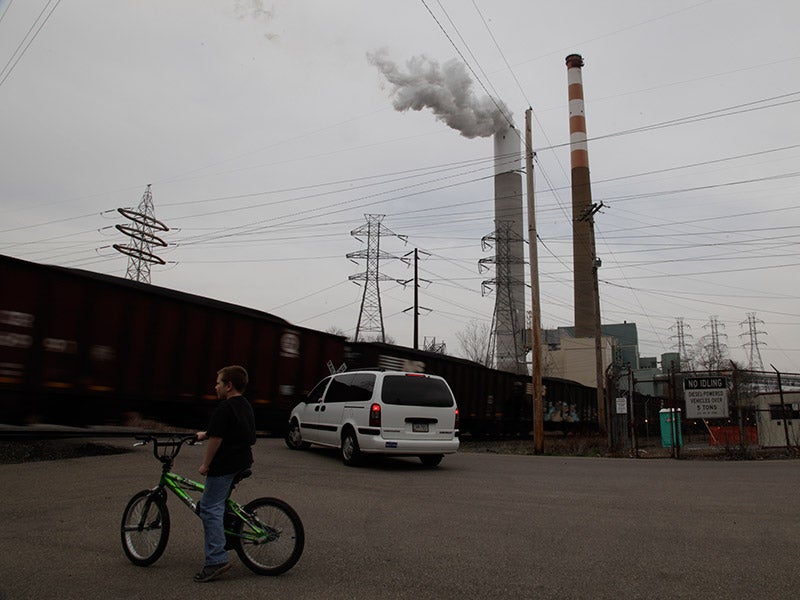
Everyone has The Right To Breathe clean air. Watch a video featuring Earthjustice Attorney Jim Pew and two Pennsylvanians—Marti Blake and Martin Garrigan—who know firsthand what it means to live in the shadow of a coal plant's smokestack, breathing in daily lungfuls of toxic air for more than two decades.

Coal Ash Contaminates Our Lives. Coal ash is the hazardous waste that remains after coal is burned. Dumped into unlined ponds or mines, the toxins readily leach into drinking water supplies. Watch the video above and take action to support federally enforceable safeguards for coal ash disposal.

ABOUT EARTHJUSTICE'S BLOG

unEARTHED is a forum for the voices and stories of the people behind Earthjustice's work. The views and opinions expressed in this blog do not necessarily represent the opinion or position of Earthjustice or its board, clients, or funders.

Learn more about Earthjustice.

View Jessica Knoblauch's blog posts
19 January 2012, 12:50 PM
Olympic air challenge, Nemo’s CO2 problem, NYC trashes trash
Bacon cheeseburger (Like_the_Grand_Canyon)

Ag industry takes beef with Americans eating less meat
Americans are eating less meat, which means the U.S. obsession with double-bacon cheeseburgers and chicken-fried sandwiches may one day be a thing of the past, reports Grist. According to the USDA, beef, chicken and pork sales are all down, prompting the meat industry to accuse the U.S. government of being anti-meat by “wag[ing] a war on protein.” This claim, though meaty, is full of holes considering that the U.S. gives the agriculture industry a number of economic freebies to support meat consumption in the form of farm subsidies, lax regulations and school lunch programs fueled by surplus chicken supplies. The real reasons that Americans aren’t eating as much meat are much more multi-faceted and include everything from cutting grocery bill costs and eating healthier to preserving the environment by lessoning carbon footprints. What’s your beef with that?    

Olympic athletes race against London’s air quality
London’s habitually bad air quality may negatively affect Olympic athletes at the London 2012 Olympic Games this summer, reports The Independent. Since the European Union’s limits for particulate matter—extremely small particles of smoke, soot, metals and other chemical compounds emitted from sources like power plants, factories, and diesel trucks—were first put in place a few years back, London has continually exceeded its limits, potentially putting people at risk of negative human health affects like lung and heart disease. Athletes, especially, are at risk due to their need to inhale large amounts of oxygen, which unfortunately also means inhaling unsafe quantities of particulates, nitrogen dioxide and ozone that could give them chest pains and decrease their lung capacity. Though the city has introduced long-term air quality improvement measures in London, currently there is no short term plan to clear the air before July, when the Olympic games begin.

View Jessica Knoblauch's blog posts
06 January 2012, 7:20 AM
Natural gas guessing games, green hog waste, melting mountains
Under current guidelines, pigs and other farm animals are routinely given drugs. (friendsoffamilyfarmers)

FDA gives “okay” to continue drugging livestock
Farmers can continue giving healthy cows, pigs and other livestock routine doses of penicillin and tetracyclines—two commonly used antibiotics—even though the practice threatens public health, reports Forbes. The Food and Drug Administration’s decision to no longer consider withdrawing approval of the common practice comes after years of meat and produce recalls that have been contaminated with antibiotic-resistant bacteria and sickened many. It also comes after the agency’s own guidance showed that drugging animals who aren’t sick is, simply put, a bad idea. No doubt, consumer advocacy groups were disappointed in the government’s decision; however, the FDA’s decision wasn’t all bad. It did decide to ban the indiscriminate use of another class of antibiotics called cephalosporins in healthy animals, citing concerns over the growing threat of cephalospins-resistant bacterial infections found in people. Too bad that cephalosporins account for a tiny and rapidly shrinking percentage of overall antibiotic use on factory farms, as Mother Jones recently pointed out. Nice try, FDA.

Natural gas bonanza claims based on dicey guessing games
Mainstream media reports of a 100-year natural gas supply lying beneath our feet is largely based on hypothetical speculation, reports Slate. Recently, the online magazine found that of 2,170 trillion cubic feet (tcf) estimated to lie beneath U.S. lands, only 273 tcfs--or 12 percent of the total amount--are “proved reserves,” meaning that they actually exist and are commercially viable to drill. That leaves us with only about 11 year’s worth of proven natural gas reserves, not 100 years, as the industry claims. The idea that there's another almost 2,000 tcfs of natural gas out there is considered to be either “probable,” “possible,” or “speculative.” Speculative, by the way, means “based on conjecture or incomplete facts or information,” according to the Encarta Dictionary. Another word for speculative is “risky” or “hypothetical.” As Slate so aptly points out, “By the same logic, you can claim to be a multibillionaire, including all your ‘probable, possible, and speculative resources.’” Just one more thing to consider before we risk our health and environment to drill another well with “speculative” reserves.

2 Comments   /   Read more >>
View Liz Judge's blog posts
06 January 2012, 4:16 AM
The no-brainer decisions the president must make this year

President Obama won the White House on a platform of hope and change – promising an end to dirty corporate influence over our political system and a beginning to an era in which our energy choices lead us to a clean, sustainable future, or at least don’t kill us or make us sick.

So far, the president’s performance has been mixed – with some deliveries on the promise and some disappointments. His last year, whether in office or in his first term, will be crucial in righting his spotty record and making good on his campaign promises to the American people.

Leading up to his fourth year in office, and making sure the new year got off to a good start with supporters, he handed the country a solid. His EPA, led by Administrator Lisa Jackson, finalized a strong rule to protect Americans from mercury poisoning and toxic air pollution from power plants.

1 Comment   /   Read more >>
View Martin Wagner's blog posts
29 December 2011, 10:39 AM
It's time for U.S. to stop opposing regulations

Emissions from aircraft are a substantial contributor to global warming. Taking into account greenhouse gas emissions, the warming effect of contrails and aviation-induced cirrus clouds, and anticipated growth in air traffic, scientists estimate that aircraft could be responsible for as much as 10 percent of human-caused global warming by 2050. So, of course the airlines are working hard to reduce these emissions, right?

Wrong. For more than a decade, the industry-influenced International Civil Aviation Organization has rejected calls to regulate greenhouse gas pollution from aircraft. Finally, fed up with inaction at the international level, Europe decided to lead the way to a solution.

Under a European regulation to go into effect in 2012, flights into or out of European airports will have to account for their contribution to global warming, and will have to buy permits for emissions exceeding 85 percent of historical amounts (if they reduce their emissions enough, they can sell their excess permits for a profit).

4 Comments   /   Read more >>
View Sam Edmondson's blog posts
23 December 2011, 3:41 PM
Coal plant pollution limits point to brighter future

The historic victory for clean air announced a few days ago—limits on the mercury, arsenic and other toxic emissions from coal plants—has been a long time coming. Congress called for these limits in 1990, but the coal power industry got to work undermining them straight away. As a result, instead of getting the breath of fresh air promised by Congress, Americans living in the shadow of a smokestack have been getting daily lungfuls of toxic air for 21 years.

It took determined litigation and public advocacy to break through the politics and industry's obstruction—the victory achieved on December 21, 2011 is the culmination of those long, hard years of fighting. Earthjustice got involved in the legal fight in 1994 and Jim Pew, a staff attorney in our Washington, D.C. office, has been dedicated to the cause for more than a decade, successfully arguing against attempts by the Bush administration to give power plants a pass.

This short video features Jim Pew and two Pennsylvanians—Marti Blake and Martin Garrigan, neighbors—who know firsthand what it means to live in the shadow of a smokestack and the specter of a plume. Check it out, and if you feel moved to send a thank you to President Obama for issuing protections to cut down on the pollution coming from this bad industrial neighbors, you can do so here.

2 Comments   /   Read more >>
View Sam Edmondson's blog posts
21 December 2011, 1:52 PM
In new video, Obama explains how critical clean air protections are

The White House recently posted a video of President Obama discussing the new clean air protections that his administration released today to limit mercury, arsenic and other air toxic emissions from power plants. The President's words underscore how momentous this occasion is. The fight for these protections is more than two decades old. Earthjustice entered it in 1994 and has been pushing hard ever since. Check out the video below.

View Chris Jordan-Bloch's blog posts
21 December 2011, 12:02 PM
For many Americans, historic EPA protection is shining light
Marti Blake points out the window at her neighbor

"It's like hell. Living in hell," says Marti Blake, when asked about being neighbors with a coal-fired power plant. "It's filthy, it's dirty, it's noisy, it's unhealthy."

For the past 21 years, Blake has lived across the street from the Cheswick Generating Station in Springdale, PA. A family situation left her trying to find a place quickly, and a simple brick home in the small town only 20 minutes from Pittsburgh seemed fine.

"I've regretted that decision ever since, because I've felt sick for the last 20 years," says Blake, who is on medication for a slew of symptoms that include coughing, sinus infections and headaches. Blake attributes these symptoms to the dirty neighbor across the street. Who else in the neighborhood, after all, has a 750-foot tall smoke stack that is spewing out toxic smoke around the clock?

Marti Blake

A portrait of Marti Blake is paired with the reflection in her living room window.
View Sam Edmondson's blog posts
21 December 2011, 10:31 AM
Protections to scrub coal plants' toxic emissions proposed after years of delay

To all who wondered what gift the Obama administration is giving the American public for the holidays: it's clean air.

The administration just announced the first-ever clean air protections against the nation's dirtiest polluters—coal-fired power plants. This is one of the most significant developments in the history of environmental protections and the 40-year old Clean Air Act.

Earthjustice has been a big part of this fight for more than a decade—our litigation helped cut through the politics and intense pressure from industry to scuttle these important protections. Today, we're proud that those years of work have resulted in a major victory for the health of the American public. We're also proud that nearly 50,000 Earthjustice supporters made their voices heard in a call for these protections and the right to breathe.

1 Comment   /   Read more >>
View Brian Smith's blog posts
20 December 2011, 4:56 PM
The energy lobby has had a very busy, and expensive, 2011 in Washington, D.C.

Amy Poszywak at SNL Financial reports that lobbying among the largest U.S. power companies topped $11 million in the third quarter of 2011 (the latest figures available) and that expenses have been high all year.

Not surprisingly, the biggest companies attempting to sway congress and the administration include some of the biggest polluters in the nation.

View Marty Hayden's blog posts
16 December 2011, 4:31 PM
Arctic rider snuck into year-end funding legislation
(Florian Schulz /visionsofthewild.com)

It’s that time of year again. No, I’m not talking about the great big man in the red suit and last-minute Christmas shopping.

I’m talking about the House GOP majority trying to deliver on their year-long assault on environmental and public health protections in the last two bills that will be passed by Congress this year.

The first is the omnibus spending bill that was passed by the House and Senate today. For the past two weeks, the GOP House Leadership and Appropriations Chairs have had a priority list of anti-environmental policy riders they had to have in any final spending bill. Some of those at the top of the list included blocking measures to require the clean up of industrial boilers and incinerators, cement kilns and power plants, and attempts to railroad Clean Water Act protections for streams, rivers and lakes. Removing protections for gray wolves in Wyoming and the Midwest were also on the list.

Thanks to the efforts of the White House, and Senate and House Democrats, none of these anti-environmental riders will become law in the final spending bill. Sadly, the same cannot be said of the Arctic. A last-minute, backroom deal tacked on a measure that excludes oil companies from complying with Clean Air Act protections in the Arctic.