Posts tagged: black carbon

unEARTHED. The Earthjustice Blog

black carbon


    SIGN-UP for our latest news and action alerts:
   Please leave this field empty

Facebook Fans

Featured Campaigns

Everyone has The Right To Breathe clean air. Watch a video featuring Earthjustice Attorney Jim Pew and two Pennsylvanians—Marti Blake and Martin Garrigan—who know firsthand what it means to live in the shadow of a coal plant's smokestack, breathing in daily lungfuls of toxic air for more than two decades.

Coal Ash Contaminates Our Lives. Coal ash is the hazardous waste that remains after coal is burned. Dumped into unlined ponds or mines, the toxins readily leach into drinking water supplies. Watch the video above and take action to support federally enforceable safeguards for coal ash disposal.

ABOUT EARTHJUSTICE'S BLOG

unEARTHED is a forum for the voices and stories of the people behind Earthjustice's work. The views and opinions expressed in this blog do not necessarily represent the opinion or position of Earthjustice or its board, clients, or funders.

Learn more about Earthjustice.

View Grand Chief Ruth Massie's blog posts
24 April 2013, 7:34 AM
Grand Chief Ruth Massey shares eyewitness account of climate change
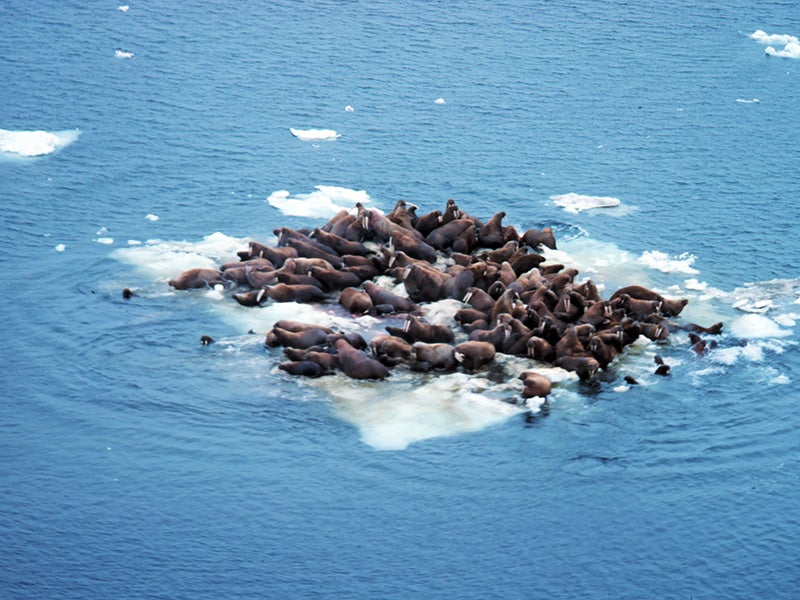
"We are witnessing the strangest of weather patterns." Chukchi Sea, Alaska. (Florian Schulz / visionsofthewild.com)

Our homelands—the Arctic wildlife and ecosystems that are the foundation of our culture and traditional ways of life—are fast changing. Arctic warming has made the weather, the condition of the ice, and the behaviors and location of fish and wildlife so unpredictable that our Elders no longer feel confident teaching younger people traditional ways. If we cannot effectively pass on our traditional ways to the younger generations, we fear for what will happen to our culture.

We know that a significant cause of these changes is black carbon, or soot, a short-lived climate pollutant which contributes significantly to the rapid warming and melting across northern Canada—our homelands. Black carbon pollution is also a health issue; soot emissions degrade the air quality in the North. Scientists believe reducing these emissions one of the best ways to slow warming and melting in the Arctic in the coming decades.

That’s why the Arctic Athabaskan Council is taking action today by filing a petition to the Inter-American Commission on Human Rights.

View Daniel Hubbell's blog posts
03 April 2013, 7:29 AM
Dr. Hansen exits 46-year career to fight for carbon controls
In recent years, Dr. Hansen has become more vocal and active in his quest for national solutions to climate change. (Arnold Adler / Courtesy of James Hansen)

Dr. James Hansen has never been shy about standing up for his scientific principles. In 1988, speaking before Congress, Dr. Hansen laid out a blunt truth, “It is time to stop waffling so much and say that the evidence is pretty strong that the greenhouse effect is here.” The statement caused an eruption of controversy, but time has borne out the sad truth of these words. It is also quite typical of a visionary scientist who has become one of the clearest and most vocal advocates against climate change. The proud author of an incredibly detailed body of work, Hansen has written on black carbon, climate change models and the atmosphere, among other topics. He received the Carl-Gustaf Rosby medal and was featured on Time’s list of 100 Most Influential People for 2006.

On April 2, he announced his retirement from National Air and Space Administration’s Goddard Institute after 46 years. He plans to focus his energies on activism, taking the case for better climate protections to court at the state and federal levels.

View Kari Birdseye's blog posts
22 March 2013, 7:27 PM
And ConocoPhillips eager to drill in the Arctic Ocean

Earthjustice received some superb video today from Dutch Harbor, Alaska, of Shell’s beat up Arctic drilling rig, the Kulluk, as it was lifted onto a huge dry haul ship to be carried to Asia for repairs:

This comes on the heels of a report from the Department of Interior, which summarized  a 60-day investigation into Shell’s 2012 Arctic Ocean drilling season and was highly critical of the oil giant’s operations.

1 Comment   /   Read more >>
View Chrissy Pepino's blog posts
12 March 2013, 2:11 PM
Be green: get rid of black
Black soot easily seen on ice formations in the Arctic.

Soot is melting the Arctic. Even scientists are alarmed with the disappearance rate of ice in the northern hemisphere. When soot falls on snow and ice it increases the amount of light and heat that is absorbed, just like any reflective surface. The Arctic is not alone in this unprecedented melting; the life-supporting snowpack in the Himalayas is also feeling the impact. Soot now has twice the heat-warming potential than previously thought, according to the Intergovernmental Panel on Climate Change (IPCC) estimates in 2007.

View Trip Van Noppen's blog posts
15 February 2013, 12:34 PM
Americans can’t wait for Congress to address climate change
President Obama delivers the State of the Union address in the House Chamber on Feb. 12, 2013.  (Chuck Kennedy / White House)

Last week, President Obama demanded that Congress take action on climate change, or else he would.

But, after years of political gridlock on the climate issue, coupled with rising seas and worsening droughts, one thing is clear: the nation simply cannot afford to wait any longer to take action. Though Congress may eventually pull together and pass a climate bill, the president must not wait on that uncertain prospect. He must act now.

After all, today the U.S. is farther from enacting a nationwide plan to reduce carbon emissions than it was four years ago. Congress has failed miserably. And though America’s greenhouse gas emissions are beginning to decline, the rate at which they’re doing so is nowhere near what we need to avoid catastrophic climate change.

25 Comments   /   Read more >>
View Trip Van Noppen's blog posts
01 February 2013, 4:43 PM
Arctic nations share unique responsibility for slowing ice melt
Reducing black carbon emissions will slow climate change now.
Chukchi Sea, Alaska. (Florian Schulz / visionsofthewild.com)

As the environmental ministers of the Arctic nations, including the United States, meet in Sweden next week, they have an opportunity to show leadership on an important though less well-known climate pollutant, black carbon (soot).

While carbon dioxide remains the most important, long-lasting pollutant forcing climate change, recent studies have revealed that short-lived climate forcers like black carbon are equally damaging, especially in the Arctic.

4 Comments   /   Read more >>
View Chrissy Pepino's blog posts
28 January 2013, 2:57 PM
What your weatherman may not tell you about 2013

Crops shriveled to dust this summer while thermometers hit continuous triple digits in the Midwest and Southwest regions. Yet, what about the current “snowmageddon” occurring in our mountain regions, and record lows on the east coast?

Global warming is the all-encompassing term for what is happening to our planet today. As we increase the amount of anthropogenic pollutants in the air, we trap heat within our atmosphere. Yet, this seems contradictory if the weather channel reports on freezing temperatures and cold fronts nationwide.

What defines global warming is climate, not weather. Weather is what we see on a 10-day forecast, what dictates the clothes we wear, and if our flight will be delayed. Climate, on the other hand, is a compilation of weather over a minimum time span of 30 years. This provides a baseline to compare historical climate patterns, and gives an overall picture of what the weather has been doing for three or more decades.

6 Comments   /   Read more >>
View Daniel Hubbell's blog posts
23 January 2013, 1:36 PM
Strikes EPA rule that allowed for more soot pollution
Soot blackens the walls of a Pennsylvania residence neighboring a coal-fired power plant.
(Chris Jordan-Bloch / Earthjustice)

The mention of soot conjures images of black clouds pouring out of unfiltered cars, or of cities lost in dark fog. At times in our history, soot pollution has helped stain entire ecosystems black, famously causing moths in Britain to change color from white to black to better hide in their environment. These images are well-deserved: soot is dangerous to both humans and the environment.

The Environmental Protection Agency blames soot for tens of thousands of premature deaths and hospitalizations every year in the United States; and according to a new study published in the Journal of Geophysical Research, a soot component—black carbon—is the second largest contributor to climate change, coming in just behind carbon dioxide.

Given how dangerous this soot pollution is, we are very pleased with a recent ruling by the U.S Court of Appeals for the District of Columbia.

View Kari Birdseye's blog posts
18 January 2013, 4:05 PM
Industry not ready for offshore drilling in treacherous waters
Shell drill rig grounded near Kokiak Island. (U.S. Coast Guard photo by Petty Officer 2nd Class Zachary Painter)

As Royal Dutch Shell continues to make perfectly clear, industry is not prepared to safely explore for oil in the pristine waters of America’s Arctic. Shell’s Arctic operations have been called the “gold standard” of the oil industry and if this is the best they’ve got, the industry is not Arctic ready.

Beyond the arguments of the Arctic being a harsh, dangerous, infrastructure-less environment, the question remains, does it make economic sense to drill for oil in this remote region now for barrels of oil in 10 years? In 12 years, cars will be averaging 54.5 mpg. Energy efficiency and a growing renewable fuel market are also making headway. U.S. oil production hit its highest level in 20 years in 2012 and it is projected to increase an additional 14 percent this year—without the extreme oil of the Arctic. In 10 years, will Americans need the extreme oil of the Arctic that Shell is so desperately seeking?

187 Comments   /   Read more >>
View Jessica Knoblauch's blog posts
10 January 2013, 12:02 PM
Plus: New FDA food rules and record-breaking heat waves
A collection of plastic washed up along a beach San Francisco, Calif. (Kevin Krejci / Flickr)

Tiny plastics clog the world’s oceans
By now we all know about the Great Pacific Garbage Patch—a giant mess of trash in the ocean—but in turns out that the world’s oceans are also full of tiny plastics, reports CNN. These so-called microplastics are used in everyday products like exfoliating face soaps and hand cleansers to give you that just-scrubbed feeling without taking a Brillo Pad™ to your face. But despite their tiny nature, microplastics may be wreaking havoc on marine life that unsuspectingly swallow these plastic bits floating in the ocean. One 2008 study even found that these tiny particles can hang out in the bodies of mussels for almost two months, though scientists don’t know yet if they cause any harm (mostly because of a lack of research on the issue). And, because they stick around the environment for a long time and can’t easily be dredged out, the plastic pollution problem is only going to get worse. According to one researcher, there has been a 100-fold increase in plastic garbage over the last 40 years. Personal product companies like Unilever are responding to the problem by phasing out the use of microplastics as a scrub material in its products. So, you may soon have to find another way to get your scrub on.

FDA takes bite out of food illnesses with proposed rules
After years of deadly outbreaks from contaminated spinach, peanut butter and other foods, the Food and Drug Administration recently proposed sweeping food safety rules to prevent contamination of the nation’s food, reports the LA Times. Each year, a shockingly high number of people fall ill from a food-borne illness—about one in six Americans—and of the people who get sick, 3,000 die. Historically, the FDA’s approach to food safety has been to wait until there’s a problem and then scramble to fix it. Now, in order to stem the tide of foodborne illnesses before they occur, the FDA’s Food Safety Modernization Act will take a more preventative approach by stepping up federal audits of food facilities and establishing science-based, minimum standards for the safe production and harvesting of fruits and vegetables. Though the Act is the most sweeping reform of FDA’s food safety authority in more than 70 years, the rules, unfortunately, won’t come any time soon since large farms have more than two years to comply with the final rules once they’re published and small farms have even longer. Bon appétit!