Posts tagged: Clean Air Act

unEARTHED. The Earthjustice Blog

Clean Air Act


    SIGN-UP for our latest news and action alerts:
   Please leave this field empty

Facebook Fans

Featured Campaigns

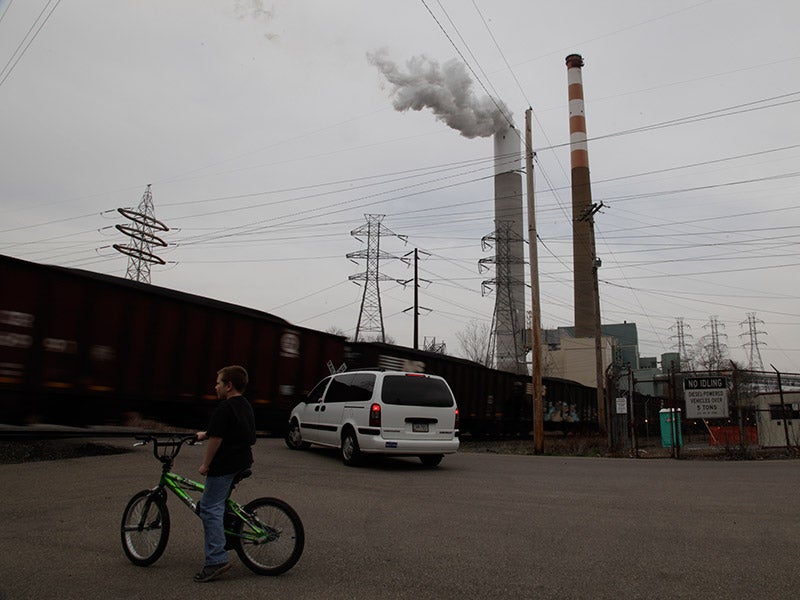
Everyone has The Right To Breathe clean air. Watch a video featuring Earthjustice Attorney Jim Pew and two Pennsylvanians—Marti Blake and Martin Garrigan—who know firsthand what it means to live in the shadow of a coal plant's smokestack, breathing in daily lungfuls of toxic air for more than two decades.

Coal Ash Contaminates Our Lives. Coal ash is the hazardous waste that remains after coal is burned. Dumped into unlined ponds or mines, the toxins readily leach into drinking water supplies. Watch the video above and take action to support federally enforceable safeguards for coal ash disposal.

ABOUT EARTHJUSTICE'S BLOG

unEARTHED is a forum for the voices and stories of the people behind Earthjustice's work. The views and opinions expressed in this blog do not necessarily represent the opinion or position of Earthjustice or its board, clients, or funders.

Learn more about Earthjustice.

View Sam Edmondson's blog posts
15 June 2012, 2:40 PM
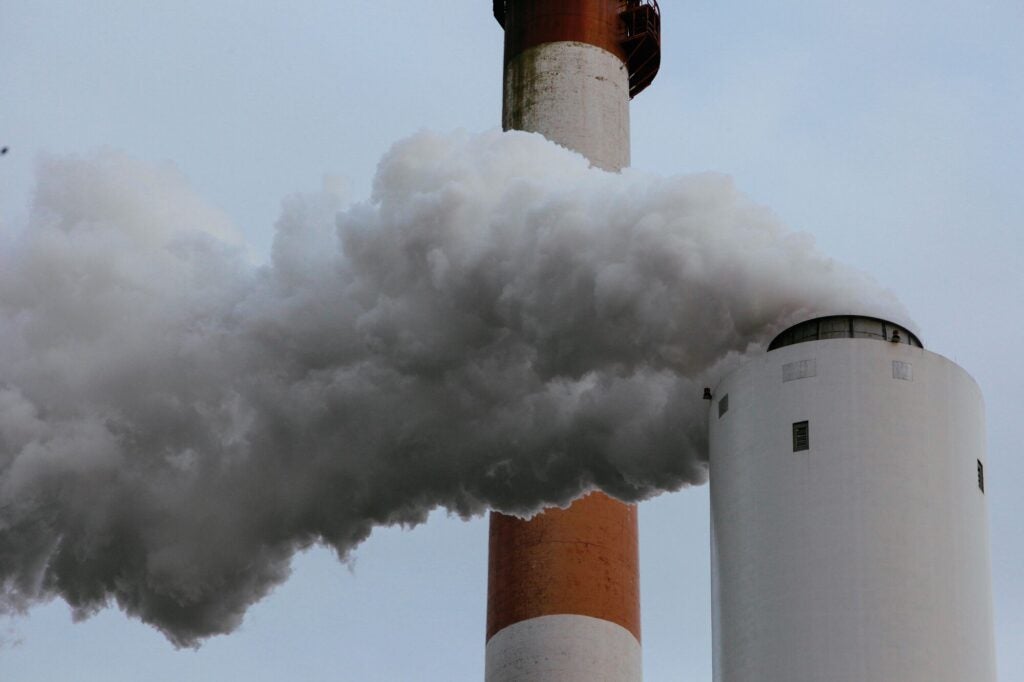
Final standards, due in December, must be strongest possible
Photo: Chris Jordan-Bloch/Earthjustice

Just two weeks ago, the Environmental Protection Agency was dithering on a proposal to strengthen protections against an air pollutant that causes tens of thousands of avoidable deaths every year.

Enter Earthjustice attorney, Paul Cort, who on behalf of citizen groups asked a federal judge to order the EPA to get moving. So compelling was the case that the judge ruled in Earthjustice's favor directly from the bench, ordering the EPA to proceed without further delay. This motivated the EPA to settle the remainder of the suit and release a proposal. The agency also committed to release a final standard by Dec. 14, 2012.

Today, the agency released its proposal, and we have Cort's legal action to thank—a prime example of how citizen enforcement of our nation's environmental laws can produce real results for public health and the environment.

View Sam Edmondson's blog posts
31 May 2012, 3:43 PM
Federal court gives EPA a week to sign proposal, after Earthjustice suit

Nothing cuts baloney like a court order. Today, in response to a request made by Earthjustice, a federal judge gave the Environmental Protection Agency one week to sign a proposal for tightening standards on soot, an airborne mixture of tiny particles that causes tens of thousands of early deaths every year.

The court's action is most welcome: there's been so much foot-dragging at EPA on this issue, you have to wonder if everyone involved needs a new pair of shoes.

The order jumpstarts a process that will hopefully have significant public health ramifications. Last year, we released a report with the American Lung Association (ALA) and Clean Air Task Force called Sick of Soot that showed a strong soot standard could prevent nearly 36,000 premature deaths every year. That averages to a staggering 700 premature deaths just between now and June 7th, the deadline set by the court.

View Sam Edmondson's blog posts
29 May 2012, 3:59 PM
Air pollution penetrates the heart of California's wild places
A giant ponderosa pine. Photo: USFS.

Over this past long weekend, spent backpacking in California's Sierra Nevada mountains, I was reminded of a memorable method for distinguishing two of our stateliest trees. Though these two specimens are similar in many respects, the pine cones of "prickly ponderosa" have small spikes that point outwards, while those of "gentle Jeffrey" curve inward. (The bark of Jeffrey pines additionally smells like butterscotch or vanilla, which makes ID'ing them doubly delicious.)

But lo, after a string of days spent with these gentle giants, I returned to some sobering news. The Associated Press reports that smog pollution is weakening the growth of ponderosa and Jeffrey pine stands in California's Sequoia National Park. Ozone, the primary component of smog, inhibits the trees' ability to perform photosynthesis, evidenced by a yellowing of their bundles of long needles.

If you need a refresher, photosynthesis is the process by which plants harness energy from the sun and convert it into cellular energy. That energy is conferred to us animals when we eat plants. So, you know, it's really important.

View Jessica Knoblauch's blog posts
11 May 2012, 9:14 AM
Beneficial pollution, farmers market boost, plastic oceans
Photo courtesy of matthewven (flickr.com)

Investigation sets flame to chemical retardant claims
Flame retardants have long been heralded as life-saving chemicals that slow fires, but a recent investigative series by the Chicago Tribune has found that the toxic chemicals, which are found in American babies at the highest recorded levels among infants in the world, both may not be safe or prevent fire deaths. Among the discoveries that the Tribune uncovered includes a decades-long campaign of deception by the flame retardant industry that has loaded American homes with furniture treated with chemicals linked to cancer, neurological deficits, developmental problems and impaired fertility. Read the entire series here.

Air pollution protecting humans from climate change
Air pollution may be clogging up your lungs and burning your eyes, but at least it’s keeping global warming in check, reports E: The Environmental Magazine. According to research by Harvard scientists, for many decades the eastern half of the U.S. stayed cooler than the rest of the country thanks to a thick cloud of particulates that reflected incoming sunlight, helping to mitigate rising temperatures. But as levels of industrial pollution have decreased, warming has increased, inadvertently creating a perverse incentive to pollute the air. Despite the benefits, the researchers were quick to point out that they weren’t against improving air quality. After all, air pollutants like particulate matter from coal-fired power plants can embed themselves deep into the lungs and cause serious health problems, no matter how breezy the weather stays. Find out how Earthjustice is working to enforce Clean Air Act regulations to both clean up the air and reduce greenhouse gases.

View Sam Edmondson's blog posts
02 May 2012, 10:46 AM
As asthma awareness month begins, ozone season looms
Smog makes some kids sing the blues when "School's Out" (the memorable Alice Cooper tune)

“School’s out for summer!”

When I was growing up, Alice Cooper’s 1972 hit usually infiltrated my head sometime around the beginning of May, looped incessantly, and hit a feverish crescendo in the few minutes before the final bell released us to summer break. Now, many years later, a very different line completes the couplet in my head.

“Ozone is a bummer!”

View Jessica Knoblauch's blog posts
06 April 2012, 12:42 PM
Dumping ship, passing the food safety buck, flame retardant flameout
Say bye-bye to pancakes and waffles covered in maple syrup (little blue hen)

Climate change ruins breakfast for everyone
This year’s early arrival of spring is devastating maple production, which generate the most sap when freezing nights follow cool days, reports the Washington Post. Typically a month-long season, maple syrup producers who rely on traditional taps and buckets saw their maple season cut dramatically this year, which means less maple production . One producer only came up with about 40 gallons of syrup when her typical haul is 300. Another family in Wisconsin, which usually collects about 400 gallons of syrup, ended up with only 165 gallons this year. Though, as Grist points out, the heat wave that we’re having now could easily be followed by a cold snap next year, climate change is expected to cause more global weirding like freakishly warmer temperatures, so it’s time to start stocking up on real maple syrup now...or resign yourself to the artificial tastes of Aunt Jemima’s and Mrs. Butterworth.

Ships still dumping pollution despite government crackdown
Over the past 10 years, the Department of Justice has fined ship operators more than $200 million for illegal ship dumping, yet the violations may just be the tip of the iceberg, reports iWatch News. Under federal and international law, ships are required to properly dispose of oily wastewater and sludge, but that costs money and time, so instead ships sometime dump their waste directly into the water using so-called “magic pipes,” which can be detached and easily rerouted when inspectors come by. Though the federal government has stepped up efforts to crack down on polluters by, in part, rewarding whistleblowers with six-figure digits and hunting for magic pipes, there's more work to be done to keep waste out of ocean waters. Last June, Earthjustice successfully defended Alaskans’ right to rein in wastewater dumping from cruise ships, which dump an estimated 148 million gallons of wastewater laced with partially-treated sewage, heavy metals and toxic chemicals like flame retardants into Alaska’s pristine waters every year.

4 Comments   /   Read more >>
View Marty Hayden's blog posts
27 March 2012, 11:49 AM
Part of ongoing effort to curb pollution causing global warming

Today, the Environmental Protection Agency proposed historic new standards to limit industrial carbon pollution from new coal-fired power plants, which is a critical step to protect the health of American children and families. 

Successful advocacy before the courts made today’s landmark action possible. On April 2, 2007 the Supreme Court in the Massachusetts v. EPA case made a precedent-setting ruling which that led to regulation of industrial carbon pollution under the Clean Air Act. Earthjustice represented the Sierra Club, and our attorney Howard Fox argued the case before the DC Circuit Court.

EPA’s proposal applies to power plants built in the future. The proposed rule will require any new power plant to average no more than 1,000 pounds of carbon dioxide emissions per megawatt of electricity produced. Most existing U.S. coal plants emit an average of 1,768 pounds of carbon dioxide per megawatt. More from the EPA on today’s announcement can be found here.

2 Comments   /   Read more >>
View Jessica Knoblauch's blog posts
22 March 2012, 11:42 AM
Gas price lies, “safe” fracking water, BPA bans
Dirty air, not eating all those chips, may cause obesity, so munch on! (Photo courtesy of loop_oh)

Forget Fritos: Air pollution may be making people fat
Sure, it’s got nothing on the much-hyped “Paleo Diet,” but a new theory that air pollution may be making us fat could provide one more bullet in the never-ending arsenal of dieting ticks and trips that people can use to lose weight. According to Discovery News, just as the oceans are becoming more acidic as they sequester more carbon dioxide, studies show that our blood becomes more acidic when we breathe in CO2-laden air, even just for a few weeks. But though higher acidity in the ocean means weaker coral reefs and shell-covered creatures, a drop in pH in our brains acts much differently by making appetite-related neurons fire more frequently, which could result in us eating more, sleeping less and, eventually, gaining more weight. Though the theory hasn’t yet been heavily tested, previous studies have shown that the issue of obesity goes far beyond cutting calories and exercising more. And, even if the theory doesn’t pan out, clean air is definitely tied to a whole host of other great health benefits, like not dying early, so take a deep breath!

History shows that “drill, baby, drill” mentality doesn’t lower gas prices
The commonly held notion that more domestic drilling leads to lower U.S. gas prices is completely false, reports the Associated Press, which came to the conclusion after analyzing more than three decades’ of monthly, inflation-adjusted gasoline prices and U.S. domestic oil production. Though both political parties are guilty of using the "drill, baby, drill" mentality to link higher gas prices to an "unfriendly" domestic drilling policy, the facts tell an entirely different tale. For example, since February 2009 we’ve increased oil production by 15 percent (yes, during the Obama presidency, which is supposedly extremely unfriendly to domestic energy production), yet between 2009 and 2012 prices at the pump spiked by more than a dollar during that time. The reason, much to Americans’ dismay, is that since oil is a global commodity, neither the U.S. nor our president has much say in determining the price of gasoline. We do, however, have a say in how much gas we use, which means that the only real way to decrease the amount that we pay at the pump is to, simply, use less gas by driving more gas-efficient cars and taking public transit, to name just a few examples.

4 Comments   /   Read more >>
View Sam Edmondson's blog posts
21 March 2012, 3:26 PM
New public survey shows broad support for clean air standards

Breathing isn’t just a physiological necessity, relegated to the unconscious functioning of our reptilian brains. It’s actually quite popular. Darn popular!

I imagine that’s so because not all breathing is created equal. There’s the satisfying lungful of sweet, clean air (I hope we have all had that experience). And there’s the cough-inducing, eye-watering, lung-busting inhalation of dirty air. Sadly, far too many people are intimately familiar with this latter experience—which may help to explain why clean air is so popular. It’s in short supply in a lot of places where people live and breathe.

Sixty-six percent of voters nationally strongly support action by the U.S. Environmental Protection Agency to curb smog, mercury and other dangerous air pollution, according to new public opinion research released today.

1 Comment   /   Read more >>
View Stephanie Maddin's blog posts
21 March 2012, 9:29 AM
In the Senate, public health is up for debate

That coal- and oil-fired power plants are big air polluters is beyond question—they emit hundreds of thousands of tons of hazardous air pollution (mercury, lead, acid gases, e.g.), far more than any other industrial polluter. And yet, many in Congress question whether we should do anything about this major threat to public health. The debate took center stage yesterday in a subcommittee hearing of the Senate Environment and Public Works Committee.

Sen. John Barrasso said that the costs and real benefits of cleaning up toxic air pollution from power plants are unknown. This is an incredible statement considering that extensive analysis by the U.S. Environmental Protection Agency has shown substantial benefits from cleaning up power plants: the prevention of up to 11,000 premature deaths, 130,000 asthma attacks and 5,000 heart attacks every year. The benefits of reducing power plant pollution could reach $90 billion each year, 9 times the cost.

Barrasso's colleague, Sen. Lamar Alexander, had a different take. He acknowledged the damage that mercury and other toxics pose to fetal development and the health of other vulnerable populations. He also conceded that power plants have evaded clean air standards for more than a decade and that the country needs to "get on with it and do it!" He then, ironically, suggested a blanket 6-year compliance timeline, which Gina McCarthy, EPA's Deputy Administrator, strongly opposed. She argued that delaying the standards any longer will severely compromise the health benefits for the American public.

1 Comment   /   Read more >>