Posts tagged: Clean Air Act

unEARTHED. The Earthjustice Blog

Clean Air Act


    SIGN-UP for our latest news and action alerts:
   Please leave this field empty

Facebook Fans

Featured Campaigns

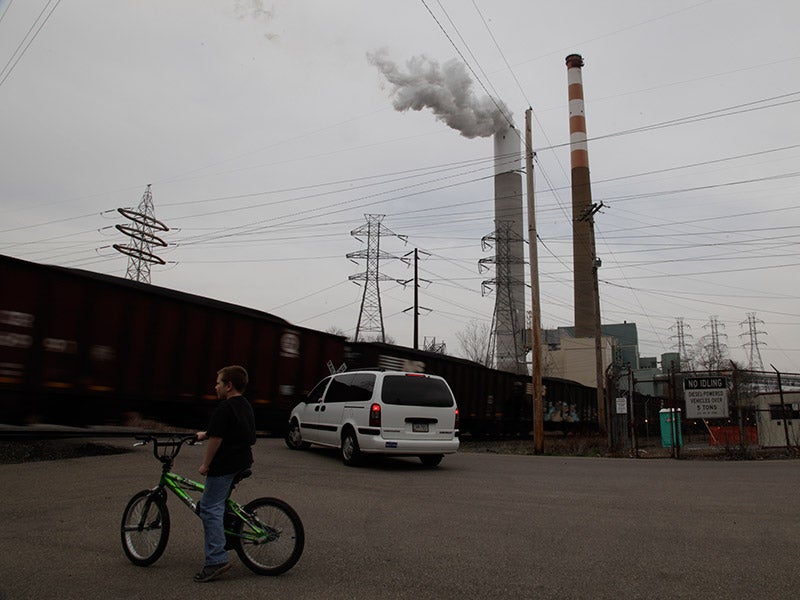
Everyone has The Right To Breathe clean air. Watch a video featuring Earthjustice Attorney Jim Pew and two Pennsylvanians—Marti Blake and Martin Garrigan—who know firsthand what it means to live in the shadow of a coal plant's smokestack, breathing in daily lungfuls of toxic air for more than two decades.

Coal Ash Contaminates Our Lives. Coal ash is the hazardous waste that remains after coal is burned. Dumped into unlined ponds or mines, the toxins readily leach into drinking water supplies. Watch the video above and take action to support federally enforceable safeguards for coal ash disposal.

ABOUT EARTHJUSTICE'S BLOG

unEARTHED is a forum for the voices and stories of the people behind Earthjustice's work. The views and opinions expressed in this blog do not necessarily represent the opinion or position of Earthjustice or its board, clients, or funders.

Learn more about Earthjustice.

View Sam Edmondson's blog posts
07 December 2011, 12:47 PM
The nation's worst toxic air polluters need to be better neighbors
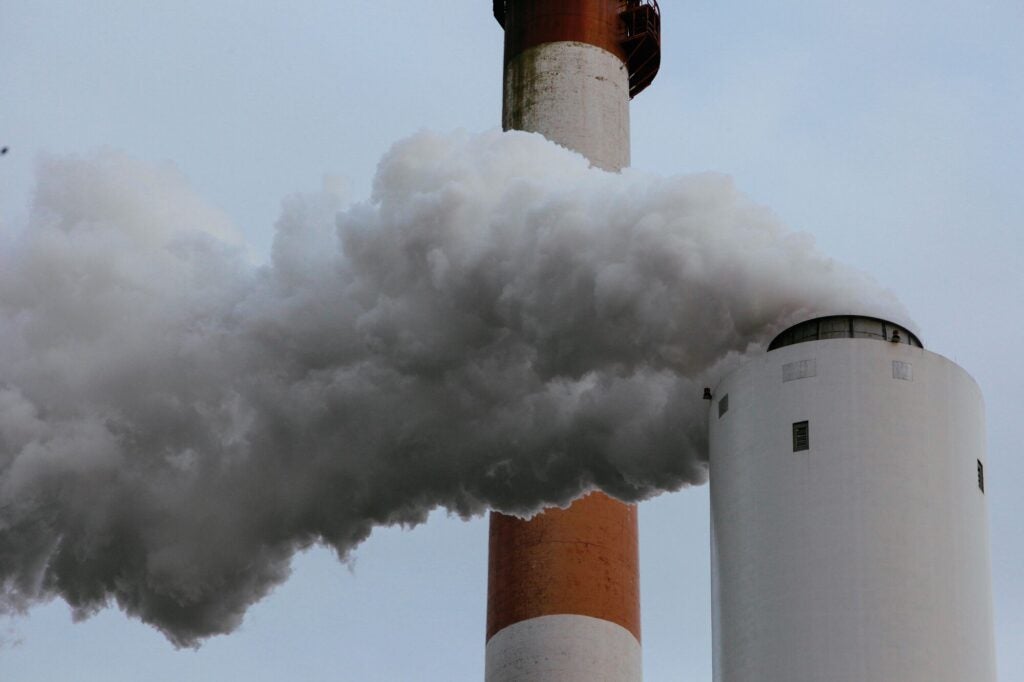
Hatfield's Ferry coal plant. Photo: Chris Jordan / Earthjustice

Imagine you live in a neighborhood full of families. There are many nice people, but a few households are real menaces. They're loud, they burn things in the backyard, and they drive around so fast that you're worried they're going to run someone down

The neighborhood bands together and one-by-one succeeds in getting these menaces to settle down. But there's a holdout—and it's the worst of all. The noise from that place is tremendous, the fires they burn are bigger than anyone's, and they drive with their eyes closed.

Meet the power plant family, America's worst toxic air polluters.

View Chris Jordan-Bloch's blog posts
01 December 2011, 3:29 PM
One Man's Quest for Clean Air

Tom Frantz grew up in California’s central valley. The once sparse rural area is now the source of food for millions of Americans, and throughout his life Tom has seen the bucolic pastures of his childhood transform into modern-day mega-farms.

8 Comments   /   Read more >>
View Sam Edmondson's blog posts
30 November 2011, 2:56 PM
A strong call for coal plants in Chicago, and everywhere, to clean up
Ian Viteri, a community organizer with LVEJO, at the 50 States United for Healthy Air event.

What's it like to live in the shadow of a smokestack?

Ask Kim Wasserman, executive director of the Little Village Environmental Justice Organization (LVEJO) and a resident of Chicago's Little Village neighborhood—a culturally vibrant area on the city's west side that many, including Wasserman, refer to as the "Mexican capital of the Midwest."

Wasserman and her family live less than one mile from the Crawford coal-fired power plant, which is owned by Midwest Generation. The same company owns another plant in Chicago, the Fisk, which is in the Pilsen neighborhood in the northeast part of the city. Pollution from these two plants has galvanized strong calls from grassroots groups—LVEJO, PERRO and others—for the plants to clean up their dirty ways. Wasserman makes the call beautifully in an op-ed published today in the Chicago Tribune.

It begins:

I'm Peter's mom. He's that 6-year-old on those ads on the "L" trains or on billboards around town. You know, the one with the inhaler, the one he's been using since he was 3. That makes him luckier than his older brother Anthony, who developed his asthma at 3 months. When Anthony had his first asthma attack, I didn't know much about it. When he was struggling to breathe you could see his little rib cage. I learned that that was a telltale sign.

1 Comment   /   Read more >>
View Sam Edmondson's blog posts
30 November 2011, 11:23 AM
EPA will issue final toxic air standards for power plants

Mark your calendars. Dec. 16 is going to be a big deal—particularly for families with children across the country. I know that Alvin, Simon and Theodore are getting Chipwrecked that day, but that's not what I'm thinking about. There's something even bigger coming down: the Environmental Protection Agency is going to release final standards to clean up mercury and other health-damaging toxic air pollutants from power plants.

Mercury is a serious threat to fetuses and young children—it can cause brain damage and other kinds of developmental problems. Power plants are far and away the biggest industrial sources of it. Collectively, in 2010, they emitted more than 33 tons of mercury. The EPA's draft standard, issued last March, would cut mercury emissions from power plants by 90 percent. Power plant pollution also causes serious respiratory problems—aggravated asthma attacks, for example—and even premature death. The EPA's draft rule would prevent as many as 17,000 premature deaths every year.

To draw attention to the upcoming announcement, the American Lung Association is running a hard-hitting commercial that highlights the impact of power plant air pollution on kids' health.

View Sam Edmondson's blog posts
17 November 2011, 3:38 PM
EPA's clean-up of toxic air pollution remains unfulfilled
Not only will clean air standards have a tremendous impact on the health of the American public, they will also create thousands of new utility jobs.
(Chris Jordan / Earthjustice)

In 1990, Congress gave the Environmental Protection Agency a very important homework assignment: protect the American public from mercury, lead, benzene, dioxins and other invisible toxic air pollutants, because what we can't see can hurt us.

Twenty-one years later, these dangerous pollutants are still pouring forth in large quantities from smokestacks across the country. Some of the nation's biggest polluters—cement kilns, industrial boilers and coal-fired power plants—are going to have to cut down on their toxic pollution as the Clean Air Act requires, have yet to do so.

In many cases, the reason is that the EPA has time and again failed to turn in its homework—critical clean air standards that require industries to install pollution controls that are readily available and affordable. Pressure and opposition from industry has routinely been a roadblock. In this way, polluting industries and their allies in Congress have played the part of the dog, scarfing the standards that would cause dirty industries to clean up their facilities. But even when the EPA has turned in clean air standards to clean up polluters, more often than not they are covered in industry's slobber—watered down and full of loopholes that benefit polluters.

3 Comments   /   Read more >>
View Raviya Ismail's blog posts
17 November 2011, 1:25 PM
NY Times article shows heavy industry hand in decision
EPA Administrator Lisa Jackson

A few months ago when the Obama Administration abruptly scrapped a stronger ozone standard, we were blindsided.
Turns out, we weren’t the only ones.

This New York Times article gives an illuminating look at the political wrangling behind the scenes of the decision, and indicates that EPA Administrator Lisa Jackson herself was blindsided. So much so that she even contemplated resigning.

Administrator Jackson thought the rule was in the bag; instead, just before Labor Day weekend President Obama indicated that it was a no-go. In a statement from the White House at the time, President Obama mentioned the importance of “reducing regulatory burdens and regulatory uncertainty, particularly as our economy continues to recover” and that he himself requested Administrator Jackson to withdraw the rule.

View Sam Edmondson's blog posts
15 November 2011, 5:10 PM
Nearly 36,000 deaths could be prevented every year by tighter soot standards

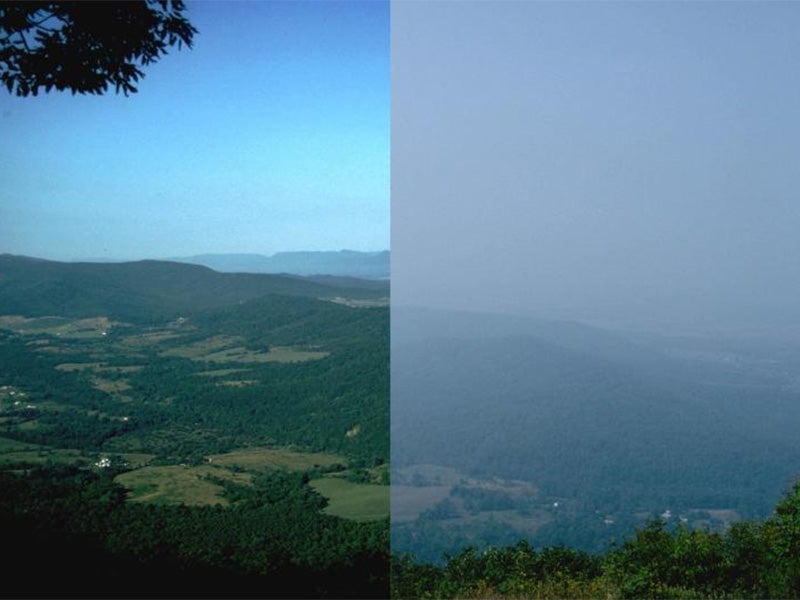
Sometimes, little things cause big problems. The tiny particles in soot pollution are 1/30th the width of a strand of your hair, and yet those tiny particles may be responsible for the premature deaths of tens of thousands of Americans every year.

Earthjustice, Clean Air Task Force and the American Lung Association released a report today—titled Sick of Soot—that shows nearly 36,000 premature deaths could be prevented in the U.S. every year if the Environmental Protection Agency strengthens the health standards for soot pollution.

In 2009, following an Earthjustice lawsuit, a federal court found that the EPA's current standards are inadequate to protect public health and ordered the agency to update them. Nearly three years later, the EPA hasn't budged. So today, in addition to co-releasing Sick of Soot, Earthjustice went back to the same federal court—on behalf of the American Lung Association, Environmental Defense Fund and National Parks Conservation Association—and asked it to set a deadline for the EPA to issue stronger soot standards.

"The EPA needs to start moving in a different direction," said Earthjustice attorney David Baron. "Sick of Soot points the way."

1 Comment   /   Read more >>
View Sam Edmondson's blog posts
01 November 2011, 1:24 PM
The economy needs regulation to get going
Rep. Darrell Issa (R-CA)

Today, Rep. Darrell Issa (R-CA)—that's "Ice-uh" for those unfamiliar with the congressman—ran a hearing in the House Oversight and Government Reform Committee about pollution from coal-fired power plants. The hearing unfolded roughly as expected, with one side—repped by Virginia Attorney General Ken Cuccinelli—arguing that clean air standards are job-killers, and the other side—repped by Environmental Protection Agency Deputy Administrator Robert Perciasepe—countering that the tremendous health benefits of reducing toxic air pollution from coal-fired power plants vastly outweigh the costs.

Now, enter Dr. Josh Bivens, the third witness at the hearing, who laid out an economic argument worth mentioning here, as it provided some refreshing clarity. Dr. Bivens, who works at the Economic Policy Institute, argued that now is precisely the time that we should be regulating big toxic polluters like the coal-fired power industry.

Because of the Great Recession, rather than spending their cash reserves on job-creating investments, big industries are just sitting on them. This is called a liquidity trap. Bivens argued that government regulations—e.g. clean air standards—are a great way to get these companies to start spending those reserves. In other words, the money that industry spends to comply with clean air standards will actually be highly beneficial for the economy. Factor in the substantial health benefits that accrue to the public when dirty coal plants install pollution control technology to control their toxic air emissions, and these clean air standards look even more like a no-brainer.

1 Comment   /   Read more >>
View Jessica Goddard's blog posts
26 October 2011, 10:10 AM
Climate change effect on oceans

If ancient Greek polytheism defined our belief system, we would be well into an era of ritual sacrifices seeking to pacify the sea god, Poseidon.

Island and coastal cities fear full submersion as oscillating and extreme weather patterns take headlines more than ever. Hurricanes and tropical storms are growing in size and destructiveness. Costal reefs are in peril as calcium carbonate (“food” for coral reef skeletons) disappears with rises in ocean acidity and sea pollution. Sea ice is melting and receding in the Arctic and Argentina. And land ice (frozen fresh water) continues to melt at an accelerated rate in Antarctica. Climate change and increased surface temperatures are impacting our oceans as you read.

We at Earthjustice are leaving the skeptics behind. Let’s consider the facts: the average reach of ice in the Arctic in September 2011 (yearly minimum) was 4.61 million square kilometers. That’s 2.43 million square kilometers below the average from 1979 to 2000. This reflects an average monthly decline of 11.5 percent per decade. In Antarctica, NASA satellites show an annual decrease in ice coverage of more than 100 cubic kilometers (24 cubic miles) since 2002.

View Raviya Ismail's blog posts
25 October 2011, 2:08 PM
Congress hides behind weak economic numbers
Lisa Heinzerling

In the back and forth between climate skeptics and conservationists, we’ve clearly got two things on our side (although many of our foes would argue this): science and the law.

This point was clearly delineated during a panel discussing the congressional attacks on the Environmental Protection Agency (and the Clean Air Act and Clean Water Act) at the Society of Environmental Journalists conference in Miami last week.

“Those rules are required by law,” said Lisa Heinzerling, a Georgetown law professor who is a former EPA official and most notably argued the landmark Massachusetts v. EPA Supreme Court case.

Heinzerling was referring to several EPA rules that GOP lawmakers have taken aim at, among them one that would rein in pollution from cement plants, and another rule to curb pollution from industrial boilers.