Posts tagged: coal ash

unEARTHED. The Earthjustice Blog

coal ash


    SIGN-UP for our latest news and action alerts:
   Please leave this field empty

Facebook Fans

Featured Campaigns

Everyone has The Right To Breathe clean air. Watch a video featuring Earthjustice Attorney Jim Pew and two Pennsylvanians—Marti Blake and Martin Garrigan—who know firsthand what it means to live in the shadow of a coal plant's smokestack, breathing in daily lungfuls of toxic air for more than two decades.

Coal Ash Contaminates Our Lives. Coal ash is the hazardous waste that remains after coal is burned. Dumped into unlined ponds or mines, the toxins readily leach into drinking water supplies. Watch the video above and take action to support federally enforceable safeguards for coal ash disposal.

ABOUT EARTHJUSTICE'S BLOG

unEARTHED is a forum for the voices and stories of the people behind Earthjustice's work. The views and opinions expressed in this blog do not necessarily represent the opinion or position of Earthjustice or its board, clients, or funders.

Learn more about Earthjustice.

View Marty Hayden's blog posts
16 February 2011, 10:38 AM
Amendments to funding bill target everything from wolves to water to health
Wolves are on the congressional hit list

House Republicans are using the oft-repeated refrain of “fiscal restraint” as their excuse for gutting several environmental initiatives that will put the public in harm’s way. But there simply is no excuse for hacking away at health protections that will leave our air and water dirtier and our children and seniors at risk.  It’s not hard to see their real agenda. In many cases their proposals are clearly designed to make it easier for some of America’s biggest polluters to dump their pollution on us rather than pay to dispose of it responsibly. 

House GOP’s Public Enemy Number 1: the U.S. Environmental Protection Agency. The spending legislation introduced this week slashes the EPA budget by $3 billion and blocks the agency from regulating greenhouse gas emissions. And in a symbolic dig against the White House, the bill also stymies President Barack Obama from replacing departing lead White House climate and energy advisor Carol Browner.
 
The spending plan also tries to block the EPA from fully implementing the Clean Water Act, while effectively letting major polluters foul our water. This will jeopardize drinking water for 117 million Americans and could leave millions of  acres of wetlands and thousands of miles of streams and rivers without Clean Water Act protections from pollution. But it doesn’t stop there.

7 Comments   /   Read more >>
View Lisa Evans's blog posts
16 February 2011, 7:53 AM
Theft of protections against toxic coal ash is on House agenda
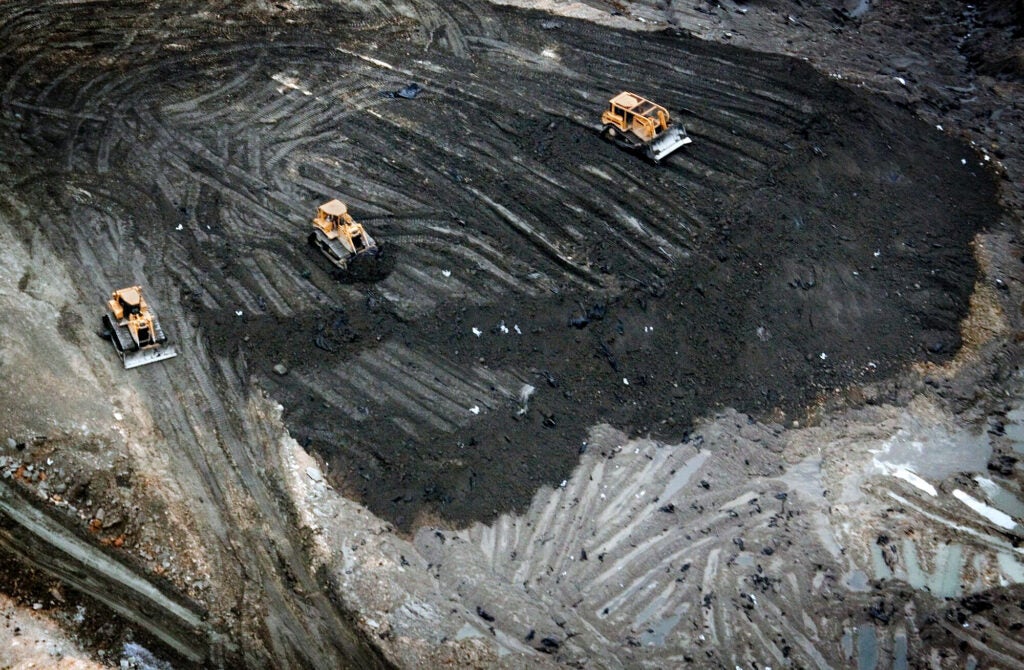
Aerial view of coal spill in Kingston, Tennessee

The highwaymen of the 112th Congress are trying to take away the authority of the EPA and rob the will of the people on a variety of critical public health and environmental issues by attaching riders to the House budget bill (the Continuing Resolution). The spending legislation introduced by the House Appropriations Committee this week would not only slash billions of dollars from programs protecting public health by ensuring clean water and air, but it would also undo or block key environmental initiatives.

While belt-tightening is a necessity, the special interest giveaways and legislative earmarks protecting big polluters are no less than highway robbery. Their attempt to pillage vital health protections guaranteed by our federal environmental statutes threatens the quality of our air and water, and places our most vulnerable communities and citizens at great risk.

3 Comments   /   Read more >>
View Terry Winckler's blog posts
15 February 2011, 3:53 PM
Legislative amendments target air, water, public lands and wildlife

Teabag by teabag, the anti-environment faction in the House of Representatives has filled its federal government spending bill with amendments that will cripple protections for our water, air, natural resources, wildlife and public health. 

Not since the darkest days of the Bush administration have we seen such an onslaught on the environment—and the hits are still coming. By mid-day today (Tues., Feb. 15), the list has grown to include attacks on a number of endangered species, including wolves and salmon, and on the power of the Environmental Protection Agency to keep lethal pollutants out of the air we breathe and the water we drink. Some amendments are outright handouts to our nation’s worst polluters.

The spending bill will fund the government so that it can continue operating after March 4, but first the Senate must pass the bill. Today, Pres. Barack Obama warned that he would veto the bill as constructed.

The following is a list of the most harmful provisions and amendments proposed so far:

1 Comment   /   Read more >>
View Vernice Miller-Travis's blog posts
09 February 2011, 7:47 AM
Federal oversight needed to clean up Chesapeake Bay

(This is the latest in a weekly series of 50 Tr-Ash Talk blogs discussing the dangers of coal ash. Earthjustice hopes that by December 2011, the third anniversary of the TVA coal ash spill, the EPA will release a coal ash rule establishing federally enforceable regulations ensuring the safe disposal of this toxic waste. Vernice Miller-Travis is the Vice Chair of the Maryland Commission on Environmental Justice and Sustainable Communities.)

One of the biggest environmental challenges in Maryland is protecting and improving the quality of the waters of the Chesapeake Bay. There are hundreds of rivers and streams that traverse our state, many of which feed into the Chesapeake Bay. Though we are a thoroughly modern state, we are also a state that has a large agricultural base, and a huge part of our economy is based on seafood, which generations of Waterman have fished out of the Chesapeake Bay. We are famous for our blue crabs and oysters.  

Here in Maryland, we are having our own version of a national debate at the local level. The vast majority of our electric power is produced at coal-fired power plants across the state. Already, several documented instances of violations of the Clean Water Act have been identified at coal ash landfills and impoundment sites in our state. Maryland is home to multiple coal combustion waste sites that have contaminated drinking water wells and polluted surface waters and the environment with arsenic, cadmium, selenium, nickel, thallium and other toxic pollutants.

Our state Attorney General’s office and the Maryland Department of the Environment have filed a lawsuit against Mirant Mid-Atlantic, LLC and Mirant Maryland Ash Management, LLC for violations of the Clean Water Act at the Mirant Faulkner coal combustion waste landfill in Charles County, and the Mirant Brandywine coal combustion waste landfill in Prince George’s County not far from the banks of the Patuxent River, a major tributary to the Chesapeake Bay.

1 Comment   /   Read more >>
View Lisa Evans's blog posts
01 February 2011, 12:36 PM
Dangerous Form of Chromium Unregulated in Coal Ash
TVA coal ash spill. Photo courtesy Ohiocitizen.org

(Barb Gottlieb of Physicians for Social Responsibility contributed to this report.)

Just three weeks ago, after a study found chromium, a toxic heavy metal, in tap water in 31 of 35 U.S. cities tested, the Environmental Protection Agency issued new guidelines recommending that all public water utilities test their drinking water for hexavalent chromium or Cr(VI). But, EPA’s well-placed concern for protection of public health has a dangerous blind spot. While government regulators express concern for small quantities of the cancer-causing substance in our water, they are ignoring one of the largest sources of the hazardous chemical—coal combustion waste (or coal ash) from the nation’s coal burning power plants.

A new report by Earthjustice, Physicians for Social Responsibility, and Environmental Integrity Project documents the threat to health from chromium VI leaching from coal ash disposal sites across the country. Our report is timely, as today the Senate Environment and Public Works Committee is holding an oversight hearing on the threat to the nation’s drinking water from hexavalent chromium and other contaminants.

1 Comment   /   Read more >>
View Jessica Knoblauch's blog posts
27 January 2011, 1:04 PM
Twelve bad men, Gasland spotlight, green spies
Polar bears use ice floes, which are rapidly melting due to climate change, to search for food. Photo courtesy of Florian Schulz.

Polar bear swims hundreds of miles in effort to survive
In a testament to the rapidly deteriorating conditions that polar bears face in a changing climate, researchers from the U.S. Geological Survey recently discovered a polar bear that swam nonstop for more than 200 hours and 400 miles, reports the BBC. The epic journey in the Beaufort sea was most likely necessary due to an increase in melting sea ice, which polar bears travel on to hunt prey. In addition to losing 22 percent of her body fat during the journey, the mama polar bear also lost something that's truly irreplaceable, her baby cub. Check out Earthjustice's Irreplaceable campaign to find out how these Arctic symbols and others are being impacted by climate change.

Rolling Stone profiles the climate change dirty dozen
What do Sarah Palin, Bjørn Lomborg and Fred Upton (R-MI) have in common besides a penchant for making grandstanding remarks? They're also three of 12 people blocking progress on global warming, reports Rolling Stone. Some of the dozen's tactics include: attacking the EPA, giving reputable climate scientists the third degree, spreading disinformation about global warming and just plain lying to the American public. Unfortunately, their laughable efforts to mislead us are actually being taken seriously by some, and in the process risking all of our future.
 

5 Comments   /   Read more >>
View Emily Enderle's blog posts
26 January 2011, 12:59 PM
Cost benefit analysis flawed
Sarah McCoin stands along Swan Pond Circle Road near the TVA Kingston Power Plant.

(This is the latest in a weekly series of 50 Tr-Ash Talk blogs discussing the dangers of coal ash. Earthjustice hopes that by December 2011, the third anniversary of the TVA coal ash spill, the EPA will release a coal ash rule establishing federally enforceable regulations ensuring the safe disposal of this toxic waste.)

Today, the House Energy & Commerce Subcommittee on Oversight and Investigations heard Office of Management and Budget (OMB) official Cass Sunstein speak on the Obama Administration’s view of regulatory reform. Sunstein trumpeted the economic benefits of President Obama’s new Executive Order – Improving Regulation and Regulatory Review.

President Obama’s new executive order, publicly announced in a Wall Street Journal article is widely regarded as a giveaway to industry, providing a set of economic criteria to consider when developing, changing or repealing regulations. This reinforces the administration’s stance on weighing economic costs against public health benefits using techniques like cost-benefit analysis. Cost-benefit analysis attempts to monetize the actual impacts of regulations like missed school and work days due to sickness, deaths from cancer resulting from exposure to pollution as well as economic impacts. While this is theoretically a useful tool, the analysis has a long list of shortcomings that ultimately results in uncalculated, therefore unconsidered, harm to our health, environment and wallets. In the case of the coal ash rule, the analysis was grossly inaccurate, resulting in a cost figure more than 20 times the actual number ($23 billion vs. $1.5 billion).

View Raviya Ismail's blog posts
18 January 2011, 4:29 PM
Low-income community rebels against proposed 15-story toxic coal ash landfill
TVA landfill full of coal ash

(This is the latest in a weekly series of 50 Tr-Ash Talk blogs discussing the dangers of coal ash. Earthjustice hopes that by December 2011, the third anniversary of the TVA coal ash spill, the EPA will release a coal ash rule establishing federally enforceable regulations ensuring the safe disposal of this toxic waste.)

The average home value in Round O, South Carolina, is just above $66K. The average household income is below $30K. And now, according to an article in a local newspaper, a power company plans on building a site to store toxic coal ash from its coal plant nearby.

Is it coincidental that these impoundments are often built near low-income communities? We think not. It’s a known phenomenon that low-income and people of color neighborhoods across the country face disproportionately high levels of air and water pollution and exposure to toxic waste and other health hazards because federal environmental laws often are not fairly enforced. And sadly, Round O, fits the profile.

While we wait on the EPA to release a federally enforceable coal ash rule that would ensure the safe disposal of this toxic waste, President Barack Obama has signed an executive order that aims to achieve "balance" in federal regulations -- between ensuring public health and safety and promoting economic growth.

4 Comments   /   Read more >>
View Raviya Ismail's blog posts
12 January 2011, 2:17 PM
Scientists Allege EPA Underestimated Risk

(The following is the first in a weekly series of 50 upcoming Tr-Ash Talk blogs discussing the dangers of coal ash. Earthjustice hopes that by December 2011, the third anniversary of the TVA coal ash spill, the EPA will release a coal ash rule establishing federally enforceable regulations ensuring the safe disposal of this toxic waste.)

Arsenic, one of the most potent poisons known to man, is found in coal ash. It is well documented that coal ash leaks dangerous quantities of arsenic to drinking water when dumped in unlined pits and ponds. In fact, in an EPA analysis the agency acknowledges that people living near unlined coal ash ponds can face as much as a one-in-50 chance of getting cancer from drinking water contaminated by arsenic. This risk is 2,000 times greater than the EPA’s goal for reducing cancer risk to one-in-100,000. Yet, four renowned arsenic experts found that this EPA risk assessment underestimates the risk of cancer from arsenic by a factor of over 17 times.

In a letter to EPA, medical toxicologist Dr. Michael Kosnett along with three senior scientists explain that the EPA relied on an outdated “cancer slope factor” (CSF) that is 17.3 times less than the updated CSF for arsenic. The scientists therefore recommend revision of the EPA’s risk estimates.

1 Comment   /   Read more >>
View Jessica Knoblauch's blog posts
23 December 2010, 11:45 AM
EPA ash sitting, mama pig abuse, food safety victory
The HSUS recently released a video on sow abuse at Smithfield farms. Photo courtesy of garwee, sxc.hu

Oil spill sand berms saturated in failure
Miles of sand berms built to protect the coastline during the Gulf oil spill that cost millions of dollars were a huge waste of money, according to a presidential oil spill commission. During the spill, Louisiana governor Bobby Jindal strongly insisted on having the berms, despite scientists and federal agencies raising concerns over the berms' potential effectiveness. Yet, as the Associated Press quoted coastal scientist Rob Young as saying, the berm effort has so far done little more than draw "a pencil line of sand." Ouch.

EPA sluggish on coal ash regulations
Two years after the Tennessee coal ash spill released more than 1 billion gallons of toxic coal slurry that destroyed homes and the area's livelihood, the EPA is still "sitting on its ash," reports Mother Jones. Despite EPA administrator Lisa Jackson's pledge early on to investigate coal ash sites, there is still no regulation of coal ash dumps, an unsettling fact that has prompted Earthjustice and others to call on the EPA to finally protect the public from the dangers of coal ash.