Posts tagged: coal

unEARTHED. The Earthjustice Blog

coal


    SIGN-UP for our latest news and action alerts:
   Please leave this field empty

Facebook Fans

Featured Campaigns

Everyone has The Right To Breathe clean air. Watch a video featuring Earthjustice Attorney Jim Pew and two Pennsylvanians—Marti Blake and Martin Garrigan—who know firsthand what it means to live in the shadow of a coal plant's smokestack, breathing in daily lungfuls of toxic air for more than two decades.

Coal Ash Contaminates Our Lives. Coal ash is the hazardous waste that remains after coal is burned. Dumped into unlined ponds or mines, the toxins readily leach into drinking water supplies. Watch the video above and take action to support federally enforceable safeguards for coal ash disposal.

ABOUT EARTHJUSTICE'S BLOG

unEARTHED is a forum for the voices and stories of the people behind Earthjustice's work. The views and opinions expressed in this blog do not necessarily represent the opinion or position of Earthjustice or its board, clients, or funders.

Learn more about Earthjustice.

View Lisa Evans's blog posts
16 February 2011, 7:53 AM
Theft of protections against toxic coal ash is on House agenda
Aerial view of coal spill in Kingston, Tennessee

The highwaymen of the 112th Congress are trying to take away the authority of the EPA and rob the will of the people on a variety of critical public health and environmental issues by attaching riders to the House budget bill (the Continuing Resolution). The spending legislation introduced by the House Appropriations Committee this week would not only slash billions of dollars from programs protecting public health by ensuring clean water and air, but it would also undo or block key environmental initiatives.

While belt-tightening is a necessity, the special interest giveaways and legislative earmarks protecting big polluters are no less than highway robbery. Their attempt to pillage vital health protections guaranteed by our federal environmental statutes threatens the quality of our air and water, and places our most vulnerable communities and citizens at great risk.

3 Comments   /   Read more >>
View Terry Winckler's blog posts
15 February 2011, 3:53 PM
Legislative amendments target air, water, public lands and wildlife

Teabag by teabag, the anti-environment faction in the House of Representatives has filled its federal government spending bill with amendments that will cripple protections for our water, air, natural resources, wildlife and public health. 

Not since the darkest days of the Bush administration have we seen such an onslaught on the environment—and the hits are still coming. By mid-day today (Tues., Feb. 15), the list has grown to include attacks on a number of endangered species, including wolves and salmon, and on the power of the Environmental Protection Agency to keep lethal pollutants out of the air we breathe and the water we drink. Some amendments are outright handouts to our nation’s worst polluters.

The spending bill will fund the government so that it can continue operating after March 4, but first the Senate must pass the bill. Today, Pres. Barack Obama warned that he would veto the bill as constructed.

The following is a list of the most harmful provisions and amendments proposed so far:

1 Comment   /   Read more >>
View Brian Smith's blog posts
10 February 2011, 5:30 PM
New study challenges marketing campaign
Rod Bremby

A study released today by MSB Energy Associates calls into question claims that the new Sunflower coal-fired power plant expansion near Holcomb, Kansas will be the “cleanest” in the country.

Among the report’s findings:
- 669 coal-fired power generating units have lower emissions of particulate (soot) air pollution
- 321 coal-fired units have lower emissions of mercury
- 53 emit lower rates of sulfur dioxide, and
- 18 emit lower rates of nitrogen oxides

These findings are based on a controversial air permit approved by the Kansas Department of Health and the Environment in December 2010.

1 Comment   /   Read more >>
View Vernice Miller-Travis's blog posts
09 February 2011, 7:47 AM
Federal oversight needed to clean up Chesapeake Bay

(This is the latest in a weekly series of 50 Tr-Ash Talk blogs discussing the dangers of coal ash. Earthjustice hopes that by December 2011, the third anniversary of the TVA coal ash spill, the EPA will release a coal ash rule establishing federally enforceable regulations ensuring the safe disposal of this toxic waste. Vernice Miller-Travis is the Vice Chair of the Maryland Commission on Environmental Justice and Sustainable Communities.)

One of the biggest environmental challenges in Maryland is protecting and improving the quality of the waters of the Chesapeake Bay. There are hundreds of rivers and streams that traverse our state, many of which feed into the Chesapeake Bay. Though we are a thoroughly modern state, we are also a state that has a large agricultural base, and a huge part of our economy is based on seafood, which generations of Waterman have fished out of the Chesapeake Bay. We are famous for our blue crabs and oysters.  

Here in Maryland, we are having our own version of a national debate at the local level. The vast majority of our electric power is produced at coal-fired power plants across the state. Already, several documented instances of violations of the Clean Water Act have been identified at coal ash landfills and impoundment sites in our state. Maryland is home to multiple coal combustion waste sites that have contaminated drinking water wells and polluted surface waters and the environment with arsenic, cadmium, selenium, nickel, thallium and other toxic pollutants.

Our state Attorney General’s office and the Maryland Department of the Environment have filed a lawsuit against Mirant Mid-Atlantic, LLC and Mirant Maryland Ash Management, LLC for violations of the Clean Water Act at the Mirant Faulkner coal combustion waste landfill in Charles County, and the Mirant Brandywine coal combustion waste landfill in Prince George’s County not far from the banks of the Patuxent River, a major tributary to the Chesapeake Bay.

1 Comment   /   Read more >>
View Sam Edmondson's blog posts
08 February 2011, 3:57 PM
Reports strongly support first-ever EPA protections

Next month, the U.S. Environmental Protection Agency will propose the first ever health protections against power plants’ toxic air pollution. No industrial source of dirty air poses greater risks to human health or the environment than these juggernauts, which have never been subject to federal limits on their emissions of mercury, arsenic, acid gases and carcinogens such as dioxins.

Power plants are also among the worst emitters of fine particle pollution (a.k.a. PM 2.5), a microscopic mixture of liquid and solid droplets suspended in the air that can penetrate deep into our lungs. Fine particle pollution takes a serious toll on our health—particularly on some of the most vulnerable individuals in our society such as children, the elderly, and low-income and communities of color who live downwind of a disproportionate number of these and other industrial facilities.

In a report released in Sep. 2010, the Clean Air Task Force presented data that project fine particle pollution from coal-fired power plants would cause 13,200 deaths, 20,400 heart attacks, 217,600 asthma attacks, and more than 1.5 million days when people have to miss work in 2010. In all, these negative impacts to our health cost us more than $100 billion.

View Brian Smith's blog posts
07 February 2011, 5:06 PM
Rushed-through process finally gets scrutiny

Tom Gross, an official with the Kansas Department of Health and Environment, is frustrated with the U.S. Environmental Protection Agency.

Gross has been publicly complaining that EPA requirements to use the latest pollution-mitigating technologies are annoying. "The whole process was incredibly frustrating," Gross told the House Energy and Utilities Committee. "We told them a few words we can't repeat," reported the Lawrence-Journal World.

Late last week, the EPA issued a letter questioning KDHE’s air-quality permit issued in December, which will allow expansion of the coal-fired power plant by Sunflower Electric. The permit generated massive public opposition. For one thing, three-quarters of the new capacity, or 695 megawatts, would be reserved for use in Colorado while Kansans get all the pollution.

View Ted Zukoski's blog posts
02 February 2011, 10:20 AM
Where's the leadership Sec. Salazar promised?
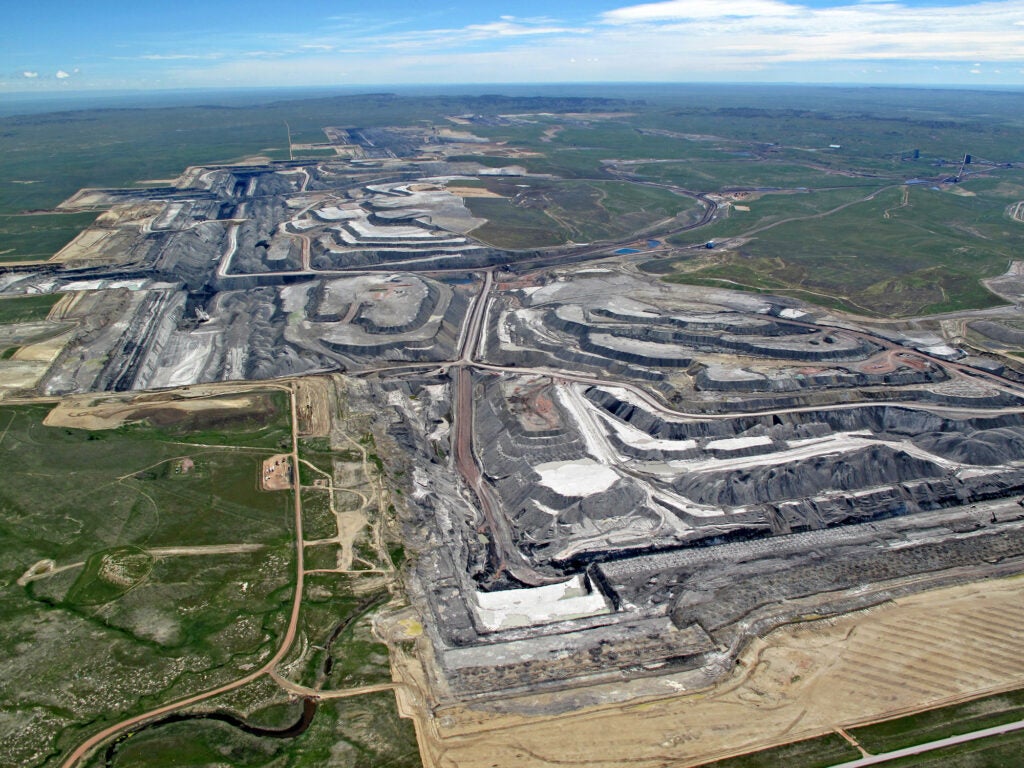
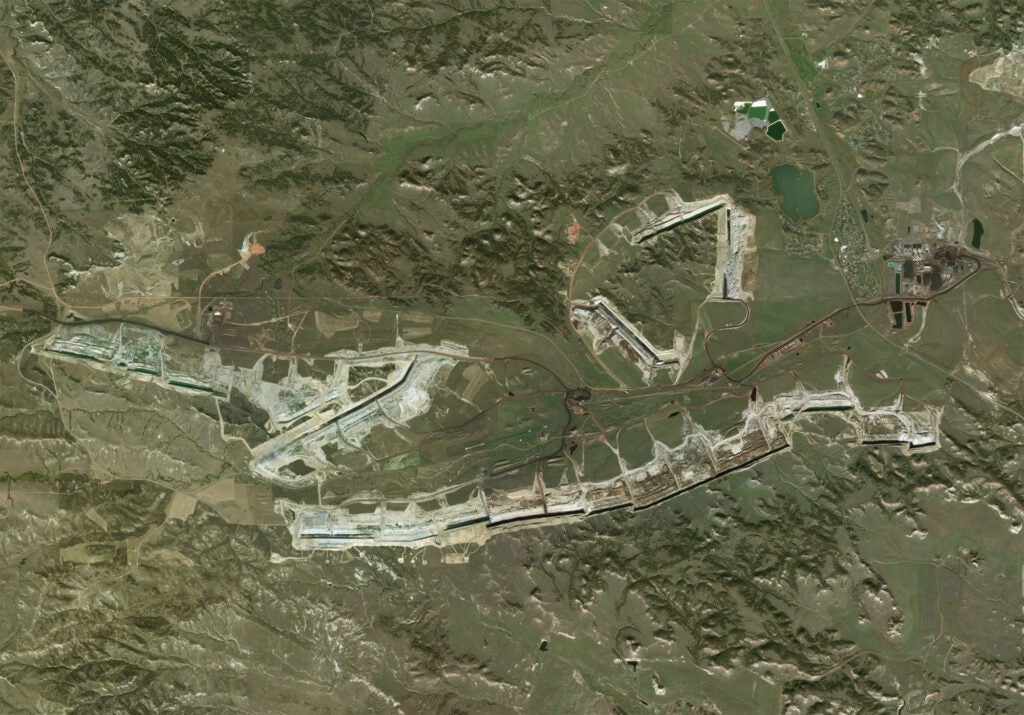
Strip mine in Wyoming's Powder River Basin. USGS photo.

In the not-too-distant past, Interior Sec. Ken Salazar issued a bold call to action for his department. With authority over hundreds of millions of acres of public lands and the vast majority of coal, oil, and gas owned by taxpayers, he stated that his department would be "taking the lead" in protecting the nation's wildlife and water from climate change, and that doing so would "require us to change how we manage the lands."

DOI had a great chance recently to live up to the secretary's words by changing the way it manages the nation's coal - a key contributor to climate change. 

Sadly, his staff has concluded that doing nothing is easier than leadership or change.Here's the background: 

View Brian Smith's blog posts
28 January 2011, 4:56 PM
Three coal mines for sale

Finally admitting the unprofitably of turning coal into motor fuel, Chevron announced on Friday that it is getting out of the business.

Chevron will sell off three coal mines in Alabama, New Mexico and Wyoming. Together, those mines produced 10 million tons of coal in 2009.

The company sees the process as "10 to 15 years in the future" and made a strategic decision to focus on operations other than mining.

View Jessica Knoblauch's blog posts
27 January 2011, 1:04 PM
Twelve bad men, Gasland spotlight, green spies
Polar bears use ice floes, which are rapidly melting due to climate change, to search for food. Photo courtesy of Florian Schulz.

Polar bear swims hundreds of miles in effort to survive
In a testament to the rapidly deteriorating conditions that polar bears face in a changing climate, researchers from the U.S. Geological Survey recently discovered a polar bear that swam nonstop for more than 200 hours and 400 miles, reports the BBC. The epic journey in the Beaufort sea was most likely necessary due to an increase in melting sea ice, which polar bears travel on to hunt prey. In addition to losing 22 percent of her body fat during the journey, the mama polar bear also lost something that's truly irreplaceable, her baby cub. Check out Earthjustice's Irreplaceable campaign to find out how these Arctic symbols and others are being impacted by climate change.

Rolling Stone profiles the climate change dirty dozen
What do Sarah Palin, Bjørn Lomborg and Fred Upton (R-MI) have in common besides a penchant for making grandstanding remarks? They're also three of 12 people blocking progress on global warming, reports Rolling Stone. Some of the dozen's tactics include: attacking the EPA, giving reputable climate scientists the third degree, spreading disinformation about global warming and just plain lying to the American public. Unfortunately, their laughable efforts to mislead us are actually being taken seriously by some, and in the process risking all of our future.
 

5 Comments   /   Read more >>
View David Lawlor's blog posts
25 January 2011, 12:36 PM
States pay to import pollution while ignoring healthier energy options
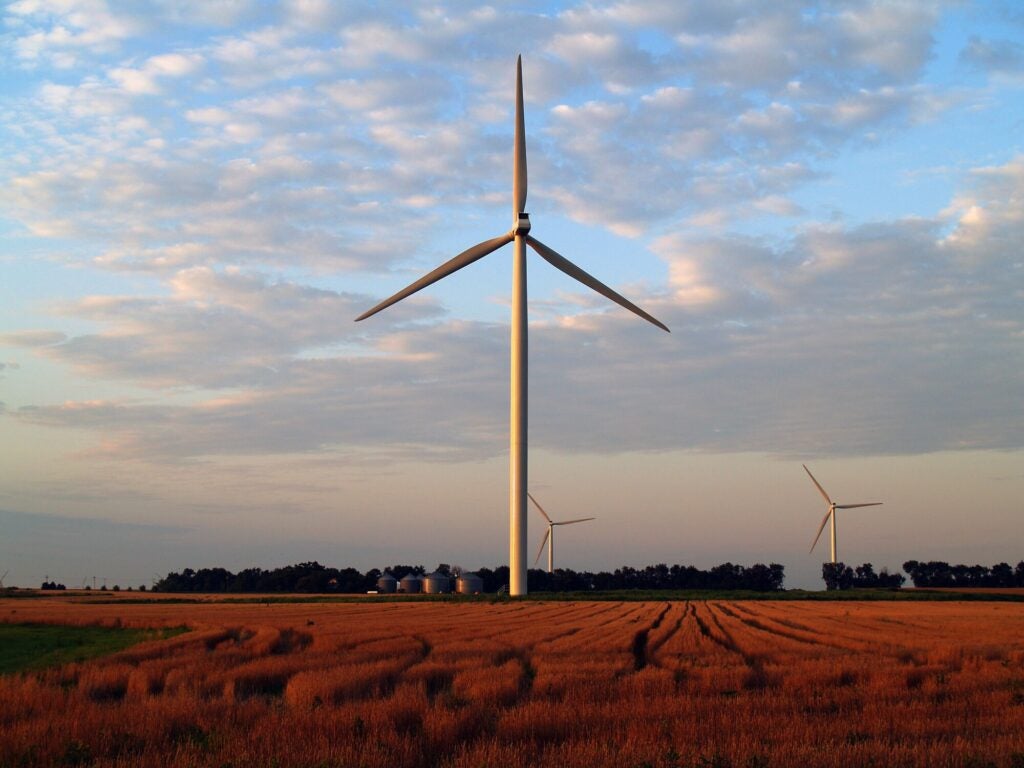
Wind farms could reduce the need for states to import dirty coal. Photo by Brian Robert Marshall.

The Union of Concerned Scientists has a snazzy new interactive slideshow on its website, highlighting states that are bypassing opportunities to ditch dirty coal and embrace clean energy. The slideshow is both interesting and an office-safe distraction good for at least a five-minute break from your spreadsheet formulas.

Go ahead, call it up on your browser and if your boss asks: “Hey, you fooling around on the Internet again?” You can say: “No, I’m reviewing the Union of Concerned Scientists’ analysis of the nation’s energy infrastructure.” There’s no good comeback to that line; the only conceivable rejoinder is, “Really, what does it say?”

Well, it says that a large portion of the country is foregoing clean energy resources in exchange for lining the pockets of the coal industry.

2 Comments   /   Read more >>