Posts tagged: coal

unEARTHED. The Earthjustice Blog

coal


    SIGN-UP for our latest news and action alerts:
   Please leave this field empty

Facebook Fans

Featured Campaigns

Everyone has The Right To Breathe clean air. Watch a video featuring Earthjustice Attorney Jim Pew and two Pennsylvanians—Marti Blake and Martin Garrigan—who know firsthand what it means to live in the shadow of a coal plant's smokestack, breathing in daily lungfuls of toxic air for more than two decades.

Coal Ash Contaminates Our Lives. Coal ash is the hazardous waste that remains after coal is burned. Dumped into unlined ponds or mines, the toxins readily leach into drinking water supplies. Watch the video above and take action to support federally enforceable safeguards for coal ash disposal.

ABOUT EARTHJUSTICE'S BLOG

unEARTHED is a forum for the voices and stories of the people behind Earthjustice's work. The views and opinions expressed in this blog do not necessarily represent the opinion or position of Earthjustice or its board, clients, or funders.

Learn more about Earthjustice.

View Neil Gormley's blog posts
03 January 2013, 3:26 PM
Why this destructive practice is holding Appalachia back
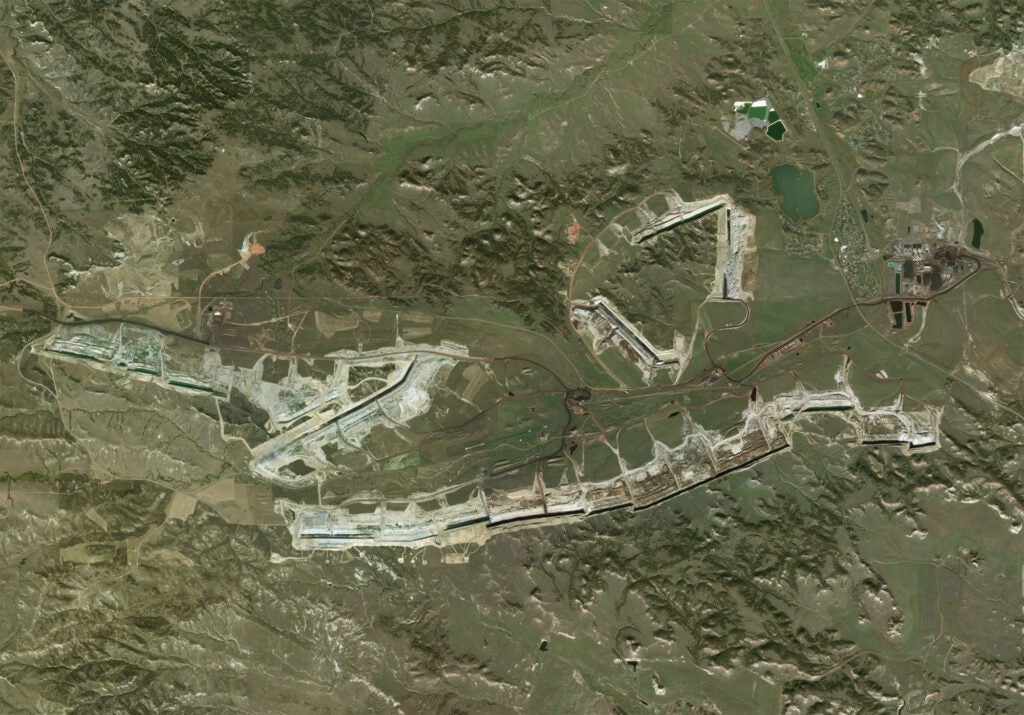
Satellite imagery of the massive Hobet mine. September 20, 2012. (NASA's Earth Observatory)

Last month, Earthjustice Associate Attorney Neil Gormley took a trip to West Virginia to visit partners and clients and to see the effects of mountaintop removal mining first-hand. As he explains in this unEarthed entry, his visit prompted questions about the relationship between this destructive practice and regional poverty.

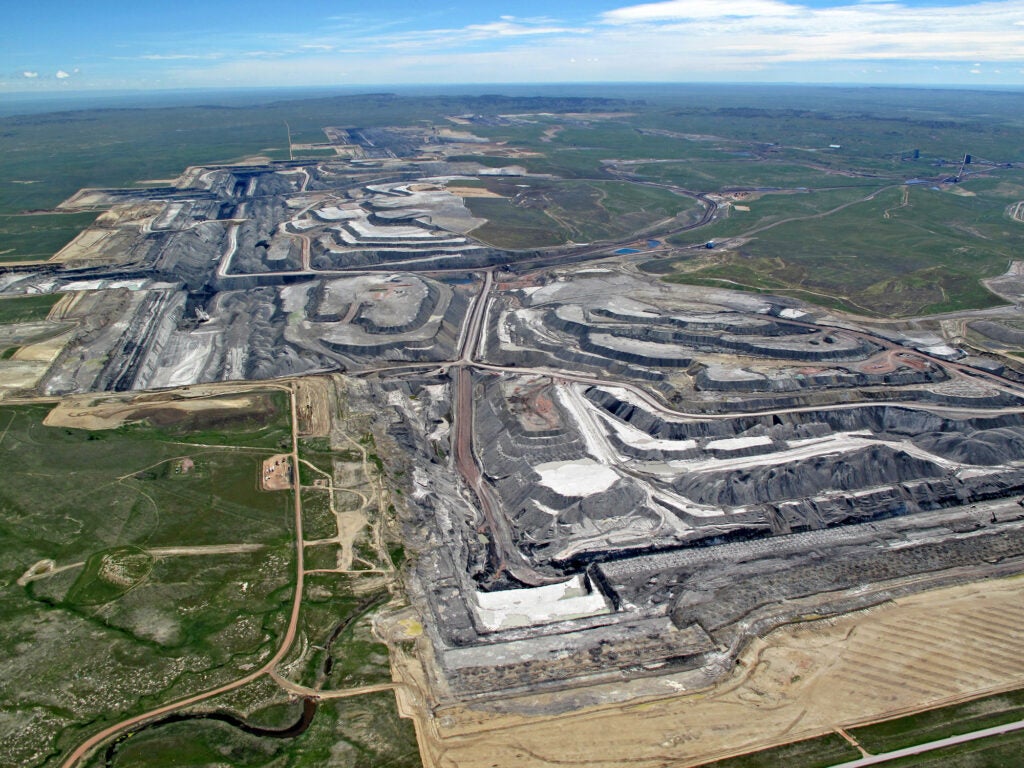
The Hobet mining complex is one of the largest mountaintop removal surface mines in the country. It was my destination last month when I took off from Charleston’s Yeager Airport in a four-seater Cessna, courtesy of Earthjustice’s partners at SouthWings.

Neil Gromley.Neil, on board the SouthWings plane.

Hobet is huge. Between current and past mining, it spans more than 15 square miles. At the time of my visit, miners were operating a dragline, an earth-moving machine so enormous it dwarfed the 240-ton dump trucks. The destruction is impossible to miss from above. Yet the mine is barely visible from the state highway that runs along its eastern perimeter. It’s shielded from view by a tall ridgeline, sparing most passers-by the eyesore.

Hobet mine.

Aerial view of the Hobet mine.  (Neil Gormley / Earthjustice via Southwings)
View Lisa Evans's blog posts
30 December 2012, 9:20 PM
But EPA must not leave the job half done
Outgoing EPA Administrator Lisa P. Jackson.  (The National Academy of Sciences)

During her four-year tenure as administrator of the EPA, Lisa Jackson was a true champion for public health and environmental justice.

One of her greatest legacies is the Mercury and Air Toxics Standard, a rule that will help Americans breathe a little easier since it sharply limits the amount of mercury and other toxic metals that can be emitted by coal-fired power plants. The rule finally requires the capture of mercury, arsenic, hexavalent chromium, nickel, selenium and other heavy metals at the plant smokestacks.

1 Comment   /   Read more >>
View Maria Beloborodova's blog posts
27 December 2012, 10:00 AM
Readers were most inspired by stories of the wild
Two of the first five calves born at Ft. Peck Indian reservation this year. (Bill Campbell)

Blog posts about Earth's magnificent places and creatures were the most popular themes for unEarthed readers in 2012. By far the most-read post concerned Arctic drilling, followed by reports of bison being restored and wolves losing protection. Not shown in our top 10 blog posts, below, are the delightful tales of curious critters painted in words by our own Shirley Hao. Posts written years ago by Shirley are still being discovered and read by thousands of people every year.

And, now, for your enjoyment, we present our most-read posts of 2012:

View Stephanie Maddin's blog posts
24 December 2012, 11:49 AM
Health of thousands put on hold by weak agency action
Alexandra Allred. (Chris Jordan-Bloch / Earthjustice)

“…My son's school would be named in a USA Today report as being in the upper 1 percent of the most toxic schools in the nation—the same school I butted heads with cement plant executives about being under the toxic plumes while children were at recess.”

– Alex Allred,
50 States United Clean Air Ambassador from Texas

We are taught as children to play fair and to follow the rules. Apparently, everyone doesn’t get the same life lessons. For communities in the shadow of cement plant pollution, the rules of engagement seem to change when it comes to Clean Air Act protections. Last week, the Environmental Protection Agency decided to both weaken and delay an already overdue standard to clean up toxic cement plant emissions.

The decision was legally indefensible with a federal court requesting small technical changes to the standard. These plants emit dangerous levels mercury, lead, dioxin, benzene and fine particulate matter (soot) and are responsible for up to 2,500 premature deaths each year.

3 Comments   /   Read more >>
View Trip Van Noppen's blog posts
14 December 2012, 5:39 PM
Earthjustice set to make 2013 the year to powerfully engage climate change

Earthjustice has just won two major victories over fossil fuels that strengthen our resolve to make 2013 the year America turns from these dirtiest of energy sources and moves towards a clean energy future—the only real solution to climate change.

On Friday, the Environmental Protection Agency reacted to Earthjustice legal action by adopting drastic limits on the amount of soot poured out from coal-fired power plants and tailpipes. This powerful achievement will save thousands of lives a year and slow climate change by reducing pollution that accelerates sea ice melt.

And, a few weeks ago, we learned that the Danskammer coal-fired power plant, one of New York’s dirtiest polluters, will be retired and torn down. Recent Earthjustice legal action helped bring about this happy outcome, aided by flooding from superstorm Sandy, a storm made fiercer by the climate-changing emissions from coal power plants like this one.

But we aren’t basing our climate change plan on more poetic justice. Our plan for tackling climate change is based on the kind of justice we had great success in achieving this year through the courts and the political system.

22 Comments   /   Read more >>
View Stephanie Maddin's blog posts
14 December 2012, 4:56 PM
Rule will save up to thousands of lives
Soot is composed of tiny microscopic particles that penetrate deep within the lungs often triggering respiratory harm and even premature death. (Chris Jordan-Bloch / Earthjustice)

No one likes to breathe dirty and polluted air. Unfortunately, for some communities there may be little to no choice.

But today, the EPA took a step in the right direction to clean up soot pollution and protect millions of Americans forced to breathe dirty air. Administrator Lisa Jackson announced a tightened standard that will limit soot pollution in many major metropolitan areas across the country, cleaning up the smokestacks and tailpipes that belch out this dirty pollution.

The current standard, set in 1997, is outdated, prompting our legal action against the EPA. Last year, we partnered with the American Nurses Association, Physicians for Social Responsibility, the Hip Hop Caucus, and the National Council of Churches to collectively call on Congress and federal regulators to protect citizens from preventable air pollution. This effort, dubbed 50 States United for Healthy Air educated stakeholders on the need for strong clean air protections for all Americans. Thankfully, some voices on Capitol Hill got the message and called on the EPA to set forth strong soot standards.

15 Comments   /   Read more >>
View John McManus's blog posts
11 December 2012, 4:10 PM
Earthjustice seeks better labeling of seafood to protect consumers
Consumers should have easy access to information about fish species with elevated mercury content. (NIH)

A new report has some not-so-great news for those who love to eat fish. Mercury is turning up in fish from all over the world—and coal is one of the main culprits.

Coal burned in power plants releases mercury, basically dissolved in smoke, that later settles out over the land. It typically falls out of the atmosphere within 30 miles or so of where it was burned and then finds its way into soil and runoff that eventually end in the oceans.

In July of 2011, Earthjustice filed a petition on behalf of Dr. Jane Hightower, the Mercury Policy Project and the Center for Science in the Public Interest, asking the Food and Drug Administration to post signs near market seafood counters and on seafood labels to warn consumers about mercury in fish.

View Jared Saylor's blog posts
30 November 2012, 12:14 PM
Defends DoD Bill against unrelated Hoeven Coal Ash Amendment
Sen. Boxer takes a stand against false rider tactics.

Some members of the Senate believe it’s acceptable to write up legislation to prevent the EPA from regulating toxic coal ash—and then attach it to a completely unrelated bill.

They tried unsuccessfully earlier this summer to put it into must-pass legislation that would help maintain and improve our nation’s highway infrastructure. They’re considering including it as a “rider” on the pending “fiscal cliff” bill. They even talked about putting it on a spending bill for the Department of Defense.

It seems some senators know no bounds on allowing polluters to continue dumping this waste—filled with arsenic, lead, mercury and more—into unlined and unmonitored ponds and landfills next to coal-fired power plants. Already, coal ash has polluted lakes, rivers, streams and aquifers at nearly 200 sites across the country.

But yesterday, one senator made clear that she’s not willing to allow dangerous environmental riders onto unrelated legislation.

2 Comments   /   Read more >>
View Lisa Evans's blog posts
28 November 2012, 1:16 PM
Lawmakers are leading nation to environmental cliff
More than a hundred million gallons of coal ash slurry were released when a coal ash dam failed, flooding Buffalo Creek Valley in West Virginia.

In the aftermath of a major catastrophe, lawmakers and regulators should be held accountable to create new safety protocols to avert future disasters. Incidents like the Cuyahoga River catching fire and the Exxon Valdez oil spill prompted changes in how we protect our nation’s waters from industrial chemicals. The Buffalo Creek disaster in West Virginia in 1972 likewise prompted changes to the regulation of dams storing toxic materials. Similarly, we must demand changes to how coal ash is handled, following the largest toxic waste spill in our nation’s history—the spill in Kingston, Tennessee in December 2008, which will have its fourth anniversary in a few weeks.

Former Director of the National Mine Health and Safety Academy Jack Spadaro remembers the Buffalo Creek disaster and knows that its grim legacy still casts a shadow today.

View Trip Van Noppen's blog posts
17 November 2012, 7:47 PM
It's back on Obama's agenda, along with "all of the above"
President Obama, on election night.  (Christopher Dilts)

Life doesn’t hand you many second chances to make good on promises.

But that’s what the American public, with an assist from superstorm Sandy, has given President Obama: another 4-year opportunity to tackle climate change—the critical environmental issue of our time. He’s now talking about the issue again, after two years of near-silence, and just a few days ago spoke of “an agenda that says we can create jobs, advance growth and make a serious dent in climate change.”

President Obama's words aren't quite as bold as those he made four years ago about attacking climate change, but they give us hope that climate change has become a politically viable issue—especially when seen in the context of the election.

49 Comments   /   Read more >>