Posts tagged: congress

unEARTHED. The Earthjustice Blog

congress


    SIGN-UP for our latest news and action alerts:
   Please leave this field empty

Facebook Fans

Featured Campaigns

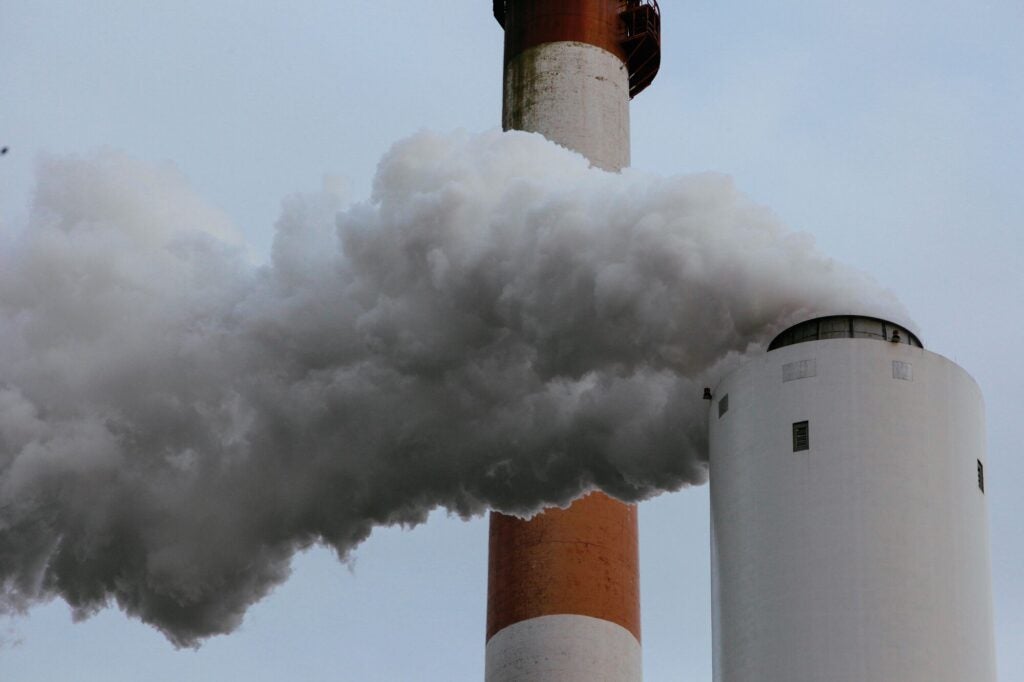
Everyone has The Right To Breathe clean air. Watch a video featuring Earthjustice Attorney Jim Pew and two Pennsylvanians—Marti Blake and Martin Garrigan—who know firsthand what it means to live in the shadow of a coal plant's smokestack, breathing in daily lungfuls of toxic air for more than two decades.

Coal Ash Contaminates Our Lives. Coal ash is the hazardous waste that remains after coal is burned. Dumped into unlined ponds or mines, the toxins readily leach into drinking water supplies. Watch the video above and take action to support federally enforceable safeguards for coal ash disposal.

ABOUT EARTHJUSTICE'S BLOG

unEARTHED is a forum for the voices and stories of the people behind Earthjustice's work. The views and opinions expressed in this blog do not necessarily represent the opinion or position of Earthjustice or its board, clients, or funders.

Learn more about Earthjustice.

View Stephanie Maddin's blog posts
21 March 2012, 9:29 AM
In the Senate, public health is up for debate

That coal- and oil-fired power plants are big air polluters is beyond question—they emit hundreds of thousands of tons of hazardous air pollution (mercury, lead, acid gases, e.g.), far more than any other industrial polluter. And yet, many in Congress question whether we should do anything about this major threat to public health. The debate took center stage yesterday in a subcommittee hearing of the Senate Environment and Public Works Committee.

Sen. John Barrasso said that the costs and real benefits of cleaning up toxic air pollution from power plants are unknown. This is an incredible statement considering that extensive analysis by the U.S. Environmental Protection Agency has shown substantial benefits from cleaning up power plants: the prevention of up to 11,000 premature deaths, 130,000 asthma attacks and 5,000 heart attacks every year. The benefits of reducing power plant pollution could reach $90 billion each year, 9 times the cost.

Barrasso's colleague, Sen. Lamar Alexander, had a different take. He acknowledged the damage that mercury and other toxics pose to fetal development and the health of other vulnerable populations. He also conceded that power plants have evaded clean air standards for more than a decade and that the country needs to "get on with it and do it!" He then, ironically, suggested a blanket 6-year compliance timeline, which Gina McCarthy, EPA's Deputy Administrator, strongly opposed. She argued that delaying the standards any longer will severely compromise the health benefits for the American public.

1 Comment   /   Read more >>
View Jessica Knoblauch's blog posts
02 March 2012, 11:15 AM
Google oceans, cutting oil subsidies, beach-bound tsunami debris
(Photo courtesy of B Rosen)

The Lorax peddles SUVs to elementary kids
The main character from Dr. Seuss’ “The Lorax,” a book that has long been considered a timeless screed on the environmental perils of overconsumption, is now being used to hawk gas-guzzling SUVs to school children, reports the Washington Post. In the book, the Lorax speaks for the trees against the greedy Once-ler. But recently, the fuzzy character showed up at Alexandria’s James K. Polk Elementary School, encouraging kids to persuade their parents to take a test drive of a Mazda SUV. In exchange, kids could help raise money for other schools’ libraries and qualify for a sweepstakes entry. At the event, a Mazda rep defended the move, arguing that the eco-friendly Lorax would like the new SUVs, which have “really good environmentally friendly technologies,” like getting 35 miles per gallon. Yikes!  (If that's considered "good" gas mileage, I'd hate to know what's poor gas mileage.) Luckily, not all the kids were taken in by the greenwashed marketing pitch. For example, when a group of kids walked past the car and started excitedly yelling, “Lorax car!” , one student quietly pointed out that the Lorax doesn’t even drive a car.

Google takes its street view to the oceans
Ocean enthusiasts who are terrified of the water can now take a virtual swim among parrotfish, coral reefs and other sea creatures, all without getting wet, thanks to a new Google venture that brings Google Street View to the oceans, reports the Wall Street Journal. Partnering with oceanographers and the international insurance company Catlin Group Limited, the program will give ocean access to anyone with a computer. It will also allow scientists to track data such as migration patterns, sea turtle populations and the health of the Great Barrier Reef, which, among other reefs, is under constant threat from climate change. As with other environmental programs like wilderness treks and farm-to-school initiatives, the hope is that Google Oceans will inspire people to protect the ocean environment, which are under threat from overfishing, habitat loss, pollution and now climate change.
 

2 Comments   /   Read more >>
View Jessica Knoblauch's blog posts
13 January 2012, 12:22 PM
The oceans' acid test, playing with wildfire, raising a glass to climate change
Napa Valley vineyards in autumn. (tibchris)

Transit riders run over by reduced tax breaks
Thanks to a lack of action by Congress before the holidays, mass transit commuters will have to pay an additional $550 in taxes this year, reports the New York Times, while those who commute by car will benefit from an increase in pre-tax benefit for monthly parking. In addition to encouraging the number of cars with single occupants, the move will no doubt clog already congested streets and increase carbon emissions. It also takes a jab at people who, for the most part, already deal with enough aggravation (think late bus arrivals, screaming babies and the person who insists on practically sitting on your lap despite the availability of other seats.) Maybe when Congress gets back in session, they’ll consider making the tax benefit, at the very least, apply equally to car and transit users.

Acidic oceans threaten entire food chain
Sharks are already stressed by the public’s taste for shark fin soup and warmer weather meddling with their dating habits. Now it looks like they will have to add acidic oceans to their list of worries. Increasingly acidic waters thin the shells of their main food source, tiny marine creatures, reports MSN. But it’s not just sharks that rely on these species for food. Virtually every creature from salmon to seals to even humans will be affected, thanks to a little thing we like to call the marine food web. Scientists already know that as oceans absorb more carbon, the waters acidify, which makes living conditions very uncomfortable for any animal with a shell, and creates food scarcity for everyone else. Add this to the already overwhelming threats of pollution, habitat loss and overfishing, and it’s clear to see that the oceans—and the people who work to save them-- including Earthjustice—have their work cut out just trying to keep their heads above water. 

View Liz Judge's blog posts
06 January 2012, 4:16 AM
The no-brainer decisions the president must make this year

President Obama won the White House on a platform of hope and change – promising an end to dirty corporate influence over our political system and a beginning to an era in which our energy choices lead us to a clean, sustainable future, or at least don’t kill us or make us sick.

So far, the president’s performance has been mixed – with some deliveries on the promise and some disappointments. His last year, whether in office or in his first term, will be crucial in righting his spotty record and making good on his campaign promises to the American people.

Leading up to his fourth year in office, and making sure the new year got off to a good start with supporters, he handed the country a solid. His EPA, led by Administrator Lisa Jackson, finalized a strong rule to protect Americans from mercury poisoning and toxic air pollution from power plants.

1 Comment   /   Read more >>
View Chris Jordan-Bloch's blog posts
21 December 2011, 12:02 PM
For many Americans, historic EPA protection is shining light
Marti Blake points out the window at her neighbor

"It's like hell. Living in hell," says Marti Blake, when asked about being neighbors with a coal-fired power plant. "It's filthy, it's dirty, it's noisy, it's unhealthy."

For the past 21 years, Blake has lived across the street from the Cheswick Generating Station in Springdale, PA. A family situation left her trying to find a place quickly, and a simple brick home in the small town only 20 minutes from Pittsburgh seemed fine.

"I've regretted that decision ever since, because I've felt sick for the last 20 years," says Blake, who is on medication for a slew of symptoms that include coughing, sinus infections and headaches. Blake attributes these symptoms to the dirty neighbor across the street. Who else in the neighborhood, after all, has a 750-foot tall smoke stack that is spewing out toxic smoke around the clock?

Marti Blake

A portrait of Marti Blake is paired with the reflection in her living room window.
View Sam Edmondson's blog posts
21 December 2011, 10:31 AM
Protections to scrub coal plants' toxic emissions proposed after years of delay

To all who wondered what gift the Obama administration is giving the American public for the holidays: it's clean air.

The administration just announced the first-ever clean air protections against the nation's dirtiest polluters—coal-fired power plants. This is one of the most significant developments in the history of environmental protections and the 40-year old Clean Air Act.

Earthjustice has been a big part of this fight for more than a decade—our litigation helped cut through the politics and intense pressure from industry to scuttle these important protections. Today, we're proud that those years of work have resulted in a major victory for the health of the American public. We're also proud that nearly 50,000 Earthjustice supporters made their voices heard in a call for these protections and the right to breathe.

1 Comment   /   Read more >>
View Marty Hayden's blog posts
16 December 2011, 4:31 PM
Arctic rider snuck into year-end funding legislation
(Florian Schulz /visionsofthewild.com)

It’s that time of year again. No, I’m not talking about the great big man in the red suit and last-minute Christmas shopping.

I’m talking about the House GOP majority trying to deliver on their year-long assault on environmental and public health protections in the last two bills that will be passed by Congress this year.

The first is the omnibus spending bill that was passed by the House and Senate today. For the past two weeks, the GOP House Leadership and Appropriations Chairs have had a priority list of anti-environmental policy riders they had to have in any final spending bill. Some of those at the top of the list included blocking measures to require the clean up of industrial boilers and incinerators, cement kilns and power plants, and attempts to railroad Clean Water Act protections for streams, rivers and lakes. Removing protections for gray wolves in Wyoming and the Midwest were also on the list.

Thanks to the efforts of the White House, and Senate and House Democrats, none of these anti-environmental riders will become law in the final spending bill. Sadly, the same cannot be said of the Arctic. A last-minute, backroom deal tacked on a measure that excludes oil companies from complying with Clean Air Act protections in the Arctic.

View Liz Judge's blog posts
22 November 2011, 4:16 PM
So this is what you mean by EPA's "War on coal" and EPA's "job-killing regulations"?
The jig is up: New data shows coal mining regulations are creating jobs, not killing them.

A little-covered news item from Nov. 18 bears much more attention. The Charleston Gazette's Ken Ward reported on some new data that blows the top off two years of coal industry lies and spin: Obama's so-called "job-killing regulations" and "war on coal" are not actually killing jobs, they are CREATING JOBS! We've been saying it all along, but here's the proof.

Since the Obama administration has taken initial steps to crack down on the coal industry's rampant pollution, which is contaminating waters and air across the nation, exposing families and communities to carcinogenic and poisonous toxic pollution, coal mining jobs have increased. By 10 percent! Since Obama's EPA began increasing mountaintop-removal-related protections on streams and waters!

View Liz Judge's blog posts
14 November 2011, 2:17 PM
Will the Senate defeat a Dirty Water Amendment this week?
The Barrasso/Heller Dirty Water Amendment would wipe out pollution limits for streams, brooks, wetlands, lakes and other waters in every state.

From early morning tadpole pursuits to sunset creek walks, my summer days started and ended in the creek that ran behind my home. My dad built a bridge across the creek, but for our neighborhood gang of rascals, well, there was no use for such bridges when we could splash and wade right through that water. Whether we were forging the stream or sitting cross-legged in it with our heads above the water, exploding with impish giggles, this creek was as much our home as our bedrooms 50 yards away. And when we outgrew the shallow waters of our backyard creek, my siblings and I took our energies to nearby Lake Erie, where we swam in deeper, more mysterious waters.

Many people have memories of swimming, fishing, wading, visiting, or skipping rocks in waters during their youth—whether those ran through their hometowns or were the destinations of family travels. That these waters were safe for recreation—or even drinking water—was no accident. Our nation’s Clean Water Act is the force that has allowed us to fish and swim and sip our water without ill consequences.

But today, the Clean Water Act and 59 percent of our nation’s streams and headwaters are in peril. The danger facing our nation’s waters, along with all the little kids who want to play in them, has arrived in an amendment by Senators John Barrasso (R-WY) and Dean Heller (R-NV).

3 Comments   /   Read more >>
View Jessica Knoblauch's blog posts
09 November 2011, 11:03 AM
The 99 percent are marching against a path of unsustainability
The Occupy protests center around issues of corporate greed and government ineptitude.

It’s not every day that you see a “stop police brutality” sign coupled with signs about protecting the environment, but that was the scene I came upon last week while attending an Occupy Oakland.

If you’ve been paying any attention to the Occupy Wall Street movement that now spans100 U.S. cities, you know that many Americans are tired of corporate greed and government ineptitude. Though there’s no central voice for this people-powered movement, one recurring theme is the backlash against unregulated big businesses. Wall Street bankers are obvious targets, but the public’s aggravation extends further to corporate entities that put profit above people and the environment.

1 Comment   /   Read more >>