Posts tagged: Environmental Protection Agency

unEARTHED. The Earthjustice Blog

Environmental Protection Agency


    SIGN-UP for our latest news and action alerts:
   Please leave this field empty

Facebook Fans

Featured Campaigns

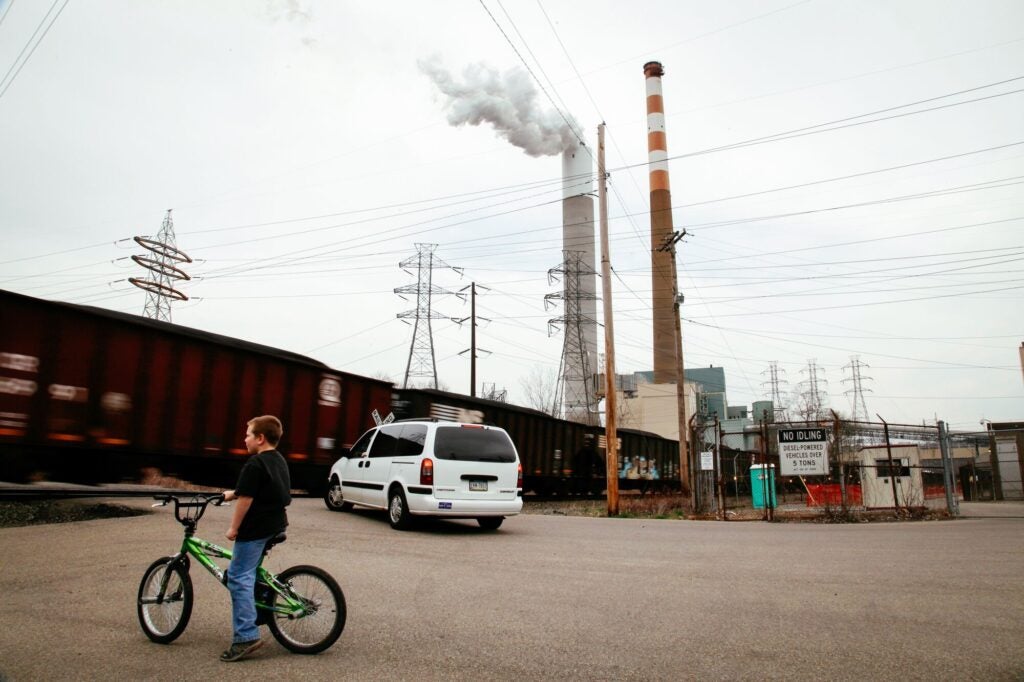
Everyone has The Right To Breathe clean air. Watch a video featuring Earthjustice Attorney Jim Pew and two Pennsylvanians—Marti Blake and Martin Garrigan—who know firsthand what it means to live in the shadow of a coal plant's smokestack, breathing in daily lungfuls of toxic air for more than two decades.

Coal Ash Contaminates Our Lives. Coal ash is the hazardous waste that remains after coal is burned. Dumped into unlined ponds or mines, the toxins readily leach into drinking water supplies. Watch the video above and take action to support federally enforceable safeguards for coal ash disposal.

ABOUT EARTHJUSTICE'S BLOG

unEARTHED is a forum for the voices and stories of the people behind Earthjustice's work. The views and opinions expressed in this blog do not necessarily represent the opinion or position of Earthjustice or its board, clients, or funders.

Learn more about Earthjustice.

View Jillian Hertzberg's blog posts
15 March 2013, 9:56 AM
House of Representatives legislation would protect air and water

Over the past few decades—with the help of Congress—Big Oil and Gas successfully chipped away at our bedrock environmental laws, carving out special exemptions for the fossil fuel drilling industry. In 1987, when Congress decided to implement new standards to control stormwater runoff pollution under the Clean Water Act, oil and gas companies got a pass. And in 1990 when the Clean Air Act was expanded to allow for control of more toxic air pollutants, the same industry got another pass. These exemptions from our fundamental air and water protections have left communities across the country exposed to dangerous health risks and threats to their environment from oil and gas operations right in their backyards.

Fortunately, activists engaged in the fight against fracking saw an important step forward, yesterday, with the introduction of two pieces of legislation in the House of Representatives. Rep. Jared Polis (D-CO) introduced H.R. 1154, the BREATHE Act, and Rep. Matthew Cartwright (D-PA) introduced H.R. 1175, the FRESHER Act. These bills call for common sense safeguards to protect water and air resources from pollution generated by the process of hydraulic fracturing, known as fracking.

4 Comments   /   Read more >>
View Debra Mayfield's blog posts
08 March 2013, 2:36 PM
University has a historic coal ash contamination problem
“Simply moving dangerous coal ash from one site to another contaminated site on campus is not being ‘Spartan Green.'"

My favorite aunt became a dean at Michigan State back in the early 1980’s. She was a role model for us all, assuming a level of power and influence that most women—especially African American women—had not been able access at that time. She, like many other students and faculty at the time, enjoyed the campus and resources it provided. But what she didn’t know was that the water that she drank, bathed in and used for cooking and cleaning and cleaning, may have been poisoned by toxic coal ash.

Last month, members of the Clean Energy Now Coalition, an alliance of nearly 50 environmental groups in Michigan aimed at educating citizens about the benefits of using clean, renewable energy, exposed the historical use of coal ash at Michigan State University and the dangers it poses to the health of students, faculty, and neighboring communities.

View Jared Saylor's blog posts
01 March 2013, 12:41 PM
Lawsuits by local and national groups clean up toxic coal ash sites
Pennsylvania residents Sabrina Mislevy and Barbara Reed stand near the Little Blue Run coal ash dump site. Litigation has led to the state phasing out the dump by 2016.

It’s been over four years since a billion gallons of toxic coal ash flooded a small town in Tennessee. We’ve been fighting ever since for the EPA to set federally enforceable safeguards to protect the thousands of communities across the country threatened by coal ash, but the agency has yet to act.

But just because the EPA isn’t doing anything doesn’t mean nothing is being done. While the agency twiddles its regulatory thumbs on much-needed protections from the arsenic, lead, mercury, selenium and other pollutants commonly found in coal ash, many local and national environmental groups are taking coal ash pond owners to court to get them to clean up the coal ash mess. The Center for Public Integrity published a story today outlining some of the dozens of legal actions happening from Montana to North Carolina where groups are challenging coal ash disposal using a variety of environmental laws.

3 Comments   /   Read more >>
View Kari Birdseye's blog posts
28 February 2013, 8:01 AM

Shell suspends oil drilling operations indefinitely
Sea ice in the Arctic's Chukchi Sea.
(Florian Schulz / visionsofthewild.com)

Shell announced that the company is hitting the pause button on oil exploration and drilling in the Arctic. Mother Nature graphically demonstrated this summer what conservation groups have been saying for more than a decade—the extreme weather and conditions of the Arctic, with its stormy, frozen seas make the Arctic environmentally treacherous for oil drilling.

Fortunately, it didn’t take a major oil spill and devastation of the fragile Arctic ecosystem for Shell to put its damaged drill rigs in a time out.

View Raviya Ismail's blog posts
27 February 2013, 2:57 PM
Concern grows over methane leaks from oil and gas wells

With the fracking boom building, natural gas is touted as a clean energy source. But the hard truth is that the gas drilling sector—which includes the controversial practice of hydraulic fracturing or fracking—has worsened air quality in many areas. In some parts of the country undergoing such a boom, air quality has fallen below levels the EPA determined to be safe.

3 Comments   /   Read more >>
View Liz Judge's blog posts
26 February 2013, 10:23 AM
Not enough change since historic disaster
The Buffalo Creek disaster destroyed 4,000 homes in 16 towns.  (WV Div. of Culture & History)

Forty-one years ago, today, a dam holding 132 million gallons of toxic liquid coal waste ruptured high up in the mountains of West Virginia, loosing a tsunami-like death wave of coal waste and chemical sludge that destroyed 4,000 homes in 16 towns, injured more than 1,000 people, and killed 125. Seven bodies were never found. This remarkable Charleston Gazette series shares the stories of the people who were affected by this horrific tragedy.

The Buffalo Creek disaster was one of the deadliest floods in American history, but unlike natural floods, it was a man-made disaster caused by corporate negligence, regulatory agency corruption and failure, and an ill-begotten idea of industrial waste disposal. Today, many of the circumstances that led to that disaster still persist, but sludge dams are several times larger. 

View Trip Van Noppen's blog posts
15 February 2013, 12:34 PM
Americans can’t wait for Congress to address climate change
President Obama delivers the State of the Union address in the House Chamber on Feb. 12, 2013.  (Chuck Kennedy / White House)

Last week, President Obama demanded that Congress take action on climate change, or else he would.

But, after years of political gridlock on the climate issue, coupled with rising seas and worsening droughts, one thing is clear: the nation simply cannot afford to wait any longer to take action. Though Congress may eventually pull together and pass a climate bill, the president must not wait on that uncertain prospect. He must act now.

After all, today the U.S. is farther from enacting a nationwide plan to reduce carbon emissions than it was four years ago. Congress has failed miserably. And though America’s greenhouse gas emissions are beginning to decline, the rate at which they’re doing so is nowhere near what we need to avoid catastrophic climate change.

25 Comments   /   Read more >>
View David Guest's blog posts
14 February 2013, 3:39 PM
Don't let agricultural pollutants kill magic waterways, they say
Algae outbreak on the Santa Fe River in May of 2012. (John Moran)

In a fantastic show of grassroots support for clean water, Floridians packed a Environmental Protection Agency meeting in Tampa on Jan. 16, saying they are fed up with repeated slimy algae outbreaks on the state’s beaches, rivers, spring and streams

More than 150 protested, and they wore fluorescent green T-shirts saying, “Ask me about slime.” They asked the EPA to stay strong and enforce pollution limits for sewage, manure and fertilizer—three culprits which are fueling algae outbreaks all over the state.

2 Comments   /   Read more >>
View Lisa Evans's blog posts
01 February 2013, 8:36 AM
Utility floats dangerous plan to barge toxic coal ash
Mississippi River at Vicksburg closed after barge hit railroad bridge and began leaking oil. (Photo: WLBT)

Utility giant FirstEnergy Corp unveiled plans last week to barge 3 million tons of coal ash annually nearly 100 miles on the Monongahela and Ohio rivers for disposal in an unlined pit in LaBelle, PA. The ash comes from its Bruce Mansfield Power Station—one of the largest coal burning power plants in the U.S.

There's not a thing right about this scheme, according to residents who take their drinking water from the river. Also unhappy are citizens of LaBelle, PA, whose water and air are already poisoned by nearly 15 years of coal ash dumping.

View John McManus's blog posts
31 January 2013, 11:17 AM
Manufacturer refused to comply with measures protecting children, wildlife

There’s a dangerous type of mouse and rat poison on the market that when eaten by the rodents, causes them to bleed to death internally. Problems arise when the poison sometimes finds its way into the hands of kids or pets or moves up the food chain from rats and mice to foxes, bobcats, owls and the like that pounce on sickly rodents.

Earthjustice attorney Greg Loarie sent a letter to the State of California’s Department of Pesticide Regulation in December asking the state to order the stuff off the market. The state has yet to respond but the U.S. Environmental Protection Agency now says it will start the process to ban forms of the poison used in the home that lack tamper-resistant packaging. While EPA is taking a significant step in the right direction, more needs to be done to protect children and wildlife.

6 Comments   /   Read more >>