Posts tagged: Environmental Protection Agency

unEARTHED. The Earthjustice Blog

Environmental Protection Agency


    SIGN-UP for our latest news and action alerts:
   Please leave this field empty

Facebook Fans

Featured Campaigns

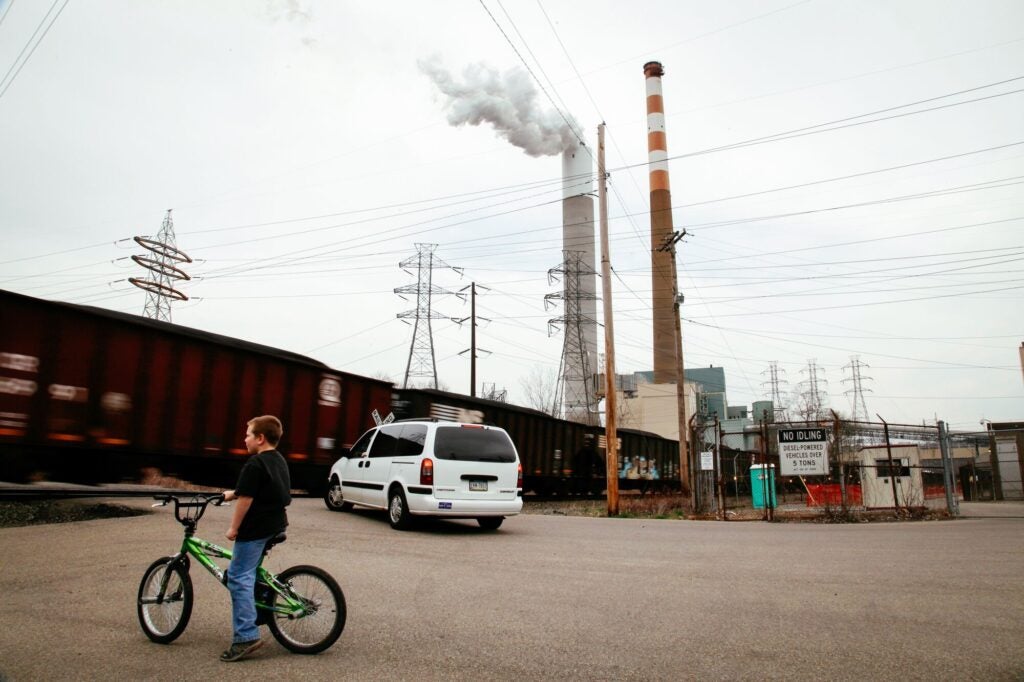
Everyone has The Right To Breathe clean air. Watch a video featuring Earthjustice Attorney Jim Pew and two Pennsylvanians—Marti Blake and Martin Garrigan—who know firsthand what it means to live in the shadow of a coal plant's smokestack, breathing in daily lungfuls of toxic air for more than two decades.

Coal Ash Contaminates Our Lives. Coal ash is the hazardous waste that remains after coal is burned. Dumped into unlined ponds or mines, the toxins readily leach into drinking water supplies. Watch the video above and take action to support federally enforceable safeguards for coal ash disposal.

ABOUT EARTHJUSTICE'S BLOG

unEARTHED is a forum for the voices and stories of the people behind Earthjustice's work. The views and opinions expressed in this blog do not necessarily represent the opinion or position of Earthjustice or its board, clients, or funders.

Learn more about Earthjustice.

View Jessica Knoblauch's blog posts
23 September 2011, 9:59 AM
Pesticide tee-off, climate change revival, organic strawberry fake out
Mmmmmm, bacon. Photo courtesy of robotsari

Chinese food regulations go down the gutter
Some restaurants in China are taking Mom’s sage advice to reuse the bacon grease to a new, hazardous level, reports Time magazine. Recently, Chinese authorities announced a crackdown on so-called “gutter oil,” the resale of used cooking oil that’s been snagged from sewers or complacent restaurant owners. In addition to the “ew” factor, eating food cooked in gutter oil can cause some serious health problems like an increased risk of liver cancer, caused by fungus-tainted oil. According to the police, a six-month investigation in China turned up 100 tons of gutter oil being processed for resale, and broke up six illicit oil recyclers, including a biodiesel company that was secretly processing oil to be sold back to food markets, not biodiesel stations.
 

3 Comments   /   Read more >>
View David Lawlor's blog posts
20 September 2011, 12:44 PM
Shell secures permits to drill for oil in America's Arctic waters in 2012.
A Coast Guard crew conducts research in the Alaskan Arctic's waters in July 2011. Photo courtesy NASA/Kathryn Hansen

A massive oil spill announced this week off the coast of western Sweden feels like an ominous harbinger for America’s Arctic Ocean.

Just days following the spill near the Swedish island of Tjörn, the U.S. Environmental Protection Agency issued air permits for Shell Oil’s plans to drill in the Alaskan Arctic in 2012. EPA issued the permits despite the fact that Shell’s oil spill response plan for the region’s icy, remote waters is totally inadequate.

Sweden’s disaster serves as a cautionary tale for America’s Arctic Ocean.

9 Comments   /   Read more >>
View Jessica Knoblauch's blog posts
19 September 2011, 2:10 PM
EJ90 brings you the latest news in Earthjustice litigation
Photo courtesy of derrickkwa

Hello, unEarthed readers! I’d like to introduce you to a new Earthjustice production designed to keep you up-to-date on the latest Earthjustice litigation news. It’s a podcast called EJ90. And the best part is that it’s only 90 seconds, so you can quickly get updates on wildlife protection, natural resource conservation, and environmental health and safety news, all before you start your day. You can also subscribe to EJ90 on iTunes and make it part of your daily podcast listening routine. 

So far, EJ90 has covered everything from Arctic drilling to Obama’s decision to undermine the EPA’s ozone standards.  Here’s a roundup of the latest EJ90 podcasts:

1 Comment   /   Read more >>
View Jessica Knoblauch's blog posts
16 September 2011, 9:38 AM
BP cheapos, dirty air downplays, climate change illness
Coral reef at Palmyra Atoll National Wildlife Refuge. Photo courtesy of Jim Maragos/U.S. Fish and Wildlife Service

UN top scientist predicts coral reefs' demise by end of century
Coral reefs, often called the “rain forests of the oceans” due to their rich biodiversity, have been around for millions of years, but these ecosystems may be experiencing their last century, reports The Independent. Climate change and ocean acidification are the main factors causing coral reefs’ demise, says University of Sydney professor Peter Sale, who studied Australia’s Great Barrier Reef for 20 years. And though humans are no strangers to wiping out species, Sale points out that this will be the first time that we’ve actually eliminated an entire ecosystem, one that is home to 25 percent of the ocean’s marine life. In addition, coral reefs support people, about 275 million in fact, who depend on reef ecosystems for food and livelihood. Even more alarming than losing these beautiful, bio diverse hotspots is the fact that reef disappearance tends to precede wider mass extinctions. Says Sale, "People have been talking about current biodiversity loss as the Holocene mass extinction, meaning that the losses of species that are occurring now are in every way equivalent to the mass extinctions of the past. I think there is every possibility that is what we are seeing."

Report finds BP’s cheapness, greed contributed to oil spill
There are a lot of consequences of being cheap: alienating friends, missing out on amazing experiences, wasting time pilfering through shoddy clothes in bargain bins. But recently, a 16-month investigation found that frugality has a dark side with the conclusion that BP’s efforts to limit costs on its deepwater well in the Gulf of Mexico contributed to a blowout that killed 11 people and tipped off the largest oil spill in U.S. history, reports the Washington Post. The report from the Bureau of Ocean Energy Management, Regulation and Enforcement lists “dozens of mistakes, misapprehensions, risky decisions and failures of communication” that led to the BP disaster. In other words, BP put profits before safety. In a statement released on Wednesday, BP agreed with the report’s conclusions, adding that “the Deepwater Horizon accident was the result of multiple causes, involving multiple parties, including Transocean and Halliburton,” At least BP is generous in sharing the blame. 

1 Comment   /   Read more >>
View Jessica Knoblauch's blog posts
09 September 2011, 4:33 AM
Dalai Lama displeasure, nature’s sunscreen, lice treatment overkill
Bankers on Wall Street may be driving up gas prices. Photo courtesy of epicharmus

Wall Street speculation increases gas prices
Subscribers to the “drill, baby, drill” mantra may want to set their sights on bankers rather than environmentalists as the culprits driving up gas prices, reports Mother Jones. According to confidential regulatory data first leaked to Sen. Bernie Sanders (I-Vt.), Wall Street speculators that hold investments in millions of barrels of oil helped artificially raise the price of gas to $4 per gallon in 2008. To put a stop to that practice, Sanders recently introduced legislation that would “set firm speculation rules for crude oil, gasoline, diesel fuel, jet fuel, and heating oil” designed to “diminish, eliminate or prevent excessive speculation,” reports Mother Jones. Of course, if passed the legislation will do nothing to stem the tide of all of the external costs of gas consumption—like increased asthma attacks and carbon pollution—but at the very least it will put a bee in the bankers’ bonnet of dubious business practices.

Coral could be key to sunscreen pill
In just a few years, sun worshippers tired of slathering sunscreen all over their pasty bodies before heading to the beach may be able instead to pop a pill that comes straight from the ocean, reports Mother Nature Network. Scientists have long known that coral reefs, which need sun for photosynthesis, make their own sunscreen to protect themselves against the sun’s harmful ultraviolet rays. Better yet, the fish that feed on the coral also get the sunscreen benefits. Recently, researchers at King’s College London cracked the code on the amazing genetic and biochemical processes behind this sunscreen compound and eventually hope to create a synthetic version of this compound for humans. Says project leader Dr. Paul Long, “We are very close to being able to reproduce this compound in the lab, and if all goes well we would expect to test it within the next two years.” Surf’s up! 

2 Comments   /   Read more >>
View Jessica Knoblauch's blog posts
02 September 2011, 8:31 AM
Cancerous ink, climate change craziness, industry schooling
Daryl Hannah. Photo courtesy of guano

Daryl Hannah faces off against tar sands pipeline
She may have lost her other eye in a standoff against Uma Thurman (aka “The Bride”) in the movie Kill Bill, but when it comes to facing off against environmental evil-doers, actress Daryl Hannah has chick-kicking staying power, reports Mother Nature Network. Her latest standoff resulted in her arrest outside the White House while protesting the Keystone XL tar sands pipeline, a controversial network of pipes that would transport tar sands crude oil from Alberta, Canada to U.S. refineries in the Gulf of Mexico. Recently, the State Department gave a green light to the dirty oil pipeline, concluding that it would have “minimal effect on the environment.” Obviously, activists like Hannah disagree. Before her arrest, Hannah told ABC News that “We cannot risk these precious resources and we cannot shackle ourselves to this type of destructive energy future when we have solutions available to us,” adding that “we have American-made, American-grown, clean safe energy.”

Getting inked may give you cancer
Getting an impulsive tattoo may cause you more than just embarrassment when that sub-navel tribal logo starts sagging years later, reports Environmental Health News. New research has found that tattoos contain all kinds of toxic chemicals, some of which have been shown to cause cancer and disrupt your endocrine system. For example, inks can contain phthalates, a commonly used chemical to soften plastics that can mimic estrogen, disrupt testosterone and have even been linked to “feminization of the reproductive tract” and sperm defects. Black tattoo inks can also contain benzo(a)pyrene, a carcinogen so potent that it's often used to grow tumors in animal test subjects. In addition to these new findings, people have known for years that tattoos can cause infections, allergies and scarring, but despite these risks almost half of adults in their late 20s have them. Though the Food and Drug Administration has the ability to regulate tattoo inks, so far it has declined to do so, a decision that may change with this latest tatoo unveiling.

View David Lawlor's blog posts
28 August 2011, 5:00 PM
Earthjustice advocacy, litigation reveal dispersants’ dirty chemical secrets

<Updated in final paragraph>

Pop quiz: nearly 2 million gallons of chemicals are about to be dumped into the ocean where they will mix with oil gushing from a blown out well. Do you:

   A. Study beforehand the chemicals’ effects on marine life?
   B. Study beforehand the chemicals’ effects on humans?
   C. Study beforehand what will happen when the chemicals mix with the oil?
   D. Just dump the chemicals in mass quantities without sufficient knowledge of their toxicity or of how they will affect marine life and humans?

Well, following last year’s Deepwater Horizon oil spill in the Gulf of Mexico, answer D is exactly what happened.

4 Comments   /   Read more >>
View Jessica Knoblauch's blog posts
19 August 2011, 7:15 AM
Genetically modified dilemma, school energy savings
Monsanto's herbicide harms crops genetically modified to resist it. Image courtesy worldwidehippies.com

Monsanto's herbicide harms plants it's meant to protect
Monsanto’s popular herbicide Roundup may be harming more than just weeds, reports Reuters. A recent study by US Department of Agriculture microbiologist Bob Kremer found that repeated and widespread use of Roundup, which contains the active ingredient glyphosate, on crops genetically engineered to withstand the pesticide is harming both the soil and the plants, and potentially reducing crop yields. Unfortunately, Kremer isn’t the only researcher to find problems with glyphosate. Over the years, other researchers have linked glyphosate use to “cancer, miscarriages and other health problems in people and livestock.”
 
Despite these concerns, the government has continued to green-light so-called Roundup Ready crops like genetically engineered sugar beets, adding to the already long list of staple food items that now dominate American supermarkets. According to the Center for Food Safety, more than half of all processed food in U.S. grocery stores—items like cereals, corn dogs and cookies—contain genetically engineered ingredients. Says Earthjustice’s Paul Achitoff, who is currently litigating against the government’s approval of GE sugar beets and alfalfa:

"The main problem for the public at large is increased chemicals in the environment. But you also have consumers’ as well as farmers’ choices being adversely affected. Nobody really wants Monsanto controlling their diet, but that is in fact what’s happening."

View Trip Van Noppen's blog posts
16 August 2011, 12:05 PM
New poll finds voters of all stripes disapprove of the destructive mining practice

A major new poll released today reveals some shocking truths about public opinions on mountaintop removal mining in Appalachia.

The polling, conducted by the Democratic Lake Research Partners and Republican Bellwether Research & Consulting and funded by Earthjustice, Appalachian Mountain Advocates (formerly the Appalachian Center for the Economy and the Environment), and the Sierra Club was done between July 25 and 28 and sampled the opinions of 1,315 registered voters in Kentucky, West Virginia, Virginia and Tennessee on the practice of mountaintop removal coal mining and clean water protections.

The poll reveals beyond the shadow of a doubt that the people of America’s coal country—West Virginia, Kentucky, Tennessee, and Virginia—don’t like mountaintop removal mining and they don’t want it to continue at the expense of their homes, health, communities, families, and future.

The strong majority of Appalachians opposes mountaintop removal mining—57 percent, compared to 20 percent who support the practice—and this opposition soars no matter the political party. Independents, Democrats, Republicans and Tea Partiers alike have shown intense disapproval of this destructive form of mining. The will of Appalachians is transcendent: people from all education levels, political orientations, and all four states oppose mountaintop removal by strong margins.

12 Comments   /   Read more >>
View Jessica Knoblauch's blog posts
04 August 2011, 2:22 PM
Koch-sponsored legislation, toxic drinking water, News Corp. climate scandal
Energy companies to taxpayers: "Money, please." Photo courtesy of epSos.de

Dirty energy industry takes handouts despite record profits
Last week, oil and gas companies announced billion-dollar profits in their second quarter, reports the New York Times, even as they continue to receive government subsidies. BP, the infamous oil company that wrecked the Gulf’s economy and environment last year with an unprecedented oil spill, reported about $5.6 billion in profits, and Exxon Mobil earned about $10 billion in April, May and June. While these corporations are busy laughing all the way to the bank, this week President Obama signed a debt deal that won’t cut oil and gas subsidies but will cut about $500 billion from “nondefense discretionary spending,” which includes funds for investments in health and environmental protection, among other things. No need to worry, though. The American Petroleum Institute assured the American public that, “When our industry does well, much of America does well also.” What a relief!

Corporations secretly writing anti-environmental bills for legislators
A number of mega corporations and politicians have secretively been collaborating on ghostwriting “model” legislative bills that legislators then introduce in state capitols across the country, reports the Center for Media and Democracy. Many of the bills pushed by the American Legislative Exchange Council (ALEC) target environmental regulations, like forbidding local governments from limiting pesticide use, opposing uniform rules on hazardous coal combustion, and putting the regulation of fracking in the hands of the states rather than establishing federal safety and environmental standards. Despite its nonprofit status, which limits its ability to lobby, ALEC members regularly hand bills to legislators, which some argue is the very definition of lobbying. Add that to the fact that the Koch brothers are very big fans and funders of ALEC, and it’s not hard to see that this is a recipe for environmental and democratic disaster.