Posts tagged: Environmental Protection Agency

unEARTHED. The Earthjustice Blog

Environmental Protection Agency


    SIGN-UP for our latest news and action alerts:
   Please leave this field empty

Facebook Fans

Featured Campaigns

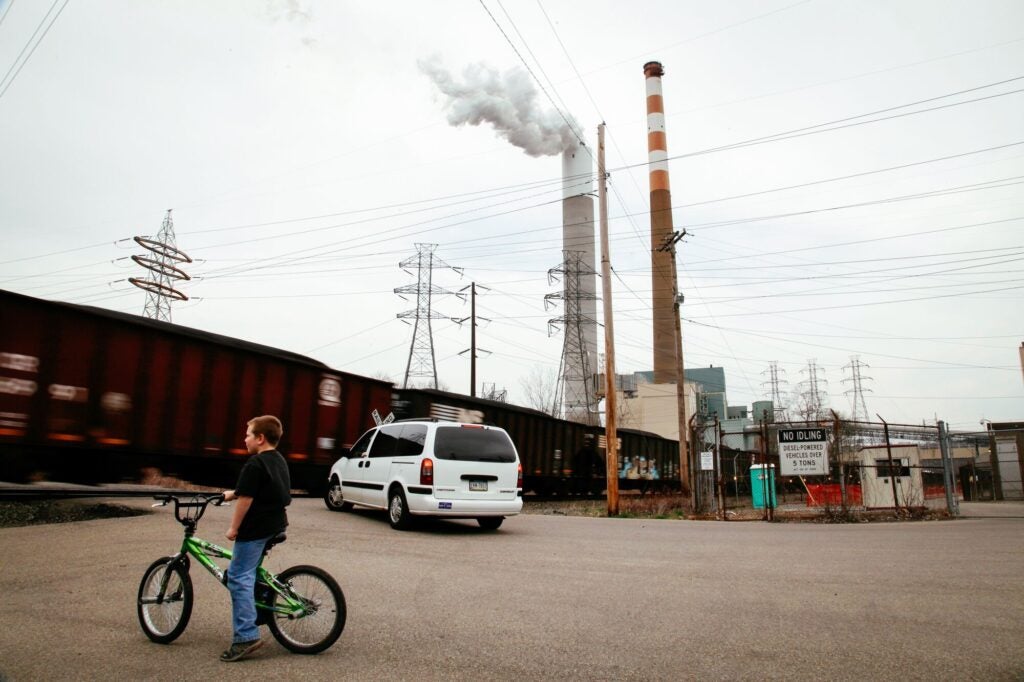
Everyone has The Right To Breathe clean air. Watch a video featuring Earthjustice Attorney Jim Pew and two Pennsylvanians—Marti Blake and Martin Garrigan—who know firsthand what it means to live in the shadow of a coal plant's smokestack, breathing in daily lungfuls of toxic air for more than two decades.

Coal Ash Contaminates Our Lives. Coal ash is the hazardous waste that remains after coal is burned. Dumped into unlined ponds or mines, the toxins readily leach into drinking water supplies. Watch the video above and take action to support federally enforceable safeguards for coal ash disposal.

ABOUT EARTHJUSTICE'S BLOG

unEARTHED is a forum for the voices and stories of the people behind Earthjustice's work. The views and opinions expressed in this blog do not necessarily represent the opinion or position of Earthjustice or its board, clients, or funders.

Learn more about Earthjustice.

View David Lawlor's blog posts
28 August 2011, 5:00 PM
Earthjustice advocacy, litigation reveal dispersants’ dirty chemical secrets

<Updated in final paragraph>

Pop quiz: nearly 2 million gallons of chemicals are about to be dumped into the ocean where they will mix with oil gushing from a blown out well. Do you:

   A. Study beforehand the chemicals’ effects on marine life?
   B. Study beforehand the chemicals’ effects on humans?
   C. Study beforehand what will happen when the chemicals mix with the oil?
   D. Just dump the chemicals in mass quantities without sufficient knowledge of their toxicity or of how they will affect marine life and humans?

Well, following last year’s Deepwater Horizon oil spill in the Gulf of Mexico, answer D is exactly what happened.

4 Comments   /   Read more >>
View Jessica Knoblauch's blog posts
19 August 2011, 7:15 AM
Genetically modified dilemma, school energy savings
Monsanto's herbicide harms crops genetically modified to resist it. Image courtesy worldwidehippies.com

Monsanto's herbicide harms plants it's meant to protect
Monsanto’s popular herbicide Roundup may be harming more than just weeds, reports Reuters. A recent study by US Department of Agriculture microbiologist Bob Kremer found that repeated and widespread use of Roundup, which contains the active ingredient glyphosate, on crops genetically engineered to withstand the pesticide is harming both the soil and the plants, and potentially reducing crop yields. Unfortunately, Kremer isn’t the only researcher to find problems with glyphosate. Over the years, other researchers have linked glyphosate use to “cancer, miscarriages and other health problems in people and livestock.”
 
Despite these concerns, the government has continued to green-light so-called Roundup Ready crops like genetically engineered sugar beets, adding to the already long list of staple food items that now dominate American supermarkets. According to the Center for Food Safety, more than half of all processed food in U.S. grocery stores—items like cereals, corn dogs and cookies—contain genetically engineered ingredients. Says Earthjustice’s Paul Achitoff, who is currently litigating against the government’s approval of GE sugar beets and alfalfa:

"The main problem for the public at large is increased chemicals in the environment. But you also have consumers’ as well as farmers’ choices being adversely affected. Nobody really wants Monsanto controlling their diet, but that is in fact what’s happening."

View Trip Van Noppen's blog posts
16 August 2011, 12:05 PM
New poll finds voters of all stripes disapprove of the destructive mining practice

A major new poll released today reveals some shocking truths about public opinions on mountaintop removal mining in Appalachia.

The polling, conducted by the Democratic Lake Research Partners and Republican Bellwether Research & Consulting and funded by Earthjustice, Appalachian Mountain Advocates (formerly the Appalachian Center for the Economy and the Environment), and the Sierra Club was done between July 25 and 28 and sampled the opinions of 1,315 registered voters in Kentucky, West Virginia, Virginia and Tennessee on the practice of mountaintop removal coal mining and clean water protections.

The poll reveals beyond the shadow of a doubt that the people of America’s coal country—West Virginia, Kentucky, Tennessee, and Virginia—don’t like mountaintop removal mining and they don’t want it to continue at the expense of their homes, health, communities, families, and future.

The strong majority of Appalachians opposes mountaintop removal mining—57 percent, compared to 20 percent who support the practice—and this opposition soars no matter the political party. Independents, Democrats, Republicans and Tea Partiers alike have shown intense disapproval of this destructive form of mining. The will of Appalachians is transcendent: people from all education levels, political orientations, and all four states oppose mountaintop removal by strong margins.

12 Comments   /   Read more >>
View Jessica Knoblauch's blog posts
04 August 2011, 2:22 PM
Koch-sponsored legislation, toxic drinking water, News Corp. climate scandal
Energy companies to taxpayers: "Money, please." Photo courtesy of epSos.de

Dirty energy industry takes handouts despite record profits
Last week, oil and gas companies announced billion-dollar profits in their second quarter, reports the New York Times, even as they continue to receive government subsidies. BP, the infamous oil company that wrecked the Gulf’s economy and environment last year with an unprecedented oil spill, reported about $5.6 billion in profits, and Exxon Mobil earned about $10 billion in April, May and June. While these corporations are busy laughing all the way to the bank, this week President Obama signed a debt deal that won’t cut oil and gas subsidies but will cut about $500 billion from “nondefense discretionary spending,” which includes funds for investments in health and environmental protection, among other things. No need to worry, though. The American Petroleum Institute assured the American public that, “When our industry does well, much of America does well also.” What a relief!

Corporations secretly writing anti-environmental bills for legislators
A number of mega corporations and politicians have secretively been collaborating on ghostwriting “model” legislative bills that legislators then introduce in state capitols across the country, reports the Center for Media and Democracy. Many of the bills pushed by the American Legislative Exchange Council (ALEC) target environmental regulations, like forbidding local governments from limiting pesticide use, opposing uniform rules on hazardous coal combustion, and putting the regulation of fracking in the hands of the states rather than establishing federal safety and environmental standards. Despite its nonprofit status, which limits its ability to lobby, ALEC members regularly hand bills to legislators, which some argue is the very definition of lobbying. Add that to the fact that the Koch brothers are very big fans and funders of ALEC, and it’s not hard to see that this is a recipe for environmental and democratic disaster.
 

View Emily Enderle's blog posts
29 July 2011, 7:07 AM
H.R. 2584 compromises public health, esp. in environmental justice communities
Millions of Americans are already suffering from asthma. (Chris Jordan / Earthjustice)

The Interior, Environment, and Related Agencies Appropriations Act, FY 2012 (H.R. 2584) is chock-full of riders that protect polluters, not people. This bill makes excessive budget cuts and policy decisions that compromise public health, especially the health of environmental justice communities already disproportionately impacted by pollution. The outrageous cuts have brought together more than 70 groups on a letter to outright oppose H.R.

1 Comment   /   Read more >>
View Jessica Knoblauch's blog posts
28 July 2011, 12:45 PM
Wrecked summer vacations, revved up gas mileage, watered down chemical regs
The agave plant, typically used to distill tequila. Courtesy of kimsdinner.

Tequila takes a shot at decreasing gasoline use
A new study that looks at the life-cycle analysis of agave-derived ethanol has found that the desert plant produces relatively few carbon emissions, positioning itself as a possible biofuel and substitute for gasoline, reports the Guardian. Though agave is best known for its use in distilling tequila, the sugar-filled plant’s ability to grow on desert lands that aren’t usable for other food crops has garnered the interest of the biofuel industry, which is eager to find a plant-based fuel that won’t drive up food prices, a la the corn ethanol disaster. Scientists are already conducting agave biofuel trials in Australia, and the technology may also have potential for use in abandoned agave plantations in Mexico and Africa. Though experts warn that biofuels can’t be the only strategy used to cut carbon emissions, finding more options to fight climate change is still a success worth drinking to.

View Trip Van Noppen's blog posts
22 July 2011, 4:05 PM
Hijacking our democracy to attack our environment
Part of The Procession of the Trojan Horse in Troy (1773) by Domenico Tiepolo.

If you've ever suspected that Congress thinks of corporate polluters first and the polluted public last, the debacle unfolding in Washington, D.C. this week should leave you with little doubt—and a bitter taste. Many of our elected leaders have hijacked the process by which we fund government agencies to sack the environment like Odysseus did Troy.

The Trojan Horse that is the federal appropriations bill is filled with an unprecedented number of anti-environmental "riders"—provisions added to a piece of legislation that have little to no connection with the subject of the bill itself. And just as the Greeks sought to extinguish the fires of life in Troy, these riders are meant to run down the bedrock environmental protections that were created to keep our environment clean and our imperiled wildlife safe from extinction.

One egregious effort—dubbed the Extinction Rider—would paralyze the nation's ability to protect hundreds of species and turn the decision-making about endangered wildlife into a one-way street where protections can only be weakened, never strengthened.

This is an absolutely inappropriate way to set new policy. It demeans the democratic process and indicates that such extreme measures can't stand on their own—instead, they have to be slipped as stowaways into a must-pass bill.

4 Comments   /   Read more >>
View Kathleen Sutcliffe's blog posts
22 July 2011, 12:48 PM
More than 20,000 messages on PA pipeline catch EPA attention

If—as an Earthjustice supporter and activist—you ever wondered whether your letters and emails to government officials had an impact, we've got news that should give you heart.

Reporters are writing about the 22,093 messages sent by supporters like you, demanding a thorough environmental review of a proposed 39-mile natural gas pipeline that threatens prime forest lands and streams in the Endless Mountains of Pennsylvania. And, politicians are standing with you.

Officials at the Environmental Protection Agency are pressing pipeline regulators to conduct a thorough environmental review of the project—and citing the number of messages you sent as the reason.

4 Comments   /   Read more >>
View Marty Hayden's blog posts
22 July 2011, 11:08 AM
Congress gives industry free ride on back of environmental protections

Perhaps inspired by the triple-digit heat afflicting Washington D.C., the House of Representatives is putting legislative flames to our important environmental and public health protections.

This week, the House will consider a spending bill for the Department of the Interior, the Environmental Protection Agency, the Forest Service and other federal agencies. The bill is stuffed with open attacks by House Republicans on protections for our air, water, wildlife and iconic places.
 
Laden with nearly 40 so-called anti-environmental “riders”— policy provisions added to a measure having little or nothing to do with the appropriating funds—the bill hasn’t even reached the House floor yet. One provision will lift a moratorium on uranium mining near the Grand Canyon--one of the world’s seven natural wonders, and the only one in the U.S.

11 Comments   /   Read more >>
View Jessica Knoblauch's blog posts
22 July 2011, 10:26 AM
Fishy cleanups, meaty eco dilemmas, dirty soaps
Grey wolves in Yellowstone help keep the elk population in check. Photo courtesy of Arran_Edmonstone

Environment loses in predator versus people standoff
A new study has found that the decline of the world’s largest predators is wreaking havoc on the rest of the ecosystem, reports the Washington Post. Nature abhors a vacuum, and by killing off large sums of the world’s wolves, lions, buffalo and wildebeest, humans have inadvertently opened a door to other, sometimes less beneficial, wildlife. For example, the decimation of lions and leopards in parts of sub-Saharan Africa has allowed disease-ridden baboons to thrive, sometimes venturing into populated areas. And in the U.S., the hunting and killing of wolves in Yellowstone Park has incresed the numbers of elk and deer, which devour the forest food supply, leaving less food for other creatures. Deer also carry ticks that spread Lyme disease, an emerging infectious disease that can affect the joints, heart and central nervous system in humans.

Though the authors of the report acknowledge that it can be difficult to predict the effect that the loss of a large predator will have on the environment, what is clear is that no species is an island unto itself. In fact, the reintroduction of a native species can sometimes have a positive effect on the environment. For example, a reintroduction of wolves into Yellowstone back in the 1990s has helped keep the elk population in check, thereby allowing other creatures like beavers and birds to bounce back. Said William Ripple, co-author of the international report, “It’s amazing the effect one species, the wolf, can have on the entire ecosystem.”