Posts tagged: Fish and Wildlife Service

unEARTHED. The Earthjustice Blog

Fish and Wildlife Service


    SIGN-UP for our latest news and action alerts:
   Please leave this field empty

Facebook Fans

Featured Campaigns

Everyone has The Right To Breathe clean air. Watch a video featuring Earthjustice Attorney Jim Pew and two Pennsylvanians—Marti Blake and Martin Garrigan—who know firsthand what it means to live in the shadow of a coal plant's smokestack, breathing in daily lungfuls of toxic air for more than two decades.

Coal Ash Contaminates Our Lives. Coal ash is the hazardous waste that remains after coal is burned. Dumped into unlined ponds or mines, the toxins readily leach into drinking water supplies. Watch the video above and take action to support federally enforceable safeguards for coal ash disposal.

ABOUT EARTHJUSTICE'S BLOG

unEARTHED is a forum for the voices and stories of the people behind Earthjustice's work. The views and opinions expressed in this blog do not necessarily represent the opinion or position of Earthjustice or its board, clients, or funders.

Learn more about Earthjustice.

View Ted Zukoski's blog posts
18 April 2013, 10:02 AM
Feds, locals don't always have wildlife's best interests at heart
The imperiled Gunnison sage grouse. (FWS)

It's hard to know, sometimes, who to trust with America’s wildlife.

For the most part, wildlife is managed by individual states, which do some good science and issue tags for hunting licenses. They are also, theoretically, on the front lines of ensuring that wildlife species don’t get into such trouble that the federal government needs to step in under the auspices of the Endangered Species Act.

There is a constant tug-of-war between the locals and the feds, and it might be tempting to say those who love vibrant wildlife populations should favor one over the other.

But it’s not always easy to pick.

2 Comments   /   Read more >>
View Shirley Hao's blog posts
11 April 2013, 5:22 PM
The (at least) 62-year-old mother keeps calm and carries on
Wisdom, back for her shift of chick rearing duties, preens her chick while her mate feeds at sea. March 7, 2013. (J. Klavitter / USFWS)

Over the years, many a leg has flitted from one fashion trend to the next, from flaring bell bottoms to form-fitting skinny jeans. But for the past six decades, one mother has stuck to just one style of leg-wear: a bird band. And it’s helped to tell an incredible story.

When the Laysan albatross known affectionately as “Wisdom” returned to Midway Atoll National Wildlife Refuge last winter, she gracefully flew right into the record books. Banded by a scientist on his first trip to Midway in 1956 as she was tending to her egg, Wisdom is at least 62 years old and far beyond what’s thought to be the average 12–40 year lifespan for a Laysan. In fact, Wisdom is the oldest documented living wild bird today.

And she’s not taking her golden years lying down: in February, she, once again, became the proud mother of a new chick. This 8-pound bird has been flying the Pacific and raising young for longer than many of the scientists observing her have been alive.

View John McManus's blog posts
05 February 2013, 12:34 PM
It took 12 years to finally win Endangered Species Act protections
Less than 300 wolverines are thought to remain in the lower 48. (USDA)

Last Friday, the federal government proposed to protect wolverines as a threatened species under the Endangered Species Act. Wolverines are the biggest member of the weasel, mink, marten and otter family, but they don’t act like good family members—they are loners who cover huge ranges usually high in mountain ranges above tree line up in the rock, ice and snow.

No one knows how many wolverines still exist in the 48 contiguous states but their number is estimated to be less than 300, most living high in the Rocky Mountains of Montana, Wyoming, and Idaho and the North Cascades of Washington. A few individual wolverines are scattered through California, Oregon and Colorado.

3 Comments   /   Read more >>
View Maria Beloborodova's blog posts
27 December 2012, 10:00 AM
Readers were most inspired by stories of the wild
Two of the first five calves born at Ft. Peck Indian reservation this year. (Bill Campbell)

Blog posts about Earth's magnificent places and creatures were the most popular themes for unEarthed readers in 2012. By far the most-read post concerned Arctic drilling, followed by reports of bison being restored and wolves losing protection. Not shown in our top 10 blog posts, below, are the delightful tales of curious critters painted in words by our own Shirley Hao. Posts written years ago by Shirley are still being discovered and read by thousands of people every year.

And, now, for your enjoyment, we present our most-read posts of 2012:

View Jessica Knoblauch's blog posts
18 December 2012, 2:54 PM
California urged to ban super toxic rat poison that kills unsuspecting wildlife
A photo of P-25. Credit: National Park Service

She was one of 26 mountain lions being studied by National Park Service biologists. Collared back in August along with her brother, Puma-25 had been dead for about a week before hikers found her on an October Sunday in Point Mugu State Park, located in the Santa Monica Mountains.

Her death, though, didn’t come at the barrel of a gun or a swipe from a competing lion. Most likely, the one-year old puma—a “Specially Protected Mammal” in California—died of rat poisoning, either by consuming it herself or eating an animal that itself ate the poison.

But Puma-26 is not alone.

1 Comment   /   Read more >>
View Ray Wan's blog posts
18 December 2012, 11:40 AM
'Culture war' killing ends storied life of alpha female
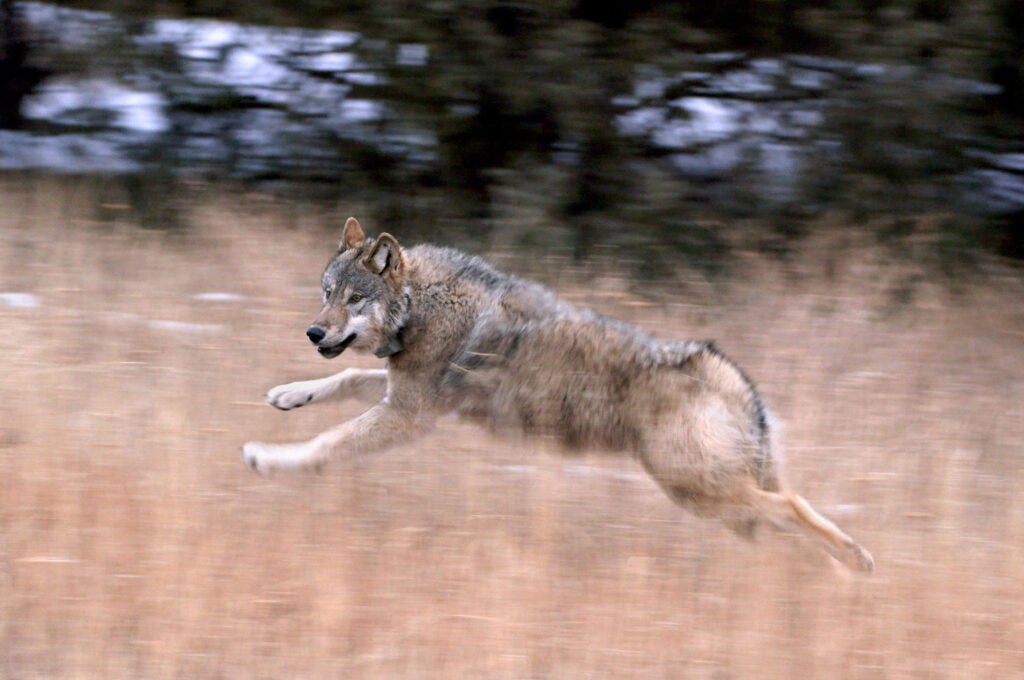
832F, leading the pack. (Courtesy of the Yellowstone Wolf Project)

She never had a real name. Scientists called her 832F. To her fans, she was known simply as ’06 after the year that she was born. But for anyone who had ever seen the large, sleek gray wolf roaming the Yellowstone plains, she was the epitome of all things free and wild.

Last week, ’06 was killed by an unknown hunter just outside of the park. She was still wearing her radio collar.

5 Comments   /   Read more >>
View Kari Birdseye's blog posts
08 October 2012, 8:56 AM
State delists endangered gray wolf and the hunt begins
Wolves perform a valuable ecological role and stand as a living symbol of wilderness. (NPS)

In Wyoming, wolves that were federally protected on Sept. 30 became legal vermin overnight—subject to being shot on sight in approximately 90 percent of the state as of Oct. 1. In the remaining 10 percent of Wyoming, wolf hunting season opened for the first time since the gray wolf was eradicated from the state in the early 1900s. Fifty-two wolves are expected to be killed in the “trophy zone” hunting season and dozens more in the free-fire “predator zone” over the coming weeks.

All of this wolf-killing threatens to turn back the tide of wolf recovery in the Northern Rockies and leave Yellowstone area wolves isolated from other wolf populations in the region. And it is all happening because the U.S. Fish and Wildlife Service turned wolf management in Wyoming over to state officials, despite the fact that Wyoming’s wolf management policies open the door to unlimited wolf killing throughout most of the state and provide inadequate protection for wolves even where killing is regulated.

35 Comments   /   Read more >>
View David Lawlor's blog posts
25 May 2012, 11:19 AM
Authorities called in to detain 27 animals
A bison, but not one of the 27 bison transported back to Yellowstone.

A group of 27 bison occupying privately owned grazing lands outside of Yellowstone National Park’s western border were detained by authorities on May 24. The group of animals included 12 newborn calves, 12 mothers, and three juveniles.

The Montana Department of Livestock led the raid with support from the Montana Department of Fish, Wildlife, and Parks; the National Park Service; the U.S. Department of Agriculture Animal and Plant Health Inspection Service; and the Gallatin County Sheriff’s Office. The bison were rounded up into a trap, placed on livestock trailers, and transported back inside park boundaries. They were released on their own recognizance into the Fountain Flats area. The raid was conducted following six weeks of surveillance and hazing that had been unsuccessful in persuading the bison to peaceably disperse and acknowledge the private property rights of landowners in the Yellowstone region.

All joking aside, whatever happened to wild animals being, you know, wild? And, for that matter, when did being a wild animal become illegal?

View Liz Judge's blog posts
02 February 2012, 3:34 PM
Nothing compares to wetlands in terms of dollars saved, disasters prevented

In addition to being Groundhog Day, Feb. 2 is World Wetlands Day. Say what? An international day to celebrate swamps? If you’re scratching your head wondering why in the world we’d throw a party for swamps (and bogs and marshes and fens and floodplains and other wet, buggy places), here’s why:

Wetlands protect us. They’re our best buffer from floods and storms, better than any levees we could ever build -- after all, an acre of wetland can store 1–1.5 million gallons of floodwater. They are also our best pollution filter, absorbing the nasty stuff we can't drink and easing the workload for our man-made drinking water sanitation systems. And they keep our ecosystems alive, providing healthy habitats and resting places to the birds, critters and plants we need in order to continue to thrive in our own environment, wherever that may be.

Great thinkers all the whole world over recognized this more than 40 years ago when they came together in the Iranian city of Ramsar and signed a global treaty called the Ramsar Convention to protect the planet’s invaluable wetlands.

1 Comment   /   Read more >>
View Jessica Goddard's blog posts
07 October 2011, 10:07 AM
Illegal fishing practices in the Gulf of Mexico lead to death of 3,000 sharks
Texas game wardens pull in miles of netting filled with killed sharks. Source: www.valleycentral.com

It was the largest shark kill the Texas game wardens had ever seen. Last week, wildlife officials discovered an estimated 3,000 sharks caught and killed in an illegal gill net off South Padre Island in the Gulf of Mexico.

Gill nets hang underwater from floats to a lead-weighted bottom line like mesh curtains, often extending up to 5 miles in length and 25 feet in depth. Notorious for their bycatch threat to sea turtles, marine mammals (such as, sea otters, dolphins and whales), sea birds, and other non-target fish, gill net possession has been illegal in Texas since 1981.
 
"This is by far the most sharks I have ever gotten in one load. Myself and my deck hand have been working on this boat for 15 years and have never seen this many sharks in one net,” said Sgt. James Dunks. Indeed, Texas Parks and Wildlife regulations prohibit licensed fishers from catching more than one shark per day.