Posts tagged: forests

unEARTHED. The Earthjustice Blog

forests


    SIGN-UP for our latest news and action alerts:
   Please leave this field empty

Facebook Fans

Featured Campaigns

Everyone has The Right To Breathe clean air. Watch a video featuring Earthjustice Attorney Jim Pew and two Pennsylvanians—Marti Blake and Martin Garrigan—who know firsthand what it means to live in the shadow of a coal plant's smokestack, breathing in daily lungfuls of toxic air for more than two decades.

Coal Ash Contaminates Our Lives. Coal ash is the hazardous waste that remains after coal is burned. Dumped into unlined ponds or mines, the toxins readily leach into drinking water supplies. Watch the video above and take action to support federally enforceable safeguards for coal ash disposal.

ABOUT EARTHJUSTICE'S BLOG

unEARTHED is a forum for the voices and stories of the people behind Earthjustice's work. The views and opinions expressed in this blog do not necessarily represent the opinion or position of Earthjustice or its board, clients, or funders.

Learn more about Earthjustice.

View Tom Turner's blog posts
21 June 2011, 5:48 PM
State tries old, discredited legal arguments in new roadless attack
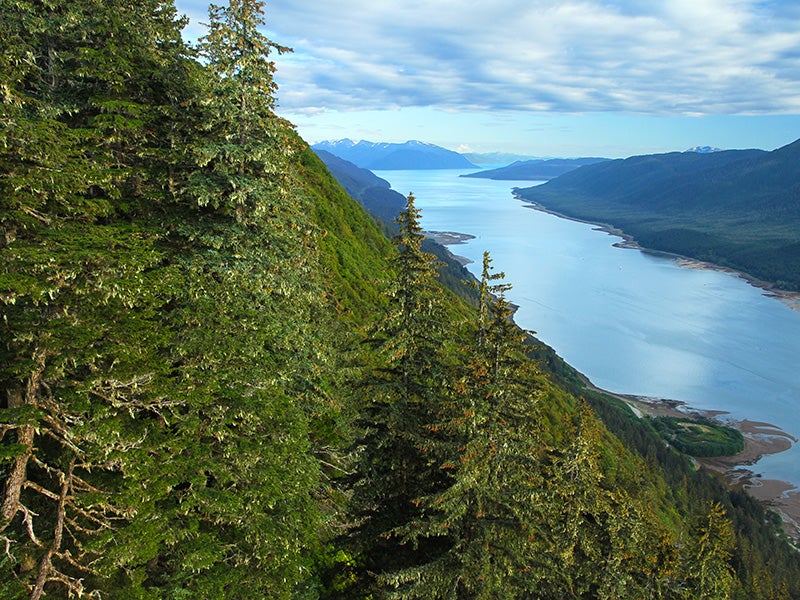
Tongass National Forest

The long and winding saga of the Roadless Rule, adopted in the Clinton administration after an exhaustive public process, just took a new turn, though it smacks of desperation.

To recap, the Roadless Rule was put in place to protect 58.5 million acres of undeveloped and otherwise unprotected land on the national forests. The rule has been subject of nine lawsuits. An appeals court in Denver has yet to rule on a lawsuit out of Wyoming; the others have concluded with the Roadless Rule still standing.

We said nine suits had been filed to challenge the rule. Make that 10. On Friday, June 17, the state of Alaska filed a new suit seeking to overturn the rule in its entirety.

3 Comments   /   Read more >>
View Shirley Hao's blog posts
14 June 2011, 3:31 PM
Protecting the oldest among us
Al (left) and his young girlfriend Patches. (Saul Young / Knoxville News Sentinel)

Two longtime bachelors are proving that it’s never too late to find love.

Al (widowed) and Tex (serially dater) were getting up there in the years and were perhaps more than a bit rusty on the romance angle, neither having enjoyed the company of the fairer sex for decades. But when the lovely Patches and coquettish Corky came to town, all bets were off and these old-timers were back in the game. The girls were nearly half their age, but love knows no boundaries—and these Aldabra giant tortoises were no exception.

Humans have Internet dating sites; Al and Tex had Knoxville Zoo Assistant Curator of Herpetology Michael Ogle. Noting the relative abundance of eligible Aldabra debutantes at Zoo Atlanta, Ogle hatched a plan of romance with his herpetologist colleagues.

1 Comment   /   Read more >>
View Liz Judge's blog posts
02 June 2011, 2:49 PM
"The Last Mountain" opens this weekend in DC and NYC
"The Last Mountain" movie poster

The buzz is heightening. The Sundance official selection documentary The Last Mountain is arriving at theaters across America beginning this weekend in Washington, DC, and New York City. Throughout June, it will open in 18 other cities, bringing this film -- on the frightening effects of destructive mountaintop removal mining-- to the biggest metropolitan markets in the nation.

The film is a powerful glimpse into the bombing and razing of mountains in West Virginia for coal, the corrupt politics that enable that destruction, and the people and communities at the foot of the exploded mountains who are paying the real price, and suffering the real costs, of one of America's greatest and most enduring environmental tragedies.

2 Comments   /   Read more >>
View Ted Zukoski's blog posts
19 May 2011, 9:31 AM
Obama’s proposed Rule + natural gas, coal threaten millions of acres
Sunset Trail roadless area, Colorado.

Colorado is the most populous, developed state in the Rocky Mountain West. Despite all the cities and towns, highways, oil rigs and second homes, about 4.4 million acres of roadless national forest remain. And that’s in addition to the 3 million-plus acres of existing wilderness.

These roadless lands - which safeguard clean water, wildlife habitat and recreation - are currently protected across the West (except Idaho - long story) by President Clinton’s 2001 “Roadless Rule.”   That Rule bars commercial logging, road construction and most mining. The Rule does have carefully narrow provisions that allow some logging where needed to reduce fire risks in some forest types.  But Clinton's Rule remains the gold standard for protecting roadless lands.
 
President Obama's Forest Service, however, is working to undermine the Rule in Colorado. 

View Liz Judge's blog posts
25 April 2011, 3:17 PM
A cartoon, a jammin' new tune and some fine-art photography tell the story
A screen shot of Mark Fiori's site and mountaintop removal cartoon animation

Well, it's true that here on a blog, the currency is words. We're supposed to tell stories through our prose. But today I'm going to go easy on the blog and yield the storytelling to a small collection of witty, beautiful, foot-stomping and surreal art by people who are mastering other mediums to talk about mountaintop removal mining:

View Chris Jordan-Bloch's blog posts
22 April 2011, 5:58 AM
A couple's fight to save the place they love

A few months ago, Earthjustice campaign manager Kathleen Sutcliffe came to me with an interesting request—she wanted to tell an uplifting story about fracking. Hydraulic fracturing, or fracking, is a drilling technique that involves blasting chemically treated water into the earth to release oil and gas trapped in underground rock formations. Most of the stories about fracking involve stuff like gas well explosions, chemical spills, tap water catching on fire, rivers being polluted, and air quality being degraded. So needless to say, it's not the most obvious place to find a positive story.

For the most part, oil and gas companies are fracking as they please and raking in huge profits at the expense of small communities and their local environments. But maybe, just maybe, we thought, there are some people out there who have stood up and used their voices to battle the bank accounts of the gas industry.

So we started reading and researching. And what we found surprised us.

1 Comment   /   Read more >>
View Jessica Knoblauch's blog posts
21 April 2011, 6:56 AM
Climate change is the single biggest threat to wolverines.
Attorney Tim Preso has spearheaded Earthjustice's efforts to protect the wolverine

(This is the fourth in a series of Q & A's on the Crown of the Continent, a 10-million-acre expanse of land in northern Montana and southern Canada. Earthjustice is currently working to protect several wild creatures in the Crown like the wolverine. To learn more about this wild place and how Earthjustice is working to protect it, check out our Crown web feature.)

EJ: The U.S. Fish and Wildlife Service (FWS) recently listed wolverines as endangered, but they're still not being protected, correct?

TP: That's right. The FWS determined that although the species qualifies for listing under the Endangered Species Act that they were basically going to put wolverines in administrative limbo and not actually list them. Obviously we're not satisfied with that result and we're continuing to examine ways to move the wolverine up to the top of the list. The Crown of the Continent is one of the largest undeveloped landscapes remaining in our country and it's really the stronghold for wolverines in the lower-48 states. The wolverine only persists in places that are really and truly wild, and the Crown is the last place that they're remaining in any significant numbers.

EJ: Why did Earthjustice decide to focus on wolverine protections?

TP: There are a number of reasons. One is just that the wolverine has a lot of amazing characteristics that make it a particularly cool animal to work on. Wolverines are extremely tough and they live in extremely harsh environments at high elevations. When grizzly bears, which we think of as a tough animal, are sleeping in their hibernation dens for the winter, the wolverine is out there on those snow-blasted slopes trying to eke out a living, covering 160 square miles over some of the most rugged country in the lower 48 states. It takes a tremendously large landscape for them to find enough food to stay alive, so these animals need extremely large home ranges.

View Tom Turner's blog posts
21 April 2011, 6:40 AM
Anti-wilderness bill is subject of scorn
Representative Kevin McCarthy (CA-22).

Last week we wrote about an effort by three Republican members of the House of Representatives to repeal the Roadless Area Conservation Rule that protects nearly 60 million acres of unspoiled lands on the national forests and to deny the Bureau of Land Management's authority to declare its unspoiled areas "wilderness study areas" and protect them until Congress can decide whether to give them permanent protection.

Now the hometown paper of one of the congressmen—Kevin McCarthy of Bakersfield, CA—has lit into him, invoking the memory of that great Republican president, Teddy Roosevelt, who would certainly deplore this foolish, not to say wicked, ploy. We thank and congratulate the editors of the Bakersfield Californian for their graceful and powerful editorial. We hope Mr. McCarthy will pay attention. Fat chance.

View Sam Edmondson's blog posts
21 April 2011, 12:41 AM
Celebrating the birthday and accomplishments of an American hero

Today is the 173rd birthday of John Muir. If the legacy of wildland preservation in this country were a river long with oxbows, falls and many notable tributaries, Muir's contributions would certainly be the headwaters.

Muir was the co-founder and first president of the Sierra Club and a steadfast advocate for the protection of wilderness. Through his essays and books—penned late in life after years of exploration—he has exposed millions to the wonders of the outdoors, and particularly the many rewards that await the California mountaineer. But Muir's greatest gift to me is the encouragement given to put the book down and go out and do: "Only those will ever know who give the freest and most buoyant portion of their lives to climbing and seeing for themselves," he wrote in The Mountains of California.

It was in the spring of 1868 that this wide-eyed son of a Scottish minister first came by wanderlust into California's Sierra Nevada mountains—or the Range of Light as he called it—to see for himself. As he climbed into the Yosemite Valley, Muir discovered the towering granite buttresses that would become the rocks of his own church.

View Jessica Knoblauch's blog posts
20 April 2011, 4:42 AM
How citizens came together to protect the Rocky Mountain Front
Gene Sentz

(This is the third in a series of Q & A's on the Crown of the Continent, a 10-million acre expanse of land in northern Montana and southern Canada. Gene Sentz is co-founder of the Friends of the Rocky Mountain Front, one of the organizations whose activism resulted in the banning of oil and gas leasing in the Front. To learn more about this wild place and how Earthjustice is working to protect it, check out our Crown web feature. You can also check out Gene's amazing pictures of the Crown.)

EJ: You've been working to protect and preserve the Rocky Mountain Front for more than three decades. How did you first get involved?

GS: In the summer of 1977, there was an outfitters' meeting and the U.S. Forest Service was showing the projects that they were going to be involved with that year. One of the main projects was to lease everything on National Forest lands in the Rocky Mountain Front to oil and gas companies. Up until that time, there had been very little drilling on National Forest land at all. I just couldn’t believe that they were going to lease everything to drilling. That fall after hunting season, a bunch of us locals got together and eventually we talked the Forest Service into backing off of leasing. That was the first step.

EJ: In 2006, President Bush signed bi-partisan legislation that expanded and made permanent a 1997 moratorium on new oil and gas leasing on public lands along the Front. That was a huge victory and your organization was a big part of that, correct?