Posts tagged: gas

unEARTHED. The Earthjustice Blog

gas


    SIGN-UP for our latest news and action alerts:
   Please leave this field empty

Facebook Fans

Featured Campaigns

Everyone has The Right To Breathe clean air. Watch a video featuring Earthjustice Attorney Jim Pew and two Pennsylvanians—Marti Blake and Martin Garrigan—who know firsthand what it means to live in the shadow of a coal plant's smokestack, breathing in daily lungfuls of toxic air for more than two decades.

Coal Ash Contaminates Our Lives. Coal ash is the hazardous waste that remains after coal is burned. Dumped into unlined ponds or mines, the toxins readily leach into drinking water supplies. Watch the video above and take action to support federally enforceable safeguards for coal ash disposal.

ABOUT EARTHJUSTICE'S BLOG

unEARTHED is a forum for the voices and stories of the people behind Earthjustice's work. The views and opinions expressed in this blog do not necessarily represent the opinion or position of Earthjustice or its board, clients, or funders.

Learn more about Earthjustice.

View Maria Beloborodova's blog posts
27 December 2012, 10:00 AM
Readers were most inspired by stories of the wild
Two of the first five calves born at Ft. Peck Indian reservation this year. (Bill Campbell)

Blog posts about Earth's magnificent places and creatures were the most popular themes for unEarthed readers in 2012. By far the most-read post concerned Arctic drilling, followed by reports of bison being restored and wolves losing protection. Not shown in our top 10 blog posts, below, are the delightful tales of curious critters painted in words by our own Shirley Hao. Posts written years ago by Shirley are still being discovered and read by thousands of people every year.

And, now, for your enjoyment, we present our most-read posts of 2012:

View Raviya Ismail's blog posts
19 November 2012, 10:51 AM
Clean air champions go to court on "fracking" and other drilling air rules
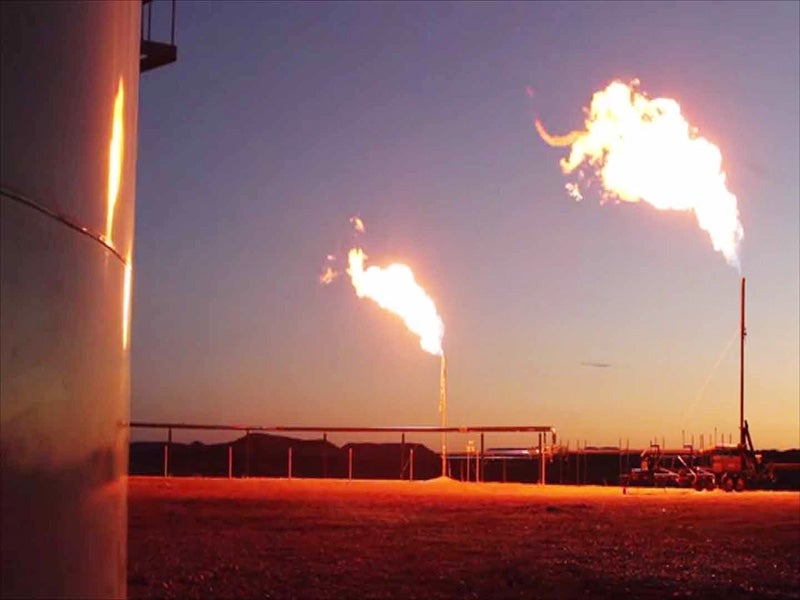
Heavy smoke caused by flaring operations at natural gas well located on state land near Pinedale, WY.  (William Belveal)

Last Wednesday, a group of clean air advocates intervened to protect crucial air safeguards that will curb pollution emitted during oil and gas drilling. Unfortunately the state of Texas and their allies with the American Petroleum Institute and a variety of other state alliances of oil and gas companies are pushing back against these necessary protections.

But here are the facts: industry and their allies are hyping natural gas as a miracle fuel, yet the gas drilling sector—which includes the controversial practice of hydraulic fracturing or “fracking”—has worsened air quality around the country. In some parts of the country undergoing a gas drilling boom, air quality has fallen below levels the EPA determined to be safe. This is a growing problem that is wreaking havoc on our lungs.

1 Comment   /   Read more >>
View Trip Van Noppen's blog posts
15 September 2012, 8:39 PM
Your voice can help put the environment on the political agenda
Your voice is as important as your vote—there is a lot you can do. (Jason Langheine)

After the summer we have had, my mind is on climate change, what more Earthjustice can do about it, and what’s at stake in this election.

I experienced the effects of climate change this summer during a trip through Colorado. Heat, drought and fire set an almost apocalyptic tone for the trip. There was no snow on the peaks, stream flows were down, and smoke filled the air. Similar impacts afflicted 60 percent of our nation and spread over three continents; sea ice coverage in the Arctic was at a record low.

Earthjustice is working hard to slow and reverse these climate trends by bringing cases across the country to beat down coal, reduce greenhouse gas emissions, and expand the market for renewable energy and efficiency. And with your support we are doing more every day: hiring more attorneys and bringing more cases in more places. We are grateful not only for your support which makes this possible, but also for your advocacy which helps get better rules adopted and enforced.

28 Comments   /   Read more >>
View Trip Van Noppen's blog posts
18 August 2012, 5:44 PM
U.S. lax about chemicals used in oil and gas operations
A U.S. Air Force chemical dispersing C-130 aircraft drops an oil dispersing chemical into the Gulf of Mexico as part of the Deepwater Horizon response effort. (U.S. Air Force Photo / Tech. Sgt. Adrian Cadiz)

In April 2010, a national nightmare began with a blowout into the Gulf of Mexico. But the hundreds of millions of gallons of oil from the Deepwater Horizon spill were just the beginning of the disaster. We are still learning about the real damage, which is much more insidious than tar balls and slicked beaches.

Recently, researchers found that the millions of gallons of chemical dispersants used to break up the oil may disrupt the Gulf of Mexico’s food chain by killing off plankton, the fuel on which marine ecosystems run. At the time of the spill, little was known about the dispersants’ health and environmental effects, but oil executives and government officials justified the risk by arguing that desperate times call for desperate measures.

Welcome to the age of extreme energy, which requires us to risk the health of our bodies and our environment just to keep the lights on. From oil dispersants to fracking fluid, the chemicals used in extreme energy all have one thing in common: We know little about them, and what we do know is worrisome.

9 Comments   /   Read more >>
View Tom Turner's blog posts
24 July 2012, 12:05 PM
Bill McKibben takes us to school—and nominates Public Enemy #1
Bill McKibben

Bill McKibben,  who first alerted the non-scientific world to global climate change two decades ago with The End of Nature  has a new piece in Rolling Stone that he says is the most important thing he’s written in the past 20 years, and he’s written hundreds of articles and books during that period.

It’s titled “Global Warming’s Terrifying New Math,” and it’s long but worth reading. More than worth reading.
 

2 Comments   /   Read more >>
View David Lawlor's blog posts
27 June 2012, 4:02 PM
Court decision protects biologically rich area from oil and gas development
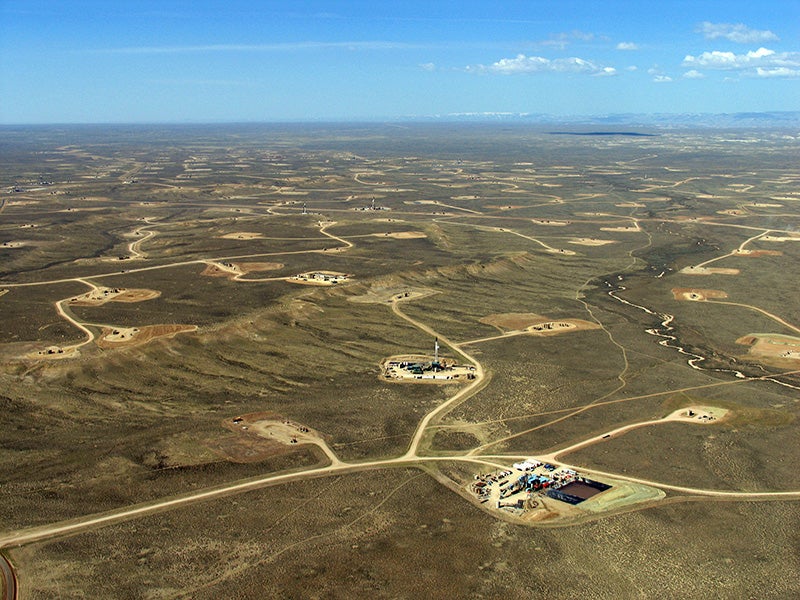
The Rulison Gas Field on the Roan Plateau. (Photo by Save Roan Plateau)

How much are oil and natural gas worth? I’m not asking how much a barrel of sweet crude is going for these days or what your gas bill from the utility company was last month. The real question isn’t how much fossil fuels cost in terms of dollars, but rather, what is worth sacrificing in their pursuit? Since the physical process of extracting oil and gas tends to severely despoil the surrounding environment, asking how much oil and gas are worth is akin to asking what nature is worth.

But in nature, there is value that dollar signs cannot quantify—take Colorado’s Roan Plateau for instance.

View Ted Zukoski's blog posts
15 June 2012, 3:54 AM
Agency pushes lose-lose-lose-lose coal mine expansion
The Sunset Roadless Area.
(Photo: Ted Zukoski)

Coal is dirty.

It’s the dirty fuel that gives us mercury in our lakes, acid rain in our skies, carbon pollution, leaky ash ponds, and scraped-off mountains and buried streams in Appalachia.

And just like the coal itself, Arch Coal’s proposed West Elk mine expansion into the Sunset Roadless Area in western Colorado will be a lose-lose-lose-lose proposition. Sadly, that doesn’t mean it’s going away.

View Jessica Knoblauch's blog posts
15 June 2012, 3:41 AM
Plus: Testy turtles, gas pump fallacies and Alberta oil spills
Seaside in Victoria, Australia (Shutterstock)

Australia announces world’s largest marine reserve
Just in time for this week’s Rio+20 Earth Summit, Australia has announced its plans to create the world’s largest marine reserve, reports the BBC. The protected zone will cover more than a third of Australia’s waters (about 3 million square kilometers) and will include restrictions on fishing as well as oil and gas exploration. The announcement comes on the heels of another big environmental win, courtesy of the Australian government, which last week announced that it is putting a stop to a billion-dollar coal project that could negatively impact the Great Barrier Reef. Though this latest move to create a marine reserve didn’t quite go as far as some environmentalists groups would have liked, it’s a great first step in building resilient oceans, which are already being battered by overfishing, pollution, habitat loss, and now ocean acidification. Find out more about Earthjustice’s work to push for building resilient ocean ecosystems.

Turtle couple that’s been dating for decades calls it quits
After more than 100 years of companionship, a pair of Giant Turtles at an Austrian zoo have decided to call it quits, reports the Austrian Times. According to the zoo staff, the century-long love fest came to a seemingly sudden end after the female turtle, Bibi, attacked her partner by biting off a chunk of his shell. Afterwards, Bibi continued attacking the male turtle until he was moved to a different cage. Since there have been no apparent changes in the turtles’ routine, the zoo suspects that Bibi may simply want to be single and nothing—including “romantic good mood food” and couples —will change her mind.

View Kathleen Sutcliffe's blog posts
05 April 2012, 5:07 PM
Matt Damon to star in new feature film about fracking

I'm not going to even try to hide my excitement at the news that Matt Damon co-wrote and is starring in a feature film, titled Promised Land, about the controversial gas development technique known as fracking. The actor has made his concerns known about fracking's link to water pollution in this two-minute spot by Working Families Party so I am extremely eager to see what kind of message a full-length feature film will deliver.

Matt Damon is also a co-founder of Water.org, and earlier this year on World Water Day, spoke about the plight of millions who lack clean water:

3 Comments   /   Read more >>
View Jessica Knoblauch's blog posts
22 March 2012, 11:42 AM
Gas price lies, “safe” fracking water, BPA bans
Dirty air, not eating all those chips, may cause obesity, so munch on! (Photo courtesy of loop_oh)

Forget Fritos: Air pollution may be making people fat
Sure, it’s got nothing on the much-hyped “Paleo Diet,” but a new theory that air pollution may be making us fat could provide one more bullet in the never-ending arsenal of dieting ticks and trips that people can use to lose weight. According to Discovery News, just as the oceans are becoming more acidic as they sequester more carbon dioxide, studies show that our blood becomes more acidic when we breathe in CO2-laden air, even just for a few weeks. But though higher acidity in the ocean means weaker coral reefs and shell-covered creatures, a drop in pH in our brains acts much differently by making appetite-related neurons fire more frequently, which could result in us eating more, sleeping less and, eventually, gaining more weight. Though the theory hasn’t yet been heavily tested, previous studies have shown that the issue of obesity goes far beyond cutting calories and exercising more. And, even if the theory doesn’t pan out, clean air is definitely tied to a whole host of other great health benefits, like not dying early, so take a deep breath!

History shows that “drill, baby, drill” mentality doesn’t lower gas prices
The commonly held notion that more domestic drilling leads to lower U.S. gas prices is completely false, reports the Associated Press, which came to the conclusion after analyzing more than three decades’ of monthly, inflation-adjusted gasoline prices and U.S. domestic oil production. Though both political parties are guilty of using the "drill, baby, drill" mentality to link higher gas prices to an "unfriendly" domestic drilling policy, the facts tell an entirely different tale. For example, since February 2009 we’ve increased oil production by 15 percent (yes, during the Obama presidency, which is supposedly extremely unfriendly to domestic energy production), yet between 2009 and 2012 prices at the pump spiked by more than a dollar during that time. The reason, much to Americans’ dismay, is that since oil is a global commodity, neither the U.S. nor our president has much say in determining the price of gasoline. We do, however, have a say in how much gas we use, which means that the only real way to decrease the amount that we pay at the pump is to, simply, use less gas by driving more gas-efficient cars and taking public transit, to name just a few examples.

4 Comments   /   Read more >>