Posts tagged: mercury

unEARTHED. The Earthjustice Blog

mercury


    SIGN-UP for our latest news and action alerts:
   Please leave this field empty

Facebook Fans

Featured Campaigns

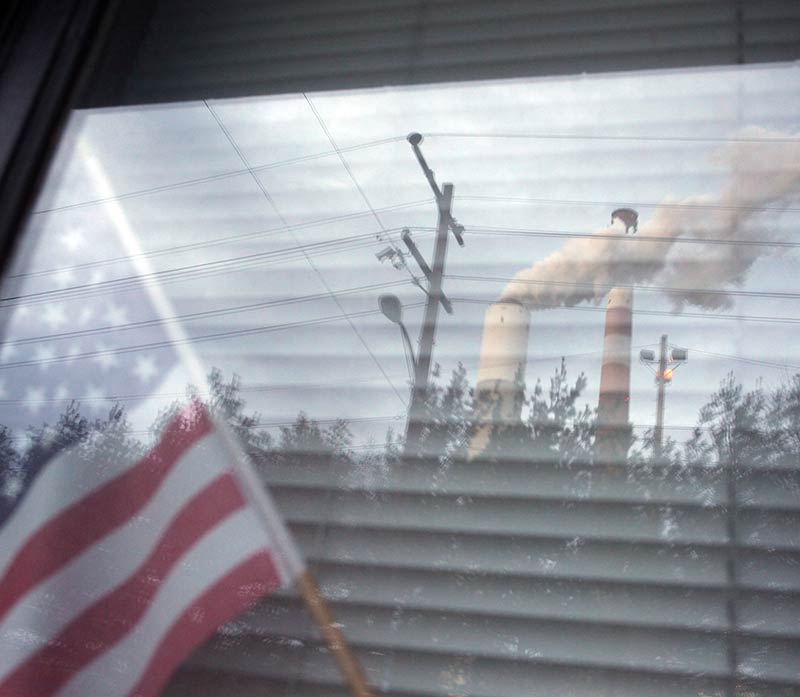
Everyone has The Right To Breathe clean air. Watch a video featuring Earthjustice Attorney Jim Pew and two Pennsylvanians—Marti Blake and Martin Garrigan—who know firsthand what it means to live in the shadow of a coal plant's smokestack, breathing in daily lungfuls of toxic air for more than two decades.

Coal Ash Contaminates Our Lives. Coal ash is the hazardous waste that remains after coal is burned. Dumped into unlined ponds or mines, the toxins readily leach into drinking water supplies. Watch the video above and take action to support federally enforceable safeguards for coal ash disposal.

ABOUT EARTHJUSTICE'S BLOG

unEARTHED is a forum for the voices and stories of the people behind Earthjustice's work. The views and opinions expressed in this blog do not necessarily represent the opinion or position of Earthjustice or its board, clients, or funders.

Learn more about Earthjustice.

View Sam Edmondson's blog posts
16 June 2011, 3:23 PM
Controversial air loophole encourages dangerous waste burning

Not all burning is bad. For example, campfires rule—when they are done sensitively. I don't mean with tenderness, but rather with attention paid to the ecosystem and the importance of the fallen wood within it. Those fires bring light, heat and comfort to our small corners of the wild.

But in other corners of the world, bad burning reigns, and the Obama administration has given it a new throne. The Obama Environmental Protection Agency is making the unprecedented assertion that burning industrial waste as a fuel—akin to coal or natural gas—is a form of recycling. This Bush-era line of logic will allow and in fact incentivize burning of industrial waste—things like scrap plastics, used chemicals and industrial sludges—in around 185,000 unregulated boilers across the country. These pieces of equipment aren't subject to pollution controls, air monitoring, or reporting requirements.

Should companies choose to burn waste in one of these boilers—and no doubt many will, as it will be a cheap way to make their waste go away—nearby communities will face increased emissions of mercury, benzene, dioxins and other hazardous air pollutants, and worse yet, they most likely won't even know it. Industry has pressed long and hard for such a gift, but the Obama administration is the first to give it so freely. Today, Earthjustice filed suit against the EPA to challenge this egregious loophole.

View Sam Edmondson's blog posts
15 June 2011, 3:25 PM
Sarah Bucic, props in hand, defends right to breathe before Congress

Last month, Sarah Bucic—a nurse from Delaware—went to Washington, D.C. as part of the "50 States United for Healthy Air" event to defend the right to breathe clean air. Today, she went back to do it again.

Midway through her testimony before the Senate Environment and Public Works Committee, Sarah—who testified on behalf of the American Nurses Association—pulled out a straw and held it up. It was skinny, the kind you might use to stir your coffee or tea—a toothpick passed through one end would more likely get stuck than fall through the other side.

Air doesn't fare much better. During an asthma attack, Sarah said, a person's airway constricts to roughly the size of that straw. In nursing school, she and her classmates were instructed to pinch their noses and breathe only through the straw to simulate what an attack feels like. Her demonstration was a powerful moment.

View Sam Edmondson's blog posts
08 June 2011, 3:11 PM
Health professionals square off with industry mouthpieces at senate hearing

The hearing room on the 4th floor of the Dirksen Senate Office building was packed—so packed that some onlookers stood in the back of the room to see the action unfold. All had gathered earlier today for "Air Quality and Children's Health," a hearing before members of two subcommittees of the Senate Committee on Environment and Public Works. Before a panel of senators sat five witnesses—two of them with the shameful purpose of arguing against air quality standards that protect children's health.

Tension crackled throughout the room when Sen. Sheldon Whitehouse (D-RI) grilled witness, Margo Thorning: "Is your advice for parents of children with asthma to just get a job?" He followed up with the observation that many children of employed parents still struggle with the effects of asthma.

View Alexandra Allred's blog posts
27 May 2011, 12:19 PM
Obama administration publishes plea for strong air pollution standards

Editor's Note: The following blog item, written by Earthjustice "Clean Air Ambassador" Alexandra Allred, first appeared on The White House blog. Allred's 11-year old sonTommy suffers from chronic asthma. Allred journeyed to Washington, D.C. earlier this month to advocate, for keeping and strengthening clean air protections, in the halls of Congress and to the Obama administration.

Early in his term, President Obama's Environmental Protection Agency (EPA) finalized an important health-protective standard that cleans up the smokestacks of cement plants, among other things, to better protect my son! This is very important to us as we live in Midlothian, Texas, the "Cement Capital of Texas," where three cement plants spew dangerous pollutants that can trigger asthma attacks, cause neurological damage, destroy organs, damage the nervous system and much more. 

If you read my son Tommy's book, How I Met the President, you will learn that he developed chronic asthma from breathing toxins in the air from our local cement plants, and as a result, met the President. While our experiences did not unfold that simply, as Tommy likes to say, "That was how we met President Obama!"

1 Comment   /   Read more >>
View Sam Edmondson's blog posts
24 May 2011, 12:31 PM
Community members in Philly and Chicago speak out for health protections

Environmental Protection Agency hearings today in Philadelphia and Chicago drew crowds of clean air advocates—including a man who described the "smell of death" from a coal-fired power plant in his town.

The hearings are focused on a proposal to clean up mercury and other toxic pollution from coal-fired power plants, our nation's worst polluters. While these citizens are on hand delivering messages to the EPA in person, you can add your voice by sending a public comment via email.

Earthjustice staff are at the Philadelphia hearing to testify and hear citizens who want cleaner air and healthier communities. One such citizen is Sarah Bucic of the Delaware Nurses Association, who was also a Clean Air Ambassador at the 50 States United for Healthy Air event held in Washington, D.C. this month. Sarah expressed concern about the impact of toxic air pollution on children's health: "Mothers should not have to worry if their air and water is safe or if their own breast milk contains toxicants," she said.

Ed, a fisherman from St. College, PA, told the EPA staff on hand that his favorite stream in the state is the Susquehanna, but he can't eat the fish he catches because mercury levels are too high. It pains him to explain this to his young nephew when they go fishing.

View Sam Edmondson's blog posts
23 May 2011, 12:16 PM
New report on coal plant pollution underscores national problem

Jamestown, VA is a fixture of American history. Founded more than 400 years ago, it was the first permanent English settlement in what became the United States. Today, not far from there, The Old Dominion Electric Cooperative is looking to make history of a different kind. It wants to build what would be the largest coal-fired power plant in all of Virginia. But if built, something new will settle in the region: a large cloud of harmful air pollution.

And indeed, a report released today by the Chesapeake Bay Foundation shows that if this chapter of history is written, it will have a profound and negative impact on the region's future. Pollution from the plant will lead to dozens of deaths, hundreds of asthma attacks and more than $200 million in regional health care costs every year. Moreover, the Chesapeake Bay, a suffering icon of the eastern seaboard, would be further polluted with mercury as well as nitrogen oxides.

The story in Virginia told by the CBF is a microcosm of the rest of the country, where coal plant pollution is claiming lives, polluting waters and costing the public billions of dollars. The Environmental Protection Agency is holding its first public hearings tomorrow, in Philadelphia and Chicago, on a recent proposal to cut toxic air pollution from the nation's coal-fired power plants.

View Trip Van Noppen's blog posts
19 May 2011, 10:31 AM
Community representatives make the case for clean air

Nobody gets through a day without breathing. Not executives in the coal-fired power and cement industries, which are polluting our air daily. Not the legion of lobbyists they hire to patrol the halls of Congress in defense of dirty air. And not the members of Congress who, hand-in-hand with these special interests, are marching the Clean Air Act off a cliff.

At the very same time that these women and men draw breath, they are working to derail and delay clean air protections with a vigor that suggests there isn't a set of functioning lungs between them.

To confront this audacity, Earthjustice helped to bring a diverse group of doctors, nurses, faith and tribal leaders, and environmental justice advocates to Washington, D.C. earlier this month for an event dubbed 50 States United for Healthy Air. These 80 Clean Air Ambassadors, who came from all 50 states, Washington, D.C. and Puerto Rico, met with members of Congress, the Obama administration and the Environmental Protection Agency to defend our right to breathe. Rev. Dr. Michael Stinson, one of the ambassadors, stated their purpose clearly: "We are people from all 50 states with a passion for one issue—clean air."

As part of an online storytelling project, Earthjustice staff asked the ambassadors to express in a sentence what clean air is to them. Their sentences read like axioms, as they elucidate core realities and challenges of this issue.

5 Comments   /   Read more >>
View Jared Saylor's blog posts
17 May 2011, 2:06 PM
Protections against boiler pollution are put on hold after polluter pressure

Shame on the Environmental Protection Agency. Yesterday afternoon, the agency decided that it would postpone indefinitely a new health standard finalized a few months ago that would reduce toxic air pollution from industrial boilers. These small power plants are used at larger industrial facilities like oil refineries and chemical plants—more than 13,000 of them are in operation across the country. In the aggregate, they are among the worst emitters of mercury, chromium, lead, arsenic, dioxins and other hazardous air pollutants.

But rather than clean up their pollution, the EPA decided instead to cave to the polluters and some members of Congress who began ramping up the pressure during the mid-term elections. According to the Los Angeles Times, “Since December, the administration has slowed review and implementations of several closely watched regulations, including two affecting the powerful coal industry: ash disposal and mountaintop-removal mining.”

It seems to be politics as usual with this EPA. According to the agency’s own assessment, the projected pollution cuts from industrial boilers would have saved up to 6,500 lives every year, and outweighed the costs to industry by $22 billion to $54 billion annually. But the delay in implementing these pollution cuts will now cost 6,500 lives, 4,000 non-fatal heart attacks and 4,300 hospital and emergency room visits for every year that we wait.

3 Comments   /   Read more >>
View Jared Saylor's blog posts
03 May 2011, 1:28 PM
Asthma affects more than 25 million Americans; some are in D.C. to talk about it
Alex and Tommy Allred, from Midlothian, TX.

Alex Allred and her family are surrounded by cement. Not concrete, which is made from cement, but the big industrial facilities that crush and heat limestone to make cement. She lives in Midlothian, TX, an area known locally as “The Cement Capital of Texas,” a distinction that Alex and her family cannot appreciate. Her son eight-year-old son, Tommy, has asthma. His visits to the hospital emergency room are too numerous to remember. His asthma attacks hit him like a tank, unexpected and relentless.

As Alex describes it: “One minute he’s running around like a normal little boy, and the next minute he’s on the floor of the car gasping for air as I fly down the road, trying to get him to the hospital as fast as I can.”

Alex and her family believe it was air pollution from the cement kilns and other big polluters in their neighborhood that caused Tommy’s asthma. He and Alex have written a short story about how the pollution affects his health, and in it he describes what an asthma attack feels like: “It is very scary and sometimes when you can’t breathe, you think you’re going to die. Then, when the attack is over, you feel like you have to go to bed.”

Today is World Asthma Day, and to celebrate, Alex is joining an unprecedented collection of doctors, faith and tribal leaders, nurses, social justice advocates and affected citizens who have come to Washington, D.C. as part of “50 States United for Healthy Air.”

View Sam Edmondson's blog posts
03 May 2011, 6:38 AM
Clean Air Ambassadors share inspiring stories, speak truth to power

The Clean Air Ambassadors who arrived yesterday in Washington, D.C. have some amazing stories to tell, and I spent the better part of yesterday hearing them. Alexandra Allred from Midlothian, TX described a day she spent outside with her son Tommy—a day when he didn’t suffer his usual respiratory issues and could play carefree, like a kid again. “I had my son back,” she told me.

William Anderson, an ambassador from Nevada and Chairman of the Moapa Band of Paiutes, described the coal fly ash that shrouds his community in a haze of toxic dust, choking local residents and concealing the nearby mountains behind a curtain of miasmal fog.

Kimberly Hill of Detroit, MI told me about residents who live near the Marathon oil refinery, which is expanding to refine tar sands crude oil from Canada—one of the dirtiest fossil fuels on earth. Tucked under a toxic blanket, these residents suffer from respiratory disease and unusual forms of cancer.

The ambassadors’ stories spring from pollution, disease, loss of loved ones and other unsavory challenges that life presents. But more importantly, their stories are charged with hope, perseverance and bravery. Many of the ambassadors arrived to tell their tales having never set foot in Washington, D.C., that inner circle of government life where power concentrates imposingly, and too often to the exclusion of the very people whose votes put the powerful in office. To walk in those halls and sit in those offices to tell Very Important People how vital clean air is to one’s community is an act of bravery by which I am awed and humbled.