Posts tagged: mercury

unEARTHED. The Earthjustice Blog

mercury


    SIGN-UP for our latest news and action alerts:
   Please leave this field empty

Facebook Fans

Featured Campaigns

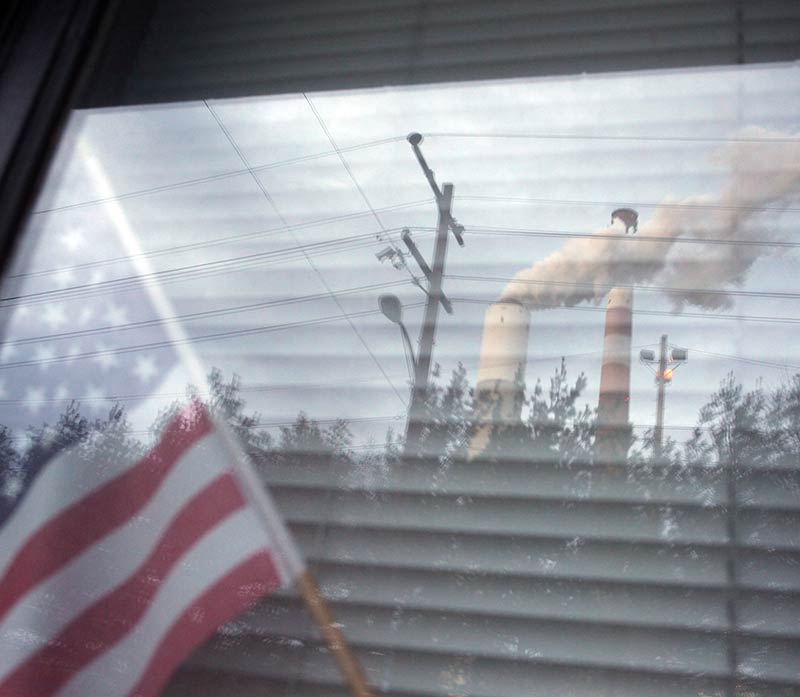
Everyone has The Right To Breathe clean air. Watch a video featuring Earthjustice Attorney Jim Pew and two Pennsylvanians—Marti Blake and Martin Garrigan—who know firsthand what it means to live in the shadow of a coal plant's smokestack, breathing in daily lungfuls of toxic air for more than two decades.

Coal Ash Contaminates Our Lives. Coal ash is the hazardous waste that remains after coal is burned. Dumped into unlined ponds or mines, the toxins readily leach into drinking water supplies. Watch the video above and take action to support federally enforceable safeguards for coal ash disposal.

ABOUT EARTHJUSTICE'S BLOG

unEARTHED is a forum for the voices and stories of the people behind Earthjustice's work. The views and opinions expressed in this blog do not necessarily represent the opinion or position of Earthjustice or its board, clients, or funders.

Learn more about Earthjustice.

View Sam Edmondson's blog posts
14 February 2011, 5:30 PM
Five state AGs send letter urging support for cement plant health protections
Cement kiln near Midlothian, TX. Photo: Samantha Bornhorst

Attorneys general from five states—New York, Maryland, Delaware, Massachusetts and Connecticut—sent a letter today to Rep. Fred Upton (R-MI), chairman of the House Energy & Commerce Committee, urging a rejection of Rep. John Carter’s (R-TX) resolution to block health protections against cement plants’ toxic air pollution.

Led by Attorney General Eric T. Schneiderman of New York, the quintet—which for their action to defend Americans’ health should be considered as a worthy addition to the “Fab Five” list—correctly note that reducing cement plants’ emissions of mercury and other toxic air pollutants will save lives and lead to the creation of American jobs manufacturing, installing and maintaining pollution control equipment.

Most importantly, these health protections will save the lives of 2,500 Americans every year—by reducing emissions of particulate matter from the cement industry by 92 percent. Cement plants’ mercury emissions—the third largest of all U.S. industries—will also be reduced by 92 percent. Mercury is a dangerous neurotoxicant that can impact a child’s ability to think and learn. The U.S. Environmental Protection Agency has estimated that more than 300,000 babies born every year may face a higher risk of developmental damage because of mercury exposure.

View Sam Edmondson's blog posts
11 February 2011, 4:45 PM
1,882 health pros demand clean air from Obama, House, Senate

This week, nearly 2,000 health and medical professionals from all 50 states and the District of Columbia told our elected representatives at the White House and in Congress to stand up for clean air. These professionals are intimately familiar with the impacts of air pollution on people—asthma, heart disease, stroke, cancer—especially such vulnerable groups as children and the elderly.

2 Comments   /   Read more >>
View Brian Smith's blog posts
10 February 2011, 5:30 PM
New study challenges marketing campaign
Rod Bremby

A study released today by MSB Energy Associates calls into question claims that the new Sunflower coal-fired power plant expansion near Holcomb, Kansas will be the “cleanest” in the country.

Among the report’s findings:
- 669 coal-fired power generating units have lower emissions of particulate (soot) air pollution
- 321 coal-fired units have lower emissions of mercury
- 53 emit lower rates of sulfur dioxide, and
- 18 emit lower rates of nitrogen oxides

These findings are based on a controversial air permit approved by the Kansas Department of Health and the Environment in December 2010.

1 Comment   /   Read more >>
View Sam Edmondson's blog posts
10 February 2011, 3:30 PM
The Clean Air Act, that's what

(Clean air is a life saver, which is why Earthjustice is working to ensure that polluters don’t stand in the way of safeguards against air pollution. Here’s a round up of some recent news in the ongoing campaign to protect our Right to Breathe.)

Use the #right2breathe hashtag on Twitter to track campaign updates.

EPA chief Lisa Jackson talks health on Capitol Hill
Tapped to testify on a bill that would shackle her agency and prevent it from doing its job to protect the American people, Lisa Jackson took an important message to Congress: Clean air saves lives and improves our health.

“Last year alone,” she said, “EPA’s implementation of the Clean Air Act saved more than 160,000 lives,” avoided 100,000 hospital visits and millions of respiratory illness cases, and kept Americans in work and at school. Clean air keeps us safe and healthy. Pro-polluter factions in Congress apparently think that isn’t a big deal, but I bet the 160,000 people whose lives were saved last year disagree.

1 Comment   /   Read more >>
View Sam Edmondson's blog posts
09 February 2011, 2:20 PM
EPA chief in Congress to defend clean air protections

EPA chief Lisa Jackson was on Capitol Hill today to testify before a subcommittee of the House Energy and Commerce Committee. On topic was a bill from Rep. Fred Upton, chairman of the committee, that would prevent the EPA from taking action on climate change.

Lisa Jackson rightfully acknowledged in her opening statements, however, that Upton’s bill is really just one piece of a “broader effort in this Congress to delay, weaken, or eliminate Clean Air Act protections of the American public.”

This broad effort includes Rep. John Carter’s anti-health resolution that would block the EPA’s limits on cement plants’ toxic air pollution. It also includes similar attempts to thwart health protections against industrial boilers' emissions of mercury, acid gases and other harmful pollutants. These and other safeguards will save lives and money and protect Americans’ right to breathe.

View Sam Edmondson's blog posts
08 February 2011, 3:57 PM
Reports strongly support first-ever EPA protections

Next month, the U.S. Environmental Protection Agency will propose the first ever health protections against power plants’ toxic air pollution. No industrial source of dirty air poses greater risks to human health or the environment than these juggernauts, which have never been subject to federal limits on their emissions of mercury, arsenic, acid gases and carcinogens such as dioxins.

Power plants are also among the worst emitters of fine particle pollution (a.k.a. PM 2.5), a microscopic mixture of liquid and solid droplets suspended in the air that can penetrate deep into our lungs. Fine particle pollution takes a serious toll on our health—particularly on some of the most vulnerable individuals in our society such as children, the elderly, and low-income and communities of color who live downwind of a disproportionate number of these and other industrial facilities.

In a report released in Sep. 2010, the Clean Air Task Force presented data that project fine particle pollution from coal-fired power plants would cause 13,200 deaths, 20,400 heart attacks, 217,600 asthma attacks, and more than 1.5 million days when people have to miss work in 2010. In all, these negative impacts to our health cost us more than $100 billion.

View Sam Edmondson's blog posts
07 February 2011, 2:56 PM
Editorial pages make strong defense of clean air health protections

Over the weekend, the New York Times and the Los Angeles Times both ran editorials in defense of clean air. Set against the increasing number of congressional maneuvers to stymie the U.S. Environmental Protection Agency and its popular programs for clean air, it is refreshing to see two of the nation’s largest newspapers take a strong position in support of Americans’ right to breathe.

Among the EPA’s many important efforts to protect public health are limits on mercury and other toxic air pollutants from cement plants, industrial boilers and incinerators, and the worst of all mercury polluters, power plants. These health protections will save lives and money by making our air safer to breathe.

From the New York Times editorial:

The agency does have a heavy regulatory agenda. It will issue proposals not only on greenhouse gases but also ozone, sulfur dioxide and mercury, which poisons lakes and fish. These regulations are fully consistent with the Clean Air Act. Some of them should have been completed during the Bush years; all are essential to protect the environment. The agency’s administrator, Lisa Jackson, has moved cautiously, making clear that she will target only the largest polluters and not, as the Republicans claim, mom-and-pop businesses.

1 Comment   /   Read more >>
View Raviya Ismail's blog posts
04 February 2011, 1:50 PM
Rep. Eddie Bernice Johnson refutes colleague's attacks
Rep. Eddie Bernice Johnson

Let’s hear it for the champions of clean air!

We at Earthjustice have spent the past several weeks countering one clean air attack after another as several elected leaders have aligned themselves with dirty polluters. But there are some in Congress who are not thinking of lining industry’s pockets and instead thinking of protecting their constituents’ right to breathe.

Among them: Congresswoman Eddie Bernice Johnson (D-TX) who in an editorial today takes on colleague Rep. John Carter (R-TX) for his attack on important air rules that would drastically cut the amount of mercury in the air.

1 Comment   /   Read more >>
View Sam Edmondson's blog posts
04 February 2011, 1:04 PM
Powerful op-ed from Alex Allred, mother of three, takes Rep. Carter to task
Alex Allred.

Alex Allred is a wife, mother of three, author, former Olympic bobsledder (!), and passionate advocate for clean air. Years ago, she and her family moved to Midlothian, Texas. Said Allred, “We moved here partly because we thought it would be a great place to raise our three kids.”

Shortly after the move, however, Alex’s son got sick with flu-like symptoms, pneumonia, and then double pneumonia. “He’d collapse on the floor. I’d pick him up and drive like a maniac to the emergency room.” It happened six times. The diagnosis given was environmental asthma.

The catalyst for her son’s sudden respiratory ailment rested in one of Midlothian’s distinguishing features: a large number of nearby cement plants. Allred ultimately got involved with Downwinders at Risk, a Dallas-based education and advocacy group on whose board she currently serves, and took her concerns over the unregulated toxic pollution from cement plants to the U.S. Environmental Protection Agency.

2 Comments   /   Read more >>
View Sam Edmondson's blog posts
03 February 2011, 4:41 PM
Recent reports detail sky-high mercury emissions of the worst toxic polluters

When it comes to mercury pollution, coal-fired power plants are king. Two recent reports—one from the Environmental Integrity Project, the other from Environment America—take a look at the scope of the problem.

EIP has meticulously tracked mercury pollution from power plants for years in their Dirty Kilowatts reports. But this year is an especially important time to focus on this unresolved pollution problem, as the U.S. Environmental Protection Agency is currently on a court-ordered deadline won by Earthjustice and a broad coalition of environmental and public health groups to issue the first-ever health protections against emissions of mercury and other toxic pollutants from power plants. The draft health protections are due March 16, 2011.

According to EIP’s report—“America’s Power Plant Mercury Polluters: The Good, the Bad, and the Dirty”—the 50 worst mercury polluters generated nearly half of the power plant industry’s total mercury emissions. These 50 dirty plants emitted 33,280 pounds of mercury—a shocking number when you consider it takes only 1/70th of a teaspoon of mercury to pollute a 20-acre lake to the point where fish are unsafe to eat.

1 Comment   /   Read more >>