Posts tagged: mercury

unEARTHED. The Earthjustice Blog

mercury


    SIGN-UP for our latest news and action alerts:
   Please leave this field empty

Facebook Fans

Featured Campaigns

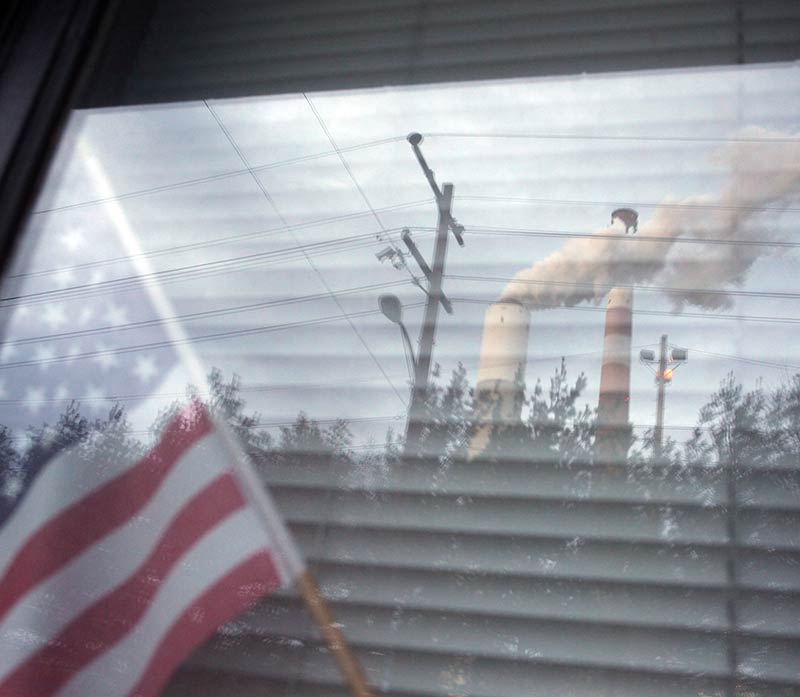
Everyone has The Right To Breathe clean air. Watch a video featuring Earthjustice Attorney Jim Pew and two Pennsylvanians—Marti Blake and Martin Garrigan—who know firsthand what it means to live in the shadow of a coal plant's smokestack, breathing in daily lungfuls of toxic air for more than two decades.

Coal Ash Contaminates Our Lives. Coal ash is the hazardous waste that remains after coal is burned. Dumped into unlined ponds or mines, the toxins readily leach into drinking water supplies. Watch the video above and take action to support federally enforceable safeguards for coal ash disposal.

ABOUT EARTHJUSTICE'S BLOG

unEARTHED is a forum for the voices and stories of the people behind Earthjustice's work. The views and opinions expressed in this blog do not necessarily represent the opinion or position of Earthjustice or its board, clients, or funders.

Learn more about Earthjustice.

View Jared Saylor's blog posts
09 August 2010, 12:00 PM
After a decade of litigation and activism, EPA makes pollution cuts

One of the first issues I worked on when I started at Earthjustice in 2004 was a lawsuit we filed to compel the EPA to take action on mercury and other toxic air pollution from cement kilns. This was during the Bush years, and despite winning in court, the EPA did next to nothing to abide by the law and clean up the air for dozens of communities living around these big polluters.

Today, we all finally have reason to celebrate. After thousands of emails, dozens of press releases, phone calls, meetings and your support, the EPA announced plans that will cut more than 16,000 pounds of mercury from our nation's cement kilns every year, starting in 2013. The rule also cuts thousands of pounds of particulate matter, sulfur dioxide, hydrogen chloride and other pollution, and promises to prevent up to 2,500 premature deaths each year.

2 Comments   /   Read more >>
View Sam Edmondson's blog posts
30 April 2010, 10:04 AM
New EPA rules will cut air toxics, but a loophole leaves some vulnerable
Solid waste incinerator. Photo: EPA.

Americans can breathe a sigh of relief today, thanks to new rules announced by the Environmental Protection Agency that will reduce toxic air pollution in communities across the country. The rules come three years after Earthjustice and others stopped the Bush administration from deregulating toxic emissions from industrial boilers, incinerators, and process heaters.

These sources may sound obscure, but consider that highly polluting materials like coal, discarded tires, used chemicals and other industrial wastes are burned in boilers and solid waste incinerators at hundreds of thousands of facilities in the U.S. Chances are, you or someone you know lives, works, or commutes by one of these facilities, perhaps without even knowing it.

Cancer, reproductive disorders, birth defects and other serious health problems can be caused by the toxic air pollutants from these sources. Now, many of these facilities will be subject to strong pollution controls.

2 Comments   /   Read more >>
View Liz Judge's blog posts
22 April 2010, 9:41 AM
Thanks for all you've done

“The battle to restore a proper relationship between man and his environment, and between man and other living creatures, will require a long sustained political, moral, ethical, and financial commitment far beyond any commitment ever made by any society in the history of man. Are we able? Yes. Are we willing? That’s the unanswered question.” – Gaylord Nelson, founder of Earth Day.

When Earth Day was born 40 years ago, there were “spumes of pollution pouring out of smokestacks, people spraying children in parking lots and at picnics with DDT, air pollution in major cities that was basically unbreathable, rivers catching on fire, lakes dying,” says one of Earth Day’s original organizers, Denis Hayes, in this Washington Post video. “It was just deteriorating very rapidly, but what addressed those problems was a wave of legislation immediately after Earth Day.” (For more on Earth Day’s storied history, read this.)

As we celebrate 40 years of Earth Day, we’re also celebrating 40 years of Earthjustice victories – check out 40 of our favorite victories along with stunning photos in this new slideshow made for Earth Day 2010.

We're also celebrating our army of supporters, activist members, and concerned citizens. We have you to thank for each of these major victories, and the many victories and wins in between.

1 Comment   /   Read more >>
View Molly Woodward's blog posts
21 January 2010, 5:04 PM
Salmon, false killer whales, mercury, water pollution
Scene from the San Francisco Bay Delta

Some top stories from the past week at Earthjustice…

It’s a rainy week here in Oakland, as a storm system bestows California with some much-needed H2O. Our short supply of water has meant trouble for salmon. A new video by Salmon Water Now illuminates startling alliances between big agribusiness and the political interests controlling water and the fate of salmon in the San Francisco Bay Delta.

A wholly different marine creature in peril will get some help at last. The NMFS announced it will take measures to protect false killer whales from the commercial longline fishing industry, following years of Earthjustice litigation. Rarely seen by humans, false killer whales are close relations of dolphins.

Mercury pollution is a big problem for aquatic life (and people who eat fish), and a lot of it comes from medical waste incinerators. In September, the EPA set groundbreaking rules that significantly reduce air pollution from this source, but now these rules are being challenged in court. Earthjustice has intervened in the lawsuit.

And, the toxic green slime clogging Florida’s waterways might finally loosen its hold, thanks to a historic first step by the EPA to limit fertilizer, animal waste and sewage pollution in the state. While the proposed limits aren’t as stringent as they could be, they’re a big improvement.

View Trip Van Noppen's blog posts
21 January 2010, 12:25 PM
Focus is on clean energy, natural heritage, and health

Last year, the U.S. government started taking environmental protection seriously again, but as 2010 dawns, we continue to see political and economic interests preventing or stalling critical environmental solutions.

In the face of this opposition, this year Earthjustice is targeting key issues with our legal and advocacy work. Our focus is on three core priorities: building a clean energy future, protecting our natural heritage, and safeguarding our health.

To avoid global warming's worst impacts, we must build a clean energy future. Reducing demand through efficiency and increasing supply from renewable sources of power are cornerstones of the foundation. But these steps are obstructed by the political stranglehold of the fossil fuel industry. Earthjustice is using the law to help break our national reliance on fossil fuels, which we continue to extract, burn, and subsidize heavily with taxpayer money, despite the destructive impact on people and the planet.

8 Comments   /   Read more >>
View Bill Karpowicz's blog posts
27 August 2009, 9:18 AM
Toxin found in every fish tested in 291 streams

More than two-thirds of fish tested by the federal government between 1998 and 2005 are contaminated by mercury at levels exceeding EPA standards according to a recent report.

Contamination is widespread, the report said, coming from various sources depending on geography. Coal-fired power plants are the largest source of mercury, although 59 of the 291 streams studied may have been affected by gold and mercury mining. The highest mercury levels were found in the south and southeast-North and South Carolina, Georgia, Florida and Louisiana, while elevated levels were found in mining areas of the West and watersheds in the Northeast and Upper Midwest.

In 2008, Earthjustice successfully appealed an EPA rule favorable to industry which would have allowed dangerous levels of mercury to persist. We’re waiting for the Obama administration to make good on its promise to introduce new power plant emission regulations.

View Jared Saylor's blog posts
26 May 2009, 3:51 PM
 

Have you been following our Name That Fish contest? As part of our Cleaning Up Mercury, Protecting Our Health campaign, we just rechristened the Bluefin Tuna as “Blue Infection Tuna.” The timing couldn't be more perfect... a new Federal study was just released this month on the alarming mercury levels in tuna and other fish in the Pacific ocean.

YubaNet.com reports:

A landmark study by scientists from the U.S. Geological Survey (USGS) and universities in the U.S. and Australia has, for the first time, documented how escalating mercury-laden air emissions, chiefly from coal-fired electrical power plants in Asia, are being transformed into methylmercury, a potent neurotoxin that is increasingly polluting the North Pacific Ocean and contaminating tuna, swordfish and other popular seafood.

2 Comments   /   Read more >>
View Jared Saylor's blog posts
08 May 2009, 8:58 AM
 

People around the Web and across the country are talking about our Cleaning Up Mercury, Protecting Our Health campaign to raise awareness about the serious health risks of mercury poisoning and to support the recent EPA proposal for cutting mercury pollution.

Here are some of the comments making the rounds:

View Jared Saylor's blog posts
01 May 2009, 12:59 PM
 

We've told you about the dangers of eating mercury-contaminated fish. Today, the US Geological Survey released a comprehensive study linking the mercury emissions from smokestacks here in the US and abroad, and the contamination of fish like tuna and other marine life in the Pacific Ocean. According to the NY Times and Greenwire:

The study documents the formation in the North Pacific of methylmercury, a highly toxic form of mercury that rapidly accumulates in the food chain to levels that can cause serious health concerns for people who consume seafood. Scientists have known for some time that mercury deposited from the atmosphere can be transformed into methylmercury, but the study focuses on how that transformation occurs.

USGS showed that methylmercury is produced in mid-depth ocean waters by processes linked to "ocean rain." Algae, which are produced in sunlit waters near the surface, die quickly and rain downward to greater water depths. The settling algae are decomposed by bacteria and the interaction of this decomposition process in the presence of mercury results in the formation of methylmercury.

Many steps up the food chain later, predators like tuna receive methylmercury from the fish they consume, the study shows.

EPA Administrator Lisa Jackson said, "This study gives us a better understanding of how dangerous levels of mercury move into our air, our water, and the food we eat, and shines new light on a major health threat to Americans and people all across the world."

Just last week, the EPA proposed significant cuts in cement kiln mercury emissions (up to 16,000 pounds a year), and we’re hopeful they will continue this leadership when they work to cut mercury from coal-fired power plants sometime in the future.

Mercury is a neurotoxin especially dangerous to young and unborn children, and women of childbearing age are often warned to limit their consumption of contaminated fish (like tuna, shark, walleye, or wild striped bass).

View Jared Saylor's blog posts
29 April 2009, 12:45 PM
 

We've been seeing some great coverage of the EPA's plan to cut mercury from cement kilns. Lots of bloggers have taken notice. Here are a few posts about our mercury campaign from around the blogosphere:

Treehugger wrote:

I doubt if any other nation regulates mercury emissions from cement kilns the way USA is about to. USEPA's just-announced progress on this front took a decade of work, several lawsuits by activists, a new EPA Administrator willing to obey the law, and a new Congress that doesn't (yet) bow to lobbyists and interfere with EPA. With all that build-up, the new, final USEPA cement kiln mercury control regulation is indeed a "sea change."

The New York Times Green Inc. Blog said:

James Pew, a lawyer with Earthjustice, an environmental law firm that had sued the E.P.A. on behalf of the Sierra Club after the agency missed a 1997 deadline to issue new emissions rules for the cement industry, said, "It's a very toothy law that will force all cement plants to meet the highest standards of pollution control."