Posts tagged: mountaintop removal

unEARTHED. The Earthjustice Blog

mountaintop removal


    SIGN-UP for our latest news and action alerts:
   Please leave this field empty

Facebook Fans

Featured Campaigns

Everyone has The Right To Breathe clean air. Watch a video featuring Earthjustice Attorney Jim Pew and two Pennsylvanians—Marti Blake and Martin Garrigan—who know firsthand what it means to live in the shadow of a coal plant's smokestack, breathing in daily lungfuls of toxic air for more than two decades.

Coal Ash Contaminates Our Lives. Coal ash is the hazardous waste that remains after coal is burned. Dumped into unlined ponds or mines, the toxins readily leach into drinking water supplies. Watch the video above and take action to support federally enforceable safeguards for coal ash disposal.

ABOUT EARTHJUSTICE'S BLOG

unEARTHED is a forum for the voices and stories of the people behind Earthjustice's work. The views and opinions expressed in this blog do not necessarily represent the opinion or position of Earthjustice or its board, clients, or funders.

Learn more about Earthjustice.

View Liz Judge's blog posts
20 July 2012, 8:38 AM
Stand with this literary giant and become a Mountain Hero, too

Fighting against mountaintop removal, this week we’re proud to announce the support of an incredibly strong woman: writer and activist Terry Tempest Williams. We know our supporters care deeply about the welfare of animals in the wild, and saw this vividly on our Facebook page when we highlighted the animals of Appalachia in a photo album on Facebook.

The Appalachian Mountains contain some of the richest assortment of wildlife in the country, from white-tailed deer to great horned owls. When these mountains are blown up by coal mining, not only are we losing the beautiful landscape, we are also destroying the habitat of the wildlife that make their home in Appalachia.

Following her own passion for wildlife, Williams has written on the lives of a clan of endangered prairie dogs, showing how they are the creators of “the most sophisticated animal language decoded so far.” Respect for life in all its myriad forms is a topic she argues for with sensitivity and detail.

View Kelsey Oliver's blog posts
09 July 2012, 11:42 AM
Mountain Heroes are my inspiration

With the Fourth of July comes a resurgence of patriotism, fireworks, and tasty BBQs, but also the opportunity to reflect on what makes America so great. Here at Earthjustice, we like to think that part of what makes this nation so great are its mountains, our “purple mountain majesties,” and the uniquely American history embedded in those slopes and valleys.

As part of honoring America’s mountains, this week’s featured Mountain Hero is Iraq war veteran Jonathan Gensler, a former officer and native of West Virginia.

In his story, Jonathan reconnects the history of America to its mountains:

The battlefield at Blair, spread across the ridgelines slated for destruction, is the site of the momentous coal miner uprising that launched our nation’s workers’ rights movement and remains the largest violent uprising in our nation’s history since the Civil War. The importance of this site goes far beyond Logan County and is pivotal in understanding and remembering the struggles of our forefathers to give working men and women basic rights—a history the coal industry would also like us to forget.

Jonathan Gensler.

2 Comments   /   Read more >>
View Liz Judge's blog posts
27 June 2012, 2:03 PM
Mountain Hero continues the work of her celebrated mother, Judy Bonds

Could there be a love more unconditional and more powerful than the love of a mother for her child? Most mothers I know would say, "No, not even possible." But if you've ever observed the adoring eyes of a child looking up to his or her mother, you might think twice.

Lisa Henderson's story is a remarkable tribute to this love and bond between mother and child.

Through our Mountain Heroes campaign, Lisa tells the story of watching her mother, renowned anti-mountaintop removal mining activist and Goldman Prize winner Judy Bonds, grow into a leader of the movement to save mountains, communities and people.

Lisa Henderson. (Chris Jordan-Bloch)

View Liz Judge's blog posts
19 June 2012, 11:13 AM
Congress finally addresses community health emergency in Appalachia
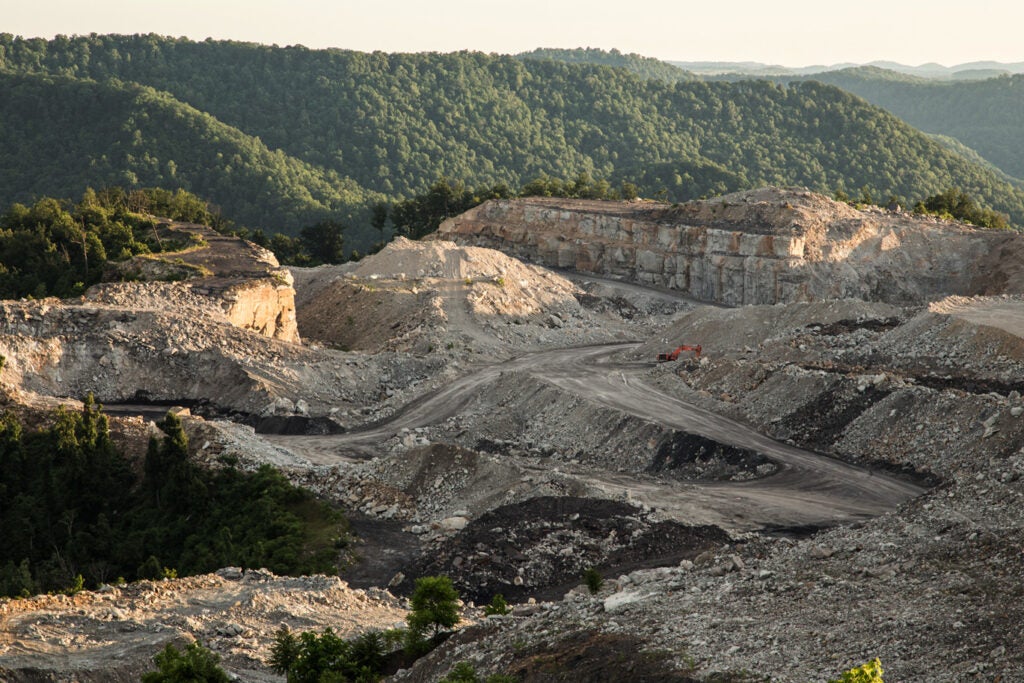
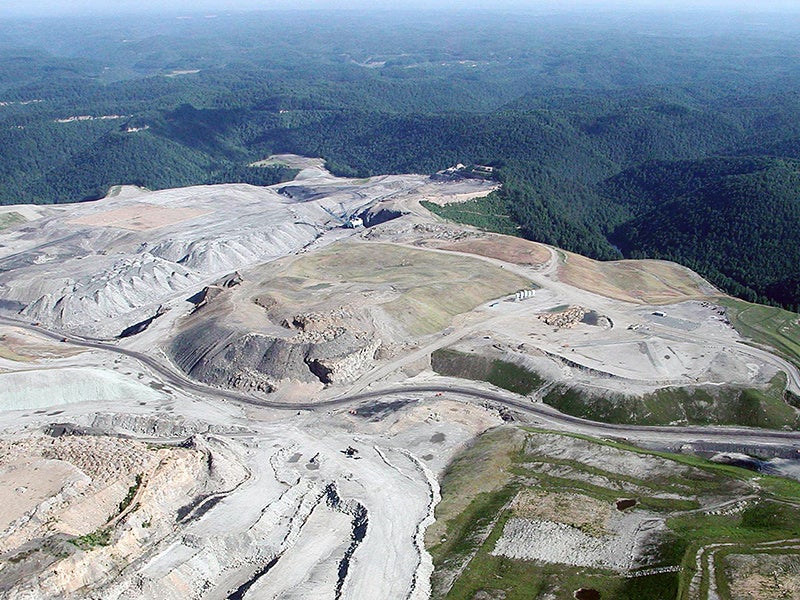
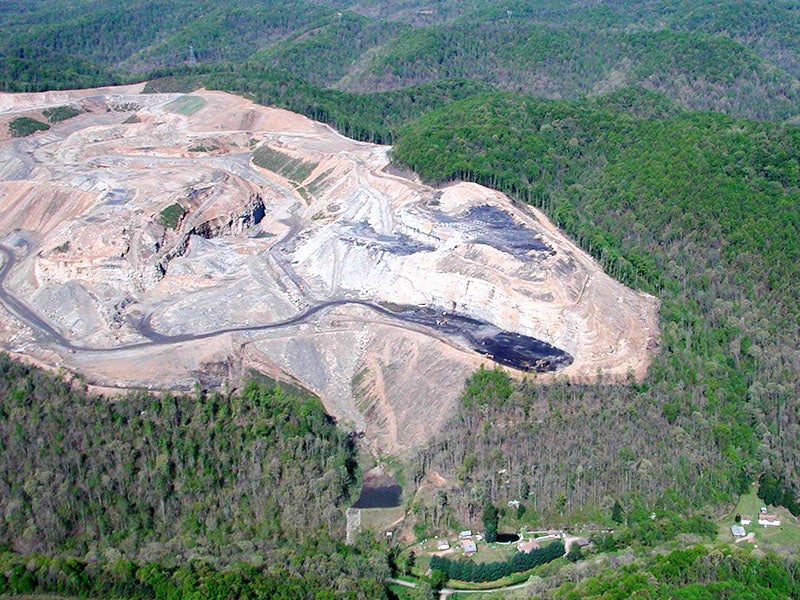
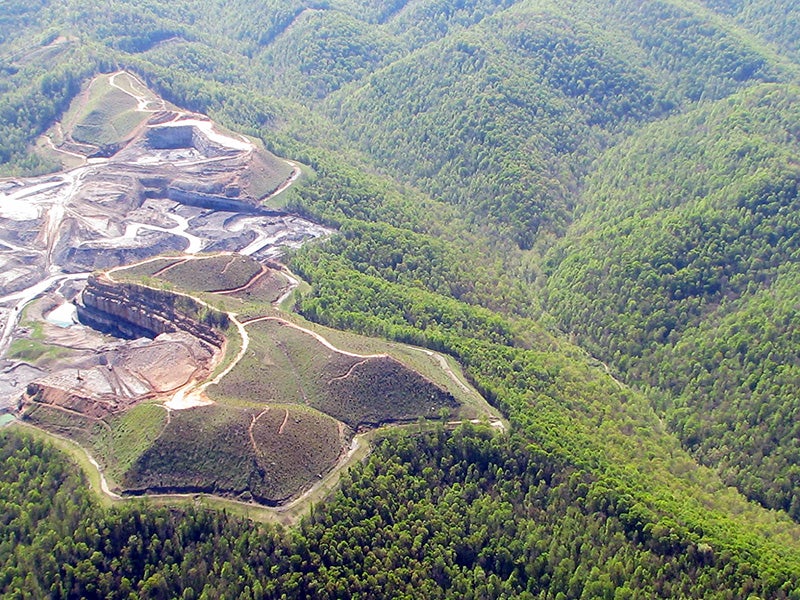
Mountaintop removal mining devastates the landscape, turning areas that should be lush with forests and wildlife into barren moonscapes. (OVEC)

Big news today in our fight to end destructive mountaintop removal mining: 13 congressional leaders joined to introduce legislation to protect communities and families from the dangerous health effects of our nation's most extreme form of coal mining—mountaintop removal mining.

The Appalachian Community Health Emergency Act is the first federal legislation to address the human health effects of mountaintop removal mining. More than 20 peer-reviewed scientific studies show significantly elevated birth defect rates, early mortality rates, cancer rates, and major disease rates in areas of mountaintop removal mining. There is truly a public health emergency, and these studies point the blame to mountaintop removal mining.

This bill aims to protect communities and address this health emergency: It would require the Department of Health and Human Services to conduct thorough health studies on the human impacts of mountaintop removal, and until it is proven that this form of mining is not killing, harming, or sickening families, children, and people across Appalachia, it would place a hold on all new mining permits.

View Liz Judge's blog posts
04 June 2012, 11:28 AM
Stories and inspiration from the fight to end mountaintop removal mining

Over our years of working to stop mountaintop removal mining, we at Earthjustice have met so many brave and dedicated people fighting for their communities, mountains and waters. In 2010, Earthjustice launched our “Mountain Heroes” campaign to share their inspiring stories and show that this is not just a fight for the environment—it’s a fight for justice and a fight to save communities, families and Appalachian culture.

Through this campaign, we shared the stories of a few true heroes and created a public photo petition, asking the public to share their own stories—and tell us why they want to save mountains, protect clean water, and fight for justice in Appalachia.

What we got back was astounding and inspiring.

1 Comment   /   Read more >>
View Liz Judge's blog posts
26 March 2012, 3:41 PM
Citizens vow to fight harder against mountaintop removal mining
Mountaintop removal mining

[Updated 4.6.12]   A federal district court judge overruled the Environmental Protection Agency's veto of the proposed Spruce No. 1 Mine in West Virginia, a case in which Earthjustice and partners and clients in West Virginia were granted amicus curiae.

The court ruling came as heartbreaking news for our partners in West Virginia and across Appalachia, who have been fighting to protect their communities from this proposed mine (and mountaintop removal mining in general) in the courts for more than a decade. The Spruce No. 1 mine would be the largest mountaintop removal mine in West Virginia, and one the largest in all of Appalachia.

Like all mountaintop removal mines, it is likely to inflict a slew of health hazards on nearby communities, as well as shake their homes and cause costly property damage. The Spruce mine would also bury and destroy seven miles of vital streams and decimate more than 2,000 mountain acres, razing 3.5 square miles of mountaintop forests and dumping 110 million cubic yards of toxic mining waste into waters and valleys an area already suffering from the impacts of mountaintop removal mining.

1 Comment   /   Read more >>
View Liz Judge's blog posts
22 March 2012, 11:20 AM
Water is life, so let's keep our fight for clean water alive
One billion people around the world don't have access to clean, safe water. (Getty)

It’s World Water Day, a day that reminds us of our most valuable resource of all: clean water.

Some of us may not think twice about a glass of clean water, a swimmable lake, or a fishable river, but clean water is not an accident. All the world over, clean water is something that people and governments have to work hard to protect and deliver safely to populations. And it is a resource that much of the world’s population still does not have access to.

Here are some quick facts to put access to safe, clean water into perspective:

View Liz Judge's blog posts
28 February 2012, 10:19 AM
State may become first to ban high-altitude mountaintop removal mining
Tennessee mountains -- Image courtesy of EarthFirst

A bipartisan bill is coming up for a vote in the Tennessee state legislature tomorrow (Feb. 29) that would ban surface mining and mountaintop removal mining at altitudes above 2,000 feet in the state.

This legislation would ensure that the most scenic vistas are protected for residents and visitors instead of being razed.

The Tennessee Senate’s Energy and Environment Committee will vote on the bill, determining whether it makes its way to the whole state’s senate for full floor vote.If it passes, this will be the first and only mountaintop removal mining ban in any state in the U.S., setting a precedent for other Appalachian states and citizens who are coping with this abominable type of coal mining.

6 Comments   /   Read more >>
View Liz Judge's blog posts
27 February 2012, 9:18 AM
Forty years after tragic sludge dam failure, the threat remains
Buffalo Creek dam failure aftermath

Yesterday, Feb. 26, was the 40th anniversary of the tragic Buffalo Creek coal sludge (also known as “slurry”) dam failure that killed 126 people and left thousands injured and homeless.

What is sludge? Before coal can be sold, it has to be processed. During the processing of coal, it’s washed in a chemical mixture to remove the dirt, rocks and clay. The resulting waste is a toxic brew of carcinogenic materials, chemicals and heavy metals that coal companies store in massive earthen dams near where they mine the coal. Coal companies dig out entire lakes to fill with this nasty stuff, and it just sits there either in perpetuity or until the dam breaks and explodes onto the communities below. Sludge dams pose a particularly looming danger in Appalachia, where they are built high up in the mountains, in perfect positioning to bring a black wave of death down to the towns and communities below them.

This is what happened in Buffalo Creek, West Virginia in 1972. Heavy rains came during that fateful week in late February, stressing the already weakly constructed sludge dams of the Pittston Coal Company.

2 Comments   /   Read more >>
View Brian Smith's blog posts
26 January 2012, 1:37 PM
The Economist magazine sees a trend

When an environmental organization tells you the age of coal is over, it’s fair to dismiss that as mere wishful thinking.

But when an international economic magazine says the same thing, people sit up and pay attention.

While the cradle-to-grave impacts of coal are well documented, the fact remains that coal still provides 45 percent of the nation’s power. But coal's dominance is decreasing as new sources of power come online and energy efficiency improves.

1 Comment   /   Read more >>