Posts tagged: National Marine Fisheries Service

unEARTHED. The Earthjustice Blog

National Marine Fisheries Service


    SIGN-UP for our latest news and action alerts:
   Please leave this field empty

Facebook Fans

Featured Campaigns

Everyone has The Right To Breathe clean air. Watch a video featuring Earthjustice Attorney Jim Pew and two Pennsylvanians—Marti Blake and Martin Garrigan—who know firsthand what it means to live in the shadow of a coal plant's smokestack, breathing in daily lungfuls of toxic air for more than two decades.

Coal Ash Contaminates Our Lives. Coal ash is the hazardous waste that remains after coal is burned. Dumped into unlined ponds or mines, the toxins readily leach into drinking water supplies. Watch the video above and take action to support federally enforceable safeguards for coal ash disposal.

ABOUT EARTHJUSTICE'S BLOG

unEARTHED is a forum for the voices and stories of the people behind Earthjustice's work. The views and opinions expressed in this blog do not necessarily represent the opinion or position of Earthjustice or its board, clients, or funders.

Learn more about Earthjustice.

View Kari Birdseye's blog posts
22 March 2013, 7:27 PM
And ConocoPhillips eager to drill in the Arctic Ocean

Earthjustice received some superb video today from Dutch Harbor, Alaska, of Shell’s beat up Arctic drilling rig, the Kulluk, as it was lifted onto a huge dry haul ship to be carried to Asia for repairs:

This comes on the heels of a report from the Department of Interior, which summarized  a 60-day investigation into Shell’s 2012 Arctic Ocean drilling season and was highly critical of the oil giant’s operations.

1 Comment   /   Read more >>
View Jessica Knoblauch's blog posts
03 January 2013, 5:35 PM
Plus: Oregano immunity, recycling for couples, NorCal coastal protections
Photo courtesy of Scott Beale (flickr)

Climate change could flood Facebook, Google by 2050
Facebook can't be brought down by angry fans irritated with its privacy policy and data mining tendencies, but it could be swept away by climate change- induced sea level rise, reports Climate Wire. Though much of the California coastline is at risk, Silicon Valley is especially vulnerable since the land it sits on is between 3 and 10 feet below sea level. According to a draft study from the Army Corps of Engineers, an extreme storm coupled with higher seas could put the valley, along with nearby homes and businesses, under water. Despite the dire predictions, for now Silicon Valley inhabitants seem content with delaying any climate change action, a sentiment that world leaders are mimicking. Unfortunately, a recent study has found that delaying carbon cuts until 2020 will make dealing with climate change far more expensive than tackling it now, reports Reuters. And, delaying action also significantly reduces the chance of meeting an U.N. agreed-upon limit of 2 degrees Celsius above pre-industrial times, which is the limit many scientists agree we must adhere to in order to avoid the most damaging effects of catastrophic climate change. So far, temperatures have risen by 0.8 degrees Celsius since we first started emitting carbon in massive quantities. While governments and industries dawdle, find out how Earthjustice is taking action to stop climate change, before it’s too late.

View John McManus's blog posts
28 November 2012, 2:58 PM
Earthjustice will act to protect them
L87, a southern resident orca, breaches at sunset with Whidbey Island and Mt. Baker in the background.  (Susan Berta / Orca Network)

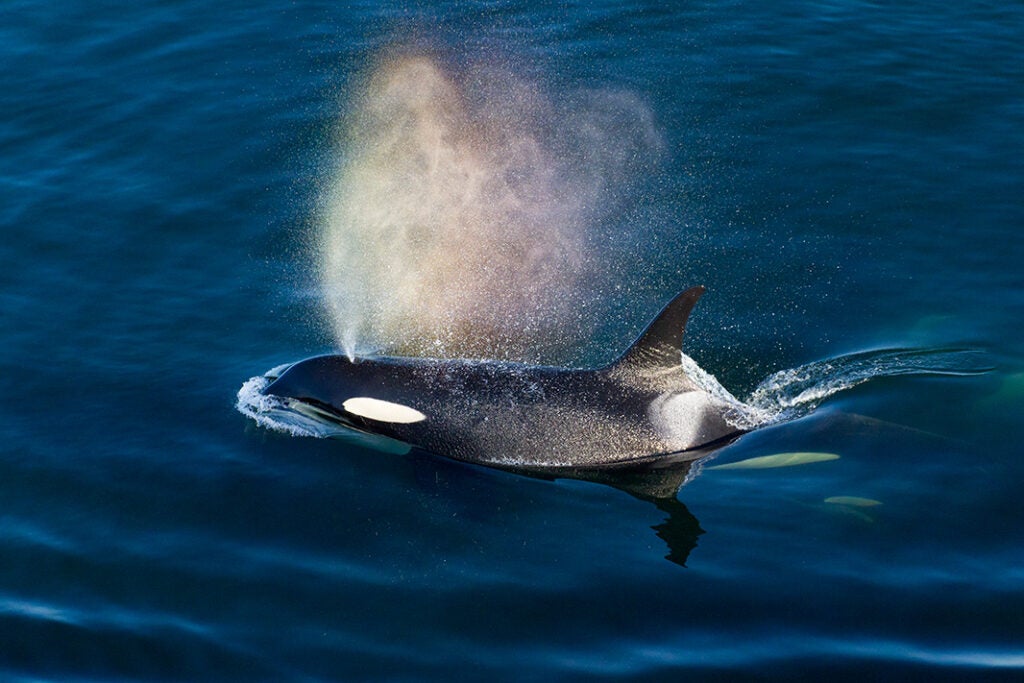
A far right anti-environmental group based in Sacramento, California is trying to get federal Endangered Species Act protections removed from a small extended west coast family group of killer whales.

This group of killer whales, or orcas, is known as the southern residents because they spend much of their time residing in coastal waters between Washington and Canada’s Vancouver island. They feed almost exclusively on salmon, which is indirectly what’s got them in trouble with the anti-environmental Pacific Legal Foundation. They eat salmon not only in Washington waters, but as far south as California when salmon mass there in the spring.

Federal regulators curtailed fresh water diversions to large agricultural operations in the desert on the west side of California’s San Joaquin Valley, in part to save the salmon eaten by the whales—both for the sake of the threatened salmon, and for the whales. The Pacific Legal Foundation and other anti-environment groups (including one headed by a former Bush Administration wildlife official) found a few irrigators there who were willing to ignore the needs of the orcas in order to get more water diverted.

Because these groups and the irrigators live more than a thousand miles from where the killer whales spend most of their time, no one should be surprised they aren’t all that concerned about the whales.

2 Comments   /   Read more >>
View Roger Fleming's blog posts
22 June 2012, 12:16 PM
Finally, oversight coming for poorly regulated fisheries
Herring school.

A special thank you goes out to the thousands of Earthjustice supporters who took action over the last few months by writing to the fishery management councils. Your voices made a huge difference.

After a long struggle, we just concluded two great weeks in the campaign to protect forage fish, some of the most important fish in the sea.

I want to share with you some of the details about what happened.

1 Comment   /   Read more >>
View John McManus's blog posts
17 May 2012, 12:57 PM
Coastal training kills, injures more than thought
A Navy vessel with research ship and orca pod, in the foreground. (Center for Whale Research)

Last week, the U.S. Navy came out with a shocking confession. They now admit that their coastal training exercises kill or harm more marine mammals than previously acknowledged. Apparently, new data led to a recalculation about how many whales, dolphins and seals are hurt by the mid-frequency sonar and explosions the Navy routinely use in training off our coasts.

Earthjustice is challenging a permit by the National Marine Fisheries Service allowing the Navy to train in the Pacific Northwest, off the coasts of Washington, Oregon and northern California. The challenge aims to get the Navy to move its training a short distance to deeper waters off the continental shelf where marine mammal populations quickly thin out, and away from other areas where marine wildlife congregate.

Note of clarification: We agree that warfare is more sophisticated than ever before, meaning the Navy has to use more sophisticated measures to make sure enemy subs and the like don’t get close enough to the U.S. to harm us. Unfortunately, they choose to train in the same coastal waters where ocean food production is high and are thick with marine mammals.

4 Comments   /   Read more >>
View Brian Smith's blog posts
09 April 2012, 3:59 PM
And we should protect them
Menhaden are a key forage fish threatened by overfishing.

When you ask a 4-year-old, “What do big fish eat?,” the answer comes easily, “Little fish!”

A new report by the Lenfest Forage Fish Task Force entitled Little Fish, Big Impact confirms the wisdom of the 4-year-old -- big fish do eat little fish.

Why is this finding significant?

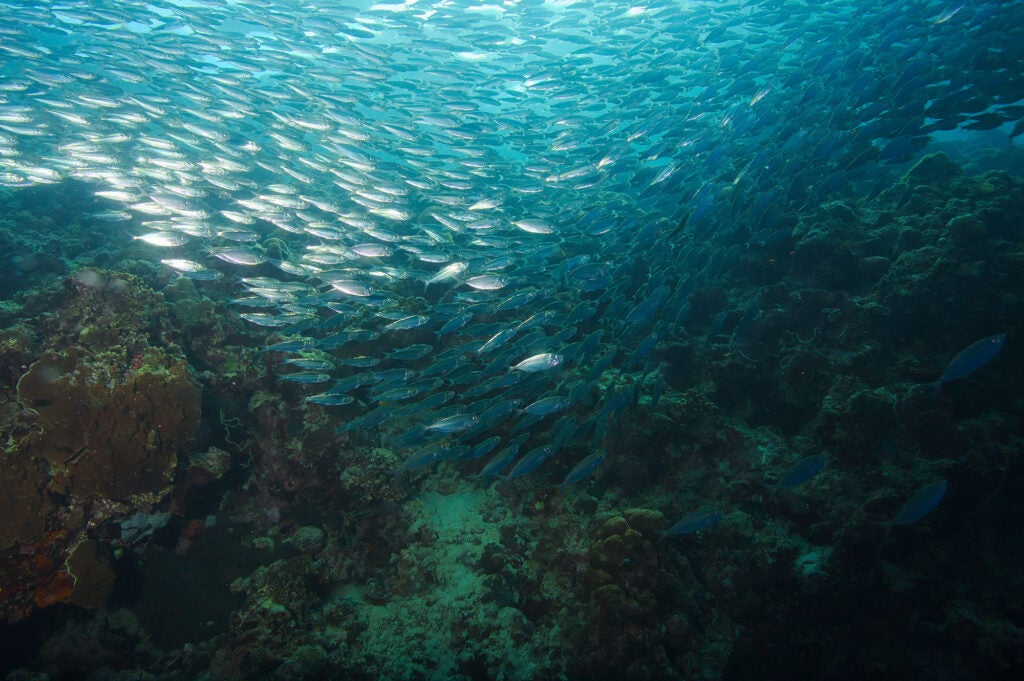
Little fish (forage fish) play an essential role in the marine food web.

1 Comment   /   Read more >>
View John McManus's blog posts
27 January 2012, 2:32 PM
Whales, other creatures imperiled by Navy's insensitivity
Grey whales are among the creatures threatened by sonar testing.

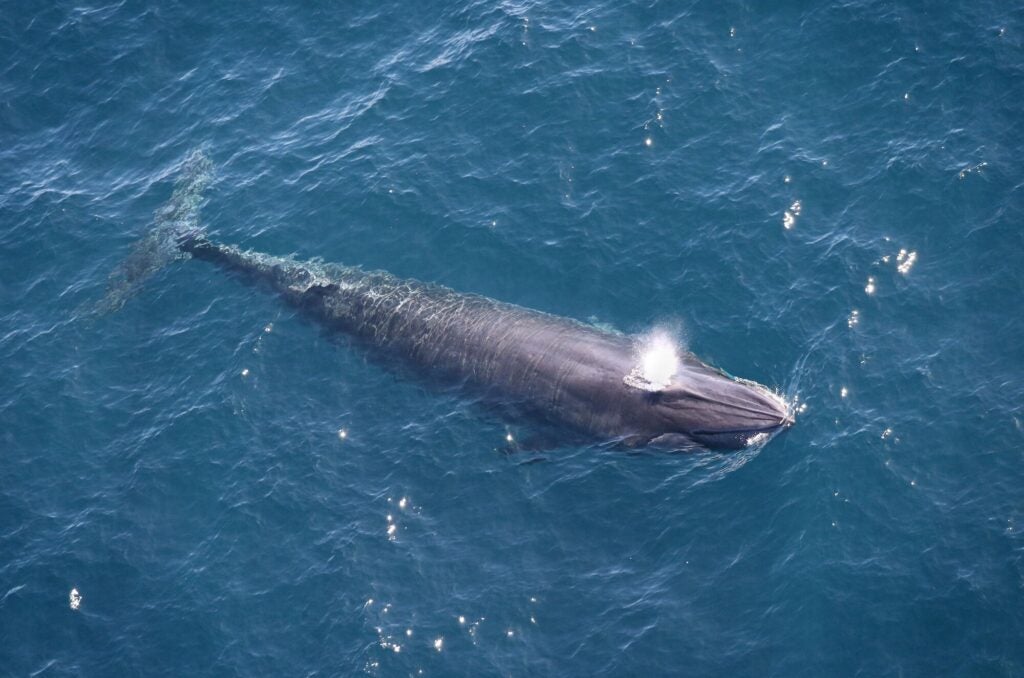
Environmental groups and some Indian tribes, represented by Earthjustice, have gone to court to get the U.S. Navy to change the way it trains off the West Coast to avoid harming whales, dolphins and porpoises.

The Navy currently has a permit from the National Marine Fisheries Service, allowing it to train from Northern California to the Canadian border. In its training, the Navy uses all kinds of weapon and surveillance tools, including mid-frequency sonar. This is super high-powered sonar blasts used to “see” underwater. The sound waves bounce off objects like the seafloor or enemy subs and the echo is picked up and read by the Navy ships.

The problem is that the high-powered underwater sound blasts can harass, injure or kill whales, dolphins and porpoises, which are already extremely sensitive to sound. These animals send and receive sound waves to “see” and communicate underwater. Their ability to pick up sound is so good that some whales can hear each other under water hundreds of miles apart.

2 Comments   /   Read more >>
View Jessica Knoblauch's blog posts
17 November 2011, 3:27 PM
“A lot of people have no idea that many of these ocean species are so badly depleted.”
Steve Roady speaks about Earthjustice's oceans litigation.

Intro: This is the first in a series of Q and As on Earthjustice’s oceans work, which works to prevent habitat loss and overfishing, as well as reduce the impacts of climate change on the ocean. Earthjustice’s Oceans Program Director Steve Roady has been litigating cases that help protect our oceans for more than a decade. Check out earthjustice.org/oceans for more information.

Jessica Knoblauch: What first drew you to oceans management work?
 
Steve Roady: I was first exposed to the oceans while growing up on Florida’s Gulf coast. I spent a lot of time on the beaches as a child and was always fascinated by the shrimpers. But I really first became aware of the key problems in the environment in middle school where we were all forced to read Rachel Carson’s classic book, Silent Spring. The idea that birds were dying because of DDT was just amazing to me and it really got me thinking about environmental issues.
 
JK: How does Earthjustice use the law to protect oceans?
 
SR: Earthjustice is one of the leading groups to begin looking at oceans’ problems through the lens of potential federal litigation. Basically, we work with three or four of your standard environmental laws. There’s the Magnuson-Stevens Act, the main federal fisheries act, which directs the federal government to prevent overfishing and to minimize bycatch, to protect habitat and to rebuild overfished fish populations. There’s also the National Environmental Policy Act, which mandates the federal government to carefully study the environmental effects of their actions before they take them. And we also invoke the Endangered Species Act to protect species like sea turtles, which are protected under the ESA but often killed as so-called bycatch in trawl fisheries around the country.
 
We invoke all of these statutes in an effort to try to curb the unrestrained fishing practices going on in federal fisheries and do our best to make sure the federal government is complying with the basic thrust of the laws that protect the ocean resource. Since we started the Ocean Law Project back in 1998, we’ve had a number of significant wins in the courts that set some significant precedents with respect to how the federal government manages ocean resources in a sustainable way. And typically we’ll have a case that we’ll bring on behalf of other groups, so if a case is won the precedent goes to everybody’s benefit.

1 Comment   /   Read more >>
View Jessica Goddard's blog posts
07 October 2011, 10:07 AM
Illegal fishing practices in the Gulf of Mexico lead to death of 3,000 sharks
Texas game wardens pull in miles of netting filled with killed sharks. Source: www.valleycentral.com

It was the largest shark kill the Texas game wardens had ever seen. Last week, wildlife officials discovered an estimated 3,000 sharks caught and killed in an illegal gill net off South Padre Island in the Gulf of Mexico.

Gill nets hang underwater from floats to a lead-weighted bottom line like mesh curtains, often extending up to 5 miles in length and 25 feet in depth. Notorious for their bycatch threat to sea turtles, marine mammals (such as, sea otters, dolphins and whales), sea birds, and other non-target fish, gill net possession has been illegal in Texas since 1981.
 
"This is by far the most sharks I have ever gotten in one load. Myself and my deck hand have been working on this boat for 15 years and have never seen this many sharks in one net,” said Sgt. James Dunks. Indeed, Texas Parks and Wildlife regulations prohibit licensed fishers from catching more than one shark per day.

View Shirley Hao's blog posts
11 July 2011, 8:39 AM
“Slow-motion stampede” grounds planes to a halt
One member of the turtle invasion poses for a dramatic photo. (Photo: Port Authority of New York and New Jersey)

Here at Monday Reads, we’ve followed the jellyfish typhoon invasion, gardening goat invasion, and wolverine invasion-of-one. Finally, we’ve reached the turtle invasion.

A few weeks ago, New York’s John F. Kennedy International Airport awoke to find its Runway 4L under siege by waves of relentless reptiles. The Associated Press reported that the “slow-motion stampede” rather conveniently got underway just as the morning rush of travelers was trying to get airborne. The onslaught soon swelled to a crescendo of more than 150 diamondback terrapin turtles, plodding determinedly through treacherous territory. Where were they going, that they would risk shell and limb? Let’s just say teens on Spring Break aren’t the only ones who like to get frisky on sandy beaches.

1 Comment   /   Read more >>