Posts tagged: Obama administration

unEARTHED. The Earthjustice Blog

Obama administration


    SIGN-UP for our latest news and action alerts:
   Please leave this field empty

Facebook Fans

Featured Campaigns

Everyone has The Right To Breathe clean air. Watch a video featuring Earthjustice Attorney Jim Pew and two Pennsylvanians—Marti Blake and Martin Garrigan—who know firsthand what it means to live in the shadow of a coal plant's smokestack, breathing in daily lungfuls of toxic air for more than two decades.

Coal Ash Contaminates Our Lives. Coal ash is the hazardous waste that remains after coal is burned. Dumped into unlined ponds or mines, the toxins readily leach into drinking water supplies. Watch the video above and take action to support federally enforceable safeguards for coal ash disposal.

ABOUT EARTHJUSTICE'S BLOG

unEARTHED is a forum for the voices and stories of the people behind Earthjustice's work. The views and opinions expressed in this blog do not necessarily represent the opinion or position of Earthjustice or its board, clients, or funders.

Learn more about Earthjustice.

View Trip Van Noppen's blog posts
14 June 2013, 3:47 PM
President Obama's energy mantra echoes the fossil fuel industry
Climate change increases the frequency of deadly wildfires. (U.S. Forest Service Region 5)

In recent weeks we have continued to experience extreme and destructive forest fires, droughts, and floods. The level of carbon dioxide in the atmosphere reached new and dangerous levels.

Despite this, President Obama’s pledge to address climate change with meaningful actions has stalled. Since the stirring words of his Inauguration and State of the Union speeches, the EPA has missed its deadline for setting limits on greenhouse gas emissions from new power plants. Even simple, non-controversial actions like strengthening the efficiency standards for new refrigerators are marooned inside the White House. This failure to act is completely inconsistent with the president’s promise to lead on climate.

Equally troubling is the president’s continued support for expansive and extreme development of new fossil fuel sources. Drilling for oil in the Arctic Ocean, fracking across our public lands, expanding coal mines for export to Asia, and importing dirty, carbon-intensive oil from Canada’s tar sands will all drive climate change to even more destructive levels and will destroy ecosystems and damage people’s health in the meantime.

37 Comments   /   Read more >>
View Trip Van Noppen's blog posts
17 May 2013, 9:35 AM
Ambassadors from every state arrive en masse to buttonhole congress reps
The grassroots campaign involved ambassadors from every state, plus D.C. and Puerto Rico.

A few days ago, a fierce army invaded Washington, D.C. to ask our representatives for something very simple: restore our right to breathe clean air.

This modest proposal came from more than 100 “clean air ambassadors” who know the cost of dirty air all too well. Take Hilton Kelley from Port Arthur, Texas, which is home to more than five large refineries, six chemical plants and an incinerator. In his community, one out of every five households has a child suffering from asthma and other contaminated-air-related illnesses. One day, after having moved away from his home town years ago, he looked in the mirror and asked himself, “If I’m not going to do anything about the conditions in Port Arthur, how can I expect anyone else to?”

5 Comments   /   Read more >>
View Jessica Knoblauch's blog posts
24 April 2013, 9:48 AM
Climate change may ruin your next seafood night
Photo courtesy of quinn.anya

Seafood lovers hooked on $1 oyster nights may soon have to find a new source of comfort for the work week blues.

Thanks to an increase of carbon in both the atmosphere and our water bodies (which absorb about a third of all carbon emissions), carbon munching critters like crabs, lobsters and shrimp are getting bigger and hungrier, say scientists at the University of North Carolina’s Aquarium Research Center. After analyzing blue crabs from the Chesapeake Bay in tanks pumped full of carbon, researchers found that the crabs grew nearly four times faster in high-carbon tanks versus low-carbon tanks.
 
Though bigger crabs sound like a delicious side effect of climate change, they’re not all that they’re cracked up to be, since crabs tend to put all their energy into building larger shells, not meatier flesh. Even worse, super-sized crabs with equally super-sized appetites could also affect the rest of the typical seafood platter, since bigger crabs will no doubt be eating bigger helpings of other seagoing creatures, like oysters.
 
Unfortunately, voracious crabs aren’t the only thing that oysters have to worry about. Because oceans are one of the world’s greatest carbon sinks, taking in 22 million tons of carbon dioxide every day, ocean chemistry is changing rapidly. This is putting a strain on shelled creatures like oysters, shellfish and corals that don't like acid baths because they depend on a pH-balanced lifestyle to build their calcium carbonate shells.
 

View Liz Judge's blog posts
24 April 2013, 9:48 AM
Unanimous panel of judges rule for EPA in coal industry lawsuit

Great news!

Yesterday, citizens in Appalachia celebrated a huge victory in their fight to protect their families and communities from harmful mountaintop removal mining. In a sharp 15-page ruling, a panel of three Republican-appointed judges in the U.S. Court of Appeals for the D.C. Circuit unanimously upheld the Environment Protection Agency’s veto of the permit for the Spruce No. 1 mine, the largest proposed mountaintop removal mine in West Virginia. Earthjustice, along with Appalachian Mountain Advocates, represented a handful of community and citizen groups in this case.

This court decision comes after 15 years of court challenges by community groups whose members were in fallout zone of the proposed mine. It’s a precedent-setting decision and historic: The Spruce Mine permit is the first mountaintop removal mining permit ever challenged in courts.

1 Comment   /   Read more >>
View Raviya Ismail's blog posts
19 April 2013, 12:22 PM
DOE releases new distribution transformer standards
Although the electricity used by any one transformer is small, the losses add up on a national scale.  (iStockphoto)

In 2007, we filed a lawsuit challenging the Bush administration's weak energy efficiency standards for electricity distribution transformers, those gray boxes mounted on utility poles that power all our homes and businesses. The results of that lawsuit are new standards from the U.S. Department of Energy that were published in the Federal Register on Thursday. The standards were updated as part of an agreement settling that lawsuit. Along with Earthjustice, parties to the suit include the Natural Resources Defense Council, Sierra Club and several states.

2 Comments   /   Read more >>
View Holly Harris's blog posts
10 April 2013, 12:30 PM
Big Oil company won't drill in 2014, following Shell's lead
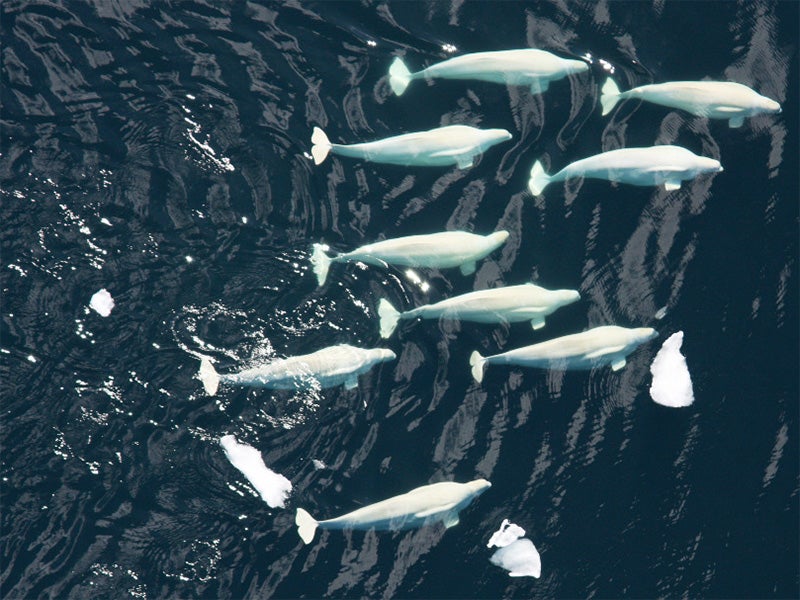
The Arctic is home to a rich variety of marine life, such as beluga whales. Chukchi Sea, Alaska. (Florian Schulz / visionsofthewild.com)

The Arctic Ocean got a reprieve and Big Oil got its latest reality check, today, when ConocoPhillips admitted it's not ready to drill in the Arctic Ocean. After Shell’s summer of accidents and near-misses, a blistering report from the Department of Interior, and now ConocoPhillips’ admission, it is time for the Obama administration to recognize our country’s Arctic offshore oil and gas program was premature. The administration’s “all of the above” energy policy is ignoring the uniqueness of the Arctic region and failing to appreciate the harsh conditions Big Oil will have to be able to endure to drill for oil in Arctic Ocean.

View Jessica Knoblauch's blog posts
04 April 2013, 4:30 PM
Plus: Climate changes coffee and oil industry handouts
Studies have shown that airline cabins contain high levels of flame retardants. Photo courtesy of chinaoffseason (Flickr)

Airplanes may contain high flame retardants levels
New research has found that commercial airliners contain high levels of flame retardants, a suite of chemicals that have been under fire lately due to concerns over health hazards, reports Environmental Health News.

Because having a plane catch fire mid-air could be disastrous, federal regulators require that all airlines pass strict fire-safety tests, hence the intense usage of flame retardants onboard the aircraft. But though chemical companies have long maintained that flame retardants are safe, several recent studies have linked them to detrimental health effects like reduced IQs and attention problems in children. Flame retardants, which are found in common household items like furniture, electronics and even baby clothes, have also been shown to build up in the body over time. And even worse, some studies suggest that flame retardants may not be all that great in slowing fires and may actually increase deadly emissions of carbon monoxide and hydrogen cyanide.

1 Comment   /   Read more >>
View Liz Judge's blog posts
03 April 2013, 12:03 PM
Highlights from the EPA’s chief of water policy

Last week, the Environmental Protection Agency revealed that 55 percent of U.S. streams and rivers are in “poor” condition, according to its most recent national rivers and streams assessment. Following the release of that grim report, the EPA held a live Twitter chat to answer questions about our clean water protections and the state of our waters in the United States.

This was a rare opportunity for the public to directly ask the EPA’s head of water policy, Nancy Stoner, about the agency’s plans to address our nation’s water quality problems. We got a chance to ask some questions, too.

The first question of the chat was ours. We wanted to know how the EPA plans to fix the situation we find our nation in today: The fact is that 27% of the nation’s rivers and streams have excessive levels of nitrogen and 40% have high levels of phosphorus. These nutrient pollutants, which come from factory farms and industrial agriculture, cause toxic green slime outbreaks that are harmful to public health.

View Kari Birdseye's blog posts
22 March 2013, 7:27 PM
And ConocoPhillips eager to drill in the Arctic Ocean

Earthjustice received some superb video today from Dutch Harbor, Alaska, of Shell’s beat up Arctic drilling rig, the Kulluk, as it was lifted onto a huge dry haul ship to be carried to Asia for repairs:

This comes on the heels of a report from the Department of Interior, which summarized  a 60-day investigation into Shell’s 2012 Arctic Ocean drilling season and was highly critical of the oil giant’s operations.

1 Comment   /   Read more >>
View Nadine de Coteau's blog posts
22 March 2013, 10:49 AM
Grammy Award-winning singer shares proceeds for endangered species
The Grammy-winning Radio Music Society is Esperanza's latest album.
(Courtesy of Esperanza Spalding)

When the President of the United States invites you to perform at his Nobel Peace Prize ceremony, there’s only one answer: yes. When that same performer offered to partner with Earthjustice to help raise awareness and support, there also was only one answer: Absolutely, yes!

Esperanza Spalding is a three-time Grammy Award winning musician whom we are lucky enough to count among Earthjustice’s most loyal and committed supporters. Her most recent album, Radio Music Society, was awarded two of the music industry’s most coveted awards: one for Best Vocal Jazz Album and one for Best Instrumental Arrangement (Accompanying Vocals) for the track, "City of Roses."

For more than six years, Esperanza has personally supported Earthjustice in our work to protect endangered species and to preserve wild lands as well as our campaigns against coal and Arctic drilling. This year, Esperanza has generously offered to support Earthjustice through her music—and her artistry.