Posts tagged: oceans

unEARTHED. The Earthjustice Blog

oceans

FOLLOW OUR BLOG:

RSS

    SIGN-UP for our latest news and action alerts:
   Please leave this field empty

Facebook Fans

Featured Campaigns

Everyone has The Right To Breathe clean air. Watch a video featuring Earthjustice Attorney Jim Pew and two Pennsylvanians—Marti Blake and Martin Garrigan—who know firsthand what it means to live in the shadow of a coal plant's smokestack, breathing in daily lungfuls of toxic air for more than two decades.

Coal Ash Contaminates Our Lives. Coal ash is the hazardous waste that remains after coal is burned. Dumped into unlined ponds or mines, the toxins readily leach into drinking water supplies. Watch the video above and take action to support federally enforceable safeguards for coal ash disposal.

ABOUT EARTHJUSTICE'S BLOG

unEARTHED is a forum for the voices and stories of the people behind Earthjustice's work. The views and opinions expressed in this blog do not necessarily represent the opinion or position of Earthjustice or its board, clients, or funders.

Learn more about Earthjustice.

View Shirley Hao's blog posts
06 February 2012, 5:57 PM
All we know, to the best of our knowledge, is that we don’t yet know enough
A male polar bear patrols the pack ice edge in the Chukchi Sea, Alaska. (Florian Schulz / visionsofthewild.com)

As portions of the contiguous United States find themselves (perhaps a bit uncomfortably) in winter’s chilly embrace, a recently published study in the scientific journal Marine Biology may shed new light on the wintry lifestyles of the Arctic regions of our country.

During this season, Arctic areas like the Beaufort and Chukchi seas, off the northern coast of Alaska, experience months of ‘polar nights’—times when the sun fails to make an appearance (making for a veritable vampire haven, one might say).

The extreme degree of coldness of these winter months is key to the survival of species like the polar bear and ringed seals, who depend on the restoration of thick sea ice (long since diminished during the warmer spring and summer months) in order to hunt and raise their young.

A polar night, in Longyearbyen, Norway.

A polar night, in Longyearbyen, Norway. (Bjørn Christian Tørrissen)
View David Lawlor's blog posts
03 February 2012, 12:48 PM
Earthjustice challenges permit for largest estuary dredging project in state history
Coos Bay, Oregon. (Brian Burger/Creative Commons)

A new battle has emerged in the fight over proposed coal export terminals in the Pacific Northwest.

The Oregon Department of State Lands recently issued a permit allowing the Port of Coos Bay to conduct the largest dredging project in an estuary in state history. The permit allows for dredging of the first 1.75 million cubic yards (mcy) of a 5.6-mcy project.

The reason for the massive dredging effort: Coos Bay—a town of about 16,000 people on the remote southern Oregon coast—has been targeted for construction of a coal export terminal and a liquefied natural gas (LNG) export facility.

Earthjustice, representing a coalition of local residents, grassroots environmental, and clean-energy groups, in early January filed an appeal of the Oregon Department of State Lands’ decision to green light the $100 million project. While the “multi-purpose” dredging permit was initially sought to develop an LNG import terminal, the Port of Coos Bay recently entered into a confidential agreement with an undisclosed coal export company seeking to send coal overseas to Asia, and LNG backers have changed their plans to now export domestic gas instead.

1 Comment   /   Read more >>
View Kari Birdseye's blog posts
03 February 2012, 9:46 AM
Using the power of popular media to educate or misinform

The uplifting movie Big Miracle, opening this weekend, has the power to educate people across the country about America’s Arctic Ocean, along with the people and wildlife that call it home.

This is the same place Royal Dutch Shell is planning to drill in our Arctic waters this summer—with no viable method to clean up an oil spill in these extreme conditions. And President Obama has the power to stop them.

View John McManus's blog posts
27 January 2012, 1:32 PM
Whales, other creatures imperiled by Navy's insensitivity
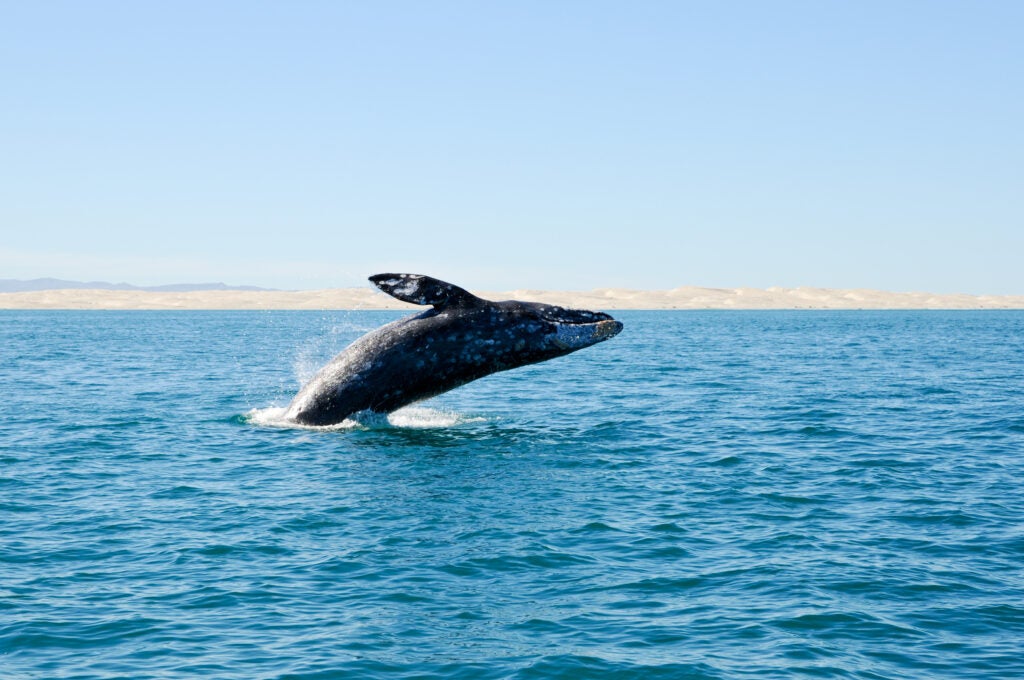
Grey whales are among the creatures threatened by sonar testing.

Environmental groups and some Indian tribes, represented by Earthjustice, have gone to court to get the U.S. Navy to change the way it trains off the West Coast to avoid harming whales, dolphins and porpoises.

The Navy currently has a permit from the National Marine Fisheries Service, allowing it to train from Northern California to the Canadian border. In its training, the Navy uses all kinds of weapon and surveillance tools, including mid-frequency sonar. This is super high-powered sonar blasts used to “see” underwater. The sound waves bounce off objects like the seafloor or enemy subs and the echo is picked up and read by the Navy ships.

The problem is that the high-powered underwater sound blasts can harass, injure or kill whales, dolphins and porpoises, which are already extremely sensitive to sound. These animals send and receive sound waves to “see” and communicate underwater. Their ability to pick up sound is so good that some whales can hear each other under water hundreds of miles apart.

2 Comments   /   Read more >>
View Jessica Knoblauch's blog posts
27 January 2012, 1:36 AM
Green seas, climate change horticulture, mercury meddles with melody
Photo courtesy of AJC1

Conspiracy theorists descend on Florida climate change plan
Plans to prepare for rising sea levels and other climate change affects in south Florida are being attacked by conspiracy theorists who believe climate change is a hoax perpetuated by a group of “progressive elites” who want to raise taxes, reports the Sun Sentinel. Though the majority of comments on the draft Southeast Florida Regional Climate Action Plan came from government agencies and nonprofits that want to improve the plan, a small faction of conspiracy theorists are bent on taking it down, but that doesn't mean policymakers will listen. Said John Van Leer, associate professor of meteorology and physical oceanography at the University of Miami, “A lot of people believe the earth is 5,600 years old. A lot of people believe the human landing on the moon was staged in a Hollywood studio…but that doesn't mean we should base public policy on that." Meanwhile, other states like Hawaii are moving forward on bills to prepare their states for sea level rise. Whether those bills will sink or swim under climate climate change conspiracies remains to be seen.

Clean seas could boost economies’ green
It turns out that oceans that don't have heaps of garbage patches in them don’t just look better, they also make more money for the world economy, reports Reuters. A recent report by the United Nations Environment Program found that pollution from events like oil spills and chemical dumps, coupled with rampant over-fishing, have heavily damaged the oceans’ productivity and health. Add to that the fact that the oceans have acidified more in the last 200 years than the previous 21,000 years and it’s clear that the oceans and its critters need some help from its land-based brethren. In order to clean up oceans, the report recommends "key steps for ‘greening’ the seas across areas” like tourism, fishing and deep-sea mining. Though greening the sea may be costly upfront, the long-term benefits include a $50-billion boost to the economy each year just by restoring fish stocks and reducing fishing capacity. Find out more about how Earthjustice is working to clean up the deep blue sea and why the high value of the oceans is crystal clear.

View Jessica Knoblauch's blog posts
19 January 2012, 11:50 AM
Olympic air challenge, Nemo’s CO2 problem, NYC trashes trash
Bacon cheeseburger (Like_the_Grand_Canyon)

Ag industry takes beef with Americans eating less meat
Americans are eating less meat, which means the U.S. obsession with double-bacon cheeseburgers and chicken-fried sandwiches may one day be a thing of the past, reports Grist. According to the USDA, beef, chicken and pork sales are all down, prompting the meat industry to accuse the U.S. government of being anti-meat by “wag[ing] a war on protein.” This claim, though meaty, is full of holes considering that the U.S. gives the agriculture industry a number of economic freebies to support meat consumption in the form of farm subsidies, lax regulations and school lunch programs fueled by surplus chicken supplies. The real reasons that Americans aren’t eating as much meat are much more multi-faceted and include everything from cutting grocery bill costs and eating healthier to preserving the environment by lessoning carbon footprints. What’s your beef with that?    

Olympic athletes race against London’s air quality
London’s habitually bad air quality may negatively affect Olympic athletes at the London 2012 Olympic Games this summer, reports The Independent. Since the European Union’s limits for particulate matter—extremely small particles of smoke, soot, metals and other chemical compounds emitted from sources like power plants, factories, and diesel trucks—were first put in place a few years back, London has continually exceeded its limits, potentially putting people at risk of negative human health affects like lung and heart disease. Athletes, especially, are at risk due to their need to inhale large amounts of oxygen, which unfortunately also means inhaling unsafe quantities of particulates, nitrogen dioxide and ozone that could give them chest pains and decrease their lung capacity. Though the city has introduced long-term air quality improvement measures in London, currently there is no short term plan to clear the air before July, when the Olympic games begin.

View Jessica Knoblauch's blog posts
13 January 2012, 11:22 AM
The oceans' acid test, playing with wildfire, raising a glass to climate change
Napa Valley vineyards in autumn. (tibchris)

Transit riders run over by reduced tax breaks
Thanks to a lack of action by Congress before the holidays, mass transit commuters will have to pay an additional $550 in taxes this year, reports the New York Times, while those who commute by car will benefit from an increase in pre-tax benefit for monthly parking. In addition to encouraging the number of cars with single occupants, the move will no doubt clog already congested streets and increase carbon emissions. It also takes a jab at people who, for the most part, already deal with enough aggravation (think late bus arrivals, screaming babies and the person who insists on practically sitting on your lap despite the availability of other seats.) Maybe when Congress gets back in session, they’ll consider making the tax benefit, at the very least, apply equally to car and transit users.

Acidic oceans threaten entire food chain
Sharks are already stressed by the public’s taste for shark fin soup and warmer weather meddling with their dating habits. Now it looks like they will have to add acidic oceans to their list of worries. Increasingly acidic waters thin the shells of their main food source, tiny marine creatures, reports MSN. But it’s not just sharks that rely on these species for food. Virtually every creature from salmon to seals to even humans will be affected, thanks to a little thing we like to call the marine food web. Scientists already know that as oceans absorb more carbon, the waters acidify, which makes living conditions very uncomfortable for any animal with a shell, and creates food scarcity for everyone else. Add this to the already overwhelming threats of pollution, habitat loss and overfishing, and it’s clear to see that the oceans—and the people who work to save them-- including Earthjustice—have their work cut out just trying to keep their heads above water. 

View Shirley Hao's blog posts
09 January 2012, 4:01 PM
Genetically distinct species make a strong, surprising hybrid showing
A hybrid black-tip shark comes in for a camera close up. (University of Queensland)

Climate change has been accused of being many things, from Imposter to Glacier National Park Name-killer. And now to the list we can add...Interspecies Dating Matchmaker?

A study published last month in Conservation Genetics documented no fewer than 57 instances of hybrid common black-tip (Carcharhinus limbatus) and Australian black-tip (Carcharhinus tilstoni) sharks off the eastern coast of Australia. The number of hybrid sharks previously uncovered in the wild or at your friendly neighborhood aquarium? Zero.

The concept of hybridization between distinct species is not a new one. (Who can forget the wholphin? The pizzly bear?) But what makes this case interesting is the sudden abundance of hybrids in species who, until this time, have (as far as we know) diligently remained within their predefined mating circles.

1 Comment   /   Read more >>
View Jared Saylor's blog posts
12 December 2011, 3:34 PM
Oil spill would be diastrous and there's no way to clean a spill up

It’s not easy to get the President’s attention. He’s a busy guy, and despite sending him thousands of comment letters and making hundreds of phone calls, he just doesn’t seem to understand that Americans don’t want oil drilling in the fragile waters of the Arctic Ocean. These waters are home to polar bears, walrus, bowhead whales and other endangered species. They provide bounty for Native subsistence communities. A spill in these waters would be an environmental disaster unlike any other. The nearest coast guard station is over a thousand miles away, and the frozen seas are battered with heavy winds and ice floes dozens of feet wide.

Well, we’re turning up the volume on our call for Arctic Ocean protections. This week, we’re running an ad in the New York Times and another in Politico, along with radio ads on local talk news stations in Washington, D.C. that ask President Obama, “Why would you allow unsafe drilling in the Arctic Ocean?”

2 Comments   /   Read more >>
View Jessica Knoblauch's blog posts
01 December 2011, 11:33 AM
A loggerhead sea turtle gets a second chance at life
Sea turtles like Karsten often mistakenly swallow fishhooks, which can result in entanglement, choking and even death. (Jessica Knoblauch)

It’s not every day that a wild animal gets a lucky break, but a few months back that’s exactly what happened to Karsten, a peaceful loggerhead sea turtle that was released off of Sombrero Beach in the Florida Keys after months of rehabilitation.

Karsten was found back in May with a fishhook in his jaw and another in his esophagus. His painful plight is unfortunately all too common for countless numbers of sea turtles who mistake baited fishhooks for harmless food and then drown because they are unable to surface for air. Though turtles have charted the seven seas for more than 100 million years, over the past few decades these ancient and resilient creatures have seen their numbers plunge due to destructive human activities. Florida, for example, has seen its nesting loggerhead population plummet by more than 40 percent in the last decade, in part because of longline fishing.

1 Comment   /   Read more >>