Posts tagged: public lands

unEARTHED. The Earthjustice Blog

public lands


    SIGN-UP for our latest news and action alerts:
   Please leave this field empty

Facebook Fans

Featured Campaigns

Everyone has The Right To Breathe clean air. Watch a video featuring Earthjustice Attorney Jim Pew and two Pennsylvanians—Marti Blake and Martin Garrigan—who know firsthand what it means to live in the shadow of a coal plant's smokestack, breathing in daily lungfuls of toxic air for more than two decades.

Coal Ash Contaminates Our Lives. Coal ash is the hazardous waste that remains after coal is burned. Dumped into unlined ponds or mines, the toxins readily leach into drinking water supplies. Watch the video above and take action to support federally enforceable safeguards for coal ash disposal.

ABOUT EARTHJUSTICE'S BLOG

unEARTHED is a forum for the voices and stories of the people behind Earthjustice's work. The views and opinions expressed in this blog do not necessarily represent the opinion or position of Earthjustice or its board, clients, or funders.

Learn more about Earthjustice.

View Doug Pflugh's blog posts
10 May 2013, 1:34 PM
Richly forested lands in W. Colorado could become industrial zone
The Thompson Divide is clearly a keystone of the region, the state and the West.  (EcoFlight)

There is no dispute that the Thompson Divide—a 220,000-acre forested wildland in western Colorado—is a special place. It comprises some of the most valuable and diverse mid-elevation forested landscapes in Colorado and includes the headwaters of streams that sustain the Crystal, Roaring Fork and North Fork valleys. Thompson Divide is a prized destination for recreationists and tourists, and supports a long tradition of ranching. Perhaps most importantly, with no fewer than nine roadless areas, the Divide includes the largest complex of non-Wilderness roadless lands left in Colorado. The Thompson Divide is clearly a keystone of the region, the state and the West.

The debate over the Thompson Divide focuses on its future: should it remain intact, providing the extraordinary ecological and economic values that have benefited local communities and wildlife for generations, or should it be transformed into an industrial zone to produce natural gas for the highest bidder?

4 Comments   /   Read more >>
View Doug Pflugh's blog posts
26 April 2013, 3:10 PM
Natural riches at stake in Colorado plateau area
The Roan Plateau has been ranked as one of the four most biologically rich areas in Colorado.  (Michael Freeman)

The Roan Plateau stands proudly above the Colorado River, an island of refuge in the sea of energy development that threatens to industrialize much of western Colorado. The Plateau contains more than 30 square miles of pristine wildlands and is one of the most biologically rich landscapes in Colorado. The Roan is undoubtedly better suited to be a refuge for wildlife, rare plants and big game than a maze of natural gas wells, pipelines and roads. It is truly a place that is too special to drill.

Earthjustice and our clients have fought for nearly five years to keep the Roan Plateau a wild place. That fight culminated in victory last year when federal Judge Marcia Krieger struck down a Bush-era Bureau of Land Management plan for extensive development on the plateau. The court directed the BLM to consider more protective approaches for managing this biological hotspot. The BLM is complying with that order and began a new environmental review process earlier this year.

3 Comments   /   Read more >>
View Tom Turner's blog posts
19 April 2013, 12:24 PM
It took one tough attorney and many years to finally build tunnel solution
An aerial shot of the new tunnel bypass near Devil's Slide. (© 2010 California Department of Transportation)

The first responsibility of a physician is to do no harm. The first responsibility of an environmentalist is never to accept a dumb solution to a problem when a better solution is available.

Case in point: Devil’s Slide south of San Francisco, a stretch of Highway 1 that would crumble into the Pacific every 10 years or so during a big storm. Rebuilding was time-consuming and expensive. The state of California sought a more permanent solution—and seized on one that ignited two decades of opposition resolved only when a doughty Earthjustice attorney finally stepped in.

5 Comments   /   Read more >>
View Doug Pflugh's blog posts
17 April 2013, 2:55 PM
Massive development could kill desert ribbon of life
Rich ecosystems flourish around the San Pedro River.  (Jeff Kennedy / USGS)

The upper San Pedro River valley in Arizona is the epitome of the Wild West. Open and arid, stretching north from Mexico and lying in the shadow of the rugged Huachuca Mountains, the valley looks much the same as it did more than a century ago when miners and settlers uneasily shared the land. It is a place where the long shadows at sunset bring visitors back to a long-past time.

Cutting across that mythic landscape is the treasure of the valley, the San Pedro River, last free-flowing river in the desert Southwest. A remnant of the formerly extensive network of desert riparian ecosystems, the river has dwindled in recent decades as development moved into the valley. And now the San Pedro may be drained to feed a proposed mega-development.

27 Comments   /   Read more >>
View Doug Pflugh's blog posts
17 April 2013, 12:20 PM
Unrestrained thirst puts Colorado atop American Rivers' threat list
Management of the Colorado River remains an engineering task that seeks to wring as much water as possible out of its banks. (David Morgan / iStockphoto)

The Colorado River has been called the lifeblood of the west; it defines our geography, sustains our fish and wildlife, feeds and powers our cities. Without it, our lives and heritage would be fundamentally different—which is why Earthjustice and the conservation community have fought for years to preserve and protect this great river.

But, the thirst for Colorado River water is proving too great.

Today, American Rivers, a national river conservation organization, named the Colorado its most endangered river for 2013. This dubious distinction was well earned as decades of damming, diversion and domestication have left the river that carves the Grand Canyon a ghost of its former self.

87 Comments   /   Read more >>
View Trip Van Noppen's blog posts
26 March 2013, 9:47 AM
Roadless Rule—and 50+ million forested acres—survive test of time
Spring blooms of fireweed in the Reservation Divide roadless area in Montana’s Coeur D’Alene Mountains. (© Terry Glase)

Time has run out for the enemies of roadless wilderness. They spent 12 years trying to kill the national law protecting our forests, and yesterday a federal district court said they couldn’t have a minute more—the statute of limitations had run out.

This means you better grab a compass when heading into a national forest because you can get lost amid all the trees saved by this law, known as the Roadless Rule.

68 Comments   /   Read more >>
View Ted Zukoski's blog posts
13 February 2013, 3:57 PM
Obama can act on climate change by taking on a few western coal mines
Coal mining damage caused by West Elk Mine. (U.S. Forest Service)

In his State of the Union address, President Obama said some stirring things about climate change. Most dramatically, he urged Congress to take action and then said:

But if Congress won’t act soon to protect future generations, I will.

Well, if you want to act on climate change to protect future generations, Mr. President, I have a modest proposal: stop rubber-stamping coal mine expansions on federal lands in the western U.S.

5 Comments   /   Read more >>
View Elijio Arreguin's blog posts
12 February 2013, 2:41 PM
Court agrees that Utah leases were granted improperly
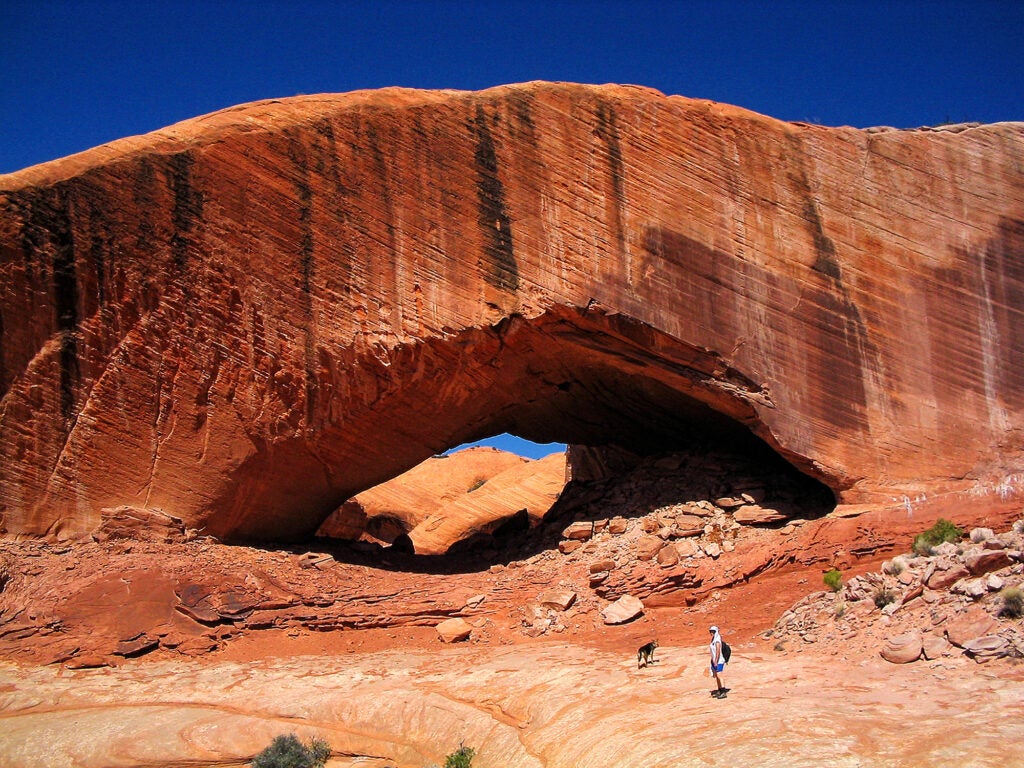
Green River Butte.

Thanks to a recent federal court decision, visitors to Utah’s public wild lands can continue to raft the Green River in Dinosaur National Monument without seeing oil derricks around the river’s bends.

They can continue to enjoy the outlook from Canyonlands National Park’s Grand View Point without drill rigs littering the landscape.

And they won’t be forced to see the formations at Arches National Park as gateways to increased carbon emissions and environmental disruption.

1 Comment   /   Read more >>
View Maria Beloborodova's blog posts
27 December 2012, 10:00 AM
Readers were most inspired by stories of the wild
Two of the first five calves born at Ft. Peck Indian reservation this year. (Bill Campbell)

Blog posts about Earth's magnificent places and creatures were the most popular themes for unEarthed readers in 2012. By far the most-read post concerned Arctic drilling, followed by reports of bison being restored and wolves losing protection. Not shown in our top 10 blog posts, below, are the delightful tales of curious critters painted in words by our own Shirley Hao. Posts written years ago by Shirley are still being discovered and read by thousands of people every year.

And, now, for your enjoyment, we present our most-read posts of 2012:

View Kari Birdseye's blog posts
20 December 2012, 4:56 PM
Salazar announces National Petroleum Reserve conservation measures
Caribou in the western Arctic, Alaska. (Florian Schulz / visionsofthewild.com)

Secretary of the Interior Ken Salazar recently announced a final plan for managing the National Petroleum Reserve-Alaska, a vast and wild area in northwestern Alaska that provides vital habitat for caribou, countless shorebirds, waterfowl, bears, wolves and wolverines, among others.

The plan is the first that covers the entire reserve, and it is a major step forward for protective management of the western Arctic.

Under provisions of the plan, key habitat areas such as these are protected:

3 Comments   /   Read more >>