Posts tagged: Roadless Rule

unEARTHED. The Earthjustice Blog

Roadless Rule


    SIGN-UP for our latest news and action alerts:
   Please leave this field empty

Facebook Fans

Featured Campaigns

Everyone has The Right To Breathe clean air. Watch a video featuring Earthjustice Attorney Jim Pew and two Pennsylvanians—Marti Blake and Martin Garrigan—who know firsthand what it means to live in the shadow of a coal plant's smokestack, breathing in daily lungfuls of toxic air for more than two decades.

Coal Ash Contaminates Our Lives. Coal ash is the hazardous waste that remains after coal is burned. Dumped into unlined ponds or mines, the toxins readily leach into drinking water supplies. Watch the video above and take action to support federally enforceable safeguards for coal ash disposal.

ABOUT EARTHJUSTICE'S BLOG

unEARTHED is a forum for the voices and stories of the people behind Earthjustice's work. The views and opinions expressed in this blog do not necessarily represent the opinion or position of Earthjustice or its board, clients, or funders.

Learn more about Earthjustice.

View Doug Pflugh's blog posts
10 May 2013, 1:34 PM
Richly forested lands in W. Colorado could become industrial zone
The Thompson Divide is clearly a keystone of the region, the state and the West.  (EcoFlight)

There is no dispute that the Thompson Divide—a 220,000-acre forested wildland in western Colorado—is a special place. It comprises some of the most valuable and diverse mid-elevation forested landscapes in Colorado and includes the headwaters of streams that sustain the Crystal, Roaring Fork and North Fork valleys. Thompson Divide is a prized destination for recreationists and tourists, and supports a long tradition of ranching. Perhaps most importantly, with no fewer than nine roadless areas, the Divide includes the largest complex of non-Wilderness roadless lands left in Colorado. The Thompson Divide is clearly a keystone of the region, the state and the West.

The debate over the Thompson Divide focuses on its future: should it remain intact, providing the extraordinary ecological and economic values that have benefited local communities and wildlife for generations, or should it be transformed into an industrial zone to produce natural gas for the highest bidder?

4 Comments   /   Read more >>
View Doug Pflugh's blog posts
17 April 2013, 12:20 PM
Unrestrained thirst puts Colorado atop American Rivers' threat list
Management of the Colorado River remains an engineering task that seeks to wring as much water as possible out of its banks. (David Morgan / iStockphoto)

The Colorado River has been called the lifeblood of the west; it defines our geography, sustains our fish and wildlife, feeds and powers our cities. Without it, our lives and heritage would be fundamentally different—which is why Earthjustice and the conservation community have fought for years to preserve and protect this great river.

But, the thirst for Colorado River water is proving too great.

Today, American Rivers, a national river conservation organization, named the Colorado its most endangered river for 2013. This dubious distinction was well earned as decades of damming, diversion and domestication have left the river that carves the Grand Canyon a ghost of its former self.

87 Comments   /   Read more >>
View Trip Van Noppen's blog posts
26 March 2013, 9:47 AM
Roadless Rule—and 50+ million forested acres—survive test of time
Spring blooms of fireweed in the Reservation Divide roadless area in Montana’s Coeur D’Alene Mountains. (© Terry Glase)

Time has run out for the enemies of roadless wilderness. They spent 12 years trying to kill the national law protecting our forests, and yesterday a federal district court said they couldn’t have a minute more—the statute of limitations had run out.

This means you better grab a compass when heading into a national forest because you can get lost amid all the trees saved by this law, known as the Roadless Rule.

68 Comments   /   Read more >>
View Ted Zukoski's blog posts
17 August 2012, 8:33 AM
Forest Service prefers protecting wildlands, chooses bulldozers anyway
The Sunset roadless area. Ted Zukoski photo (c).

The Forest Service finally admitted it.

It took the agency two environmental assessment drafts and a draft and final environmental impact statement, but they admitted it.

The agency finally admitted that it would be “environmentally preferred” to protect the wildest, most pristine part of the Sunset roadless area in western Colorado from bulldozing for road construction and for scraping well pads to benefit Arch Coal, the nation’s second largest coal company.

The construction of a spider-web of industrial facilities that will take decades to heal will devastate that part of the roadless area the Forest Service itself concluded meets all of the criteria for designation as wilderness—the most protective designation on public lands.

But while the Forest Service concluded it was “environmentally preferred” to protect this remote natural area of ponds and streams, elk and black bear habitat, with its huge spruce and large stands of aspen, the agency also decided on August 10 to approve the most aggressive coal mine expansion for Arch Coal’s West Elk Mine, paving the way for the roadless area’s destruction.

9 Comments   /   Read more >>
View Ted Zukoski's blog posts
15 June 2012, 3:54 AM
Agency pushes lose-lose-lose-lose coal mine expansion
The Sunset Roadless Area.
(Photo: Ted Zukoski)

Coal is dirty.

It’s the dirty fuel that gives us mercury in our lakes, acid rain in our skies, carbon pollution, leaky ash ponds, and scraped-off mountains and buried streams in Appalachia.

And just like the coal itself, Arch Coal’s proposed West Elk mine expansion into the Sunset Roadless Area in western Colorado will be a lose-lose-lose-lose proposition. Sadly, that doesn’t mean it’s going away.

View Tim Preso's blog posts
16 February 2012, 5:15 PM
Last, best wild national forest lands shielded from development
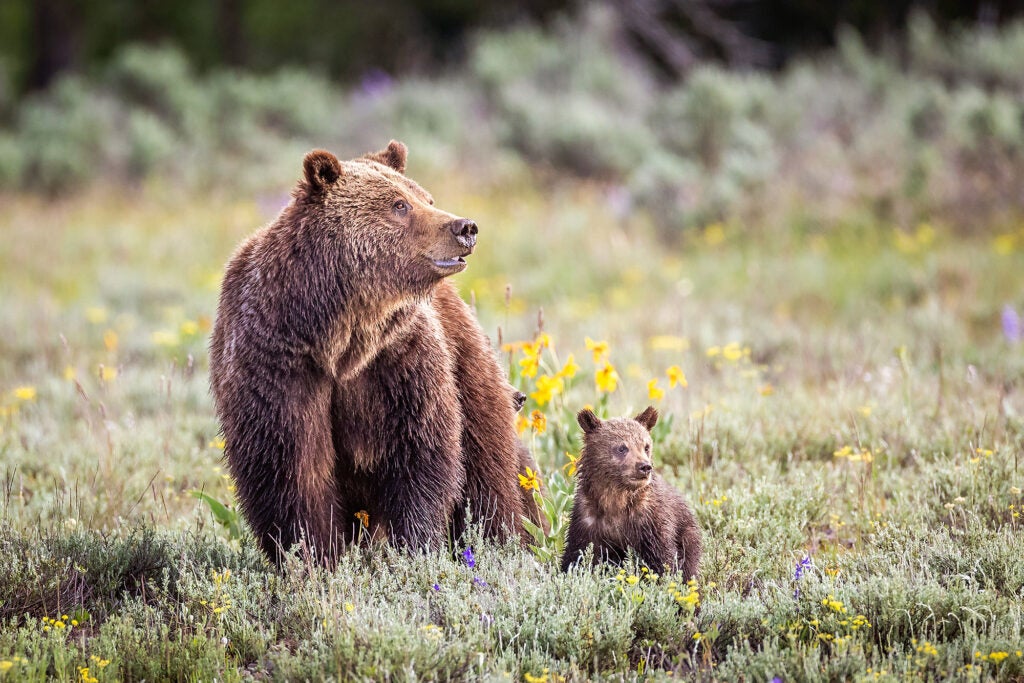
A grizzly bear taking a stroll in Yellowstone National Park.
(Terry Tollesfbol / USFWS)

Nearly 50 million acres of America’s most pristine public forest lands remain protected today, thanks to a decision this afternoon by the 10th Circuit Court of Appeals denying a last-ditch effort by the State of Wyoming and the Colorado Mining Association to overturn the U.S. Forest Service Roadless Area Conservation Rule, more commonly known as the Roadless Rule.

Earthjustice has been in the courts for the past 13 years fighting to protect the Roadless Rule, a landmark conservation measure that protects wild national forests and grasslands from new road building and logging. Protection of these forests secures vital habitat for some of our nation’s most sensitive wildlife. From condors of the southern California mountains, to grizzly bears and wolves near Yellowstone National Park, to migratory songbirds among the Appalachian hardwoods, many species would no longer exist—or would be severely depleted—but for the forest lands protected by the Roadless Rule.

View Ted Zukoski's blog posts
11 December 2011, 10:44 PM
But there’s still a chance for one big present under the tree
Aerial view of the Alton coal strip mine near Bryce Canyon. Photo (c) Ray Bloxham, Southern Utah Wilderness Alliance.

As fall turns to winter, President Obama has continued his virtually unbroken streak of bending over backwards for the coal industry in the West.  For those who love Western public lands and could do without more subsidies to Big Coal, Mr. Obama has been more Grinch than Santa.

For example, the Forest Service recently consented to a coal lease in western Colorado that will result in more than two square miles of the beautiful Sunset Trail Roadless Area being chewed up with 48 well pads and 6.5 miles of road.  It’s a Christmas present to corporate goliath Arch Coal, and coal in the public’s stocking.

But wait, there’s more! BLM is moving ahead with plans to approve a strip mine on the doorstep of Bryce Canyon National Park.  Denuded habitat, truck trips that will disrupt tourism and the lives of local residents, and dust will all result.  Not everyone is wild about the idea - including the Salt Lake Tribune, which editorialized against the project.  (And if you're not wild about the strip mine either, go here to tell the BLM.) 

3 Comments   /   Read more >>
View Trip Van Noppen's blog posts
20 November 2011, 12:08 AM
Court ruling climaxes 13-year legal struggle
Young boy fishing in the West Fork Humptulips River by the Moonlight Dome Roadless Area in Washington’s Olympic National Forest. (© Thomas O’Keefe)

Last month, protection for nearly 50 million acres of wild lands was resoundingly affirmed in a court decision that will benefit future generations. After 13 years of legal battles by Earthjustice on behalf of our allies, the Tenth Circuit Court of Appeals reinstated the Roadless Rule, a landmark preservation act that protects our nation’s wild forests and grasslands from new road building, logging and development.

The conviction behind the Roadless Rule, that we should protect pristine wild lands not only for the well-being of the last survivors of our wild heritage, but also for our own well-being, is one held by most Americans. The public outpouring of support for the Roadless Rule has been unprecedented. The Roadless Rule victory is living proof that the desire to protect America’s natural heritage lives on in us all.

But despite overwhelming public support for the Rule, the fight to uphold it has been far from easy and is still not over. Since the Clinton administration first began considering the idea of protecting the last undeveloped lands on our national forests, the Roadless Rule has been subjected to relentless attacks by loggers, miners and supporting politicians.

16 Comments   /   Read more >>
View Tom Turner's blog posts
21 October 2011, 5:28 PM
Decision climaxes 13-year legal struggle by Earthjustice
Meadows and ponds abound in a roadless area in Wyoming’s Beartooth Plateau. (© Nelson Guda, 2009 / nelsonguda.com)

<In a major victory for Earthjustice and its supporters, today the 10th Circuit Court of Appeals reinstated The Roadless Rule, which protects nearly 50 million acres of National Forest lands against exploitation. Tom Turner, who literally wrote the book ("Roadless Rules") on the case, provides some background here.>

Toward the end of the Clinton administration, the Forest Service declared that most logging and road building no longer would be permitted on nearly 60 million acres of wild, unprotected national forest lands.

The so-called Roadless Area Conservation Rule was immediately challenged in nine separate lawsuits filed by states (Idaho, Wyoming, Alaska, Utah, North Dakota), a few counties, and several timber industry interests.

Earthjustice immediately moved to defend the rule in all those cases, eventually devoting thousands of hours by many attorneys to the effort. Many major national groups became involved, along with statewide groups. The Natural Resources Defense Council was a key ally in Alaska.

192 Comments   /   Read more >>
View Marty Hayden's blog posts
22 July 2011, 11:08 AM
Congress gives industry free ride on back of environmental protections

Perhaps inspired by the triple-digit heat afflicting Washington D.C., the House of Representatives is putting legislative flames to our important environmental and public health protections.

This week, the House will consider a spending bill for the Department of the Interior, the Environmental Protection Agency, the Forest Service and other federal agencies. The bill is stuffed with open attacks by House Republicans on protections for our air, water, wildlife and iconic places.
 
Laden with nearly 40 so-called anti-environmental “riders”— policy provisions added to a measure having little or nothing to do with the appropriating funds—the bill hasn’t even reached the House floor yet. One provision will lift a moratorium on uranium mining near the Grand Canyon--one of the world’s seven natural wonders, and the only one in the U.S.

11 Comments   /   Read more >>