Posts tagged: Tr-Ash Talk

unEARTHED. The Earthjustice Blog

Tr-Ash Talk


    SIGN-UP for our latest news and action alerts:
   Please leave this field empty

Facebook Fans

Featured Campaigns

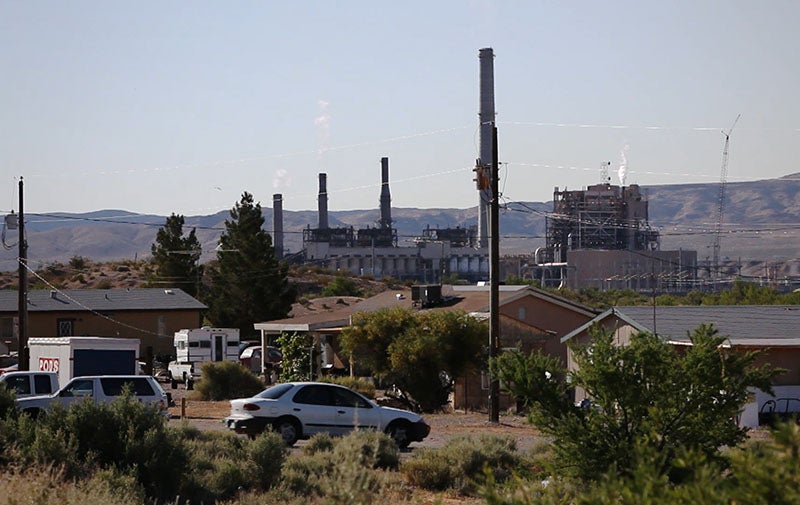
Everyone has The Right To Breathe clean air. Watch a video featuring Earthjustice Attorney Jim Pew and two Pennsylvanians—Marti Blake and Martin Garrigan—who know firsthand what it means to live in the shadow of a coal plant's smokestack, breathing in daily lungfuls of toxic air for more than two decades.

Coal Ash Contaminates Our Lives. Coal ash is the hazardous waste that remains after coal is burned. Dumped into unlined ponds or mines, the toxins readily leach into drinking water supplies. Watch the video above and take action to support federally enforceable safeguards for coal ash disposal.

ABOUT EARTHJUSTICE'S BLOG

unEARTHED is a forum for the voices and stories of the people behind Earthjustice's work. The views and opinions expressed in this blog do not necessarily represent the opinion or position of Earthjustice or its board, clients, or funders.

Learn more about Earthjustice.

View Raviya Ismail's blog posts
27 January 2012, 8:49 AM
Coal ash leaching into water in North Carolina

Last week we announced our intent to sue the Environmental Protection Agency to force the release of long-awaited public health safeguards against toxic coal ash. Here is just another example of why states aren’t doing an adequate job keeping this toxic muck out of our drinking water. This Charlotte Observer article reports on elevated levels of coal ash metals in groundwater at all 14 coal-fired power plants in North Carolina.

According to the article, “sulfate, dissolved solids and chromium were found at seven plants. Boron was found at six, arsenic at three, and selenium, thallium and antimony at two. Chloride and nickel were each detected at one plant.”

(I know the answer to this question) Who would want any of these toxic chemicals in their drinking water?

2 Comments   /   Read more >>
View Raviya Ismail's blog posts
13 January 2012, 8:53 AM
EPA’s promise to close ponds obviously going nowhere
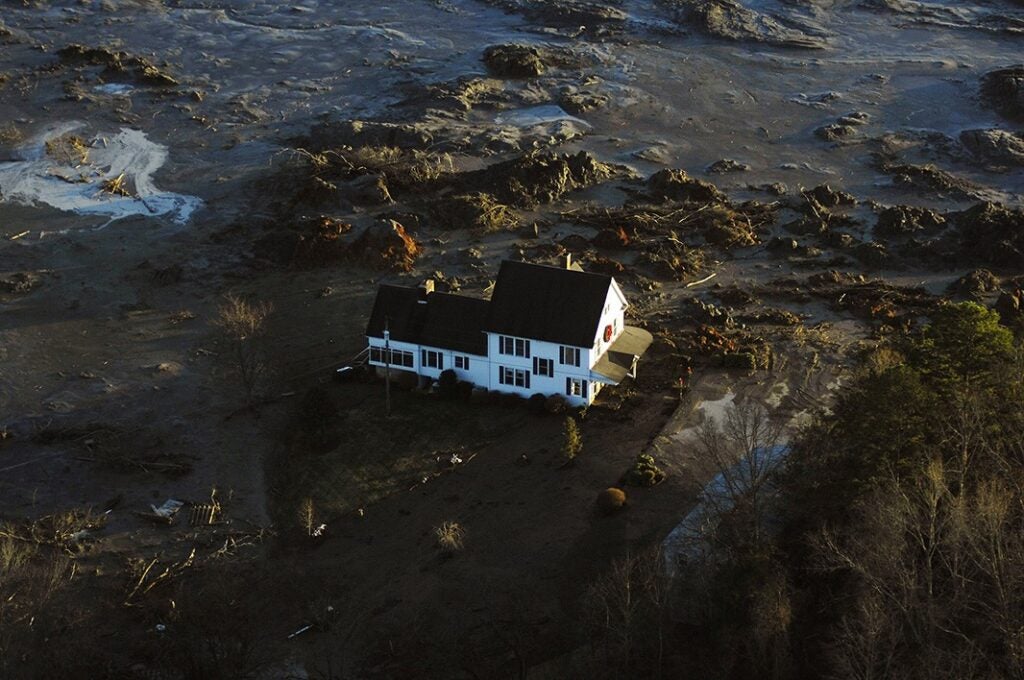
Aerial image of the TVA spill. (TVA)

Last month we marked three years since the Tennessee Valley Authority Kingston coal ash spill, underscoring the fact that the EPA has yet to regulate toxic coal ash waste.

Now we have even more reason to be concerned.

According to analysis by the Environmental Integrity Project, the most recent U.S. Toxic Release Inventory indicates that coal ash disposal into these big ponds was much higher in 2010 than it’s been since 2007. Shortly after the Dec. 23, 2008 spill, the EPA pledged it would take this toxic menace seriously, yet the agency has still not published a final rule addressing the waste.

View Raviya Ismail's blog posts
22 December 2011, 2:21 PM
Three-year anniversary of TVA coal ash spill and no regulation in sight
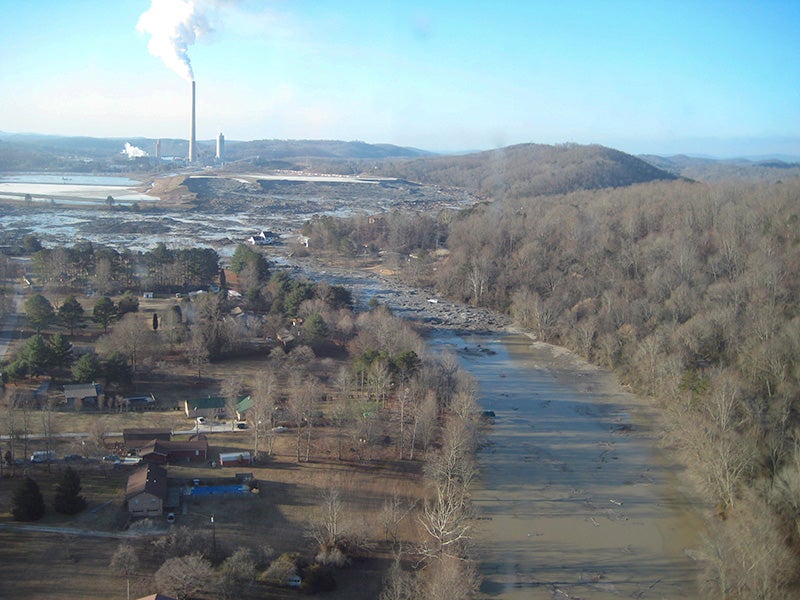
Tennessee coal ash spill three years ago

So much has happened since that terrible day three years ago when more than 1 billion gallons of toxic coal ash sludge burst through a dam at the Tennessee Valley Authority’s Kingston Fossil Plant in Harriman, about 150 miles from Nashville.

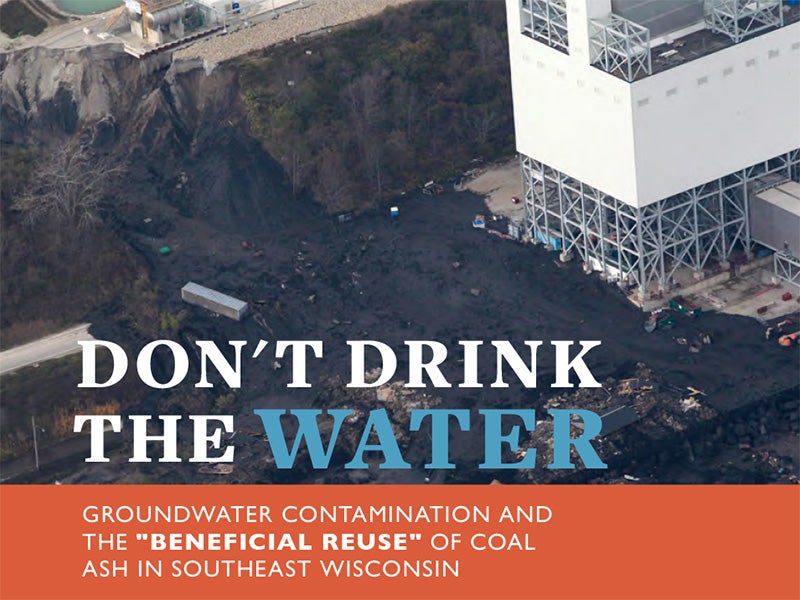
For starters, the Environmental Protection Agency, which had promised to move swiftly to protect the public from future coal ash disasters soon after the TVA spill, has still not finalized a national rule.  In the absence of EPA action, more contamination has been uncovered at 19 new sites and additional disasters have occurred, such as the October 31, 2011 25,000-ton coal ash spill in Oak Creek, Wisconsin, where a bluff collapsed sending coal ash and debris from We Energies Oak Creek Power Plant into Lake Michigan.

View Raviya Ismail's blog posts
07 December 2011, 12:59 PM
States bad on coal ash oversight also have dirty air
Coal ash landfill

Looks like that murky glass of water shouldn’t be your only concern.  Several states weak on coal ash disposal also have another dubious claim: many are the worst offenders of air pollution.
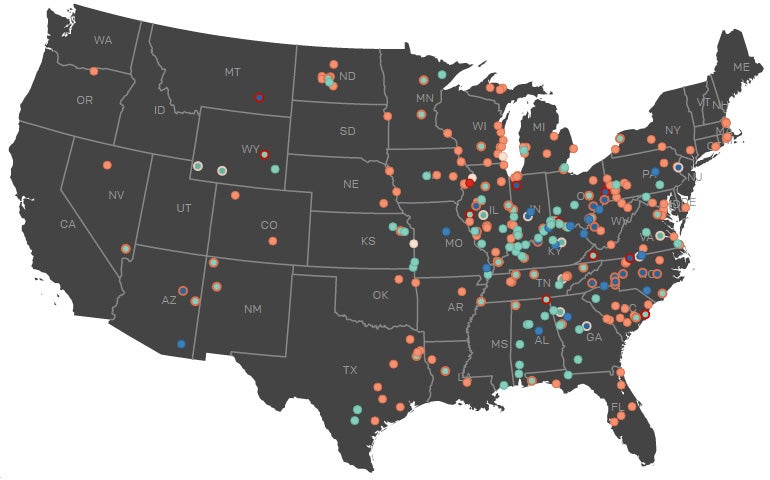
In August, we released a report detailing the lack of state-based regulations for coal ash disposal and the 12 worst states when it comes to coal ash dumping.

View Raviya Ismail's blog posts
23 November 2011, 11:37 AM
To all those clean water champions out there!
Rep. Edward Markey (D-MA) opposed H.R. 2273, calling it a "green-light pass for utility companies to dispose of their waste without regard to public health or the environment."

It’s been a hard year for those of us who dream of our drinking water being free from coal ash contamination.  We waited for the U.S. Environmental Protection Agency to release standards for regulating toxic coal ash and were dismayed to find out they would be delayed until the end of 2012 or even 2013. Then in October, the House of Representatives passed a bill that allows for coal ash to keep polluting our drinking water. That same month a 50-year-old coal ash fill in Wisconsin collapsed, sending toxic waste directly into Lake Michigan.

And if all of that wasn’t enough, the Senate has an identical companion bill, S. 1751, that they will be voting on imminently.

But despite all this, we are grateful.

View Raviya Ismail's blog posts
15 November 2011, 1:34 PM
Senate briefing highlights dire threat from coal ash
Massive clean-up operations in the aftermath of the 2008 Kingston coal ash spill. (TVA)

This week, the House Science, Space and Technology Subcommittee on Energy and Environment will investigate how the Environmental Protection Agency incorporates science into its rulemaking process. Given that the EPA has been Public Enemy Number 1 for the GOP-controlled House, this is likely to be another opportunity for Republicans and their comrades to target the EPA.

Yes, we’ve had enough of this. But we’re not alone. Republicans have come under fire for questioning science by Democrats as well as members of their own party. In an article in E&E News, former EPA Administrator Bill Reilly, who served under President George H. W. Bush, said “for some of the most prominent leaders of the Republican Party, science has left the building.”

Ouch - but we couldn’t agree more.
 

1 Comment   /   Read more >>
View Raviya Ismail's blog posts
01 November 2011, 11:25 AM
Coal ash spills into Lake Michigan near Milwaukee power plant
Coal ash spill into Lake Michigan

We’re closing in on the 3-year anniversary of the TVA coal ash disaster and there are still no federal regulations in place protecting us from coal ash. And now, another spill: in Oak Creek, Wisconsin a bluff collapsed, sending coal ash and debris from We Energies Oak Creek Power Plant into Lake Michigan.

Writing this off as a “freak accident” or “mudslide” is a dangerous err in judgment. Coal ash has toxic levels of arsenic, hexavalent chromium, mercury, lead and other chemicals. Would you want that in your drinking water? No, and sadly, that is a reality to people who live near these sites in Wisconsin.

We’re still waiting on details from this spill (how many tons of coal ash, how far does it extend, etc.) and there are many questions. Maureen Wolff lives a mile from the power plant and walked to the shoreline shortly after the incident. She saw the dark color of the debris and wondered if it was coal ash.

“All this is going along the coast line and they’re telling people all it is is just a few trailers and possibly some tools. No one is saying what exactly is in it,” she is quoted saying in the Milwaukee Journal Sentinel.

1 Comment   /   Read more >>
View Emily Enderle's blog posts
21 October 2011, 10:48 AM
Pals of polluters vote to let coal ash poison our water supplies
Clean-up operations in the aftermath of the 2008 Kingston coal ash spill. (TVA)

On Friday, in a 267–144 vote, a majority of House members voted to keep allowing coal ash to pollute our drinking water. The passage of the Coal Residuals Reuse and Management Act (H.R. 2273) lets states choose to adopt a disposal standard less protective than those for household garbage.

The bill fails to protect communities from drinking water polluted by arsenic, hexavalent chromium and other cancer-causing chemicals or disasters like the TVA spill. It doesn’t even take the most basic step of eliminating wet disposal ponds, which both EPA’s proposed options include. Further, it doesn’t create a federally enforceable baseline standard and serves solely to establish a toothless regime that treats this ash with fewer protections than household garbage.

Under the leadership of Rep. David McKinley (R-WV), the GOP-controlled House has taken aim at public health and transparency, undermining the efforts of the EPA to use the best available science to complete their public rulemaking addressing coal ash.

View Alana Bryant's blog posts
12 October 2011, 11:46 AM
Debunking polluters' unfounded fears
Massive clean-up operations in the aftermath of the 2008 Kingston coal ash spill. (TVA)

The anticipated vote on H.R. 2273, the Coal Residuals Reuse and Management Act, will be upon us Friday. The bill (sponsored by Rep. David McKinley (WV-R)) would prevent the EPA from establishing a strong national rule to protect American’s health and drinking water from the nation’s second largest industrial waste stream: coal ash.

There are myriad health hazards associated with coal ash disposal sites, due to the many toxic chemicals that are contained in the ash such as arsenic, hexavalent chromium, lead and mercury, just to name a few.  From high cancer risk from poisoned drinking water, to blowing toxic dust, to the risk of catastrophic collapse, too much is at stake to not properly regulate this toxic waste.

But we know now that a strong coal ash rule includes another benefit: 28,000 new American jobs every year.

1 Comment   /   Read more >>
View Joshua Ulan Galperin's blog posts
07 October 2011, 7:35 AM
Next week House preparing to tie EPA's hands
Kingston coal ash spill. (TVA)

East Tennessee is not known for its population of environmental activists, but last fall hundreds of people turned up in Knoxville to ask the Environmental Protection Agency (EPA) to adopt a special waste designation for coal ash. Support for EPA’s public health and environmental safeguard is strong here because the 2008 Kingston coal ash disaster occurred in our backyard, making the danger of toxic coal ash blatantly clear.

Experts at the EPA have now spent years reviewing data related to the dangers of coal ash, and they have listened to the opinions and ideas of citizens, including those here in East Tennessee.  Shockingly, even while the EPA reviews the opinions of hundreds of thousands of citizens, anti-environmental crusaders in the United States House of Representatives are preparing to undermine these voices as well as the expertise of the EPA.

Next week the House of Representatives is preparing to vote on H.R. 2273, a bill that would prohibit comprehensive federal oversight of coal ash. H.R. 2273 is a gift to coal companies at the expense of public health and the environment.