Posts tagged: water

unEARTHED. The Earthjustice Blog

water


    SIGN-UP for our latest news and action alerts:
   Please leave this field empty

Facebook Fans

Featured Campaigns

Everyone has The Right To Breathe clean air. Watch a video featuring Earthjustice Attorney Jim Pew and two Pennsylvanians—Marti Blake and Martin Garrigan—who know firsthand what it means to live in the shadow of a coal plant's smokestack, breathing in daily lungfuls of toxic air for more than two decades.

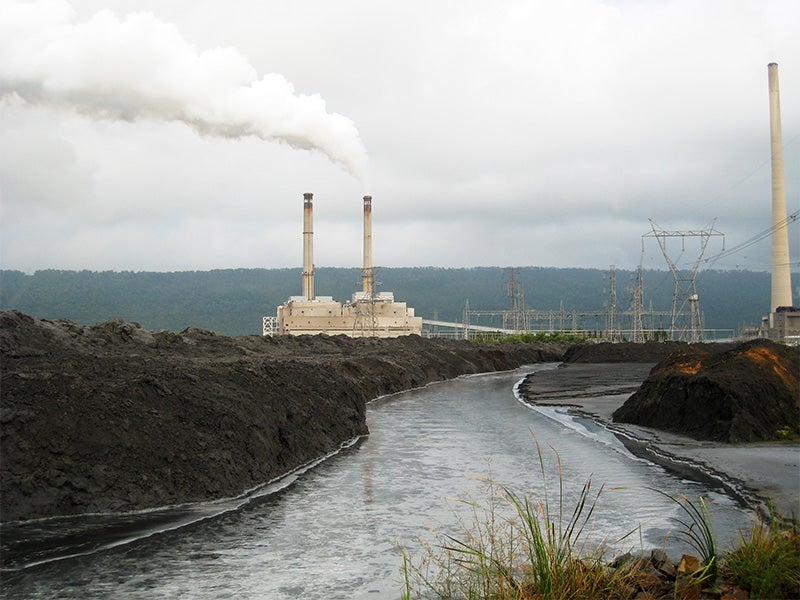
Coal Ash Contaminates Our Lives. Coal ash is the hazardous waste that remains after coal is burned. Dumped into unlined ponds or mines, the toxins readily leach into drinking water supplies. Watch the video above and take action to support federally enforceable safeguards for coal ash disposal.

ABOUT EARTHJUSTICE'S BLOG

unEARTHED is a forum for the voices and stories of the people behind Earthjustice's work. The views and opinions expressed in this blog do not necessarily represent the opinion or position of Earthjustice or its board, clients, or funders.

Learn more about Earthjustice.

View Doug Pflugh's blog posts
16 May 2013, 10:00 AM
Lawsuit seeks to protect San Pedro River from huge development
The upper reaches of the San Pedro River.  (Melanie Kay / Earthjustice)

Earthjustice has worked with our partners for more than a decade to sustain the San Pedro River of southern Arizona. Our attorneys have taken legal action—a series of cases challenging inappropriate groundwater depletions by the U.S. Army’s Fort Huachuca—to keep water in the river until a balance can be struck between the needs of the river and the local communities. While we have had success through the years, the San Pedro is unfortunately one of those places where the effort to achieve a lasting solution has been difficult.

Champions of the San Pedro now have a great opportunity to change that tide and secure meaningful protection for the river into the future. A challenge was filed this week to a 7,000-unit suburban development planned for the upper San Pedro valley which had been given the go-ahead by the state of Arizona. This development would be fueled by groundwater pumped from the San Pedro watershed and will, if built, drain the remaining flows from the river. The challenge seeks to deny the planned groundwater pumping, force the state to acknowledge the authority of water rights granted to the San Pedro Riparian National Conservation Area and, by doing so, keep the river alive.

13 Comments   /   Read more >>
View Terry Winckler's blog posts
03 May 2013, 11:00 AM
When the town's toilets flush, guess what ends up in African-American yards
Nine residents of Rochelle, GA are suing their city government for discharging the city's raw sewage onto their properties.

Alisa Coe and Bradley Marshall—attorneys in our Florida office—took off on a two-hour drive last month and ended up 60 years away in the rural Georgia town of Rochelle, where black people live on one side of a railroad track and whites on the other.

You’ve heard of this place if you pay attention to news; last weekend the national media was reporting on the local high school’s first interracial prom … ever.

But even as the media focused on the prom, Alisa and Bradley faced up to the town’s mayor and chief of police, who bullied the two attorneys as they investigated claims that the city’s sewer system routinely dumps raw sewage into the streets and yards of the black community (but not the white community). The mayor used his car to block the attorneys’ car when they drove into a black neighborhood, and then screamed and threatened them with arrest. The chief of police pulled up with his lights flashing and told the duo to call him before coming back to Rochelle.

Those fellas obviously didn’t know who they were messing with.

385 Comments   /   Read more >>
View Liz Judge's blog posts
24 April 2013, 9:48 AM
Unanimous panel of judges rule for EPA in coal industry lawsuit

Great news!

Yesterday, citizens in Appalachia celebrated a huge victory in their fight to protect their families and communities from harmful mountaintop removal mining. In a sharp 15-page ruling, a panel of three Republican-appointed judges in the U.S. Court of Appeals for the D.C. Circuit unanimously upheld the Environment Protection Agency’s veto of the permit for the Spruce No. 1 mine, the largest proposed mountaintop removal mine in West Virginia. Earthjustice, along with Appalachian Mountain Advocates, represented a handful of community and citizen groups in this case.

This court decision comes after 15 years of court challenges by community groups whose members were in fallout zone of the proposed mine. It’s a precedent-setting decision and historic: The Spruce Mine permit is the first mountaintop removal mining permit ever challenged in courts.

1 Comment   /   Read more >>
View Jared Saylor's blog posts
23 April 2013, 7:56 AM
One option protects waters from toxic pollution; other options fall far short
Power plant water discharges are filled with toxic pollution.  (EPA)

Coal-fired power plant pollution is contaminating our water, not just our air. Here’s how: when plants install scrubbers and other emission control devices onto smokestacks to capture air pollution, the chemical waste they pull from the air is then discharged into our waterways.

Not good.

This discharge contains mercury, arsenic, selenium and other toxic chemicals that can cause neurological and developmental damage, harm unborn fetuses in utero, damage internal organs, and cause cancer. Coal plants are the number one toxic discharger into our country’s waterways, yet the Environmental Protection Agrency has not reviewed clean water regulations for this industry in more than 30 years.

Until now.

View Trip Van Noppen's blog posts
20 April 2013, 12:59 PM
Investment in biodiversity yields tourism riches
A three-toed sloth in Costa Rica's Cahuita National Park. (Nathan Dappen)

This month, I had the very good fortune to visit Costa Rica, home to some of greatest biodiversity in the world. In this tiny nation, plants and animals from temperate North America and from tropical South America mingle in habitats at different altitudes (including active volcanoes and rain forests at the beach)! I marveled at hundreds of leaping dolphins, huge rain forest trees with rich canopy life, miraculous birds, sloths and anteaters.

Not surprisingly, Costa Rica is an increasingly popular travel destination, especially for nature-oriented visitors. Of course, rampant tourism can ruin natural landscapes and in so doing, wreak havoc with local communities that depend on those landscapes, which is why early on many Costa Ricans made sustainability a primary focus. The country has been preparing itself for two generations, establishing and protecting national parks and other preserves, training young people as scientists and guides, and developing a sustainable travel ethic. It's a model that Mexico could follow, instead of proceeding on a path of destroying some of its most remarkable ecological treasures for short-term gain.

11 Comments   /   Read more >>
View Doug Pflugh's blog posts
17 April 2013, 2:55 PM
Massive development could kill desert ribbon of life
Rich ecosystems flourish around the San Pedro River.  (Jeff Kennedy / USGS)

The upper San Pedro River valley in Arizona is the epitome of the Wild West. Open and arid, stretching north from Mexico and lying in the shadow of the rugged Huachuca Mountains, the valley looks much the same as it did more than a century ago when miners and settlers uneasily shared the land. It is a place where the long shadows at sunset bring visitors back to a long-past time.

Cutting across that mythic landscape is the treasure of the valley, the San Pedro River, last free-flowing river in the desert Southwest. A remnant of the formerly extensive network of desert riparian ecosystems, the river has dwindled in recent decades as development moved into the valley. And now the San Pedro may be drained to feed a proposed mega-development.

27 Comments   /   Read more >>
View Doug Pflugh's blog posts
17 April 2013, 12:20 PM
Unrestrained thirst puts Colorado atop American Rivers' threat list
Management of the Colorado River remains an engineering task that seeks to wring as much water as possible out of its banks. (David Morgan / iStockphoto)

The Colorado River has been called the lifeblood of the west; it defines our geography, sustains our fish and wildlife, feeds and powers our cities. Without it, our lives and heritage would be fundamentally different—which is why Earthjustice and the conservation community have fought for years to preserve and protect this great river.

But, the thirst for Colorado River water is proving too great.

Today, American Rivers, a national river conservation organization, named the Colorado its most endangered river for 2013. This dubious distinction was well earned as decades of damming, diversion and domestication have left the river that carves the Grand Canyon a ghost of its former self.

87 Comments   /   Read more >>
View Tom Turner's blog posts
16 April 2013, 6:05 PM
Under pressure from Earthjustice and others, senators seek to rein practice in
An almond farmer watches oil wells that have sprouted near almond orchards in the Central Valley town of Shafter, CA. (Chris Jordan-Bloch / Earthjustice)
See photo essay »

As reported in the current issue of Earthjustice Quarterly Magazine, oil fracking has become big news in California, where the practice is conducted in the shadows and is essentially unregulated—the Wild Wild West, if you will. (See: Extreme Energy: Out of Control Out West)

That may be about to change.

At least 10 bills have been introduced in the state legislature since the Magazine came out; three would impose moratoriums to halt fracking until regulations can be put in effect. Others would require disclosure of the chemicals being used, mandate groundwater monitoring before and after fracking operations, and classify wastewater from the fracking process as hazardous waste. A state-court lawsuit by Earthjustice is working its way through the system, and a federal court just ruled that failure by the Bureau of Land Management to study the environmental impact of fracking is illegal—but the judge declined to rescind the permits, so the practice continues.

15 Comments   /   Read more >>
View David Guest's blog posts
12 April 2013, 3:47 PM
Toxic algae, caused by runoff, found in mammals' stomachs
The manatees in the Indian River seem to be eating algae because a huge 2011 algae outbreak killed most of the sea grasses. (Shutterstock)

Florida tourism promoters are always looking to get stories in the newspaper to lure northern tourists—and their vacation cash—down here. But a recent story in the New York Times wasn’t what they had in mind.

“Florida Algae Bloom Leads to Record Manatee Deaths,” read the national headline on April 6, in the middle of prime winter tourist season.

Endangered manatees have been dying by the hundreds on both the east and west coasts. The tally is at 340 and rising. No one has pinpointed the precise cause, but the likeliest is toxic algae, the kind that’s fueled by sewage, manure and fertilizer pollution.

6 Comments   /   Read more >>
View Elijio Arreguin's blog posts
04 April 2013, 11:49 AM
Study predicts a decrease in the size of surf
Photo courtesy of Dunedin NZ (Flickr)

“Surf’s up!”

These two words have sparked countless scenes of surfers worldwide frantically gathering boards, leashes and friends in excited rushes to the ocean in the hopes of catching a few big waves. However, a recent study published in the journal Nature Climate Change, "Projected changes in wave climate from a multi-model ensemble", indicates that climate change may threaten the frequency of such scenes.

Researchers’ findings project that while only 7.1 percent of the world’s ocean area will experience an increase in average wave heights, almost 26 percent will actually experience a decrease in the size of surf.