Posts tagged: water

unEARTHED. The Earthjustice Blog

water


    SIGN-UP for our latest news and action alerts:
   Please leave this field empty

Facebook Fans

Featured Campaigns

Everyone has The Right To Breathe clean air. Watch a video featuring Earthjustice Attorney Jim Pew and two Pennsylvanians—Marti Blake and Martin Garrigan—who know firsthand what it means to live in the shadow of a coal plant's smokestack, breathing in daily lungfuls of toxic air for more than two decades.

Coal Ash Contaminates Our Lives. Coal ash is the hazardous waste that remains after coal is burned. Dumped into unlined ponds or mines, the toxins readily leach into drinking water supplies. Watch the video above and take action to support federally enforceable safeguards for coal ash disposal.

ABOUT EARTHJUSTICE'S BLOG

unEARTHED is a forum for the voices and stories of the people behind Earthjustice's work. The views and opinions expressed in this blog do not necessarily represent the opinion or position of Earthjustice or its board, clients, or funders.

Learn more about Earthjustice.

View Liz Judge's blog posts
03 April 2013, 12:03 PM
Highlights from the EPA’s chief of water policy

Last week, the Environmental Protection Agency revealed that 55 percent of U.S. streams and rivers are in “poor” condition, according to its most recent national rivers and streams assessment. Following the release of that grim report, the EPA held a live Twitter chat to answer questions about our clean water protections and the state of our waters in the United States.

This was a rare opportunity for the public to directly ask the EPA’s head of water policy, Nancy Stoner, about the agency’s plans to address our nation’s water quality problems. We got a chance to ask some questions, too.

The first question of the chat was ours. We wanted to know how the EPA plans to fix the situation we find our nation in today: The fact is that 27% of the nation’s rivers and streams have excessive levels of nitrogen and 40% have high levels of phosphorus. These nutrient pollutants, which come from factory farms and industrial agriculture, cause toxic green slime outbreaks that are harmful to public health.

View Trip Van Noppen's blog posts
26 March 2013, 9:47 AM
Roadless Rule—and 50+ million forested acres—survive test of time
Spring blooms of fireweed in the Reservation Divide roadless area in Montana’s Coeur D’Alene Mountains. (© Terry Glase)

Time has run out for the enemies of roadless wilderness. They spent 12 years trying to kill the national law protecting our forests, and yesterday a federal district court said they couldn’t have a minute more—the statute of limitations had run out.

This means you better grab a compass when heading into a national forest because you can get lost amid all the trees saved by this law, known as the Roadless Rule.

68 Comments   /   Read more >>
View Kari Birdseye's blog posts
22 March 2013, 7:27 PM
And ConocoPhillips eager to drill in the Arctic Ocean

Earthjustice received some superb video today from Dutch Harbor, Alaska, of Shell’s beat up Arctic drilling rig, the Kulluk, as it was lifted onto a huge dry haul ship to be carried to Asia for repairs:

This comes on the heels of a report from the Department of Interior, which summarized  a 60-day investigation into Shell’s 2012 Arctic Ocean drilling season and was highly critical of the oil giant’s operations.

1 Comment   /   Read more >>
View Sean Helle's blog posts
21 March 2013, 11:47 AM
Earthjustice's David Baron to present on court's environmental influence

Update: On March 22, 2013, President Obama accepted Caitlin Halligan’s request to withdraw as a nominee to the D.C. Circuit. Senate Republicans had blocked a yes-or-no vote on Ms. Halligan’s nomination for more than two years. As the President emphasized in his statement, the D.C. Circuit “is considered the Nation’s second-highest court, but it now has more vacancies than any other circuit court. This is unacceptable.”

In cataloguing the casualties of Washington politics, it’s not something you’d be likely to list. There’s the climate, of course. And our nation’s waters. Human health might come to mind. But the United States Court of Appeals for the District of Columbia Circuit? Its name alone inspires sleep, not action.

This shouldn’t be the case. As Earthjustice President Trip Van Noppen recently wrote, the D.C. Circuit is our second highest court—one with the power to determine whether Americans across the country have clean air to breathe and clean water to drink. And the circuit’s importance isn’t limited to environmental cases. “From food safety and workers’ rights to the integrity of our elections, the court wields extraordinary authority and influence.”

View Andrea Delgado's blog posts
19 March 2013, 12:34 PM
Budget resolution tees up fight against harmful amendments
The devastating Kingston Fossil Plant coal ash spill in 2008. (TVA)

Arsenic-infused drinking water, the risk of cancer, and the fear of being washed away by a flood of toxic sludge are a burden of concern for Americans living near more than 1,300 toxic coal ash dump sites.They have expressed their concerns through numerous letters to Congress, petitions, and more than 450,000 public comments to the Environmental Protection Agency. They urge federal action to stop disposal practices that trap communities in clouds of toxic ash, contaminate drinking water, and lead to massive dam collapses.

Yet, protection from toxic heavy metals and standards that will prevent another dam failure are not solutions the EPA has provided. Meanwhile, as the administration plays a waiting game with potential disaster, citizens across the U.S. live in harm’s way.

View Chrissy Pepino's blog posts
18 March 2013, 1:05 PM
If gas is "natural," why is it exempt from the Clean Air and Clean Water Acts?
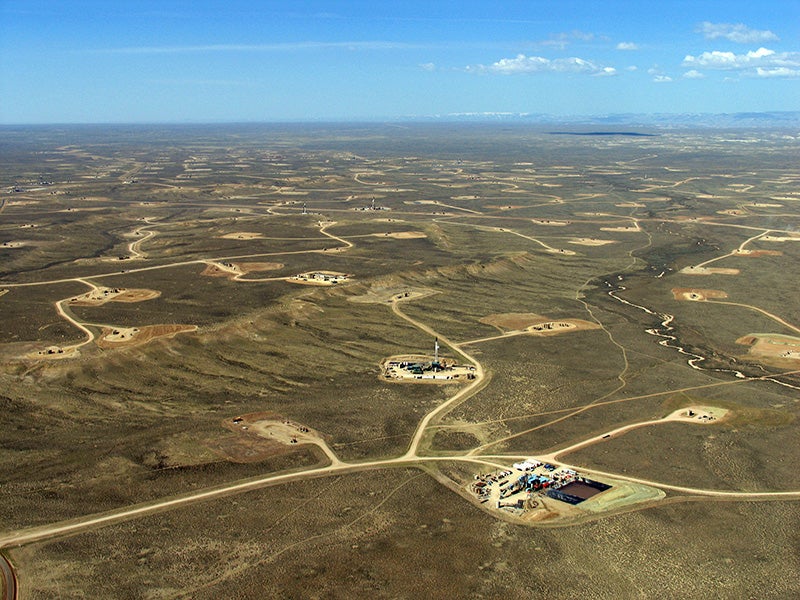
A scarred landscape from fracking pads. (EcoFlight)

The technological advance of horizontal drilling was a game changer for the oil and gas industry. When oil and natural gas were previously being harvested, vertical drilling was the only way to extract the fossil fuel. With horizontal drilling, wells can now be fracked and re-fracked, at different depths and in all directions. By increasing the area of exploration for natural gas, many previously untouched landscapes are now being scarred due to the fracking boom.

Fracking, shorthand for hydrologic fracturing, uses tons of water, sand and chemicals- under high pressure—to create cracks in the bedrock, allowing methane gas to escape. Some claim this process is “cleaner” than dirty coal, but, on a global warming potential basis, new research shows that natural gas, oil and coal, are all equally dirty on emissions.

1 Comment   /   Read more >>
View Jillian Hertzberg's blog posts
15 March 2013, 9:56 AM
House of Representatives legislation would protect air and water

Over the past few decades—with the help of Congress—Big Oil and Gas successfully chipped away at our bedrock environmental laws, carving out special exemptions for the fossil fuel drilling industry. In 1987, when Congress decided to implement new standards to control stormwater runoff pollution under the Clean Water Act, oil and gas companies got a pass. And in 1990 when the Clean Air Act was expanded to allow for control of more toxic air pollutants, the same industry got another pass. These exemptions from our fundamental air and water protections have left communities across the country exposed to dangerous health risks and threats to their environment from oil and gas operations right in their backyards.

Fortunately, activists engaged in the fight against fracking saw an important step forward, yesterday, with the introduction of two pieces of legislation in the House of Representatives. Rep. Jared Polis (D-CO) introduced H.R. 1154, the BREATHE Act, and Rep. Matthew Cartwright (D-PA) introduced H.R. 1175, the FRESHER Act. These bills call for common sense safeguards to protect water and air resources from pollution generated by the process of hydraulic fracturing, known as fracking.

4 Comments   /   Read more >>
View Ted Zukoski's blog posts
15 March 2013, 9:46 AM
Drought highlights need for smart solutions to water demand in West
Glen Canyon Dam on the Colorado River. The white bathtub ring will get bigger as water levels drop. (Photo: BuRec)

Winter in the Rockies is almost over. Almost, because April is still one of our snowiest months in Colorado. But even with a few days of snow last week, April would have to be pretty darned wet just to get this year’s snowpack up to average. As of March 15, snowpack in the watersheds that feed Lake Powell—which is just upstream of the Grand Canyon on the Colorado River behind the Glen Canyon Dam—was at less than 80 percent of average.

It’s so low, the National Park Service—which manages boating on the Lake as part of the Glen Canyon National Recreation Area—is spending a half-million of its sequester-reduced dollars to dredge a new channel for boats that would otherwise have to make a detour around new land that’s exposed as lake levels recede. The Bureau of Reclamation is predicting that inflows to Lake Powell this spring will be less than half of the 30-year average. In Denver, the water agency—which relies heavily on water grabbed from the Colorado River basin—is already warning it will put in place tough restrictions on lawn watering this summer to deal with the ongoing drought. His answer is, it could, as temperatures rise and water supplies dwindle due to global warming.

10 Comments   /   Read more >>
View Tom Turner's blog posts
12 March 2013, 11:19 AM
Documentary outlines modern environmental history

A stunning, inspiring new documentary film, A Fierce Green Fire, The Battle for a Living Planet, had its theatrical premiere in New York on March 1, and was scheduled for screenings across the country in following weeks. (View the full schedule.)

The film is in five acts, each narrated by a different person. Robert Redford starts with the beginnings of the modern movement, highlighting David Brower and the Sierra Club’s successful campaign to block construction of power dams in the Grand Canyon. Ashley Judd tells the story of Love Canal in New York and a neighborhood that had to be abandoned when residents—children in particular—began to become ill, even die, from toxic wastes buried beneath their homes and yards years before. Van Jones recounts the struggles by Greenpeace and the Sea Shepherd Society to end commercial whaling. Isabel Allende tells the tale of the Brazilian rubber tappers’ crusade to save their forest home, led by the martyred Chico Mendez. Meryl Streep ends with a hopeful recounting of the effort to stem global climate change.

View Debra Mayfield's blog posts
08 March 2013, 2:36 PM
University has a historic coal ash contamination problem
“Simply moving dangerous coal ash from one site to another contaminated site on campus is not being ‘Spartan Green.'"

My favorite aunt became a dean at Michigan State back in the early 1980’s. She was a role model for us all, assuming a level of power and influence that most women—especially African American women—had not been able access at that time. She, like many other students and faculty at the time, enjoyed the campus and resources it provided. But what she didn’t know was that the water that she drank, bathed in and used for cooking and cleaning and cleaning, may have been poisoned by toxic coal ash.

Last month, members of the Clean Energy Now Coalition, an alliance of nearly 50 environmental groups in Michigan aimed at educating citizens about the benefits of using clean, renewable energy, exposed the historical use of coal ash at Michigan State University and the dangers it poses to the health of students, faculty, and neighboring communities.