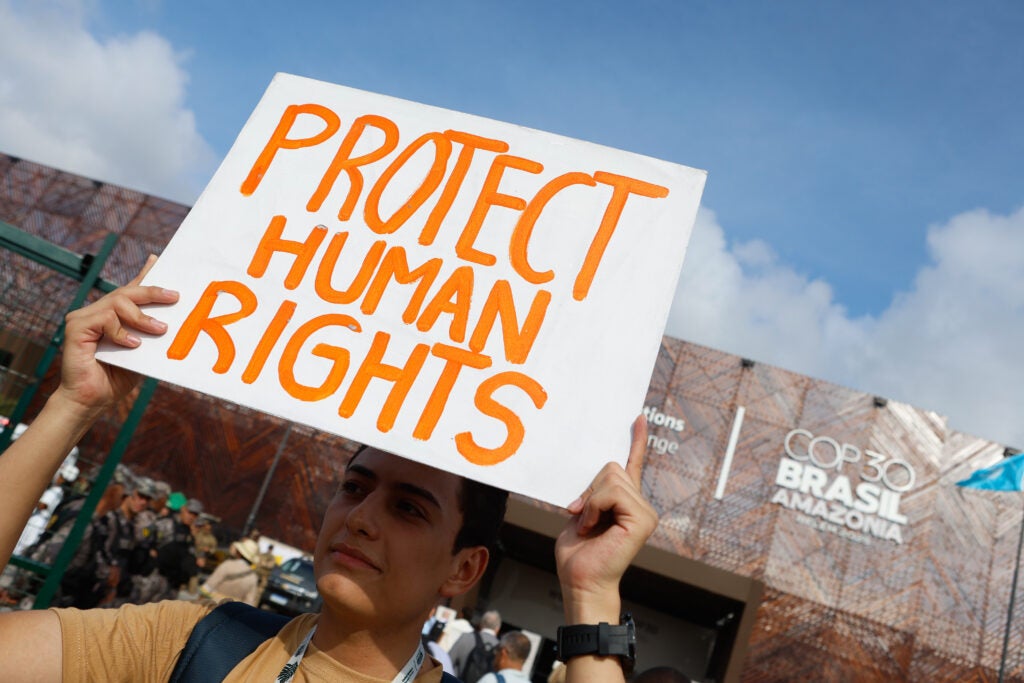
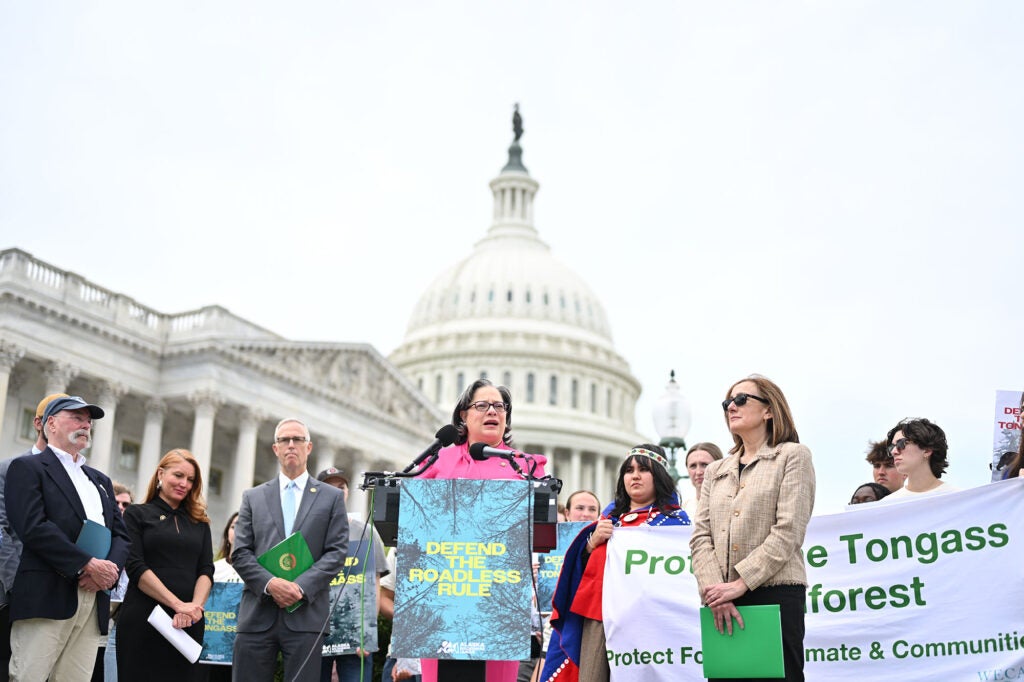
Earthjustice uses U.S. courts and international tribunals to hold corporations and governments accountable for human rights violations resulting from environmental devastation.
The Universal Periodic Review process was set up to review the status of human rights in the 192 UN member-states.
Earthjustice has used the UPR process to encourage the Council to recognize and act on the important issue of the impact that climate change has on the most fundamental human rights.
Earthjustice works with the United Nations to establish universal recognition of the right to a healthy environment.
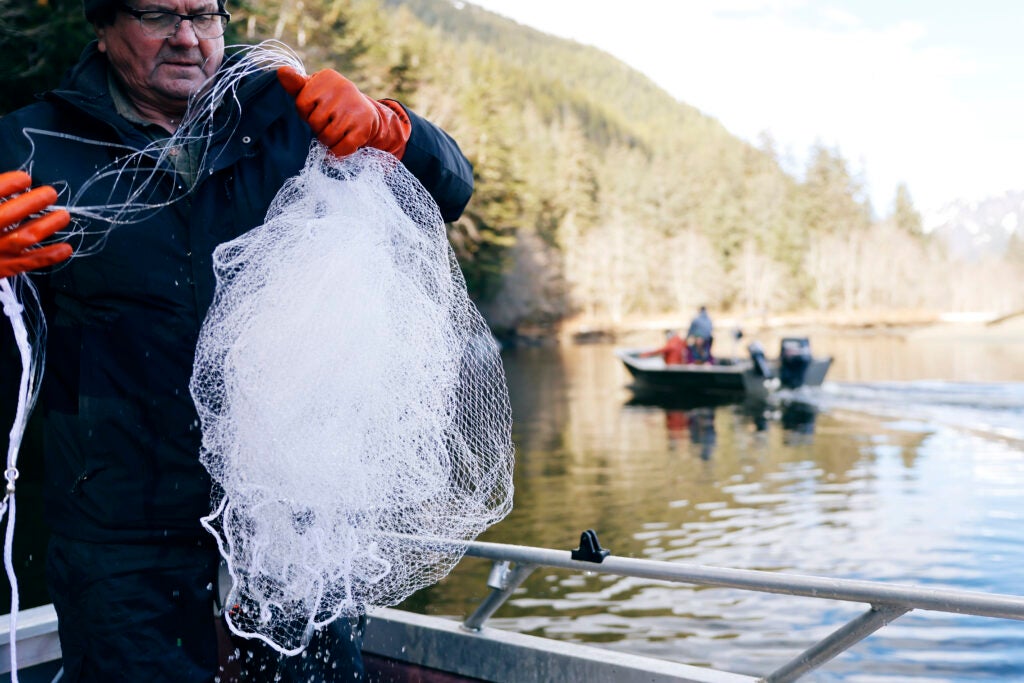
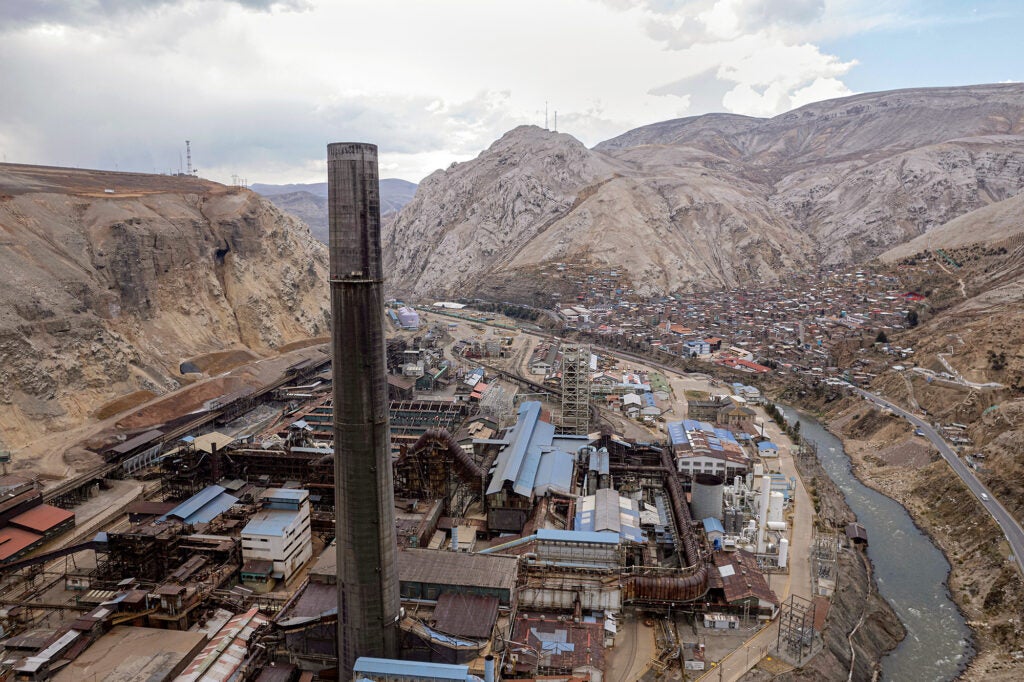
Earthjustice uses U.S. courts and international tribunals to hold corporations and governments accountable for human rights violations resulting from environmental devastation. Through petitions to the Inter-American Commission on Human Rights, for example, we are helping to protect the way of life of the Arctic Inuit people from the harmful effects of global warming, and to protect the health of children and local community members from the harmful effects of pollution from an aluminum smelter in La Oroya, Peru.
In addition, Earthjustice has taken advantage of the opportunity to submit Universal Periodic Review (UPR) reports to the United Nations Human Rights Council. The UPR process was set up to review the status of human rights in the 192 UN member-states. Earthjustice has urged the Council to consider the right to a healthy environment, the right to participate in decisions that affect the environment, as well as rights to food, water, health, shelter, a means of subsistence, an adequate standard of living, and cultural heritage. We have also used the UPR process to encourage the Council to recognize and act on the important issue of the impact that climate change has on the most fundamental human rights.
The Commission also received alarming information on the already serious impact of anthropogenic climate change on the enjoyment of human rights, especially in mountain regions where the widespread loss of glaciers and snow pack and rising temperatures are diminishing access to water, harming food production, and introducing new diseases. The Commission urges States to keep human rights at the forefront of climate change negotiations, including in designing and implementing measures of mitigation and adaptation.
|
Comoros, Union of Fiji Island, Republic of Kazakhstan, Republic of Kiribati, Republic of Maldives, Republic of Marshall Islands, Republic of |
Micronesia, Federated States of Nauru, Republic of Palau, Republic of Samoa, Independent State of Seychelles, Republic of |
Saint Vincent and the Grenadines Vanuatu, Republic of |
We also work closely with the United Nations to establish universal recognition of the right to a healthy environment. As part of this effort, we have submitted reports to the UN Human Rights Council detailing some of the most significant developments, at the domestic, regional and international levels, that demonstrate the growing awareness of the right to a healthy environment. The report also includes case studies about issues in various countries that clearly illustrate the link between human rights and the environment.
Recent reports: 2008 | 2007 | 2005 | 2004 | 2003 | 2002 | 2001