

746 coal ash units in 43 states and Puerto Rico have reported information in compliance with federal coal ash safeguards since 2015. Here’s what the data said.
Beginning in 2018, coal-fired electric utilities were compelled to publicly report groundwater monitoring data for the first time ever, following transparency requirements imposed by federal coal ash regulations, known formally as the Coal Combustion Residuals Rule.
For decades, utilities have disposed of coal ash dangerously, dumping it in unlined ponds and landfills where the toxins leak into groundwater.
According to industry’s own data, 94% of the coal ash ponds in the United States are unlined.
Almost all of them are contaminating groundwater with toxins above levels that the U.S. Environmental Protection Agency deems safe for drinking water.
Much of industry’s disclosure of the data has been in abstruse and non-standard formats. The data can be difficult to find, despite the requirement that the information be publicly accessible. Some utilities fail to post the required information entirely or conceal it behind sign-in walls to prevent search engines from locating the disclosures.
Legal and technical experts from Earthjustice, Environmental Integrity Project, and partner organizations located and analyzed the data disclosures.
292 plants reported groundwater monitoring data. Based on that data, 91% of these plants are contaminating groundwater with toxic substances at levels exceeding federal safe standards.
More maps on coal ash: Find where coal ash might be stored near you — see power plant sites that have regulated and/or unregulated legacy coal ash dump sites. And, see coal plants closing coal ash ponds in place within 5ft. of groundwater and that have admitted contamination of groundwater with heavy metals and other toxins from coal ash.
The 2015 Coal Combustion Residuals Rule is the first-ever federal safeguards against coal ash pollution. The protections were the result of more than a decade of litigation by Earthjustice, on behalf of our clients and alongside our partners.
Earthjustice fights in the courts for a long-term solution to this toxic menace. And we act on behalf of dozens of clients and coalition partners to defeat legislative attempts to subvert federally enforceable safeguards of coal ash.
Coal ash, the toxic remains of coal burning in power plants, contains a hazardous brew of toxic pollutants including arsenic, boron, cadmium, chromium, lead, radium, selenium, and more.
The toxics in coal ash can cause cancer, heart disease, reproductive failure, and stroke, and can inflict lasting brain damage on children.

Is Drinking Water Safe Near Contaminated Coal Ash Sites?
Both U.S. EPA and public interest groups have identified at least 26 sites where private wells have been contaminated by coal ash.
Most often, neither power companies nor state regulators test private drinking water wells. Most state regulations and U.S. EPA’s CCR Rule require plant owners to test only onsite groundwater.
As a result, contamination may go undetected in private wells for years, because most coal ash pollutants have no telltale taste or color.
While there is ample groundwater data for most coal plants sufficient to establish that groundwater is contaminated above levels that are safe to drink, determining the quality of drinking water in nearby communities is much more difficult due to lack of data. Consequently, we cannot at this time determine the safety of drinking water near the hundreds of coal ash dumps covered by the CCR Rule.
Even with scant data available nationally, there is nevertheless historical evidence that coal ash ponds, landfills, and “beneficial use” have contaminated residential drinking water wells.
Case Study: Town of Pines
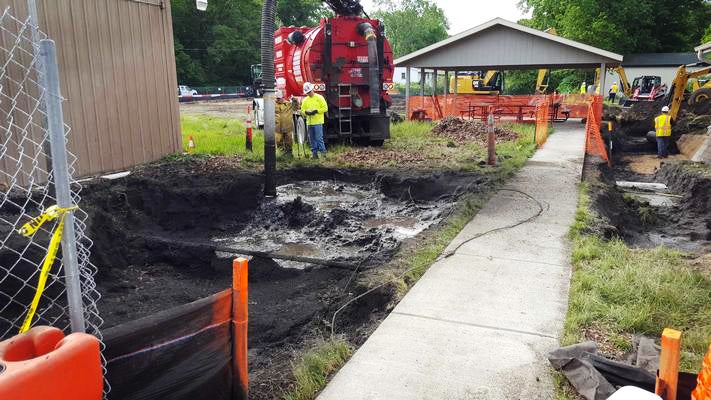
The most widespread drinking water contamination occurred in Town of Pines, Indiana, from a leaking landfill and coal ash used as “fill” throughout the town.
As a result of the water contamination, U.S. EPA declared Town of Pines a Superfund site in 2001, and NIPSCO, the utility responsible, eventually provided municipal water to most residents and removed coal ash and contaminated soil from the town.
List of Contaminated Private Drinking Water Wells
Below are the 26 sites, known at this time, where coal ash ponds, landfills, and “fill” sites contaminated private drinking water wells.
| Apollo Beach, FL | Arsenic, thallium, boron, molybdenum | Tampa Electric Co.: Big Bend Power Station | Unlined pond | EPA, (2014c), EIP (2010a) |
| Juliette, GA | Cobalt, potentially uranium | Georgia Power: Plant Scherer | Unlined pond | CNN (2012); GA Power (2018) |
| Joliet, IL | Boron | NRG: Joliet #9 Generating Station (Lincoln Stone Quarry Landfill) | Unlined pond in quarry | EIP (2010b) |
| Oakwood, IL | Arsenic, lead, iron, manganese, chromium | * Bunge North America Corp.: Rocky Acres Coal Combustion By-Product Disposal Site | "Beneficial" use fill project | EIP (2010a) |
| Noblesville, IN | Boron | Duke Energy, Noblesville Station | Landfills | IDEM (2018), Duke (2017) |
| Princeton, IN | Boron, arsenic | Duke Energy: Gibson Generating Station | Unlined ponds and landfill | EPA (2014a); EIP (2010a) |
| Town of Pines, IN | Arsenic, boron, molybdenum, lead, selenium, sulfate | * NIPSCO: Yard 520 (Town of Pines Superfund Site) | Unlined landfills and fill projects | EPA (2014a) |
| Gambrills, MD | Arsenic, cadmium, lead, thallium, beryllium, nickel, aluminum, manganese, sulfate, lithium | * Constellation Energy: BBSS S&G Quarries (Gambrills Site) | "Beneficial" use (unlined quarry fill) | EPA (2014a) |
| Lansing, MI | Boron, lithium | Board of Water and Light, Erickson Power Station | Unlined ponds | BWL data (2022), City Pulse (2022) |
| Colstrip, MT | Boron, molybdenum, arsenic, selenium, sulfate | Talen Energy: Colstrip Steam Electric Station | Unlined ponds | EPA (2014a); EIP (2010a) |
| Waterflow, NM | Arsenic, boron, lead, sulfates and selenium | * Public Service New Mexico: San Juan Generating Station | Unlined pond | Earthjustice (2009) |
| Lansing, NY | Boron, lead, selenium | * AES: Cayuga Coal Ash Disposal Landfill | Landfill | EPA (2014a); EIP (2010b) |
| Gaston County, NC | Arsenic, beryllium, cadmium, cobalt, lithium, thallium | Duke Energy: Allen Steam Station | Unlined pond | EPA (2014b) |
| Wilmington, NC | Thallium, Antimony, boron, selenium, TDS, sulfate, manganese, iron, lead, arsenic, and pH | Duke Energy: L.V. Sutton Energy Complex | Unlined ponds | EPA (2014d) |
| Arden, NC | Iron, manganese | Duke Energy: Asheville Steam Electric Plant | Unlined ponds | EIP (2010a); Citizen Times (2014) |
| Shippingport, PA | Arsenic, cadmium, lead, Fluoride, barium, boron, hexavalent chromium, thallium | First Energy: Bruce Mansfield Plant (Little Blue Run) | Unlined pond | EPA (2014a); EIP (2010b) |
| South Heights, PA | TDS, Fluoride, manganese, chloride, aluminum | * Duquesne Light Co.: Phillips Power Plant | Unlined ponds | EIP (2010a) |
| Camden, TN | Mercury, boron, sulfate | * Trans Ash, Inc. Landfill | Unlined landfill | EIP (2010a) |
| Yorktown, VA | Nickel, selenium, vanadium, sulfate | Dominion: Yorktown Power Station | Unlined ponds and gravel pit | EPA (2014a) |
| Dumfries, VA | Lead, aluminum, pH, cobalt | Dominion: Possum Point Power Station | Unlined ponds | ECC Report (2016) |
| Chesapeake, VA | Boron, arsenic chromium, copper, lead vanadium | * Dominion Virginia Power: Battlefield Golf Course | "Beneficial" use fill project | EPA (2014b) |
| Waukesha, WI | Arsenic, boron, molybdenum, manganese, iron, sulfate, chloride | * We Energies: Highway 59 Landfill | Unlined landfill (sand and gravel pit) | EPA (2014a) |
| Oak Creek, WI | Boron, molybdenum | We Energies: Oak Creek Power Plant, Caledonia Landfill | Unlined landfills and "beneficial" use fill project | EPA (2014d), EIP (2010b) |
| Sheboygan, WI | Boron, arsenic, selenium, chloride, sulfate, iron, TDS | WPL: Edgewater Generating Station | Unlined ponds, landfill | EPA (2014b) |
| Cassville, WI | Boron, Fluoride, sulfate and TDS | WPL: Nelson Dewey Station | Unlined ponds | EPA (2014b) |
| Ozaukee County, WI | Boron, selenium | * Druecker Quarry Fly Ash Site- WEPCO Port Washington Facility | Unlined landfill | EPA (2014b) |
1 The groundwater contaminants represent the constituents found in groundwater both onsite and offsite.
* Asterisked sites and sources do not appear in this website's CCR Rule Compliance map dataset, either because they are related to “legacy” ash ponds that will need to come into compliance per the Aug. 2018 D.C. Circuit Court order, or to disposal sites that are not subject to the CCR Rule for other reasons. For example, the CCR Rule does not regulate landfills that ceased receiving coal ash before October 2015.
EPA (2014a): U.S. EPA, Damage Case Compendium, Technical Support Document, Volume I, Proven Damage Cases (Dec. 18, 2014)
EPA (2014b): U.S. EPA, Damage Case Compendium, Technical Support Document, Volume IIa, Potential Damage Cases (Dec. 18, 2014)
EPA (2014c): U.S. EPA, Damage Case Compendium, Technical Support Document, Volume IIb, Part One, Potential Damage Cases (Dec. 18, 2014)
EPA (2014d): U.S. EPA, Damage Case Compendium, Technical Support Document, Volume IIb, Part Two, Potential Damage Cases (Dec. 18, 2014)
EIP (2010a): Environmental Integrity Project and Earthjustice, Out of Control: Mounting Damages from Coal Ash Waste Sites (Feb. 24, 2010)
EIP (2010b): Environmental Integrity Project, Earthjustice and Sierra Club, In Harm’s Way: Lack of Coal Ash Regulations Endangers Americans and their Environment (Aug. 26, 2010)
BWL data (2022): Board of Water and Light, CCR Rule Compliance Data and Information website
Citizen Times: Clarke Morrison, Citizen Times, Groups seek to join Duke coal ash lawsuits (Jan. 17, 2014).
City Pulse (2022): Tom Perkins, City Pulse, Experts skeptical of BWL’s ‘naturally occurring’ boron claim (Feb. 22, 2022)
CNN (2012): John Sepulvado, CNN Radio, A power plant, cancer and a small town’s fears. (April 1, 2012).
Duke (2017): Duke Energy (Jan 6, 2017). Private Well Sampling and Analysis Plan, Noblesville Generating Station. VFC # 80408262.
Earthjustice (2009): Earthjustice. Waste Deep (2009).
ECC Report (2016): Environmental Consultants and Contractors, Report of Findings, Potable Well Findings (April 6, 2016).
GA Power: Georgia Power, Plant Scherer CCR Rule Compliance Information, Appendix IV SSI Notification, Golder Associates (Nov. 14, 2018).
IDEM (2018): Indiana Department of Environmental Management (Jan 31, 2018). Adoption of Agreed Order, Commissioner, IDEM v. Duke Energy Indiana, LLC, Noblesville Station, Case No.2017- 24922-S. IDEM VFC #80606239.
Damage to Aquatic Life from Coal Ash Disposal
For decades, discharges of coal ash-contaminated water to reservoirs, lakes, rivers, and streams have caused significant harm to fish and wildlife.
The release of bioaccumulative toxins from coal ash, including arsenic, cadmium, chromium, lead, mercury, and selenium, has caused fish kills, deformities in fish and amphibians, and health hazards to people consuming contaminated fish.
Selenium is a particularly dangerous contaminant because it is toxic to aquatic life at very low levels.
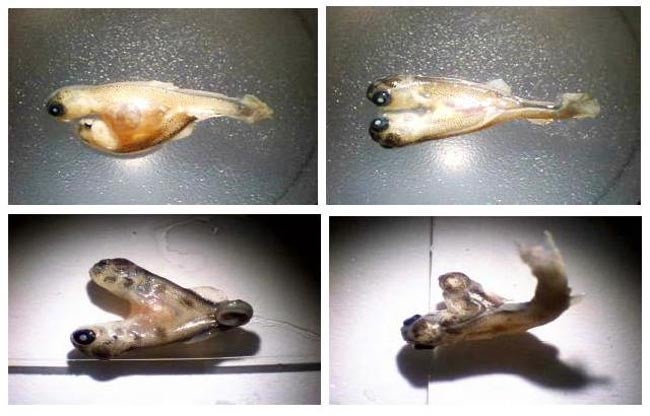
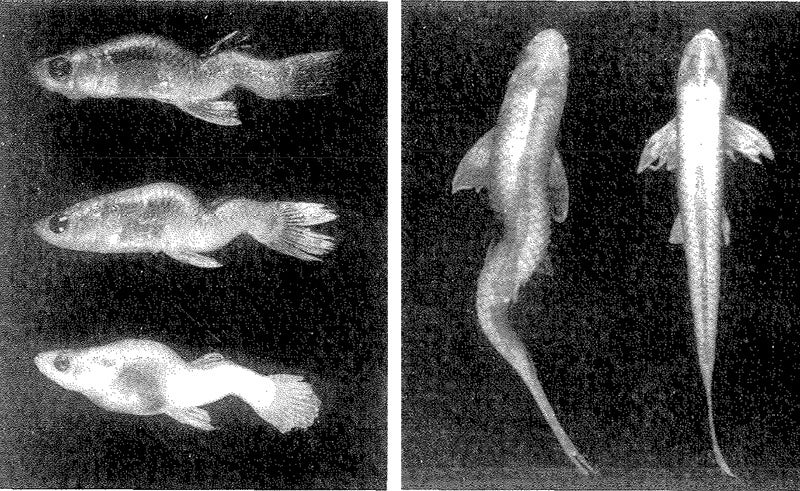
In addition, selenium bioaccumulates in food chains and passes from parents to offspring in eggs, where it causes a variety of skeletal deformities and other abnormalities in the developing embryos. This can lead to massive reproductive failure and local extinction of species.
At least three toxins common to coal ash, including arsenic, methyl mercury, and selenium, can result in biomagnification in aquatic organisms, thereby increasing the danger of ingestion by humans and other animals.
A review of documented environmental damage since 1967 reveals that harm from coal ash has injured fish, birds, amphibians, and wildlife at multiple locations across the United States.
Case Study: Belews Lake
The most studied case of coal ash damage occurred at Belews Lake in North Carolina in the 1970s, when coal ash-contaminated water from an ash pond at Duke Energy’s Belews Creek Steam Station caused a long-term catastrophic toxic event. Selenium poisoning killed 19 of the 20 fish species in 3800-acre Belews Lake. Adverse impacts in fish and birds persisted at the lake for decades.
List of Contaminated Waterbodies
The following list of contaminated waterbodies, documented by U.S. EPA and scientists, is not comprehensive of all the coal ash-impaired waters in the United States, because water quality data for surface water and fish tissue data is available for only a limited number of sites.
This list, nevertheless, comprises 28 sites in 15 states and provides a limited snapshot of the toll of coal ash on aquatic environments.
The damage to fish and wildlife is both dramatic and costly. One expert estimates that the combined direct and indirect cost of poisoned fish and wildlife at 21 of the 28 sites below has exceeded $2.3 billion.1
|
Widows Creek Stevenson, AL |
* TVA: Widows Creek Fossil Fuel Plant | Lemly (2012) |
|
Euharlee Creek Cartersville, GA |
Georgia Power: Plant Bowen | EPA (2014a); Lemly (2012) |
|
Gibson Lake Princeton, IN |
Duke Energy: Gibson Generating Station | EPA (2014a); Lemly (2012) |
|
Herrington Lake Harrodsburg, KY |
E.W. Brown Generating Station | Lemly (2018) |
|
Lake Erie Erie, MI |
Consumers Energy: J.R. Whiting Power Plant | EPA (2014a); Lemly (2012) |
|
Lake Huron Essexville, MI |
Consumer Energy: DE Karn and JC Weadock Power Plants | EIP (2010a) |
|
Belews Lake Walnut Cove, NC |
Duke Energy: Belews Creek Steam Station | EPA (2014a); Lemly (2012) |
|
Hyco Lake Semora, NC |
Duke Energy: Roxboro Steam Electric Plant | EPA (2014a); Lemly (2012) |
|
Sutton Lake Wilmington, NC |
Duke Energy: L.V. Sutton Generating Energy Complex | Lemly (2013) |
|
Mayo Reservoir Roxboro, NC |
Duke Energy: Mayo Steam Electric Station | EPA (2014a); Lemly (2012) |
|
Kyger Creek/Stingy Run Gavin Power, OH |
Gavin Power LLC: Gavin Power Plant | Lemly (2012); EIP (2010b) |
|
Delaware River Mt. Bethel Township, PA |
* Talen Energy: Martins Creek Power Plant | EPA (2014a); Lemly (2012) |
|
Monongahela River Masontown, PA |
First Energy: Hatfield's Ferry power Station | Lemly (2012) |
|
Wateree River Eastover, SC |
SCE&G: Wateree Generating Station | Lemly (2012); EPA (2014d) |
| Beaver Dam Creek | Savannah River" | Savannah River, SC |
|
McCoy Branch Oak Ridge, TN |
* DOE: Oak Ridge Y-12 Power Plant | EPA (2014a); Lemly (2012) |
|
Melton Hill Reservoir Lenoir City, TN |
TVA: Kingston Fossil Plant | Lemly (2012) |
|
Clinch and Emory Rivers Harriman, TN |
TVA: Kingston Fossil Plant | Lemly (2012) |
|
Brady Branch Reservoir Marshall , TX |
AEP-SWEPCO: H.W. Pirkey Power Plant | EPA (2014a); Lemly (2012) |
|
Martin Lake Tatum, Rusk, Manola Counties, TX |
Luminant Generation: Martin Lake Steam Electric Station | EPA (2014a); Lemly (2012) |
|
Welsh Reservoir Mount Pleasant, TX |
AEP: J. Robert Welsh Power Plant | EPA (2014a); Lemly (2012) |
|
Smithers Lake Thompsons, TX |
NRG: W.A. Parish Electric Generating Station | EIP (2011) |
|
Clinch River Cleveland, VA |
AEP-Appalachian Power: Clinch River Power Plant | EPA (2014a); Lemly (2012) |
|
Adair Glen Lynn, VA |
* AEP: Glen Lyn Plant | Lemly (2012); EIP (2010b) |
|
Rocky Run Creek Pardeeville, WI |
WPL: Columbia Energy Center | Lemly (2012); EIP (2010b) |
|
Connor's Run Moundsville, WV |
AEP: Mitchell Generating Plant | Lemly (2012) |
|
Little Scary Creek Winfield, WV |
AEP: John E. Amos Power Plant | Lemly (2012); EIP (2010a) |
|
Evaporation ponds at Bridger Plant Point of Rocks, WY |
PacifiCorp: Jim Bridger Power Plant | Lemly (2012) |
1 Lemly (2012). A Dennis Lemly and Joseph P. Skorupa, Wildlife and the Coal Waste Policy Debate: Proposed Rules for Coal Waste Disposal Ignore Lessons from 45 Years of Wildlife Poisoning, Environ. Sci. Technol. 2012, 46, 8595−8600.
* Asterisked sites and sources do not appear in this website's CCR Rule Compliance map dataset, either because they are related to “legacy” ash ponds that will need to come into compliance per the Aug. 2018 D.C. Circuit Court order, or to disposal sites that are not subject to the CCR Rule for other reasons. For example, the CCR Rule does not regulate landfills that ceased receiving coal ash before October 2015.
Lemly (2012): A Dennis Lemly and Joseph P. Skorupa, Wildlife and the Coal Waste Policy Debate: Proposed Rules for Coal Waste Disposal Ignore Lessons from 45 Years of Wildlife Poisoning, Environ. Sci. Technol. 2012, 46, 8595−8600.
Lemly (2013): A. Dennis Lemly, Biological Assessment to Determine Impacts of Selenium Pollution From Coal Ash Wastewater Discharges on Fish Populations in Lake Sutton, NC. (November 5, 2013).
Lemly (2018): A. Dennis Lemly, Selenium poisoning of fish by coal ash wastewater in Herrington Lake, Kentucky, 150 Ecotoxicology & Envtl. Safety 49 (2018)
EIP (2011): Environmental Integrity Project, Risky Business: Coal Ash Threatens America’s Groundwater Resources at 19 More Sites (Dec. 12, 2011)
Requirements for Industry to Clean Up Groundwater & A Toolkit to Advocate for Coal Ash Cleanups
Hundreds of coal ash ponds must be closed over the next several years, and many plant owners are proposing inadequate and sometimes illegal and dangerous closures.
The report Cleaning Up Coal Ash For Good provides regulators, policymakers, and communities with the resources to choose effective coal ash pond closures that protect the environment and public health while also creating jobs and benefiting the economy.
When comparing the economic, environmental, and community impacts of different closure methods, the analysis finds that there are significantly higher benefits from a clean closure when all ash is removed from leaking ponds and the local community is engaged in closure and redevelopment planning processes. Learn more.
Owners of at least 124 plants in 28 states and Puerto Rico (as of Oct. 5, 2020) have posted public notifications that leaking coal ash ponds and landfills at their sites, without an alternative source demonstration, have contaminated groundwater above state and/or federal heath limits for one or more of the following toxic substances: Antimony, Arsenic, Barium, Beryllium, Cadmium, Chromium, Cobalt, Lead, Lithium, Molybdenum, Selenium, Thallium, and Radium 226 and 228 combined.
- See the list of 124 plants with available cleanup plans (PDF)
- See the full map data, which includes information on available and upcoming cleanup plans and alternative source demonstration (spreadsheet)
These admissions trigger requirements under the federal CCR Rule for the companies to clean up groundwater and engage the public, as follows:
- Cleanup Plan: Each plant owner must develop a cleanup plan (“corrective measures assessment”) designed to remediate any coal ash releases and to restore the contaminated area to its original condition. These cleanup plans must be completed within 180 days of discovering the contamination, and must be posted on the industry’s publicly accessible website 30 days later. The utility owner can qualify for a 60-day extension in certain cases. Cleanup plans are now available at over 100 plants, and more should be posted on industry websites this year.
- Public Meeting: The plant owner must discuss the results of the corrective measures assessment with interested and affected parties at least 30 days before the company selects a remedy. While there is no strict deadline for remedy selection, the utility must select a cleanup plan “as soon as feasible.” Thus, the exact date of a public meeting will be determined on a site-by-site basis.
- Public Engagement in the Cleanup Process: It is critical for affected communities to play an active role in the review of the cleanup plan and in the cleanup selection process. Because there is no required oversight role for U.S. EPA or state regulators, active community members are the frontline for ensuring adequate cleanup at these contaminated sites. Community evaluation of the cleanup plans will be necessary to ensure timely, comprehensive, and health-protective remediation.
Your Guide to Advocating for Coal Ash Cleanups
The success of any individual coal ash cleanup will depend on the strength of the engagement of the local community in the cleanup process.
If you live in a community where a cleanup process will take place (see most recent list, as PDF or spreadsheet), use the information and resources in A Toolkit to Advocate for Coal Ash Cleanups for tools and tips to advocate for the most protective outcome.
If you read our toolkit guide, please let us know. We want to hear from you! It is helpful for communities fighting coal ash to know that other communities across the country are also getting involved. You'll also have the opportunity to keep in touch and learn about the experiences of communities who engage in coal ash cleanups
Cleanup Status Report Form
If the cleanup is not occurring according to the schedule established by the polluter or if data reveal contamination is not being abated, alert local, state, and federal authorities, as well as the media.
You can also alert Earthjustice to the problem by using the Cleanup Status Form.
The 10 Most Contaminated Sites
The Environmental Integrity Project and Earthjustice have identified the 10 most contaminated sites nationwide, based on a combined measure of the extent to which each pollutant exceeded safe levels at each site.
The report Poisonous Coverup: The Widespread Failure of the Power Industry to Clean Up Coal Ash Dumps (2022) explains the methods for ranking the sites and discusses each site contamination in detail.
This table summarizes the pollutants that were present at unsafe levels and the degree to which each pollutant exceeds a safe level.
Exceedances greater than 50 times a safe level are in red.
|
#1: San Miguel Plant Christine, TX |
Arsenic (x8), Beryllium (x127), Boron (x41), Cadmium (x114), Cobalt (x488), Fluoride (x2), Lithium (x90), Mercury (x3), Radium 226+228 (x6), Selenium (x8), Sulfate (x20), Thallium (x4) |
|
#2: Reid Gardner Generating Station Moapa, NV |
Antimony (x1), Arsenic (x121), Boron (x84), Cadmium (x2), Cobalt (x16), Fluoride (x3), Lead (x8), Lithium (x161), Molybdenum (x87), Selenium (x1), Sulfate (x228), Thallium (x5) |
|
#3: Naughton Power Plant Kemmerer, WY |
Antimony (x2), Arsenic (x10), Barium (x1), Beryllium (x2), Boron (x16), Cadmium (x2), Chromium (x3), Cobalt (x13), Lead (x16), Lithium (x242), Molybdenum (x3), Radium 226+228 (x1), Selenium (x150), Sulfate (x66), Thallium (x9) |
|
#4: Jim Bridger Power Plant Point of Rocks, WY |
Antimony (x1), Arsenic (x4), Boron (x9), Cadmium (x3), Cobalt (x92), Fluoride (x3), Lead (x4), Lithium (x164), Molybdenum (x10), Radium 226+228 (x2), Selenium (x85), Sulfate (x125), Thallium (x11) |
|
#5: Allen Steam Station Belmont, NC |
Arsenic (x7), Beryllium (x6), Boron (x1), Cadmium (x1), Cobalt (x466), Lithium (x12), Selenium (x5), Sulfate (x3), Thallium (x1) |
|
#6: New Castle Generating Station New Castle, PA |
Arsenic (x372), Boron (x4), Cobalt (x5), Lithium (x54), Molybdenum (x1), Sulfate (x3) |
|
#7: Brandywine Ash Management Facility Brandywine, MD |
Arsenic (x5), Beryllium (x2), Boron (x29), Cobalt (x47), Lithium (x222), Molybdenum (x111), Selenium (x9), Sulfate (x11) |
|
#8: R.D. Morrow, Sr. Generating Station Purvis, MS |
Arsenic (x3), Beryllium (x2), Boron (x19), Lead (x1), Lithium (x167), Molybdenum (x176), Sulfate (x6), Thallium (x1) |
|
#9: Hunter Power Plant Castle Dale, UT |
Boron (x16), Cobalt (x28), Lithium (x210), Molybdenum (x11), Radium 226+228 (x2), Selenium (x7), Sulfate (x62) |
|
#10: Allen Fossil Plant Memphis, TN |
Arsenic (x294), Boron (x4), Fluoride (x1), Lead (x3), Molybdenum (x9) |
Demographic Data Surrounding Coal Ash Contaminated Sites
Nationwide, the burden of coal ash pollution is carried disproportionately by communities of color and low-income communities.
Populations of people of color and/or low-income residents are higher than the state average at six of the 10 most contaminated sites with residential populations within three miles of the coal ash dumps.
These communities are unlikely to have the resources to routinely test their drinking water, and they often lack access to adequate medical care and legal assistance. In addition, these communities frequently confront multiple toxic threats that accentuate health risks. Finally, such communities often lack the political power necessary to garner the attention and assistance of regulatory agencies and elected officials.
Coal ash creates issues of environmental injustice, where harm falls disproportionately on our nation’s most vulnerable communities.
Percentages in red ‡ are above state averages. Please see map notes above for methods and sources in generating demographic data.
|
#1: San Miguel Plant Christine, TX |
31% | 9% |
|
#2: Reid Gardner Generating Station ‡ Moapa, TX |
89% ‡ | 55% ‡ |
|
#3: Naughton Power Plant Kemmerer, WY |
9% | 21% |
|
#4: Jim Bridger Power Plant Point of Rocks, WY |
NA (No population within 3 miles) | NA (No population within 3 miles) |
|
#5: Allen Steam Station ‡ Belmont, NC |
42% ‡ | 16% |
|
#6: New Castle Generating Station ‡ New Castle, PA |
9% | 38% ‡ |
|
#7: Brandywine Ash Management Facility ‡ Brandywine, MD |
63% ‡ | 15% |
|
#8: R.D. Morrow, Sr. Generating Station ‡ Purvis, MS |
31% ‡ | 33% |
|
#9: Hunter Power Plant ‡ Castle Dale, UT |
2% | 30% ‡ |
|
#10: Allen Fossil Plant ‡ Memphis, TN |
99% ‡ | 49% ‡ |
The Fight Against Coal Ash Continues
Even as the U.S. Environmental Protection Agency, under the Trump administration, moved to weaken protections from coal ash pollution, the D.C. Circuit Court of Appeals handed a pivotal victory to the American public in August 2018, in a lawsuit brought by Earthjustice, on behalf of public interest groups.
In a lifesaving move, the court’s order requires the agency to increase protections for coal ash waste sites, casting serious doubt on the legality of the U.S. EPA’s ongoing attempts to undermine current standards. (Read an explanation of the court decision.)
Earthjustice — with the Environmental Integrity Project and Sierra Club — filed a petition for review challenging the U.S. EPA rule that modifies the 2015 CCR Rule to, among other changes, give power plant owners more time to clean up leaking coal ash sites that have been shown to have contaminated groundwater.
For coal ash, the winds are shifting. We will continue to work alongside impacted communities to bring industry and federal agencies accountable to the law.
Earthjustice’s Clean Energy Program uses the power of the law and the strength of partnership to accelerate the transition to 100% clean energy.