After years of dreaming about getting one of the original Americans back out on the prairie where they belong, we’re a big step closer to seeing it happen. In the spring of 2012, 60 pure-strain, wild bison from Yellowstone National Park finally arrived at Fort Peck Indian Reservation. The bison had returned to the Great Plains.
Ft. Peck Indian Reservation
More than 100 years ago, bison were slaughtered by the millions. In the spring of 2012, the great herds were being re-born on the Great Plains—one baby at a time.
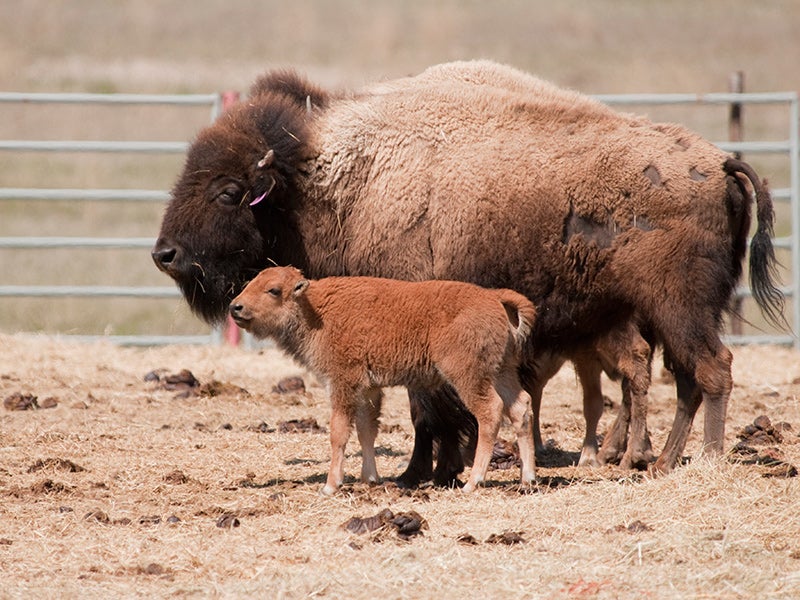
These are two of the first wild baby bison to be born at Fort Peck Indian Reservation that spring.
The bison’s triumphant return to Fort Peck culminates more than a century
of work to restore American bison herds that had been slaughtered.
Photo: Bill Campbell
Related
Ft. Peck Indian Reservation
One of the first wild baby bison born at Ft. Peck.
Once numbering in the tens of millions, bison fell victim to Manifest Destiny, as the railroads encouraged large-scale hunts to feed an insatiable demand for buffalo hides.
By 1902, only 23 genetically pure bison remained, a vestigial herd discovered in a remote valley in Yellowstone National Park. (Most bison that are ranched
around the West contain cattle genes.)
Photo: Bill Campbell
Related
Ft. Peck Indian Reservation
Tribal members greet the bison herd, as they arrive at Ft. Peck in the spring of 2012.
As trailers carrying the bison crossed the Missouri River, a group of Sioux and Assiniboine tribal members—who call themselves “the Buffalo People”—chanted a welcome to their lost relatives with songs from a bygone era.
Native tribes in northern Montana for years have sought to reestablish herds using Yellowstone stock. Until this year, they were blocked by cattle interests. But then the state agreed to move approximately 60 buffalo to the Fort Peck Indian reservation in far northeastern Montana.
Photo: Ted Wood
Related
Ft. Peck Indian Reservation
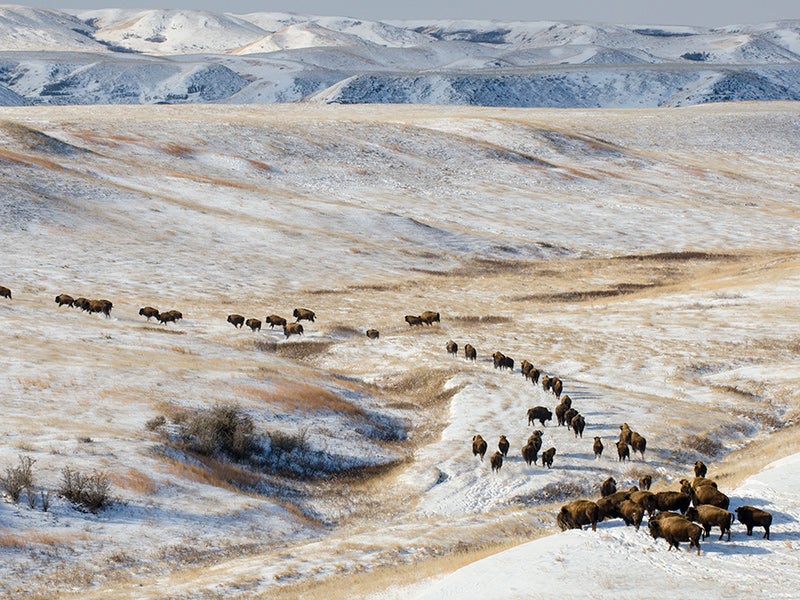
The newly relocated Ft. Peck herd in 2012.
Earthjustice attorneys have worked for more than a decade on behalf of wild buffalo. Most of this work has been to ease rules unnaturally restricting buffalo to the confines of Yellowstone National Park.
Outside the park, buffalo have for years been set upon by federal and state agents in helicopters, snowmobiles and on horseback—all intent on driving them back into the park.
Photo: Lynn Donaldson
Related
Ft. Peck Indian Reservation
Free-roaming bison flow at the foot of the Grand Tetons.
Ranchers have insisted that state officials shoot the wandering bison, because some carried a disease called brucellosis that causes cattle to abort their fetuses—though there has been no documented case of a cow contracting brucellosis from a bison.
Since 1985, nearly 7,000 bison have been slaughtered as a result of this wildly controversial policy.
Photo: Ted Wood
Related
Ft. Peck Indian Reservation
Since the buffalo arrived at Fort Peck in the spring of 2012, at least five new members to the herd have been born.
Livestock interests and their allies have sued to reverse the restoration of bison on the Fort Peck Indian Reservation and kill the larger bison restoration program in its infancy.
Earthjustice has stepped in to defend the restoration program and make sure it succeeds as what we hope will be the first of many efforts to bring bison to the plains.
Photo: Bill Campbell
Related
Ft. Peck Indian Reservation
Earthjustice Managing Attorney Tim Preso said, “We want to make sure that this spring’s newborn bison calves at Fort Peck are the first of many generations
of wild bison to grace their historic range on the Great Plains.”
Watch of video of Tim Preso, discussing Earthjustice's decade-long legal efforts on behalf of wild bison.
Photo: Bill Campbell
Related
Map: Bison Range
In the 19th century, market hunters decimated the great bison herds, shipping the hides back to the eastern United States where they were converted into leather belts to spin machinery in burgeoning industrial factories.
Related
Ft. Peck Indian Reservation
Free-roaming bison.
Earthjustice Managing Attorney Tim Preso: "We are at a pivotal moment for bison conservation in Montana. For the first time ever, the State of Montana has transplanted wild bison from their refuge in Yellowstone National Park to their native habitat on the Great Plains. It’s an historic step."
Photo: Bill Campbell
Related
Ft. Peck Indian Reservation
All Americans, including the very first ones, will be better off knowing these magnificent creatures, specially evolved to live on the wind swept, cold, blistering hot, and sometimes drought stricken prairie, will be back where they came from.
Photo: Bill Campbell
Related