

Port Clyde: A Way of Life Revived
Fishermen in Port Clyde, Maine, are modeling a standard that allows them to continue their fishing tradition, while also allowing the fish stocks to rebound.
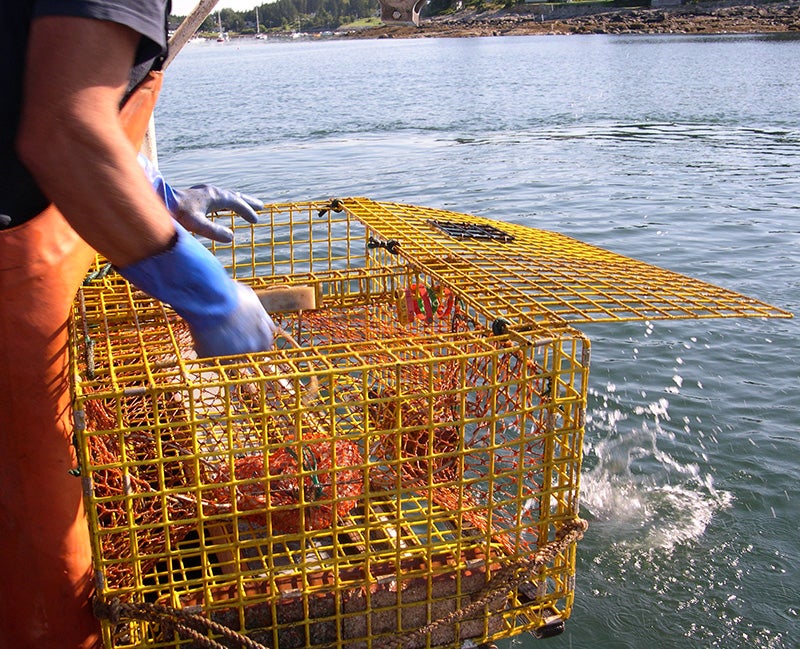
There is no Walmart in Port Clyde, Maine. Or McDonald’s.
There is the general store which serves everything from chunky lobster soup to rootbeer floats. And an inn nearby which serves fresh blueberry juice. Residents leave their doors unlocked. They take strolls at all times of the day and night.
This coastal community of 1500 people has only had one drastic change in the last decades. It’s the fish: there’s just not so much of them anymore.
Glen Libby, 54, a Port Clyde fisherman, remembers the time when you could catch more in a day than what people now need four days to catch. “Over the last decades, it’s been a steady decline,” said Glen Libby, chairman of the Midcoast Fishermen’s Association, a non-profit group seeking to improve the lives of local fishermen, and president of a local fishermen’s cooperative. “Every year you hope it’s the year that it turns around. We’re still hopeful it will.”
The decline in groundfish (haddock, cod, flounder, halibut, hake, Pollock, and red fish) is due to the influx of industrial fishing in the region in the last few decades. Despite the challenges, Glen Libby is part of a family of fishermen—Glen, a former groundfisherman and current shrimp fisherman. Glen’s brother Gary Libby, 52, is a groundfishermen, lobsterman, and shrimp fisherman. Glen’s son Justin Libby, 30, captains a groundfish boat. Glen and Gary’s father, Roger Libby, who is in his 70’s, originally got the family into fishing and is still a constant presence on the Port Clyde docks, keeping his eye on the family business.
But the family has had to adjust to higher fuel prices, federal regulations and competition from industrial fisheries. Their strategy to stay afloat? They organized the Port Clyde fishing cooperative last year, with local fishermen processing and selling their catch directly to customers. The fishermen use environmentally-friendly fishing gear that meets or exceeds federal requirements and attracts customers who want to support a local, sustainable fishing model. The coop, called Port Clyde Fresh Catch, offers a delivery subscription service and online sales, where customers can have fresh or frozen seafood shipped to their home. The coop also has extended to restaurant and farmer’s market sales.
As much as the story of Port Clyde is the fish and the people, it’s now become a story of embracing a new model to bring back a way of life that balances fishing, while maintaining local fish resources in a sustainable way.
“I was kind of at a point that I wanted to give up but with this whole thing going, it’s giving me another spark,” said Justin Libby. “This is a coop we started to try to get the fish to the people.”
This model enables Port Clyde fishermen to make more money—cutting out the middlemen and costly fish processors—while adhering to federal fish quotas. As much as the story of Port Clyde is the fish and the people, it’s now become a story of embracing a new model to bring back a way of life that balances fishing, while maintaining local fish resources in a sustainable way.
Gone are the days where groundfish and herring stocks were abundant and Port Clyde fishermen made good money with little to no competition. In the 1970s, New England’s groundfish and herring populations crashed under heavy fishing from foreign fleets, leading to the passage of the Magnuson-Steven’s Act in 1976. Among the tenets of the new law was a 200-mile fishery restriction, allowing only American fishing boats into that zone.
But after the groundfish populations recovered slightly in the 1980’s, they collapsed again in the mid-1990’s due to heavy fishing pressure from U.S. groundfish fleets. At this time, industrial-size fishing ships called herring midwater trawlers moved into the region in search of the recovering herring stocks. These fleets, armed with technological advances to make fishing much more “efficient”, have spent years catching large amounts of herring with little regulatory oversight. In the process, they have also scooped up hundreds of thousands of pounds of groundfish, including juvenile groundfish, as “bycatch”—fish which is largely discarded dead and wasted. Now several years later, groundfish populations have struggled to recover as herring populations—the principal food supply for groundfish—show signs of stress and possible collapse.
Enter Earthjustice. In 2007, the public interest law firm began representing local fishermen before federal regulators and in the courts challenging the National Marine Fisheries Service’s (the government agency charged with setting fishing rules and monitoring fishing activities) failure to restrict the industrial herring fishery from critical spawning regions for groundfish. Herring are a crucial species in the Northwest Atlantic ecosystem—small fish that are food for other marine mammals, sea birds, and fish, including groundfish life and is critical to the overarching ecosystem. In addition, regulators are being pressed to set Atlantic herring catch limits at scientifically determined levels that ensure enough herring is left in the ocean as forage for recovering groundfish.
These legal challenges aim for several things: establish fishing catch limits that acknowledge the role that herring play as a forage species, establish a new monitoring program that provides accurate estimates of herring and other bycatch, and finally, protect sensitive areas of the ocean that are spawning grounds for groundfish, herring, and other species.
Earthjustice works on behalf of these fishermen because, simply put: they are good stewards of the ocean.
“While our cod, haddock and flounder and herring fisheries issues are often viewed separately the two fisheries are inextricably linked,” said Earthjustice attorney Roger Fleming. “To rebuild and sustain New England’s legendary groundfish fishery we have to reform the Atlantic herring fishery top to bottom. We have to make sure that juvenile and spawning groundfish are protected and that enough herring are left in the ocean as food for groundfish and other species.”
There have been recent victories. In July, commercial fishermen from Cape Cod reached an agreement with NMFS requiring the government agency to reconsider a weak rule that allowed industrial herring fishermen to dump non-target fish that come up in their nets back into the ocean.
That same month, a federal judge ruled in favor of the Midcoast Fishermen’s Association and the Northwest Atlantic Marine Alliance, two pro-reform groups. The judge required NMFS to reconsider a request to exclude industrial trawl ships from groundfish nursery grounds.
Earthjustice defends these fishermen because, simply put: they are better stewards of the ocean. By staying out of vulnerable fish spawning grounds and using sustainable fishing equipment, these Port Clyde fishermen are modeling a standard that allows them to continue their lifeblood while also allowing the fish stocks to rebound.
“It just seems to make common sense to not have an industrial-sized facilities in groundfish closed areas,” said Glen Libby, who was pleased with the recent rulings.
As Libby and other Port Clyde fishermen wait for fish stocks to recover, they are focusing their efforts on the cooperative. And while this means he spends most of his time off his fishing boat, he’s doing what it takes to succeed as a small businessman.
“This is something we always talked about during cocktail hour,” Libby said. “The stars aligned in the right direction and here we are.”
Nathaniel Winchenbach, 30, is a former lobster fisherman who now is processing manager at the Port Clyde Fresh Catch plant overseeing the filleting and packaging of the fish. Winchenbach said he doesn’t miss all that time on the lobster boat—his future is with the cooperative.
“I was a lobster man and now I’m retired,” Winchenbach said. The cooperative “is a great opportunity for a fisherman. I see it as a great opportunity for everybody working here. Starting from square one, learning how to run a small business.”