

Mississippi “Data Center Giveaway Law” Leaves Residents in the Dark and Could Already Be Costing Utility Customers ~$11/mo.
A Mississippi law is failing to protect households from secret deals and potentially rising power bills. Here’s how lawmakers and utilities can fix this big problem with transparency, accountability, and strong oversight.
A new report by Synapse Energy Economics, In the Dark: Data Centers Could Be Costing Mississippi Households, sheds light on the rapid AI data center buildout under an unprecedented Mississippi “Data Center Giveaway Law” that allows for secret contracts between data centers and public utilities — and strips utility regulators of their usual oversight meant to protect consumers.
The law could leave Mississippi households subsidizing the costs of the data center buildout if reforms aren’t made to protect consumers now.
The report demonstrates the need for greater transparency, accountability, and strong oversight to protect people from higher electricity bills resulting from the true costs of the data center boom.
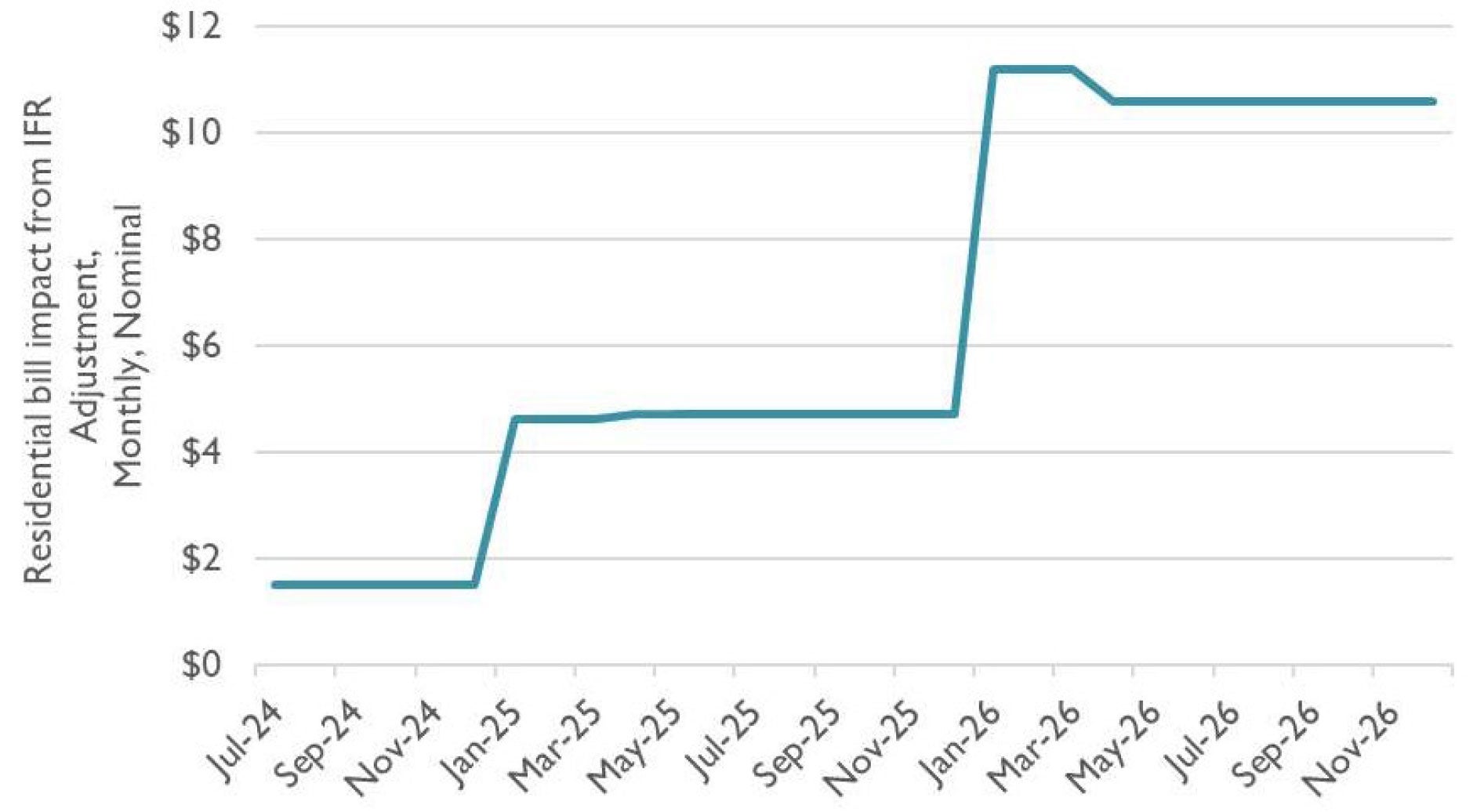
The report finds that average bills are already up to $10.60 higher per month for Entergy Mississippi’s residential customers as a result of investments to serve data centers — a cost that could grow, according to publicly available information. This report analyzes how Entergy Mississippi’s costs to serve data centers are currently — today — being added to residential electric rates.
The Mississippi “Data Center Giveaway Law” allows secret contracts and nondisclosure agreements while removing consumer protections and public oversight for large data centers.
In 2024, the Mississippi Legislature passed Senate Bill 2001 (SB2001).
This unprecedented legislative action curtailed the standard oversight role of the Public Service Commission (PSC) over energy infrastructure, making it easier and faster to expand the electrical grid for data centers. The investments needed to accommodate these new loads will be measured in the billions of dollars.
By limiting the role of the PSC, Mississippi legislators transferred significant risk to residential consumers, who, as a class of ratepayers, have now lost a key transparency and fairness check on Entergy Mississippi, the largest electricity provider in the state.
This report addresses major concerns with this loss of transparency, namely that the costs associated with data center growth and the grid improvements that these new customers have sought may be borne by residential consumers and other ratepayers.
Today, Entergy has several very large contracts with data centers. Under SB2001, it has been much easier for Entergy to enter into such contracts and recover the associated costs from ratepayers, all while cloaking information about the incremental system costs associated with these contracts in nondisclosure agreements.
This bold abandonment of public transparency for what has historically been seen as a “common good” — electricity — has no known analogue anywhere else in the country.
Data center infrastructure could already be costing Mississippi households ~$11 per month more on their electricity bill.
Using publicly filed information, Synapse estimates that Entergy’s residential ratepayers in Mississippi have already paid approximately $38 million as of March 2026 for investments related to serving these data centers, and that they will contribute $74 million by the end of 2026.
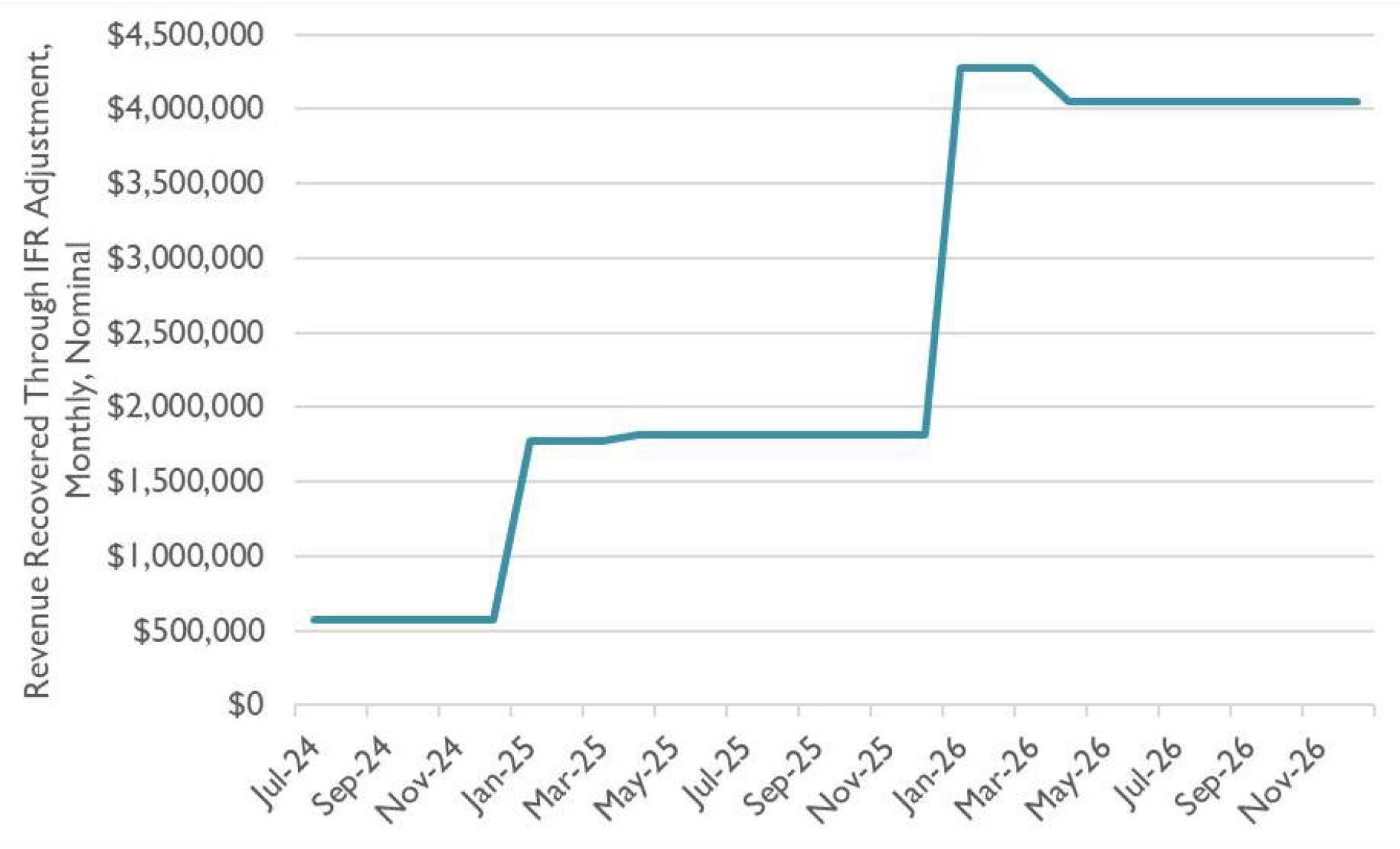
As a result, the average residential customer’s bill is now about $10.60 per month higher. We stress that these are estimates and that there is considerable uncertainty about impacts given that much of the key information is not publicly available.
To protect people from rising electricity costs from the data center buildout, strong policies and laws are needed to ensure data centers pay for the massive amounts of energy and associated infrastructure they demand.
While it is possible that data centers could be offsetting some or all of their incremental costs through separate financial arrangements with Entergy, this would be unverifiable since the key rate filings are confidential.
And, based on review of publicly available dockets and filings by Entergy, some system costs are scheduled to be included in ratepayers bills moving forward.
Further, recent claims by Entergy that such contracts with large-load customers produce cost savings for other customers are not supported by any documentation from Entergy, and thus, these claims similarly cannot be validated.
Indeed, we have serious concerns about the assumptions that Entergy is making when projecting overall savings.
In this section, we provide recommendations for contract provisions to protect customers in Mississippi and ensure that data centers do not raise rates for everyone else.
While we recognize that there are certain limitations to what the Commission may require under SB2001, we suggest that Entergy could proactively commit to establishing reasonable, customer-protective provisions through a standardized contract.
Entergy should make a clear commitment, which would be enshrined in the standardized contract, that data center customers shall not be subsidized by other customer classes, consistent with cost-causation principles.
1. Establish Standard Contracts
Entergy should establish “Large Load” standardized contract with clear eligibility criteria and definitions, and with required customer protection provisions (discussed below).
2. Cost Allocation
There are two primary recommendations for cost allocation.
First, all facilities that solely benefit the data center (e.g., dedicated line extensions, dedicated substation) should be directly assigned to the customer via up-front contributions in aid of construction (CIAC) or equivalent mechanisms. It is not currently clear to what extent Entergy will directly allocate these costs to data center customers.
Second, where infrastructure investments benefit both data center and other customers, costs allocated to the data center must at a minimum recover the incremental costs to serve data center load and must be allocated according to cost causation principles.
3. Minimum Contract Terms
Entergy should require minimum initial contract terms of at least 15 years, with an optional load ramp period of up to five years during which load moves toward full contract capacity.
4. Minimum Charges
Contracts should include minimum charges that reflect the fixed costs incurred to serve the data center, regardless of actual usage, which should be based upon the contracted capacity.
At a minimum, monthly charges should include a demand component sized to recover the fixed costs associated with dedicated infrastructure, regardless of whether the data center operates at full capacity in a given month.
We recommend a minimum billing demand of at least 80 percent.
5. Exit Fees and Stranded-Cost Protections
Exit fees are necessary to protect existing customers if a data center terminates service before the end of the contract term. Exit fees may also be applied to reductions in contract capacity.
Exit fees should be calculated based upon the present value of remaining unrecovered costs, unless costs can be reassigned to new customers.
Further, there should be an explicit commitment that no stranded asset costs can be recovered from other customers. All such costs must be covered by the data center through exit fees, pre-funded contributions, or shareholder absorption.
Finally, contracts should specify a minimum notice requirement for exit.
6. Collateral and Financial Security
Exit fees are only meaningful if they can be collected. Accordingly, data center contracts must include robust collateral and financial security provisions, sized to the anticipated exit fee value. Not all forms of financial assurance are equally reliable.
While utilities may accept corporate parent guarantees as collateral, such guarantees raise serious enforceability concerns, particularly in the event of a customer's bankruptcy or corporate restructuring.
More reliable forms of collateral — such as irrevocable letters of credit, surety bonds, or cash deposits — provide direct recourse against a third-party financial institution, independent of the financial condition of the contracting entity or its parent and are enforceable even in the event of the customer's bankruptcy.
Corporate parent guarantees, by contrast, are unsecured obligations that may be difficult to collect if a parent company is in financial distress or restructuring.
Mississippi should require that collateral securing large load contracts take one of these more reliable forms rather than relying on corporate guarantees that may prove difficult to enforce when they are most needed.
The Mississippi legislature should consider codifying these financial assurance requirements as new data center developments continue to be announced across the state.
7. Rate Design
Rates should be grounded in cost-causation principles and ensure that data centers pay their fair share of investment in capacity (generation, transmission, distribution), operating and maintenance costs, and resource adequacy and reliability.
8. Transparency and Reporting Requirements
To address governance and oversight concerns, all data center service should be documented in standard form contracts, with limited and clearly defined negotiable terms. Utilities should be required to file executed service agreements with confidential commercial details redacted as necessary, so regulators and stakeholders can verify compliance with standardized terms and conditions.
Periodic reporting should be mandated on data center loads and usage patterns, revenues collected versus costs imposed on the system, status of interconnection and network improvements, and any exit or capacity reduction events and associated exit fees assessed and/or other mitigations applied (i.e., reassignment of capacity to other customers).
Additionally, Entergy should periodically provide a standardized and uniform update on data center-related investments, contracts, revenues, and costs. This would synthesize the information that is currently spread across many disparate dockets related to data center investments in a single report to enhance transparency.
Media Inquiries: Dustin Renaud, Earthjustice, drenaud@earthjustice.org
The Gulf Regional Office works with communities and other partners fighting for a healthy and just future in the Gulf. We work to cut pollution, end fossil fuel expansion, protect our region’s precious places and wildlife, transition to clean energy, and drive climate solutions that work for everyone.