Earthjustice goes to court for our planet.
We’re here because the earth needs a good lawyer.
Big Oil Stays Away from the Arctic Refuge, But the Fight Isn’t Over
What Happened: The Trump administration tried to sell off the Arctic National Wildlife Refuge to Big Oil with a lease sale on June 5. But all the major oil companies stayed away. Just two Alaska companies bid, and their bids only covered one tenth of available lands.
Why It Matters: Even though the interest in today’s sale was tepid, the new leasing still threatens to turn a globally significant habitat into a polluted industrial zone. We are suing to prevent this.
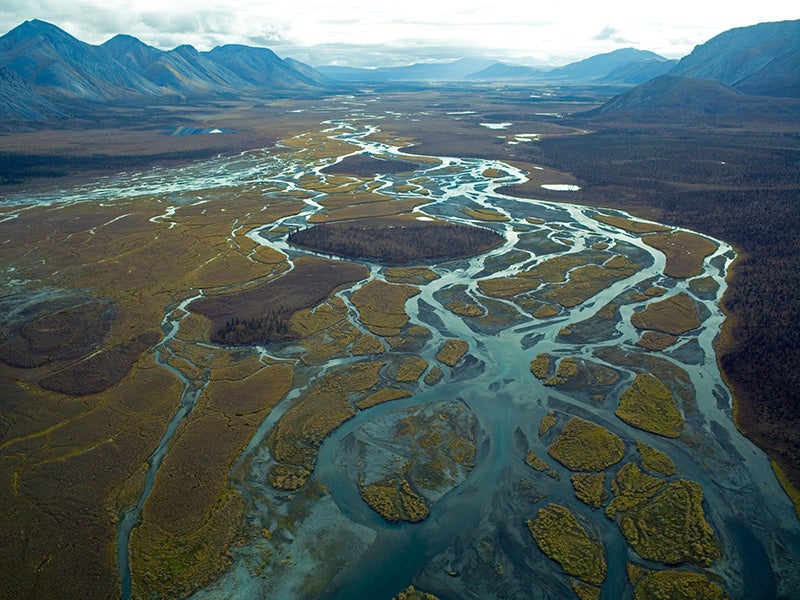
Oil drilling would harm threatened and endangered species, Indigenous communities, and one of the most beautiful natural places on earth. The Coastal Plain of the Refuge provides essential habitat for polar bears, caribou, migratory birds, and ringed and bearded seals.
The lack of interest from the oil industry’s major players likely reflects how risky and deeply unpopular drilling would be. The persistence of our Alaskan partners, our decades of litigation, and your public advocacy is making a difference in this fight.
Why the Arctic National Wildlife Refuge is special
- The Refuge spans 19.3 million acres in northern Alaska. On the Arctic coast lies the Coastal Plain, the biological heart of the Refuge that contains 1.56 million acres of tundra, braided rivers, and wetlands.
- The Plain is also the calving ground for the Porcupine Caribou Herd. The Indigenous Gwich’in people’s survival and identity are inextricably linked to these caribou, which they consider sacred.
- Federal law protected the Refuge from development until the first Trump administration opened the coastal plain to leasing. Only two other lease sales have been held, resulting in no development thus far. Efforts to keep the Refuge wild have enjoyed bipartisan and broad public support.
Arctic Ocean
Beaufort
Sea
Nuiqsut
Chukchi
Sea
Prudhoe Bay
Coastal Plain
Teshekpuk Lake
Western Arctic(National Petroleum
Reserve-Alaska)
Arctic National Wildlife Refuge
Russia
Arctic Circle
Canada
Alaska
Bering
Sea
Gulf of
Alaska
Peter Hoey for Earthjustice
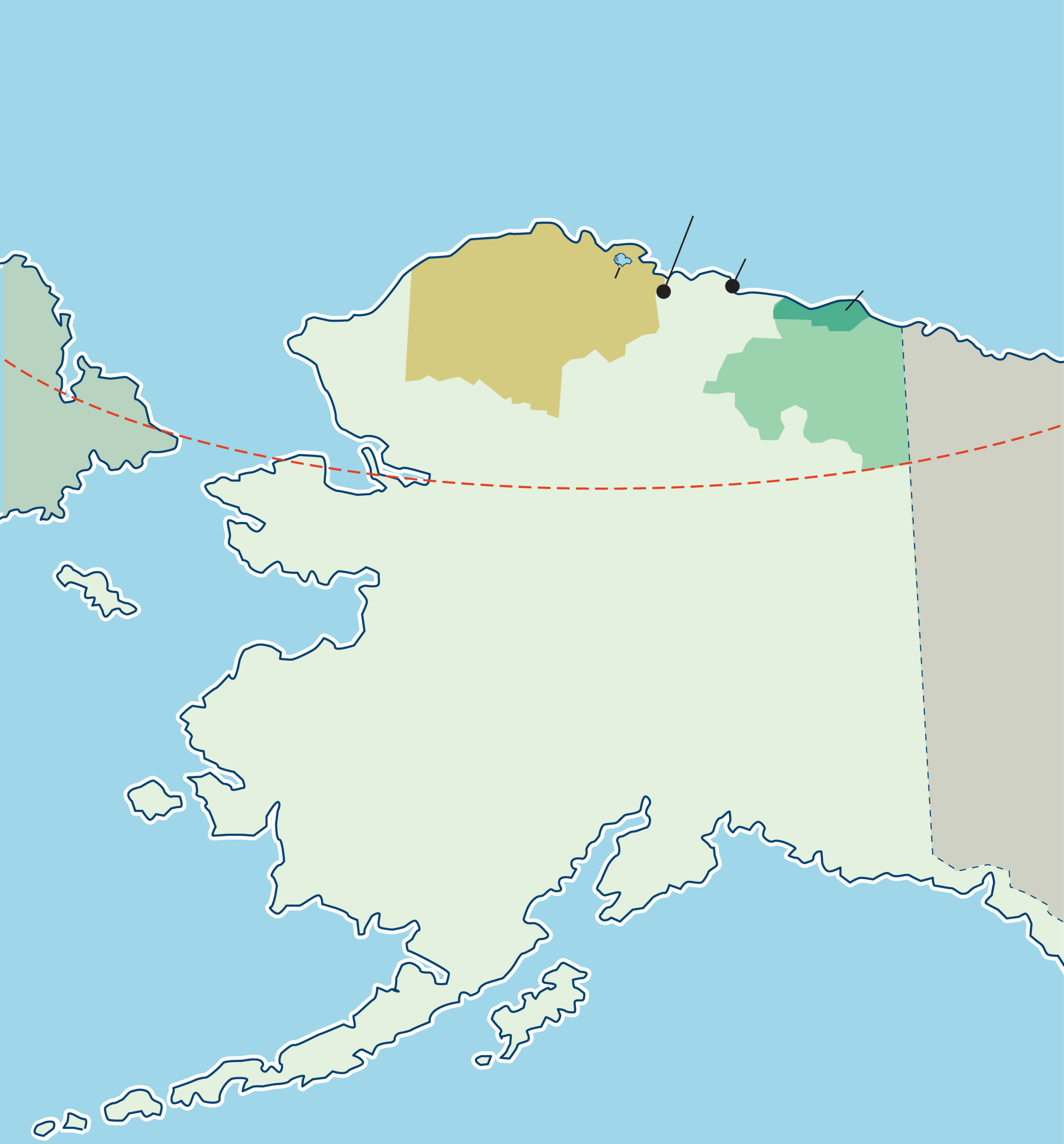
The Western Arctic (also called the "National Petroleum Reserve-Alaska" or NPR-A) is home to many millions of acres of specially designated lands because of their ecological and cultural importance. This includes Teshekpuk Lake, a wetlands area critical for migratory birds from around the world.
The Arctic National Wildlife Refuge is the country’s largest national refuge and home to diverse wildlife and Indigenous communities. Within the Arctic Refuge’s Coastal Plain are the calving grounds of the Porcupine Caribou herd.
What happened with the lease sale
- The Trump administration made 700,000 acres of the Coastal Plain available for oil and gas leasing, which would allow leaseholders to drill on that land.
- On June 5, a small Alaska company called Hex Energy and the state-sponsored Alaska Industrial Development and Export Authority bid on five tracts covering about 70,000 acres.
- All of the leases cover important polar bear habitat. The government acknowledged the leasing program would probably kill dozens of polar bear cubs. The administration moved forward anyway, declining to take action to adequately protect the bears.
- Opening the Refuge to oil companies continues a pattern of attacks on ecologically sensitive public lands by this administration.
- In March, the administration auctioned off more than a million acres of lands in the Western Arctic to oil companies.
What happens next
- The threat to the Refuge remains. This June 5 sale is the first of four lease sales planned for the Coastal Plain over a 10-year period.
- The Alaska Industrial Development and Export Authority, the primary leaseholder in the Refuge, is planning to conduct harmful seismic testing on the Coastal Plain as soon as this coming winter. Seismic testing could kill polar bears and leave scars on the Refuge’s sensitive landscape for decades.
- We are suing to challenge the Interior Department’s 2025 decision to maximize oil and gas leasing in the Refuge’s Coastal Plain. The leasing program breaks numerous federal laws, including the Endangered Species Act and the National Wildlife Refuge Act.
- We filed the lawsuit in January with NRDC, which is co-counsel, and we are representing NRDC, the Center for Biological Diversity, and Friends of the Earth. The suit reactivates litigation from 2020 and builds on years of legal work to protect the Refuge.
- The litigation and decades of public support for the Arctic Refuge likely factored into the decisions of major oil companies to steer clear of this lease sale. When we stand up for public lands, we win.
- Keep speaking up for the Arctic. Tell Congress to protect precious land, endangered species, and Indigenous communities.