

The public deserves a say on oil and gas leasing
What's At Stake
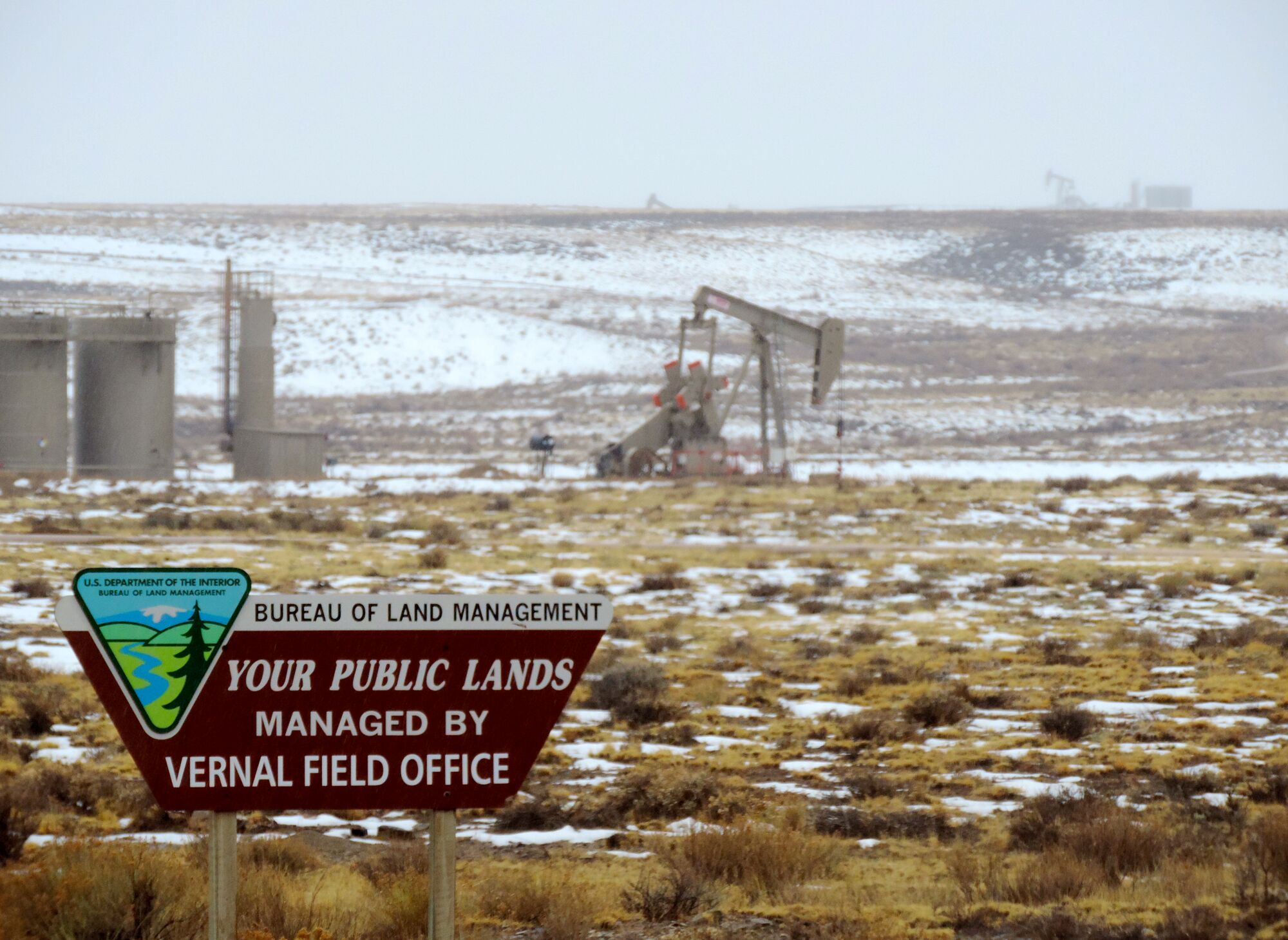
The Trump administration wants to stage another massive public lands giveaway to oil and gas billionaires — while silencing the public.
Their new proposal guts requirements that ensure Big Oil pays to clean up and plug oil wells after drilling on public lands. And they want to cut your voice out of the leasing process by eliminating opportunities to raise your concerns about drilling on public lands, while leaving taxpayers to pay for cleanup.
Tell the administration to abandon this reckless plan.
Delivery to Interior Secretary Doug Burgum
Important Notice
Your message is delivered to a public docket, and all information submitted may be placed in the public record. Do not submit confidential information.
By taking action, you will receive emails from Earthjustice. Change your mailing preferences or opt-out at any time. Learn more in our Privacy Policy. This Earthjustice action is hosted on EveryAction. Learn about EveryAction’s Privacy Policy.
Why is a phone number or prefix required on some action forms?
Trouble Viewing This Action?
If the action form is not loading above, please be aware that ad blockers and VPNs may prevent the action form from displaying. Please add earthjustice.org as a trusted website in your ad blocker, and refresh this webpage. (Details.) If the action form still does not display, please report the problem to us at action@earthjustice.org with a screenshot image of the problem. Thank you!
Your Actions Matter
Your messages make a difference, even if we have leaders who don't want to listen. Here's why.
You level the playing field.
Elected officials pay attention when they see that we are paying attention. Read more.
They may be hearing from industry lobbyists left and right, but hearing the stories of their constituents — that’s your power.
Our legislators serve at the pleasure of the people who gave them their job — you.
Make sure your elected officials know whose community and whose values they represent. When you contact your elected official, you’re putting a face and a name on an issue.
Whether or not you voted for them, they work for you, for the duration of their term.
Make sure your elected officials know whose community and whose values they represent. (Find your local, state, and federal elected officials.)
Your action is with us in court.
If a federal agency finalizes a harmful action, the record of public comments provides a basis for bringing them into court. Read more.
Throughout each of the public comment periods we alert you to, Earthjustice’s attorneys are researching and writing in-depth, technical comments to submit — detailing how the regulation could and should be stronger to protect the environment, our communities, and our planet.
We need you to join us — your specific experiences, knowledge, and voice are crucial to add to the Administrative Record through the comment periods.
Lawsuits we file that challenge weak or harmful federal regulations rely on what was submitted during the comment period. The court can only look at documents that are in the Administrative Record — including the public comments — to decide if the agency did something improper.
Your actions aid our litigation. Taking action and submitting comments during a comment period is substantively important.
It’s the law.
Federal agencies must pause what they’re doing and ask for — and consider — your comment. Read more.
Many of us may have never heard of the National Environmental Policy Act (NEPA) and the Administrative Procedure Act (APA), but laws like these require our government to ask the public to weigh in before agencies adopt or change regulations.
Regulations essentially describe how federal agencies will carry out laws — including decisions that could undermine science, or weaken safeguards on public health.
Public comments are collected at various points throughout the federal government’s rulemaking process, including when a regulation is proposed and finalized. (Learn about the rulemaking process.) These comments become part of the official, legal public record — the “Administrative Record.”
When the public responds with a huge outpouring of support for environmental protections, these individual messages collectively undercut politicians' attempts to claim otherwise.
What this means is each of us can take a role in shaping the rules our government creates — and ensuring those rules are fair and effective.