Posts tagged: pesticides

unEARTHED. The Earthjustice Blog

pesticides


    SIGN-UP for our latest news and action alerts:
   Please leave this field empty

Facebook Fans

Featured Campaigns

Everyone has The Right To Breathe clean air. Watch a video featuring Earthjustice Attorney Jim Pew and two Pennsylvanians—Marti Blake and Martin Garrigan—who know firsthand what it means to live in the shadow of a coal plant's smokestack, breathing in daily lungfuls of toxic air for more than two decades.

Coal Ash Contaminates Our Lives. Coal ash is the hazardous waste that remains after coal is burned. Dumped into unlined ponds or mines, the toxins readily leach into drinking water supplies. Watch the video above and take action to support federally enforceable safeguards for coal ash disposal.

ABOUT EARTHJUSTICE'S BLOG

unEARTHED is a forum for the voices and stories of the people behind Earthjustice's work. The views and opinions expressed in this blog do not necessarily represent the opinion or position of Earthjustice or its board, clients, or funders.

Learn more about Earthjustice.

View Kathleen Sutcliffe's blog posts
03 June 2010, 1:57 PM
Toxic America series continues tonight at 8 pm ET/PT

Did you tune into CNN's special series "Toxic Towns USA" last night? I sure did. I wanted to root on our friends and allies in the town of Mossville, LA who were featured in the special one-hour program hosted by Dr. Sanjay Gupta.

Among the local heroes profiled in the piece was Dorothy Felix, who has spent much of the past decade fighting to protect her community from the cancer-causing chemicals raining down upon her hometown of Mossville, a historically African-American community in southwestern Louisiana ringed by chemical plants.

This is a community where University of Texas researchers found that 99 percent of residents suffered from at least one disease or illness related to toxic chemical exposure. Further studies found blood levels of dioxin in Mossville residents rivaling those seen in workers involved in industrial accidents. The toxicologists studying these results called them some of the highest levels ever reported in the United States from an environmental exposure.

11 Comments   /   Read more >>
View Jessica Knoblauch's blog posts
29 March 2010, 12:01 PM
Like farm crops, pets get poisoned

While the U.S. Environmental Protection Agency mulls over the 42,000 letters sent from Earthjustice supporters and others who expressed support for safety standards protecting rural kids from pesticides, it's important to remember that pesticides aren't just limited to the fields.

Every spring, pet owners slick the backs of their dogs and cats with over-the-counter treatments designed to keep fleas and ticks at bay. The problem is that these treatments, which are also found stocked on shelves of pet stores nationwide in the spray, collar and shampoo form, contain toxic pesticides. Think of it as your very own bottle-o-poison.

The EPA has been keeping a watchdog's eye on these so-called spot-on treatments due to an increase in incident reports where pets have experienced adverse reactions that range from mild to downright serious.

5 Comments   /   Read more >>
View Kathleen Sutcliffe's blog posts
16 March 2010, 9:43 AM
They all want EPA to protect rural kids from pesticides

As I write, officials at the U.S. Environmental Protection Agency are wading through the tens of thousands of letters Earthjustice supporters and their counterparts at MomsRising, Pesticide Action Network and United Farmworkers sent asking the agency to protect rural kids from pesticides.

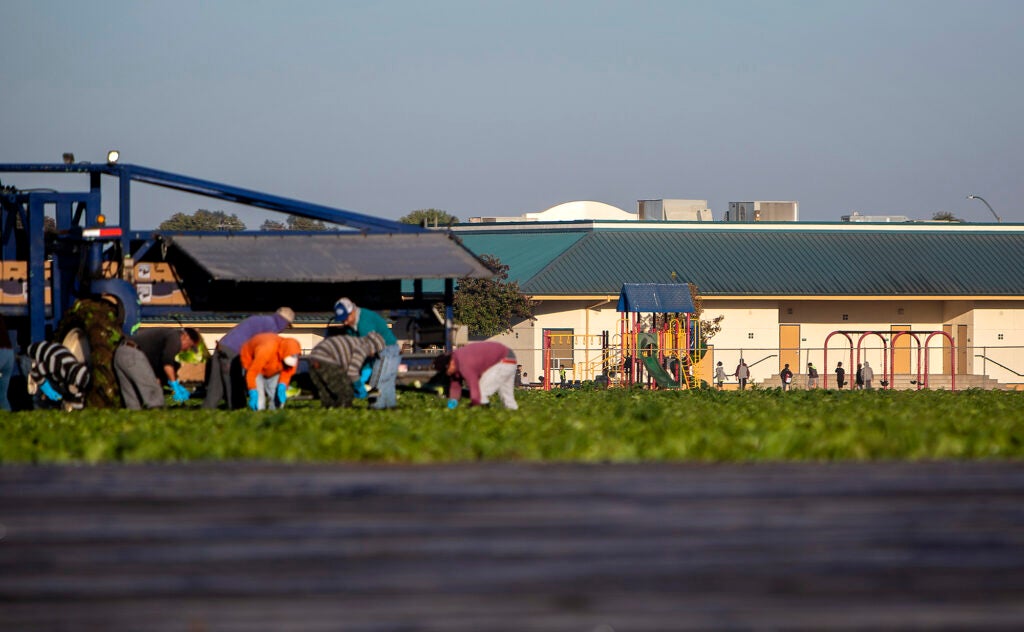
These 42,000 people—along with 51 groups in 18 states—are publicly supporting our petition for safety standards to protect children who grow up near farms from the harmful effects of pesticide 'drift'—the toxic spray or vapor that travels from treated fields—and for immediate no-spray buffer zones around homes, schools, parks and daycare centers for the most dangerous and drift-prone pesticides.

As EPA officials complete their tally, I hope they're paying particular attention to the personal stories people shared in their letters. People like Cynthia Piper, of Lakewood, OH, who after seeing children exposed to pesticides suffer from deformities, fought for a right-to-know pesticide spray ordinance in her town. Or JeanAnn Hurst of Chowchilla, CA, whose son was exposed to the nerve-gas pesticide chlorpyrifos while on school grounds. You can find Cynthia and JeanAnn's stories on our interactive map. And if you've had a close encounter with pesticides yourself, please consider submitting your story as well.

3 Comments   /   Read more >>
View Kathleen Sutcliffe's blog posts
03 March 2010, 2:02 PM
Saving the world 140 characters at a time

The microblogging site Twitter is poised to hit a major milestone: sometime in the next day or so one lucky Twitter user is expected to send out the ten billionth tweet (real-time counter is here).

Whether you love exchanging ideas in 140-character bursts, or if U H8 the resulting abbrevs, people will be paying very close attention to the string of words that mark Twitter's ascension into the big, big time.

So what will that 10 billionth tweet say? How about "Protect Rural Kids From Pesticides! Take action here:http://bit.ly/dyq39N"?

2 Comments   /   Read more >>
View Kathleen Sutcliffe's blog posts
01 March 2010, 9:25 AM
Five days left to tell EPA to protect rural kids from pesticides
Teresa de Anda, Californians for Pesticide Reform. Photo is from Tracy Perkins' collection: 25 Stories From the Central Valley

In case you missed it, NPR had a very good piece Sunday on Earthjustice's efforts to protect rural children from "pesticide drift"—the toxic spray or vapor that travels from pesticide-treated fields and into nearby communities.

Each year, nearly a billion pounds of pesticides are sprayed into fields and orchards around the country. And as our partner Teresa de Anda with Californians for Pesticide Reform told the NPR reporter, just about everyone in these agricultural areas has a story to tell about unnerving encounters with pesticides.

41 Comments   /   Read more >>
View Patti Goldman's blog posts
24 February 2010, 3:13 PM
Only 8 days remain to contact EPA
Adelaida Galvez and her daughter Genoveva, who has been exposed to pesticides, live across from an orange grove in Lindsay, CA.

Pesticides, by design, maim, incapacitate, or kill pests. But throughout this country, pesticides drift from the fields where they are sprayed to areas where children live, learn, and play, causing similar harm. Far too many children suffer acute nerve poisoning illnesses from pesticides and they risk debilitating long-term effects like cancer, reproductive impairments, and learning disabilities.

As its name suggests, the Environmental Protection Agency (EPA) is charged with protecting children from pesticide-induced illnesses. In fact, in 1996, Congress unanimously passed the Food Quality Protection Act, giving EPA 10 years to ensure that children would not be harmed by their aggregate exposures to a pesticide.

To do this, EPA added up the exposures to children from a pesticide in food, drinking water, homes, and yards. Unfortunately, it failed to include what is often the biggest exposure for rural kids, kids living near fields or orchards, and farmworkers—pesticides moving through the air to envelop and permeate the homes, schools, parks, and playgrounds. This route of exposure, known as pesticide drift, occurs following pesticide application.

8 Comments   /   Read more >>
View Trip Van Noppen's blog posts
21 January 2010, 12:25 PM
Focus is on clean energy, natural heritage, and health

Last year, the U.S. government started taking environmental protection seriously again, but as 2010 dawns, we continue to see political and economic interests preventing or stalling critical environmental solutions.

In the face of this opposition, this year Earthjustice is targeting key issues with our legal and advocacy work. Our focus is on three core priorities: building a clean energy future, protecting our natural heritage, and safeguarding our health.

To avoid global warming's worst impacts, we must build a clean energy future. Reducing demand through efficiency and increasing supply from renewable sources of power are cornerstones of the foundation. But these steps are obstructed by the political stranglehold of the fossil fuel industry. Earthjustice is using the law to help break our national reliance on fossil fuels, which we continue to extract, burn, and subsidize heavily with taxpayer money, despite the destructive impact on people and the planet.

8 Comments   /   Read more >>
View Molly Woodward's blog posts
10 December 2009, 4:40 PM
Copenhagen, the Chukchi Sea, Clean Air, Trees

Some top stories from the last week at Earthjustice...

The Copenhagen conference started off with a bang of optimism when the EPA announced that greenhouse gas emissions endanger public health. The cooperative spirit quickly fizzled after a draft agreement surfaced that apparently favors the interests of the U.S. and other wealthy nations. There’s more news by the hour: Be sure to check out our daily reports from Copenhagen, and analysis by two attending Earthjustice attorneys, Erika Rosenthal and Martin Wagner.

All the buzz from the conference nearly drowned out a disturbing, and related, piece of news: Shell Oil was granted conditional approval to drill exploratory wells in the Chukchi Sea. Earthjustice attorney Erik Grafe warned that the approvals outpace the science of what we know about Arctic waters.

On the same day that the EPA released its endangerment finding, Earthjustice challenged the agency on a toxin polluting the air in Appalachia, to the point where kids can’t play outside. It’s coal dust, and we think the coal plants that produce it should do something about it. 

Farm workers and their families will get some long-awaited help to deal with toxic pesticides poisoning the air around their homes and schools, thanks to a new EPA policy. Going forward, the EPA will assess the health risks posed by pesticide drift with the same standards by which pesticides in food are assessed. 

And finally, this week Earthjustice saved taxpayers $1.5 million!and 4.3 million board-feet of old-growth forest in the Tongass to boot. This also means we kept a little C02 out of the atmosphere. Indeed, one of the least controversial ideas out of Copenhagen is also one of the simplest: don’t cut down trees.

View Patti Goldman's blog posts
09 December 2009, 3:14 PM
New policy aims to correct decades of wrongdoings

Yesterday, the Environmental Protection Agency put itself on a path to right several wrongs of the past decades done to this nation's farmworkers and their families.

EPA announced a new policy that will apply the same science in assessing risks to workers and their families as it uses to protect children generally from pesticides in our food. In 1996, Congress mandated that EPA protect children from the risks posed by the combined exposure to pesticides in our foods, drinking water and environment. Congress also directed EPA to account for children's special vulnerabilities to toxic pesticides and gaps in our knowledge about their full risks.

EPA reviewed thousands of pesticides under these standards, but it carved out exceptions for some of the most vulnerable children—children who go with their parents in the fields and children who are exposed to pesticides that drift into their homes, schools, day care centers, and playfields.

2 Comments   /   Read more >>
View Tom Turner's blog posts
02 December 2009, 3:57 PM
A different angle from the Center for Food Safety

I just received two copies of a newsletter called Cool Foods: Countdown to Copenhagen & Beyond from the Center for Food Safety. The purpose of the effort is to remind negotiators and the public that industrial agriculture accounts for between 13.5 percent and as much as 32 percent of greenhouse gas emissions. "Particularly alarming," they write, "is that industrial agriculture is responsible for 60 percent of total global nitrous oxide emissions, largely from nitrogen fertilizer. Nitrous oxide is the deadliest of the three major GHGs, approximately 300 times more potent than carbon dioxide." And on in the same vein. Scary but vital information.

Lester Brown's Earth Policy Institute has a somewhat different take on the subject, but also provides compelling evidence and argument that climate change and agriculture are intimately linked.