
Subscribe to Earthjustice
   Please leave this field empty

State Department’s Refusal to Disclose Tar Sands Communications Challenge

Case Number # 2212

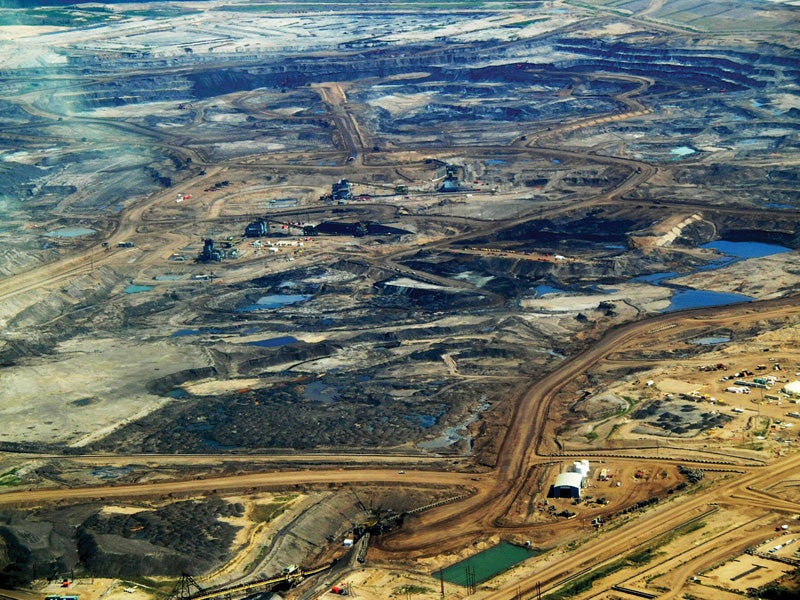
Tar sands mining operations destroy forests and wetlands, with vast drilling infrastructure, open pit mines, and toxic wastewater ponds up to three miles wide, permanently damaging the environment. (Velcrow Ripper / Flickr)
Alberta, Canada. Tar sands mining operations permanently damages the environment, destroying forests and wetlands, with vast drilling infrastructure, open pit mines, and toxic wastewater ponds up to three miles wide.
(Velcrow Ripper / Flickr.)

Earthjustice is representing environmental and ethics groups in challenging the U.S. State Department’s refusal to disclose communication records with a lobbyist for TransCanada Pipelines, Paul Elliott, who was previously a presidential campaign manager for Secretary of State Hillary Clinton. Disclosure of these communications may reveal improprieties in the State Department’s decision-making with respect to TransCanada’s Keystone XL pipeline that would transport tar sands crude oil to from Alberta, Canada to U.S. refineries in the Gulf of Mexico.

Before deciding whether to grant a permit, the State Department must analyze the pipeline’s risks, finalize an Environmental Impact Statement, and determine whether the pipeline is in the public interest. After the Environmental Protection Agency told the State Department its draft environmental impact statement was inadequate, Secretary Clinton nonetheless said that the State Department was “inclined to approve” the permit. The State Department plans to make a final decision about the Presidential Permit before the end of 2011.

Tar sands mining operations destroy forests and wetlands, with vast drilling infrastructure, open pit mines, and toxic wastewater ponds up to three miles wide, permanently damaging the environment. The extraction process involves strip mining and in situ drilling that injects steam into the ground to melt the tar-like crude oil from the sand and requires massive amounts of energy and water. In fact, tar sands oil production emits about three times the amount of greenhouse gas emissions as extraction of conventional oil and uses from two and a half to four times the amount of water. The construction and operation of the Keystone XL pipeline itself poses additional environmental risks, including potential contamination of major freshwater aquifers.

Press Releases

Thursday, February 23, 2012
Campaign connections could raise possibility of bias in Keystone XL pipeline review
Thursday, October 6, 2011
Groups amend public records request to include more lobbyists with Clinton, Obama ties
Thursday, September 22, 2011
Petition asks U.S. Interior Dept. to investigate Canada’s failure to protect threatened caribou and migratory birds
Wednesday, May 18, 2011
Groups question what impact the relationship will have on controversial pipeline decision