
How the Supreme Court Ruled on the Environment This Term, and What We’re Expecting Next
Recapping the cases we watched, how they turned out, and why they matter.
Pundits are always trying to force-fit a “theme” onto the decisions in a Supreme Court Term — the October to June period when the Court hears most of its cases. It’s an exercise I’ve never bothered with; justices have life tenure and the “term” matters to them mostly for scheduling their summer getaways.
Moreover, the shadow docket has eroded the concept of a “term” because it has given litigants a year-round emergency hotline to contest lower court decisions. (Right-wing lawyers have started to resemble soccer pros, constantly flopping in search of fast-track Supreme Court of the United States review.)
So, I’ll take a simpler approach to breaking down the term for you from my perspective at Earthjustice. Let’s go through the cases we watched, how they came out, and why they matter.
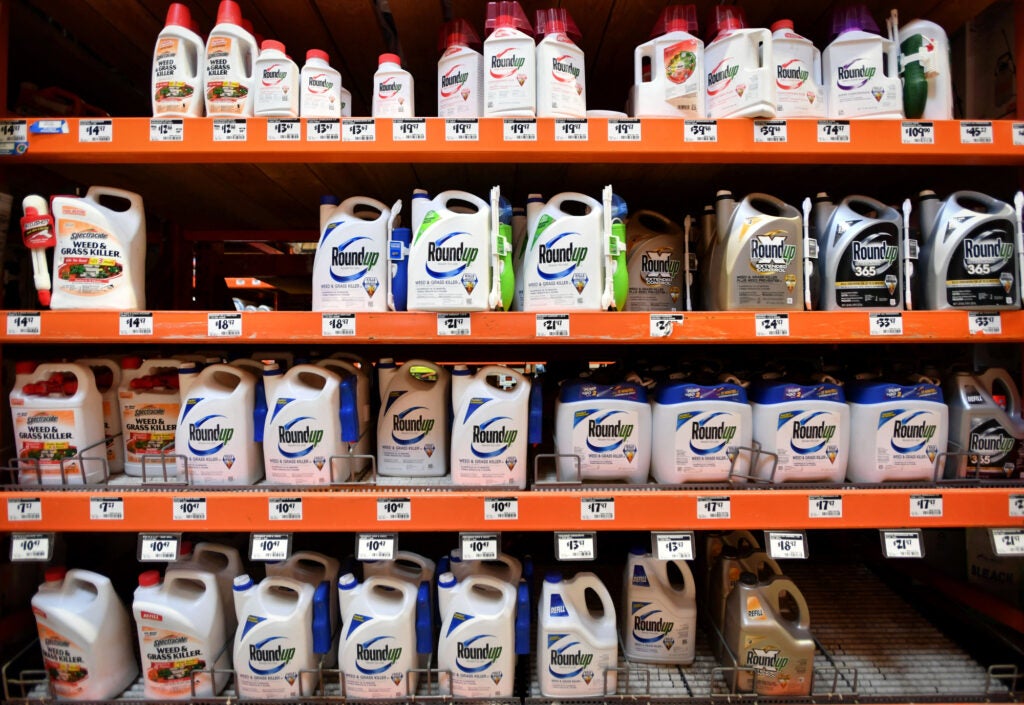
Monsanto’s weed killer Roundup on a store shelf in California. (Josh Edelson / AFP via Getty Images)
Monsanto shut down an important accountability mechanism for toxic chemicals
Monsanto v. Durnell was the clearest loss for environmental litigants. The Court held that the main federal pesticide law (FIFRA) bars a state tort lawsuit in which the plaintiff argued that Monsanto should have put a cancer warning on its weed killer. This matters. One reason is that this is just one of over 100,000 similar state-level tort lawsuits against Monsanto. Another is that the decision will protect lots of other manufacturers of lots of other products, who can now use Environmental Protection Agency (EPA) labeling requirements as a safe harbor: They don’t have to disclose serious and known risks of their products to consumers unless EPA completes the lengthy process of requiring them to do so.
These kinds of state-law tort claims have long done work that federal regulation does not always do well enough on its own. They can highlight facts and science that large corporations have motivations to downplay. They can investigate what a company knew and when it knew it. And they can put pressure on companies to strengthen warnings before more people get hurt. The Court’s decision will foreclose many of these suits.
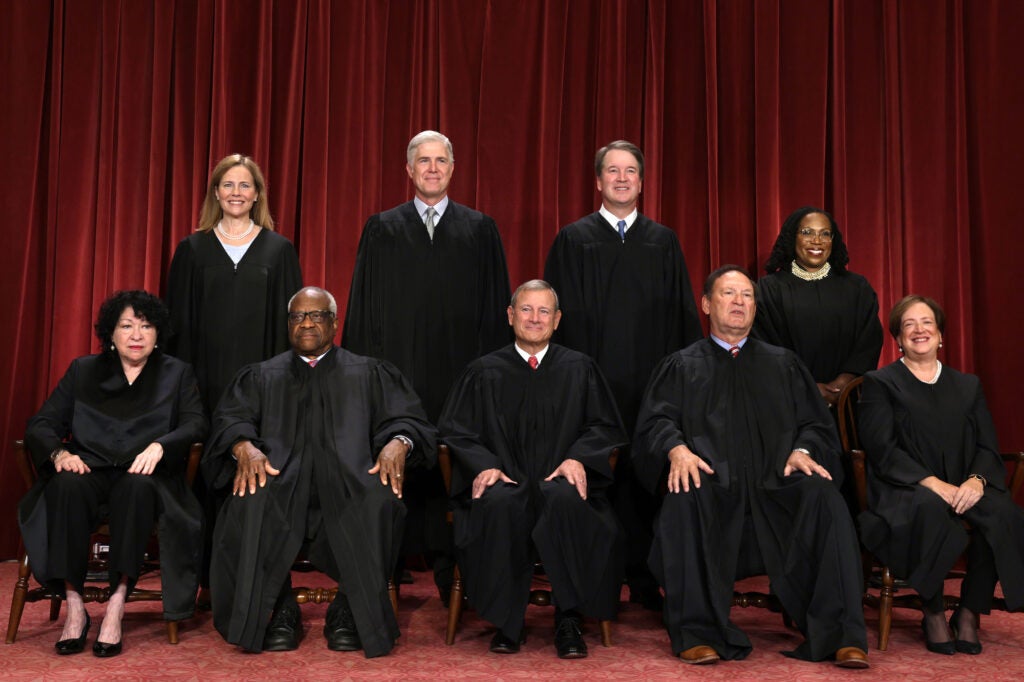
The nine Supreme Court justices pose for an official portrait in 2022. (Alex Wong / Getty Images)
The Court continues to undercut agency power
While I don’t see a “theme” to this term, I sure saw cases that reflect the policy agenda of the Court’s right wing. For us, the blockbuster was Trump v. Slaughter, which examined whether President Trump can replace a member of the Federal Trade Commission (FTC) despite a federal law saying that they can only be removed “for inefficiency, neglect of duty, or malfeasance in office.” This is a huge decision that significantly alters the separation of powers between our three branches of government — and not for the first time in recent years.
It also disregards precedent. Over 90 years ago, in a case called Humphrey’s Executor, the Supreme Court ruled that the Constitution allows Congress to insulate some regulatory issues from partisan politics by limiting the president’s ability to decide who runs the relevant federal agency. Congress has done that for some sensible things: nuclear energy, the monetary system, workplace safety, and consumer protections.
Slaughter, well, slaughters Humphrey’s Executor. (Sorry.) It basically eliminates the idea of independent regulatory agencies, leaving presidents much more freedom to micromanage those issues and replace public servants with whomever they choose. This, combined with President Trump’s habit of filling agencies with loyalists, will make people feel like there’s no such thing as serious regulatory policy, just politics. And perception has a way of becoming reality.
Hang on, there is one thing that the Court doesn’t want President Trump messing with: the dollar! To me, that’s the only explanation for Trump v. Cook: On the same day all six conservative justices let President Trump remove FTC Commissioner Slaughter, two of them balked at letting him remove Federal Reserve Governor Lisa Cook. The logical disconnect is hard to miss. To me it all boils down to realpolitik: The Chief Justice and Justice Kavanaugh are fine with autocratic deregulation, just not autocratic monetary policy.
The only decision we welcomed on the regulatory front was FCC v. AT&T. Back in 2024, SEC v. Jarkesy significantly limited the ability of federal agencies to enforce their own regulations through internal procedures. FCC v. AT&T put in a bit of a firebreak by saying that agencies can enforce their regulations so long as they have to go to federal court to collect any monetary penalties. But that’s hardly cause for a “hooray.” More like a “phew.”
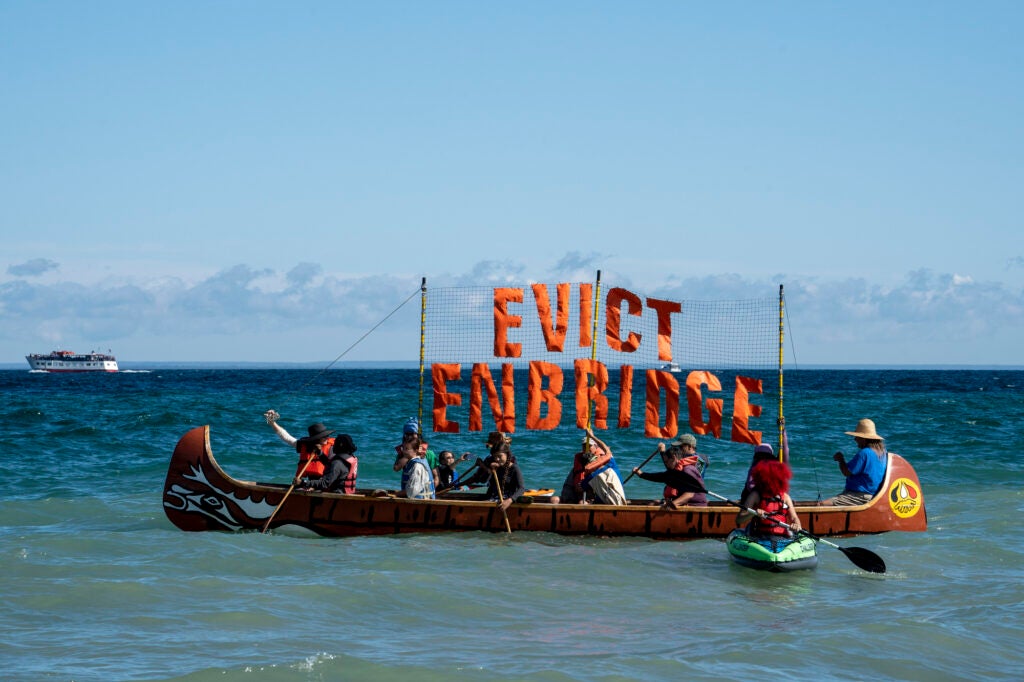
Line 5 protestors paddle next to the Mackinac Bridge in Mackinaw City, Michigan. (Sarah Rice for Earthjustice)
Procedure still matters
Two “environmental” cases also reminded us that nuts-and-bolts process often matters just as much as the substance of our laws. Chevron v. Plaquemines Parish makes it easier for defendants to move certain state-law suits into federal court when there’s a federal actor involved. These moves matter: State court judges are often elected, and state court juries are often drawn from more local pools. The jury in this case had awarded Plaquemines Parish $744 million for environmental harms caused by Chevron’s violation of state laws. The plaintiff parish will now need to take its case to federal court, where Chevron clearly thinks it will have a better shot.
Enbridge v. Nessel went the other direction. In a case involving the highly contested Line 5 pipeline in Michigan, the Court unanimously rejected Enbridge’s attempt to remove the matter from federal court. Enbridge had tried to move the case 800 days after it started, despite the fact that there is a 30-day deadline for doing so. The Court unanimously rejected Enbridge’s argument that it should excuse the error.
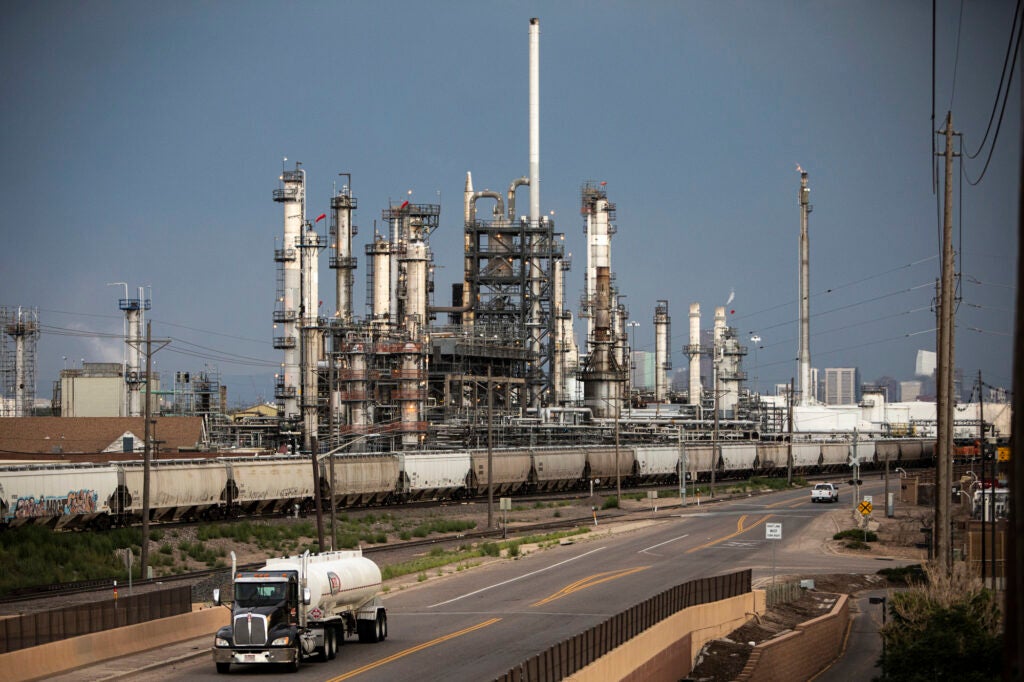
The Suncor refinery in Commerce City, Colorado. (Martin do Nascimento / Earthjustice)
Looking ahead to next year
The biggest environmental case of next term will almost surely be Suncor Energy v.County Commissioners of Boulder County. The case will examine whether federal law bars state-law legal actions against fossil fuel companies for relief for injuries caused by the effects of climate change. There are dozens of these suits progressing around the country, and there will be more if the Court lets this one proceed. There’s a great irony here: At the same time Trump’s EPA is claiming that it has no power to regulate greenhouse gases (GHGs) under the Clean Air Act, Trump’s Department of Justice is arguing that the Act prevents Boulder County from suing for climate damages under state law.
Next term will also feature a highly technical case that is nonetheless critical for some of Earthjustice’s longstanding clients. In the Department of the Air Force v. Prutehi Guåhan, the Court will examine whether the Air Force must perform an environmental analysis before applying for a permit to continue detonating obsolete bombs in a sensitive area of Guam. And finally, Department of Labor v. Sun Valley Orchards will give the Court another chance to test the limits of Jarkesy and further chart the future of agency authority.
Jackson Chiappinelli
Media Relations and Communications Strategist, Earthjustice
jchiappinelli@earthjustice.org