

Conservationists Challenge Dredging Project Near Port Everglades Over Endangered Species Act Violations
Groups file lawsuit to protect imperiled Florida corals
Contacts
Dr. Rachel Silverstein, Miami Waterkeeper, (305) 905-0856, media@miamiwaterkeeper.org
Danika Desai, Earthjustice, ddesai@earthjustice.org
Alex Muir, Center for Biological Diversity, (352) 432-0940, ext. 472, amuir@biologicaldiversity.org
Morgan McClure, Florida Wildlife Federation, (863) 286-9095, morgan@fwfonline.org
Nicole Russell, Diving Equipment and Marketing Association, (858) 616-6408, ext. 1007, nicole@dema.org
Miami Waterkeeper, the Center for Biological Diversity, Florida Wildlife Federation, and the Diving Equipment & Marketing Association sued the U.S. Army Corps of Engineers and the National Marine Fisheries Service on Tuesday for violating the Endangered Species Act when permitting a sand dredging project near Port Everglades.
The groups, represented by Earthjustice, along with co-plaintiff Center for Biological Diversity, filed a motion seeking an injunction to halt work until the Corps and the Fisheries Service reassess the Port Everglades Inlet Sand Bypass Project’s harm to critical marine habitat, threatened corals and queen conch. The dredging project — which has sent harmful sediment plumes into nearshore waters — paused in July and is set to resume in the fall.
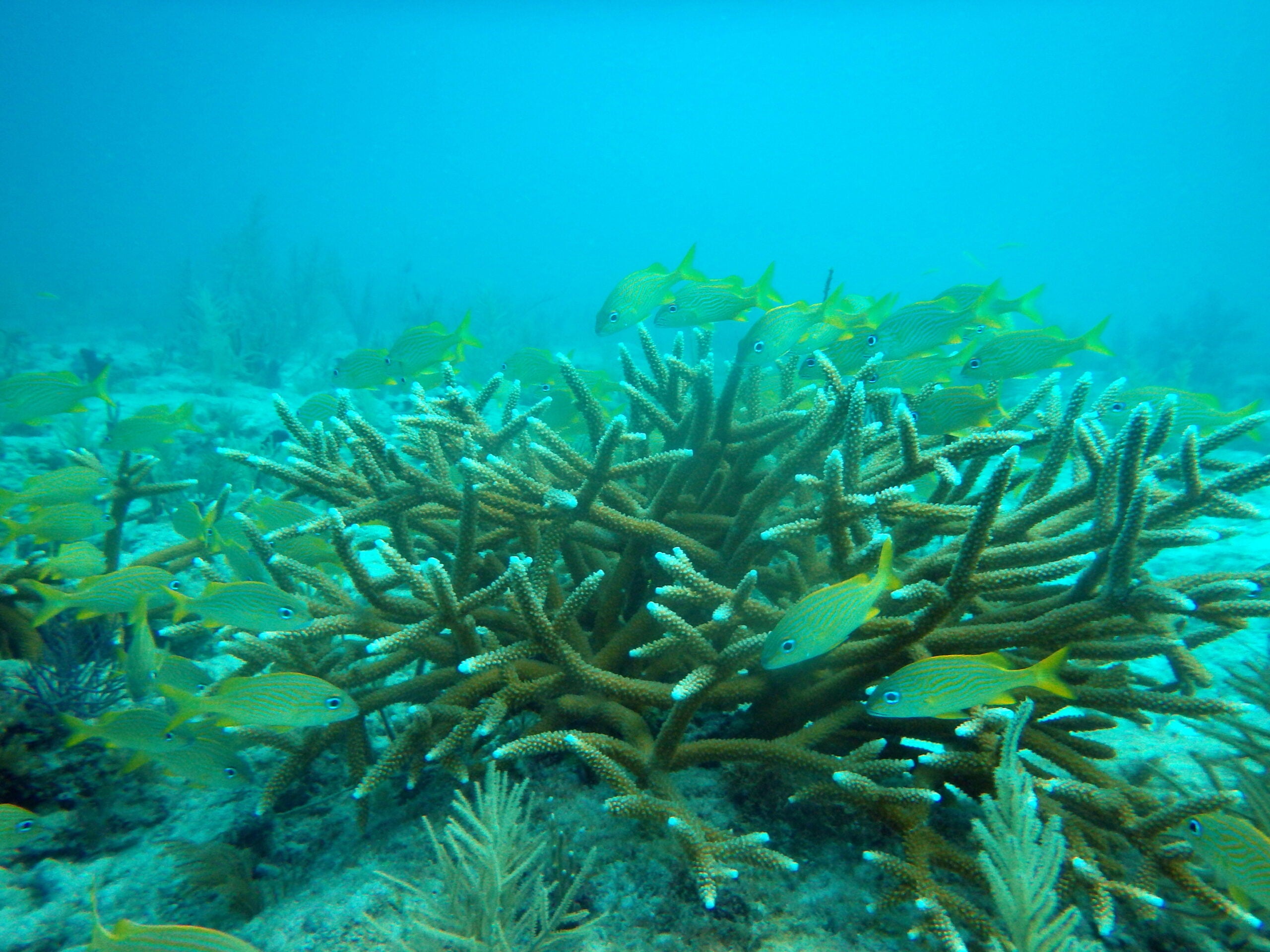
The Sand Bypass Project is putting federally listed corals, conch, and other marine species and habitat at risk from sedimentation. There is added pressure on the reef ecosystem after an unprecedented 2023 marine heatwave caused widespread staghorn and elkhorn coral mortality, leaving these threatened species at dire risk of extinction.
“Staghorn coral is on the brink of extinction in Florida, and this project puts some of the last known surviving colonies at risk,” said Danika Desai, senior attorney with Earthjustice. “We are suing to ensure the responsible agencies protect these surviving staghorn — which are critical to the species recovery — to the full extent the law requires.”
The groups previously warned the Corps and the Fisheries Service in May that the agencies were violating the Endangered Species Act.
The lawsuit says that the Fisheries Service’s formal biological opinion on the Sand Bypass Project is arbitrary and unlawful because it underestimates likely harms to corals and conchs, ignores critical information about the project’s harm, and relies on mitigation strategies that are unlikely to ensure the survival and recovery of the federally protected species.
In April, the Fisheries Service corroborated some of these concerns in a letter to the Corps, recommending the Corps evaluate the need to formally reassess the harm to listed species and their habitat. Despite this, dredging continued without a new environmental analysis.
“The reef around Port Everglades is home to some of the last staghorn coral surviving in Florida. For reasons we still don’t fully understand, they are hanging on right here — and that makes the stakes of this dredging project extraordinarily high,” said Rachel Silverstein, CEO and Waterkeeper at Miami Waterkeeper. “Unfortunately, we are already seeing warning signs that impacts may exceed expectations, and the failure to properly evaluate the gravity of the risks could have dire consequences. We are calling for commonsense safeguards, science-based oversight, and stronger mitigation so that more of these precious reefs are not lost.”
Staghorn corals have been declared functionally extinct across the state. Some of the last healthy populations of naturally occurring staghorn corals and breeding queen conch live next to Port Everglades. The fate of these populations will be critical to the recovery of these species in Florida.
“Florida’s iconic queen conchs are struggling to survive after decades of overharvesting and habitat degradation. This lawsuit intends to stop the dredging project before it’s too late for them,” said Alex Muir, a Florida attorney at the Center for Biological Diversity. “Florida’s queen conch are already too sparsely populated or otherwise impaired to recover the state’s population, meaning every single one of them matters. Yet the Corps is pushing this project knowing it will wipe out hundreds of mother conchs and doom future generations. That’s illegal and we’re going to court to fight it.”
This is the same Port-adjacent reef area that is also at risk from the proposed Port Everglades Expansion dredging project. If it moves forward, that major project would put more than 10 million corals at risk, as well as staghorn corals, queen conch, dolphins, turtles, and fish.
Satellite imagery and sediment monitoring show that the Sand Bypass project has produced larger-than-predicted plumes of sediment, stretching over thousands of meters from the dredging, and which could be harming the nearby reef, critical habitat, and listed species that call this area home.
The initial phase of dredging began in October 2025 with the construction of a 10.8-acre sand pit off the coast of Fort Lauderdale, just north of the Port Everglades Inlet. The sand pit represents the first component of the project, which will then be dredged routinely every two to four years to produce sand for ongoing beach renourishment nearby.
“It comes down to this: protect the habitat and you protect the species,” said Jess Melkun, Vice President of Conservation Policy at the Florida Wildlife Federation. “Florida’s coral reefs are among our state’s most important ecosystems, supporting marine wildlife, protecting our coastlines, and sustaining local communities. This case is about ensuring decisions affecting these irreplaceable habitats are grounded in the best available science, before it’s too late.”
“The Sand Bypass project threatens more than coral reefs — it threatens the businesses, jobs, and communities that depend on Florida’s world-renowned diving resources. DEMA is joining this lawsuit because healthy marine ecosystems are the foundation of a thriving recreational diving industry. We believe Florida can responsibly manage its coastline while protecting the coral reefs and underwater habitats that support both marine life and the state’s coastal economy,” said Nicole Russell, Interim President and CEO of DEMA.
Florida’s Coral Reef stretches along the Atlantic coast from Monroe to Martin Counties. It is the only nearshore coral reef in the continental U.S. and is extremely valuable. It provides protection from storm surge and flooding, habitat for hundreds of species, and opportunities for recreational use and eco-tourism that contribute billions of dollars in sales to South Florida each year. Florida’s reefs are threatened by warming temperatures, ocean acidification, pollution, disease, and dredging sediments. Coral reefs have declined rapidly in recent years, with coral cover decreasing by more than 90% since the 1970s.
About the Plaintiffs
Miami Waterkeeper is a non-profit organization that develops local solutions to global challenges. Miami Waterkeeper protects South Florida’s waters by advocating for resilient solutions grounded in science, rooted in nature, and driven by community. As a leader in environmental advocacy in South Florida, Miami Waterkeeper envisions a resilient South Florida that is a global leader in clean water solutions, where thriving communities and nature coexist.
The Center for Biological Diversity is a national, nonprofit conservation organization with more than 1.8 million members and online activists dedicated to the protection of endangered species and wild places. The Center’s Florida and Caribbean program uses science, law, and creative media to defend the region’s unique biodiversity for generations to come.
The Florida Wildlife Federation is a statewide non-profit dedicated to safeguarding Florida’s water, wildlife, and wild spaces by taking action today to prevent irreversible loss tomorrow. Since 1936, we’ve united conservationists, anglers, hunters, recreationists, and wildlife enthusiasts to protect Florida’s ecosystems. From the halls of legislature to the homes of everyday Floridians, we’ve achieved milestones such as securing protections for iconic species like the Florida panther and constitutional amendments for land and water conservation. With a steadfast commitment to tackling challenges like pollution and unchecked development, we envision a future where Florida’s natural resources are fiercely protected by and for all.
The Diving Equipment and Marketing Association is an international non-profit trade association with the mission of bringing businesses together to grow the diving industry worldwide. With more than 1,400 business members DEMA promotes recreational scuba diving through consumer awareness programs such as the Go Dive Now campaign; conducts industry research and advocates for access by divers to a clean and healthy aquatic environment. DEMA owns and produces DEMA Show, an annual trade-only event for businesses in the scuba diving, action watersports and adventure/dive-travel industries.
Additional Resources
About Earthjustice
Earthjustice is the premier nonprofit environmental law organization. We wield the power of law and the strength of partnership to protect people's health, to preserve magnificent places and wildlife, to advance clean energy, and to combat climate change. We are here because the earth needs a good lawyer.