

How Trump and His Allies Are Attacking America’s Forests
The Trump admin and Congress are trying to gut our national forest protections for the benefit of loggers, drillers, and miners. We're fighting back to defend our iconic public lands — and you can help.
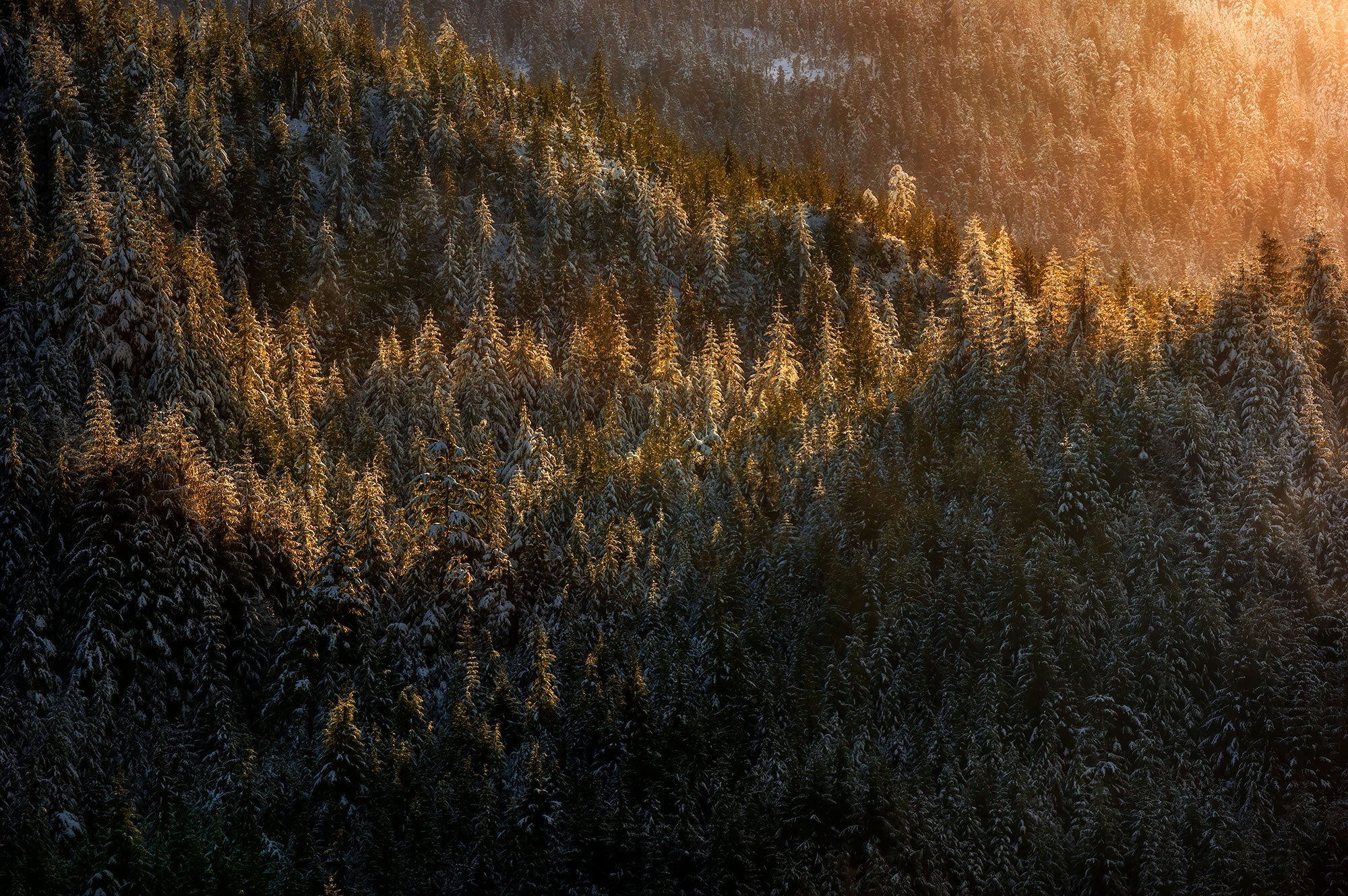
America’s forests are among our greatest national treasures. Yet the Trump administration and its allies in Congress look at these magnificent ecosystems and see commodities to offer the highest bidder.
They are rapidly slashing our national forest protections to make room for loggers, drillers, and miners to profit off our beloved lands. These efforts are the latest in a disturbing pattern of attacks on America’s public lands to benefit extractive industries.
Earthjustice is prepared to leverage our decades of experience successfully fighting threats like these in court. Read on to learn more about these attacks, and how we’ll defend against them.
What Is the National Forest System?
National forests are large areas of federally managed forest lands, owned collectively by the American people. They make up the National Forest System, which includes a total of 155 national forests and 20 national grasslands spanning 193 million acres of land.
National forests provide shelter for our cherished wildlife, from grizzlies and gray wolves to salmon and songbirds. They filter drinking water for millions of Americans, and our last remaining stands of old-growth trees help fight climate change. Visitors to communities near these forests contribute $16.24 billion annually to the gross domestic product — the total value of U.S. goods and services in the U.S.
The National Forest System doesn’t cover all of our federal forests, though. Lands like Bureau of Land Management (BLM) forests and forested national monuments are also at risk.
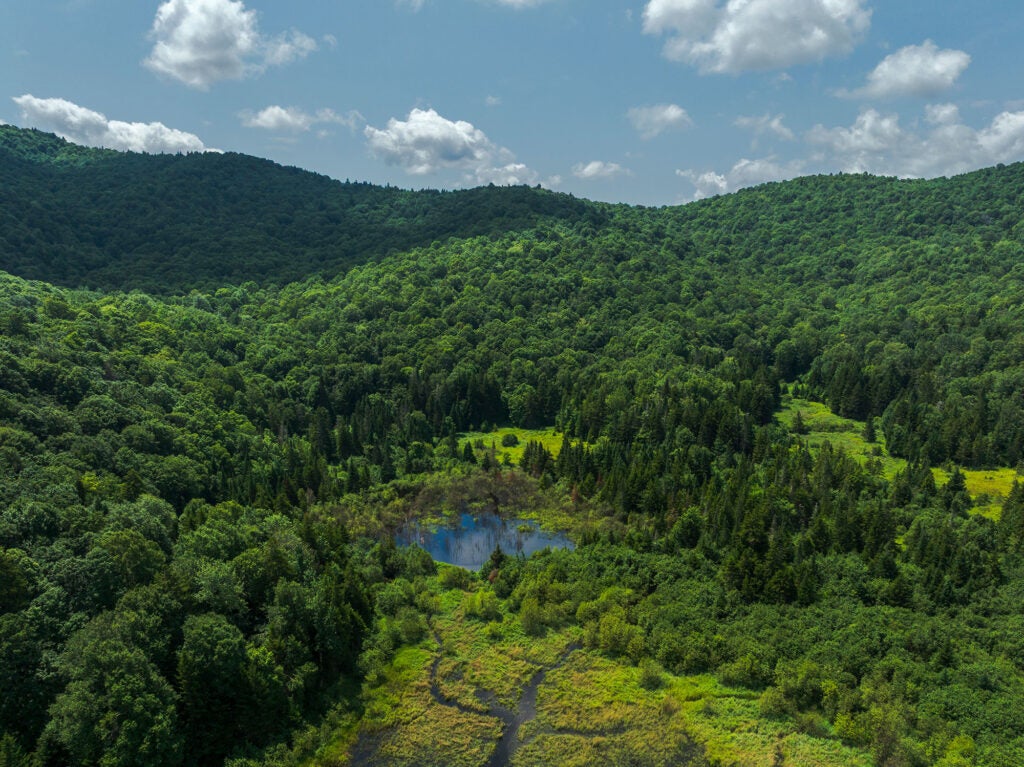
Aerial view of a beaver complex and Telephone Gap in Green Mountain National Forest, home to the largest roadless areas in Vermont. (Kurt Budliger for Earthjustice)
Threats Against Our Nation’s Forests
Repealing the Roadless Rule
One of the most important land and forest protection measures of our lifetime, the 2001 Roadless Rule safeguards 45 million acres of our most pristine national forest lands from logging, new roads, mining, and oil and gas drilling.
Despite its overwhelming popularity with Americans, the Trump administration has proposed rescinding the Roadless Rule, stripping away protections against logging, roadbuilding, and reckless development in our public forest lands, like the Tongass in Alaska and Green Mountains in Vermont.
The public has just 30 days, until September 21, to weigh in on this proposal.
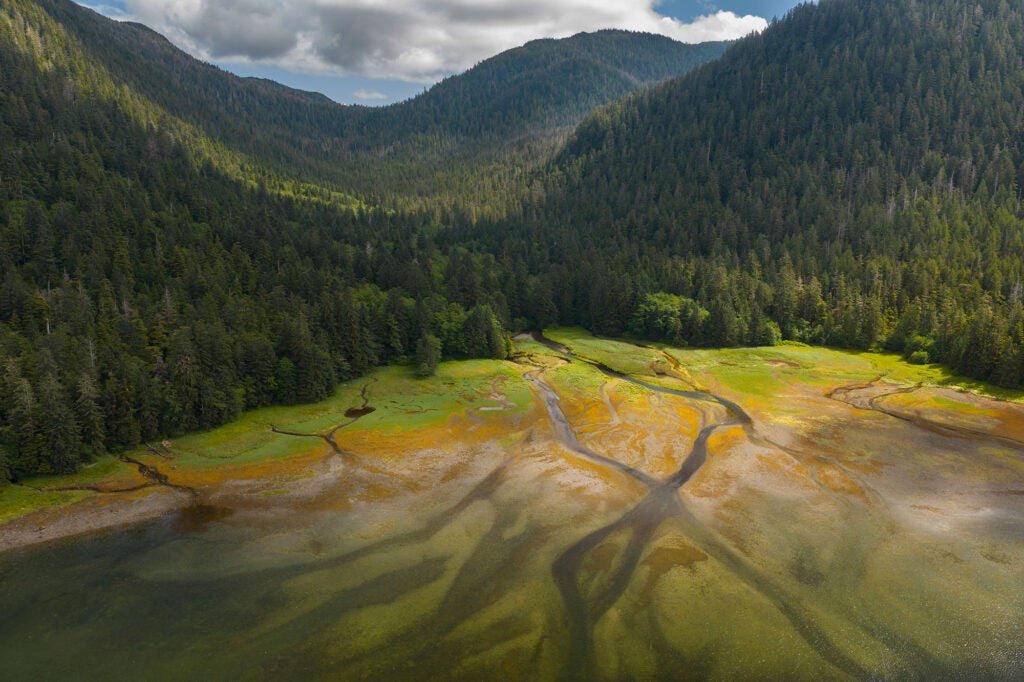
Tongass National Forest, Kuiu Island, Prince of Wales Island, Alaska. The Roadless Rule protects about half of the Tongass, the crown jewel of the National Forest system and home to nearly one-third of all old-growth temperate rainforest remaining in the entire world. (David Herasimtschuk for Earthjustice)
Potential Threats to Pacific Northwest Forests
The Pacific Northwest is home to wide swaths of federal forested lands, including some of the nation’s last remaining old growth trees. These forests play a crucial role in providing communities with clean drinking water, supporting a booming recreation and tourism industry, sustaining imperiled salmon and northern spotted owls, and fighting climate change. Massive, ancient trees in these forests absorb huge amounts of carbon, keeping the heat-trapping element out of the atmosphere. The soil around these trees is also full of carbon from centuries of decomposing organic material.
Despite these broad benefits, the Trump administration has indicated plans to fully exploit timber production on our public lands for private gain. This fall, the Bureau of Land Management (another federal agency that manages some public forests) will release a proposed management plan for nearly 2.5 million acres in western Oregon that is likely to roll back the clock to a destructive era of massive clearcutting.
Separately, the Forest Service is in the process of amending the longstanding Northwest Forest Plan, which provides a science-based ecosystem management framework for 17 national forests across 24.5 million acres of federally managed lands in Washington, Oregon, and California. While the amendment process began under the Biden Administration with input from tribes, conservation groups, and timber interests, the Trump Administration has stated it will release a new, and likely more clearcut intensive, proposal this fall.
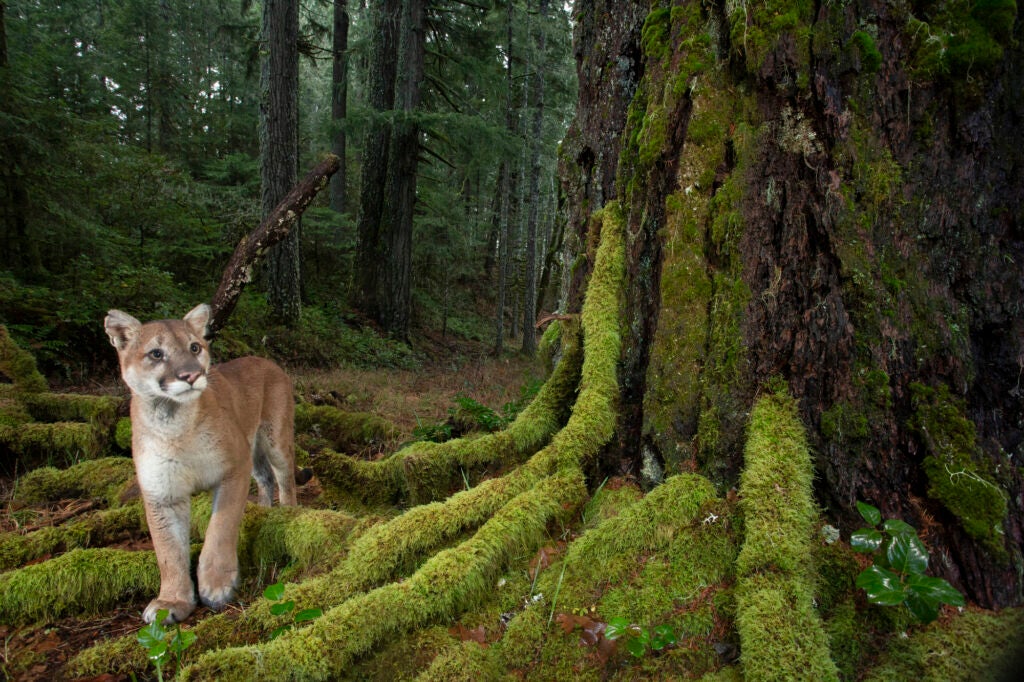
A mountain lion prowls along old-growth tree roots in the Siuslaw National Forest in western Oregon. (David Herasimtschuk)
Gutting Science-Based Forest Management
On top of that, the Senate is considering the deceptively named “Fix Our Forests Act” — a harmful bill that would potentially open millions of acres of federal land to massive logging projects. The bill sidesteps critical environmental reviews and endangered species safeguards while silencing citizen voices in protecting our public lands. It also ignores science-based forest management practices that are proven to reduce wildfire risk.
The Plot Against Public Lands
Sadly, forests are just one place where public lands are being sacrificed to benefit extractive industries.
Less than two years into his second term, President Trump has been responsible for rolling back safeguards from more than 86 million acres of public lands such as forests, deserts, wetlands, and other natural environments. Over the summer, the administration slashed Utah’s Bears Ears and Grand Staircase-Escalante National Monuments to less than 10% of their prior size to enable drilling, mining, and other harmful activities on these iconic public lands.
At the same time, lawmakers in Congress have been abusing an obscure law to open our wild lands to development — putting beloved sites like Minnesota’s Boundary Waters at risk of mining contamination and opening Alaska’s arctic to oil drilling.
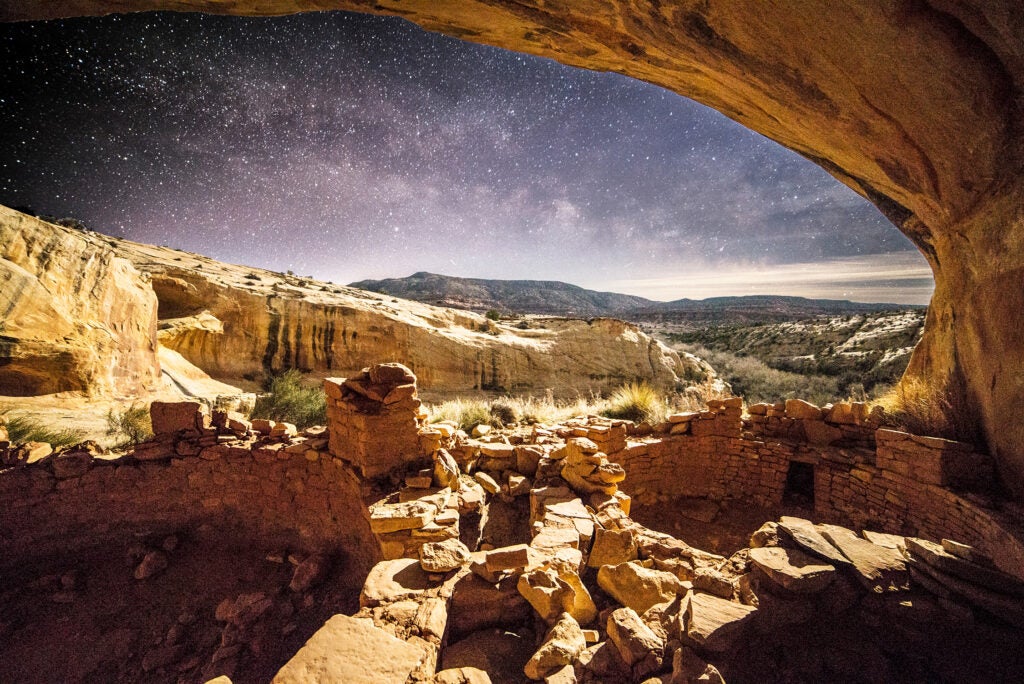
Stars illuminate the landscape of Utah’s Bears Ears National Monument. (Marc Toso)
How Earthjustice is Defending Our Public Forests and Lands
Fortunately, Earthjustice has spent decades successfully fighting dozens of court cases that have stopped threats like this before:
- For more than 25 years we’ve defended the Roadless Rule, winning case after case against logging interests and their political allies.
- In the Pacific Northwest, our litigation played a vital role in reducing rampant old-growth logging, protecting rivers and streams, and helping shift federal management toward science-based, ecosystem-wide conservation.
- We’ve successfully fought for 40 years to protect the Tongass National Forest from old-growth logging and destructive road construction.
And we are not slowing down now: Our team of 200+ lawyers is countering every attack as the Trump administration threatens to undo decades of work to preserve our public lands and forests.
In fact, we won a big victory this summer after a judge ruled that the government violated the Endangered Species Act with a plan to allow more roads in the Northern Rockies’ Bitterroot National Forest. The lawsuit aims to protect vulnerable species like grizzlies and bull trout along with public forest land in Montana from destructive motorized vehicles.
We’re prepared to push back against the rest of these attacks, joining our partners across the environmental movement to defend our public forests and other public lands.
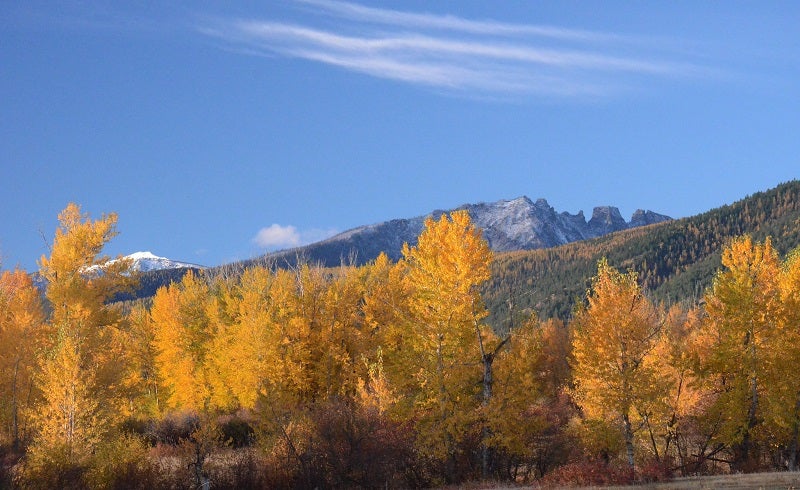
Bitterroot Valley near Florence, MT. (U.S. Forest Service )
How You Can Help
Our forests belong to all Americans – present and future. Together, we have the power to show the Trump administration and lawmakers that our public lands and forests are not for sale.
- Speak out against the Trump administration’s proposal to rescind the Roadless Rule. The public will have from August 21 – September 21 to weigh in.
- Contact your members of Congress today and tell them to reject any efforts to clearcut our forests.
Established in 1987, Earthjustice's Northwest Regional Office has been at the forefront of many of the most significant legal decisions safeguarding the Pacific Northwest’s imperiled species, ancient forests, and waterways.