Puerto Rico’s Grid Money Could Be a Blessing. Instead, It Risks Becoming a Curse.
Federal recovery funds are supporting coal and gas, deepening the island's dependence on imported fuel.
Nearly nine years after Hurricane Maria battered Puerto Rico’s electric grid, the federal government has allocated about $14 billion to rebuild and modernize it. This should have been a once-in-a-lifetime chance to make electricity in Puerto Rico reliable, resilient, affordable and worthy of 21st-century advancements. Instead, it is beginning to look like a different kind of disaster.
The timing could not be more consequential. Colorado State University recently forecast one of the least active Atlantic hurricane seasons in more than a decade, projecting just nine named storms, four hurricanes and one major hurricane, largely because a strengthening El Niño is expected to suppress storm development. Yet for Puerto Rico, a quiet season offers no guarantee of safety. The island’s experience has shown that resilience is not determined by how many storms form in the Atlantic, but by whether critical infrastructure can withstand the one storm that arrives.
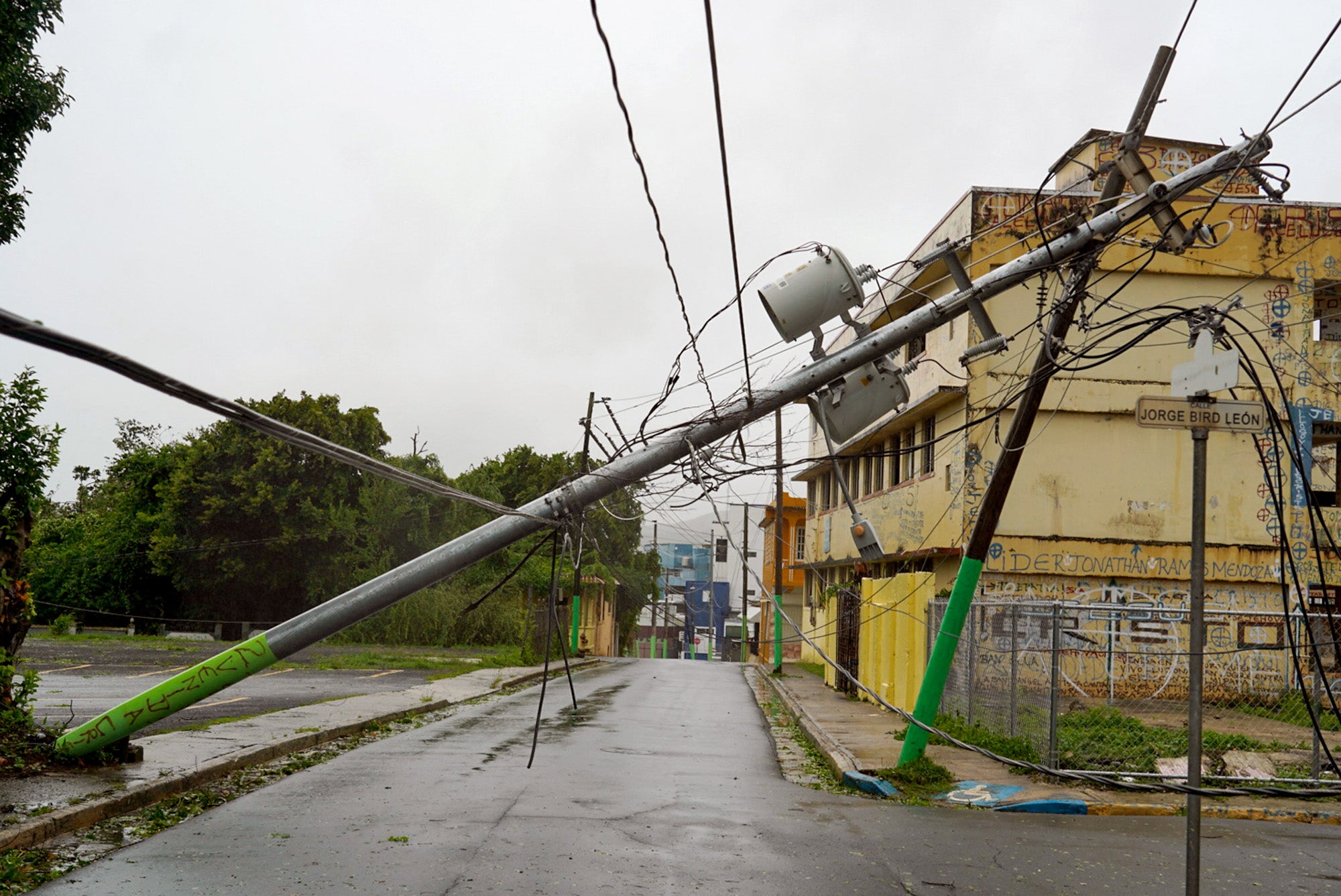
Broken electricity lines above homes damaged are seen after Tropical Storm Ernesto hit Fajardo, Puerto Rico, on August 14, 2024. (Jaydee Lee Serrano / AFP via Getty Images)
The phrase “resource curse” is usually applied to countries rich in oil, gas, or minerals that nevertheless suffer weak development, corruption, or distorted economies. Puerto Rico’s resource is not petroleum or copper, but rather, it is federal recovery money. And unless that money is directed by the public interest, it can enrich outside contractors, deepen dependence on imported fossil fuels, and leave communities with the same fragile grid that failed them before.
A recent Government Accountability Office (GAO) report found that FEMA, HUD, and the Department of Energy have earmarked roughly $14 billion for Puerto Rico’s grid recovery since 2017, but only a limited share has actually been disbursed. FEMA alone has paid out about $2.7 billion of roughly $11.1 billion obligated. The result is a cruel paradox: Puerto Ricans live with high electric rates and recurring outages while billions meant to fix the system sit in bureaucratic limbo.
The danger is not merely a disbursement delay. It is what the money is used to build when it finally flows. Disaster funds should help Puerto Rico break with the centralized, fossil-fuel-dependent model that left the archipelago vulnerable to hurricanes, earthquakes, fuel-price shocks, and failing transmission lines. Instead, too many proposals would preserve that model or make it more entrenched.
Consider the Department of Energy’s recent support for retrofitting and modernizing the AES coal plant in Guayama. The plant is located on Puerto Rico’s southern coast, near communities that have borne the air, water, land, and marine pollution of large power plants for decades. AES has acknowledged pollution of the South Coast Aquifer. Modernizing that facility does not transform Puerto Rico’s energy future; it extends the life of a polluting past.
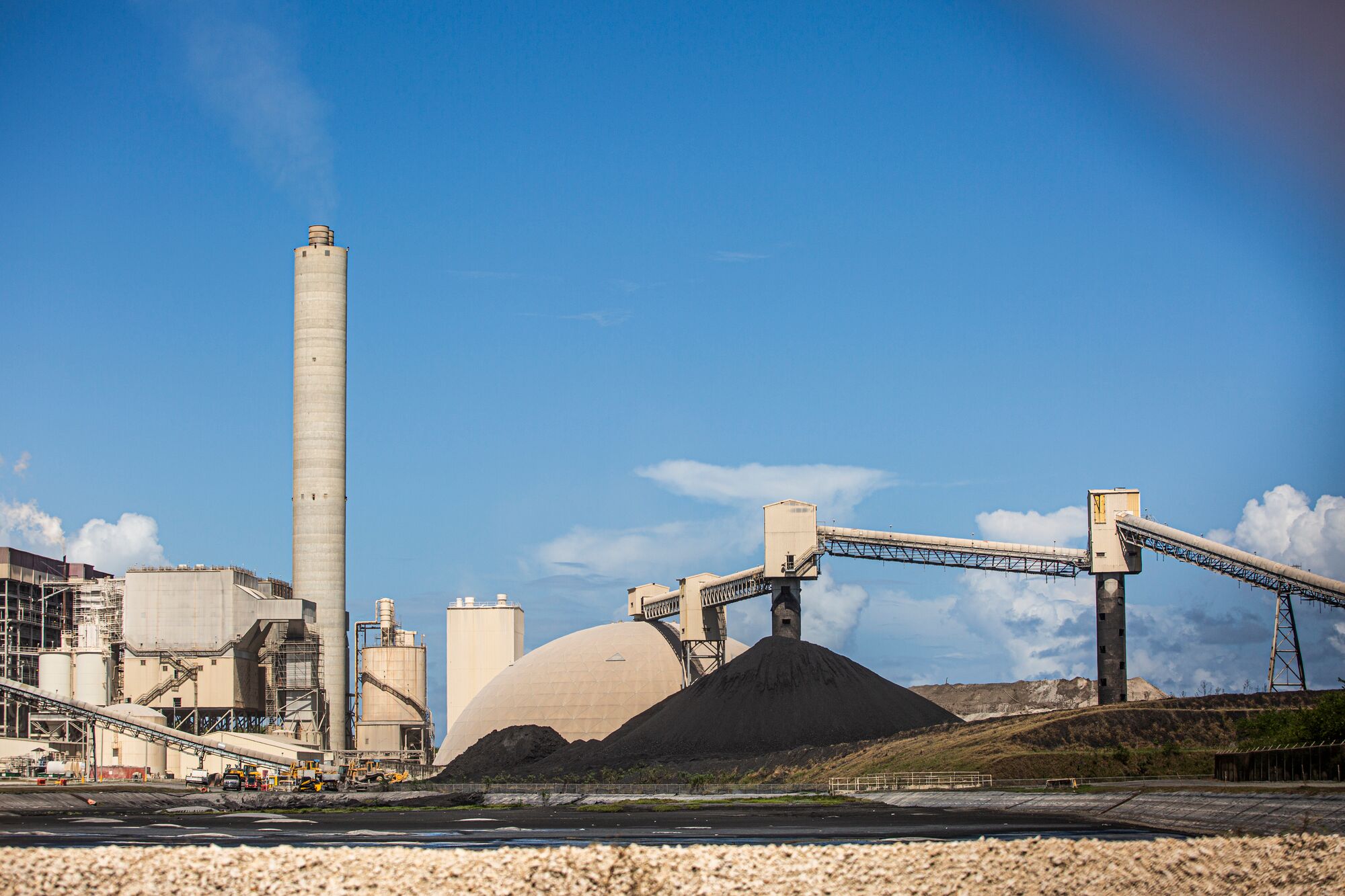
The AES Power Plant produces power by burning coal in Guayama, P.R. In center right, back, is an uncovered mountain of toxic coal ash. (Erika P. Rodriguez for Earthjustice)
Puerto Rico has become attractive to energy conglomerates because federal funds are available, electricity rates are high and the island is seen as a market for imported fuels, including fracked methane gas. New Fortress Energy and its affiliates, for instance, have benefited from the methane gas buildout. These investments may be marketed as reliability measures, but they keep Puerto Rico dependent on fuel imports and centralized generation — the very vulnerabilities that disasters repeatedly expose.
The alternative is not abstract. Community and environmental organizations across Puerto Rico have long called for an electric system that is decarbonized, decentralized, democratized and decolonized. That means distributed renewable energy and storage, especially rooftop and community-based solar; energy literacy; meaningful public participation; and priority for marginalized communities that have been treated as sacrifice zones. It also means keeping more recovery dollars in Puerto Rico’s local economy rather than allowing federal spending to flow disproportionately to outside firms.
Distributed renewable energy is not a luxury in Puerto Rico. It is a survival strategy. This is why Puerto Ricans who can afford it have been adding nearly three thousand rooftop solar and battery storage units per month since at least June 2021. In the aggregate, Puerto Rican rooftop solar and battery storage units form the largest distributed powerplant in Latin America, with 1.7GW of solar capacity and 3 GWh of storage capacity.
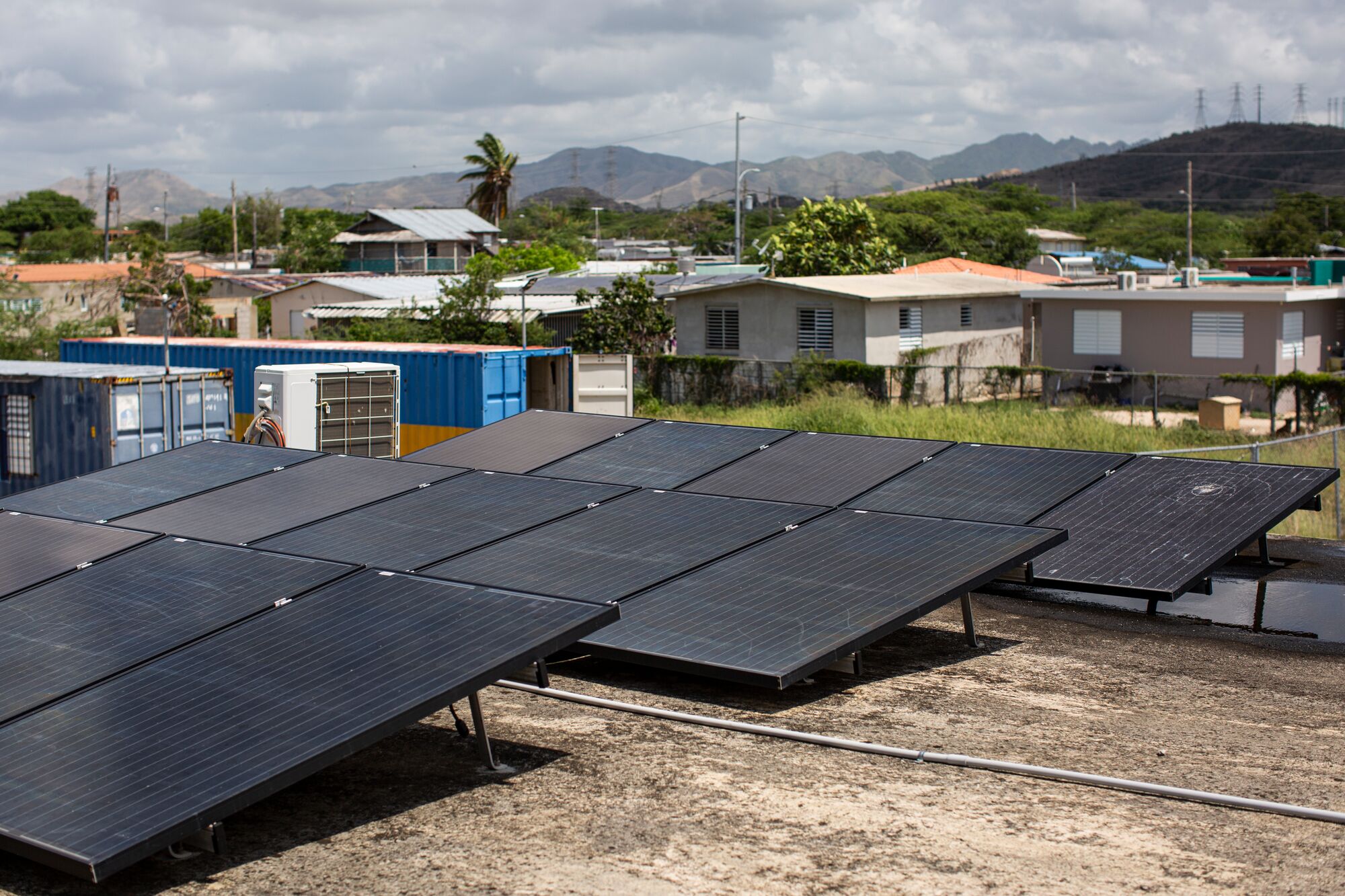
Solar panels on the roof of the El Coquí Community Center in Salinas, Puerto Rico, on May 13, 2023. (Erika P. Rodriguez for Earthjustice)
But with a high poverty rate most people can’t afford to buy or lease rooftop solar systems from private vendors. When storms knock down transmission lines, a household, school, clinic or community center with solar panels and batteries can remain powered. When fuel prices spike, locally generated renewable power can reduce exposure to imported oil, coal, and gas. When public dollars support local installers, electricians and community organizations, recovery becomes economic development rather than extraction.
This is especially important for southeastern Puerto Rico, where many communities near the largest and dirtiest power plants are low-income and Afro-descendant. If recovery funds reduce fossil-fuel generation and support local renewable systems, these communities could see cleaner air, cleaner water and healthier ecosystems. If the funds prop up coal and gas infrastructure, they will be asked once again to sacrifice their health for someone else’s electricity.
The San Juan metropolitan area would benefit, too. Much of Puerto Rico’s electricity demand is concentrated there, far from the largest generating plants. A more decentralized system would reduce dependence on long-distance transmission and distribution lines vulnerable to hurricanes, vegetation, landslides, and earthquakes. The GAO noted that only a small fraction of planned vegetation clearing had been completed with federal funds as of early 2026. A grid strategy that depends on thousands of miles of vulnerable lines will remain fragile no matter how much money is spent.
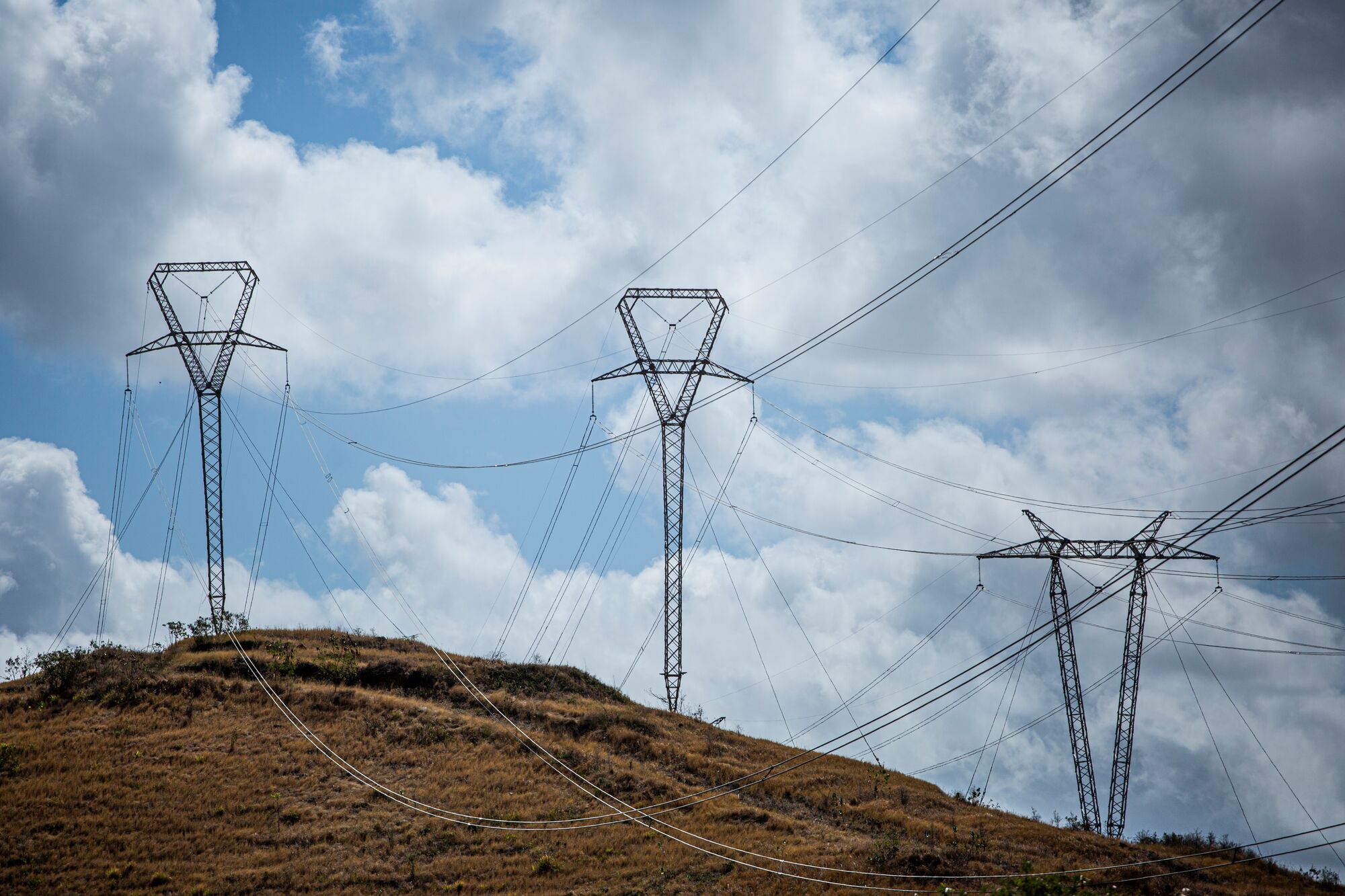
Transmission powerlines in Guayama, P.R. (Erika P. Rodríguez for Earthjustice)
Puerto Rico does not need another round of top-down decisions that treat the archipelago as a laboratory for corporate energy projects. It needs accountability, transparency and a clear public-interest test for every federal dollar. Does this investment reduce dependence on imported fossil fuels? Does it improve resilience for households and communities? Does it lower costs? Does it support local workers and businesses? Does it protect the people who have already borne the heaviest environmental burdens?
Federal agencies should align recovery funding with Puerto Rico’s urgent need for distributed renewable energy, storage, and community resilience. Puerto Rico’s government should insist that recovery money serve residents first, not fossil-fuel companies. And Congress should oversee not only how fast the money is spent, but whether it is building the future Puerto Ricans have demanded.
As forecasters predict a quieter-than-normal hurricane season, Puerto Rico and the federal government should resist the temptation of complacency. The next major storm may arrive this year or years from now. What matters is whether the billions already allocated today are used to create a decentralized, resilient energy system that can withstand it. Puerto Rico has already paid too high a price for an electric system that fails. Its recovery dollars should not be allowed to fail as well.
Ruth Santiago is a community and environmental lawyer based in southeastern Puerto Rico, where she works with groups on energy-system transformation. She is a former member of the White House Environmental Justice Advisory Council, and a current member of Earthjustice’s Board of Trustees.
Earthjustice’s Clean Energy Program uses the power of the law and the strength of partnership to accelerate the transition to 100% clean energy.
Kathryn McGrath
Public Affairs and Communications Strategist, Earthjustice
kmcgrath@earthjustice.org