

The Trump Administration’s Border Wall Strategy: Waive the Laws it Doesn’t Like.
In just a year and a half, the Department of Homeland Security has issued an unprecedented number of waivers of federal laws for border wall construction, threatening the southern border’s fragile ecosystem and the communities that depend on it.
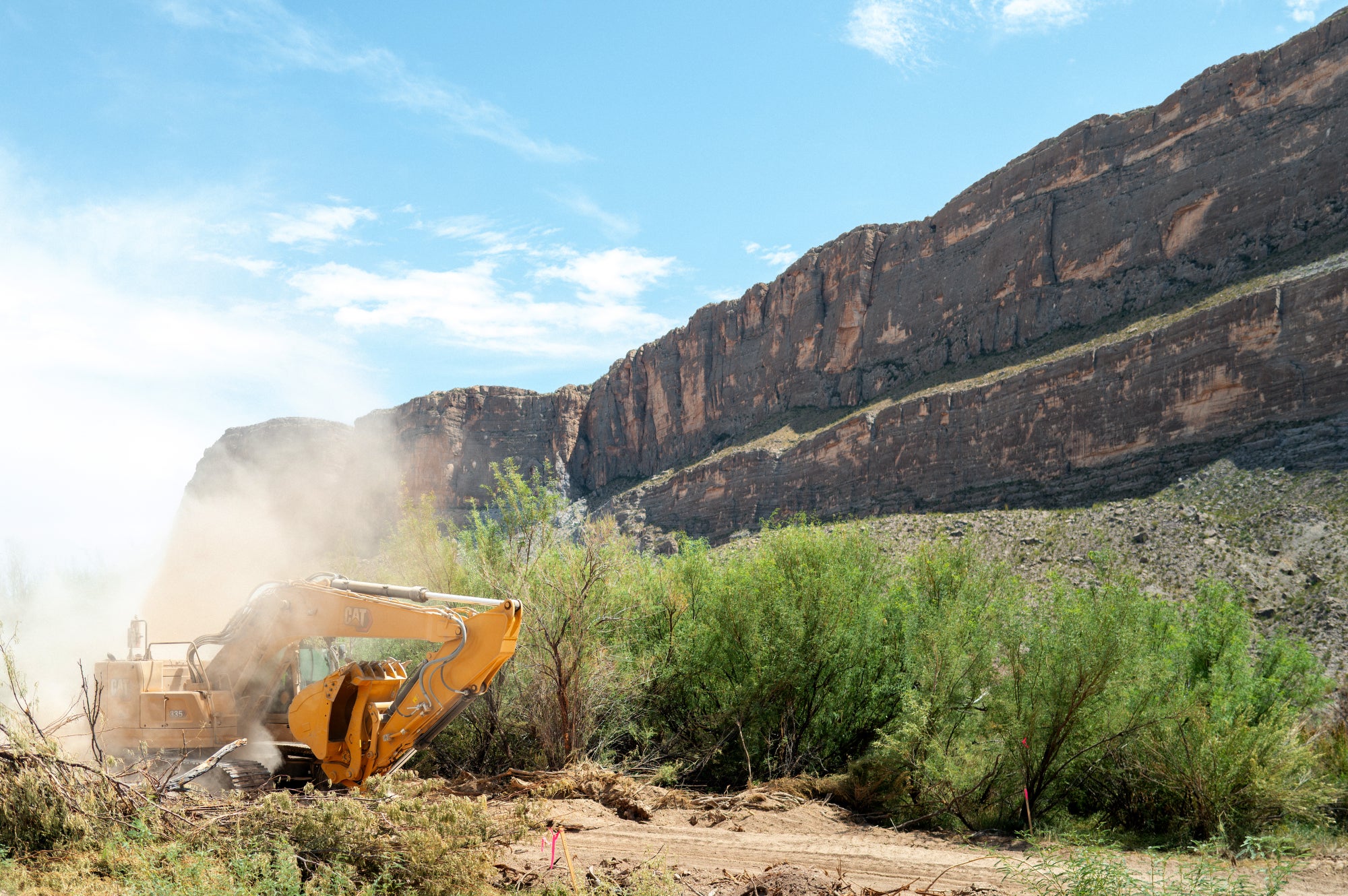
The U.S.-Mexico border spans a vast, interconnected region of exceptional ecological, cultural, and economic value. Its deserts, rivers, grasslands, mountains, and coastal habitats support remarkable biodiversity, wildlife migration, and clean water.
Just as important, countless communities on opposite sides of the border are linked by generations of family ties, cultural traditions stretching back millennia, and economic activity critical to the entire U.S. economy. The border is a remarkable place.
But construction of the Trump administration’s border wall is putting that all in jeopardy. The administration intends to use billions of taxpayer dollars to construct its system of land and water barriers across nearly the entire border. That includes many hundreds of miles of double wall or wall paired alongside water barriers.
These plans threaten the communities and biodiversity along the entirety of the US-Mexico border. And in order to advance them, the administration is not just breaking the law, it is waiving the law entirely.
But Earthjustice is fighting back – and winning. In October, a court issued an order immediately halting border wall construction throughout Big Bend National Park in Texas.
Read on to learn more about the Trump administration’s plans and our legal fight to stop them.
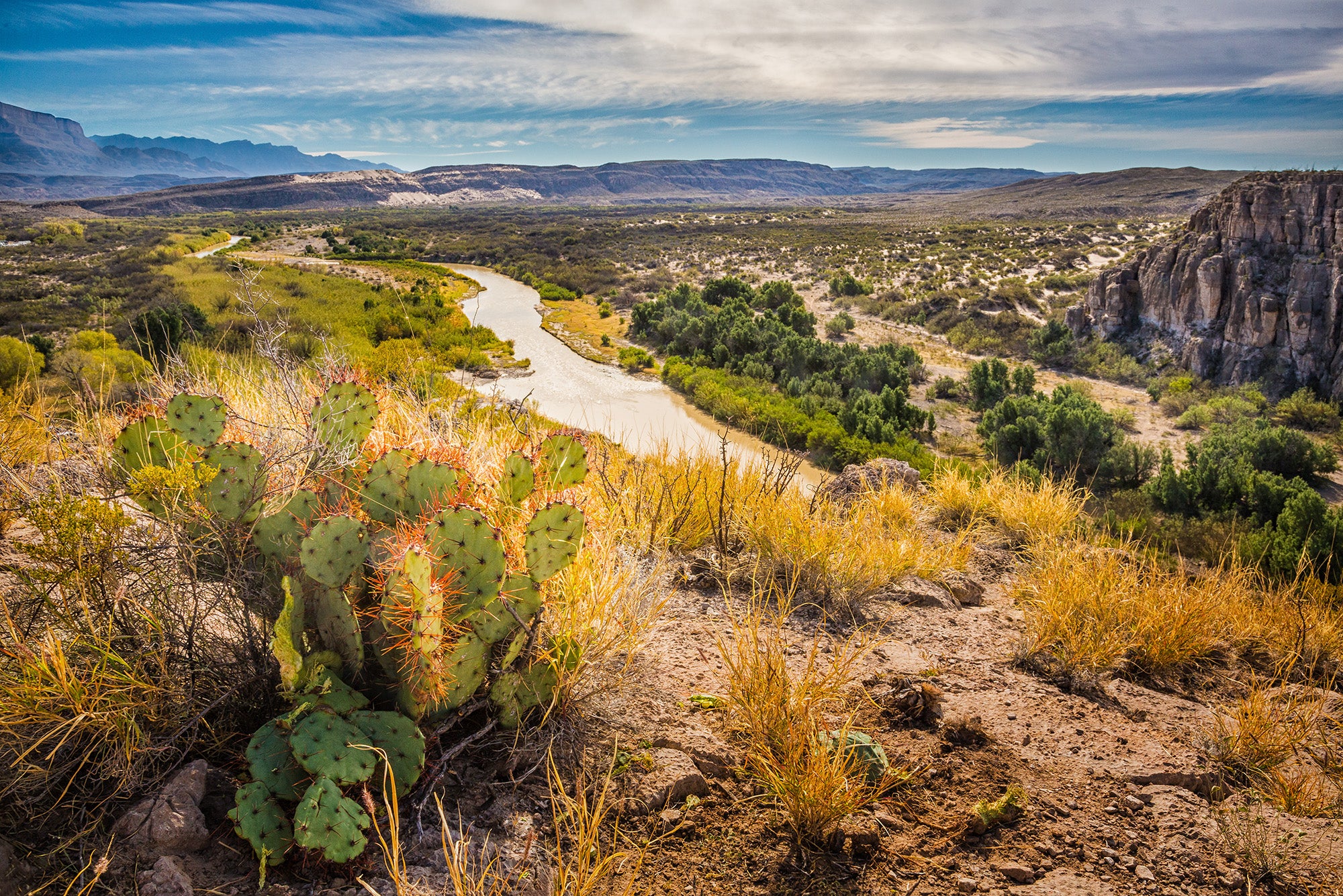
A view of the Rio Grande River in Big Bend National Park. (Deb Snelson / Getty Images)
A blunt tool for a cruel agenda
While development of a wall along the southern border was a cornerstone commitment of Trump’s first term, its actual construction was stalled in many places because of a lack of significant funding appropriated by Congress and lawsuits against the administration’s efforts to unlawfully use funds that were set aside for other purposes.
That all changed last year when Congress appropriated $46.5 billion to U.S. Customs and Border Patrol (CBP) for the “construction, installation, or improvement of new or replacement primary, waterborne, and secondary barriers” through the One Big Beautiful Bill Act.
Armed with more than twice the amount of funding than all previous spending on border barrier construction combined, the Trump administration has since doubled down on an obscure authority to speed construction: issuing waivers that allow CBP to blatantly disregard federal and local laws.
Under the 2005 REAL ID Act, the Secretary of Homeland Security (DHS) is authorized to waive any legal requirements it deems necessary to “ensure expeditious construction of the barriers and roads” along the southern border.
Similar waivers were issued throughout Trump’s first term as well. But the rate at which the second Trump administration has doled out waivers is unprecedented. In the past year and a half, DHS has invoked over 30 waivers, accounting for roughly half the total number the agency has issued in its more than two-decade history.
This push to sideline legal oversight is central to the administration’s goal to build as much wall as quickly as it can.
Bedrock environmental and public health regulations, like the National Environmental Policy Act, Clean Water Act, and Endangered Species Act, are the most frequent targets of these exemptions. But other laws have also been waived, including those related to Native American religious freedom, procurement and contracting, and transparency.
By waiving these laws, DHS is giving itself a free pass to ignore the significant, often irreparable consequences of its operations and hide its decisions from the public. Already, wall construction has destroyed habitat for threatened wildlife, desecrated sacred sites, and heightened extreme flooding risks in border towns from Texas to California.
An ‘inevitable threat to human life’ in South Texas
“The reality is that this wall will make our communities less safe and less resilient, and will put people’s lives in danger,” says Martin Castro, watershed science director at the Rio Grande International Study Center (RGISC) in Laredo, Texas.
In October 2025, then-Homeland Security Secretary Kristi Noem waived a wide swath of procurement and contracting laws for every single CBP sector, including Laredo. Noem then issued another waiver for the Laredo sector in December that allows CBP to bypass nearly every major environmental law to build border wall in the sector.
Castro warns that the administration’s plan to remove vegetation along the Rio Grande’s banks and install hundreds of miles of buoys and barriers will destroy a unique riparian corridor, home to an abundance of rare native species and drought-tolerant vegetation endemic to the region.
“Removing this vegetation increases soil erosion, sedimentation, and saltation of the river,” Castro stresses, noting that doing so threatens the health of aquatic species and compromises the quality of drinking water for millions of residents along both sides of the border.
But the harms of the wall extend far beyond the environmental impact. The buildout of this network of land and water barriers poses an “inevitable threat to human life, property, and critical bridge infrastructure,” according to a recent report commissioned by RGISC.
The analysis, by geomorphologist Mark Tomkins, PhD, underscores the dangers of erecting such massive infrastructure within a floodplain. It warns that both the wall and buoy system will drastically exacerbate the impacts of floods, causing water levels to rise higher and faster, and sweeping heavy equipment, cars, boats and other hazardous debris downstream. This debris will accumulate under bridges, eroding their support columns and potentially inciting collapse.
Had the government not waived laws like the National Environmental Policy Act and the Clean Water Act for the Laredo sector, it would have had to account for those impacts, consider alternatives that would be less harmful, and respond to public input. Because of the waiver authority, it did not have to conduct any analysis before beginning to implement its plan.
These dangers aren’t hypothetical — they’re already happening. Two bridges along the US-Mexico border had to shut down this summer due to buoys drifting into the river after major flooding.
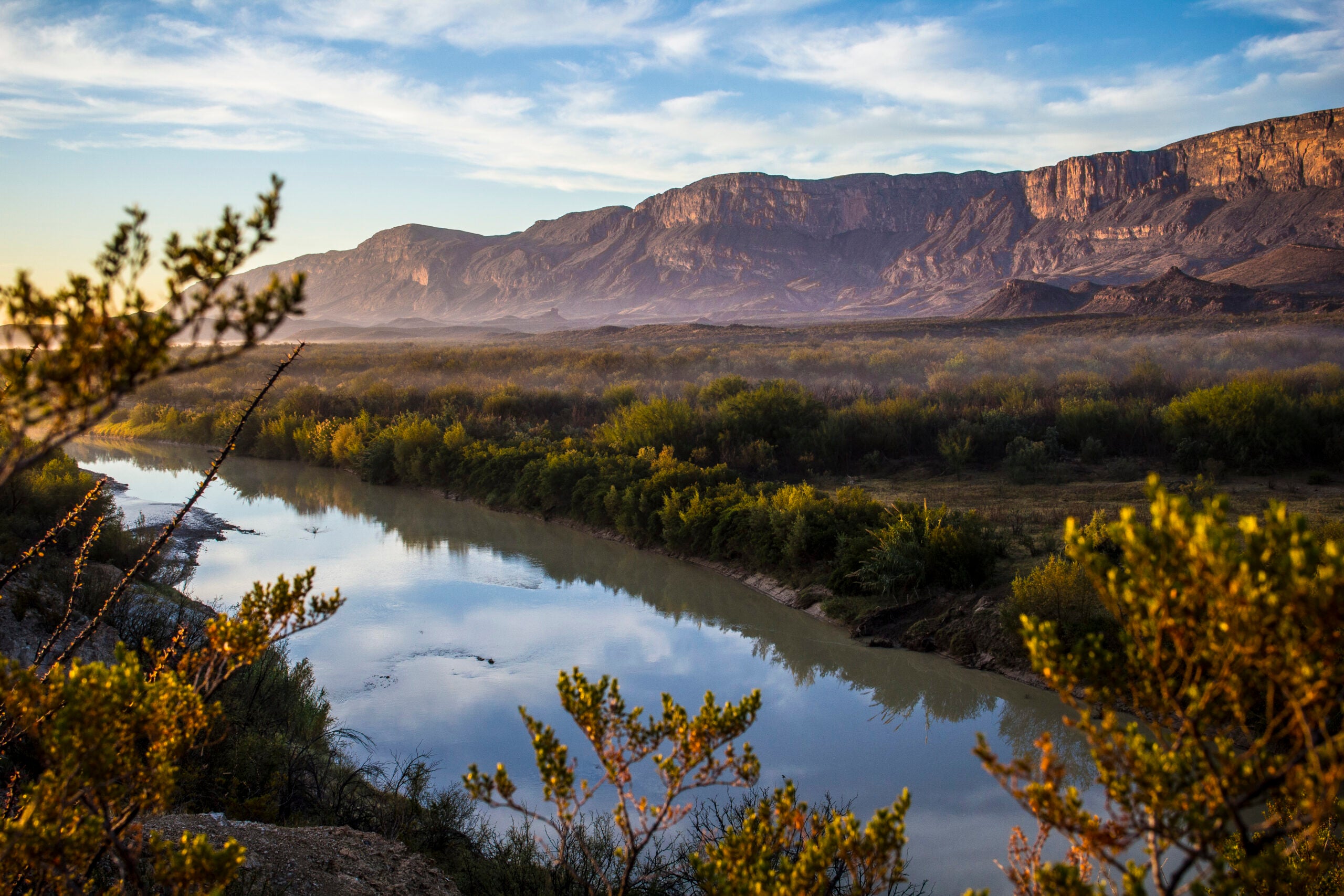
Big Bend National Park in Texas. (National Park Service)
An ecological and cultural assault on Southern California
The federal government’s waiver authority to build border wall infrastructure was first applied in southern California, where it has caused devastating ecological and cultural damage. Two 30-foot-high prison-style walls now cut directly through Friendship Park, marring the binational landmark shared by San Diego and Tijuana that was established in 1971 as a symbol of solidarity and good will between the United States and Mexico.
The development of border barriers in the park has turned this vision of international kinship on its head.
“They’ve already destroyed the park”, says Dan Watman of Friends of International Friendship Park, an organization working to restore the site’s original mission and to protect Yogurt Canyon, which surrounds it.
Watman pointed to the first Trump administration’s use of a waiver to disregard the Migratory Bird Treaty Act, among other laws, to build wall barriers that destroyed habitat for the vulnerable burrowing owl.
“Today, there are no more burrowing owls left there,” he says.
Watman is deeply concerned that additional border wall construction in the park will continue to damage the canyon’s wildlife habitat and disrupt water flows.
He is also weary that the destruction of Friendship Park is just a preview of what the entire southern border will look like if the Trump administration continues down this path.
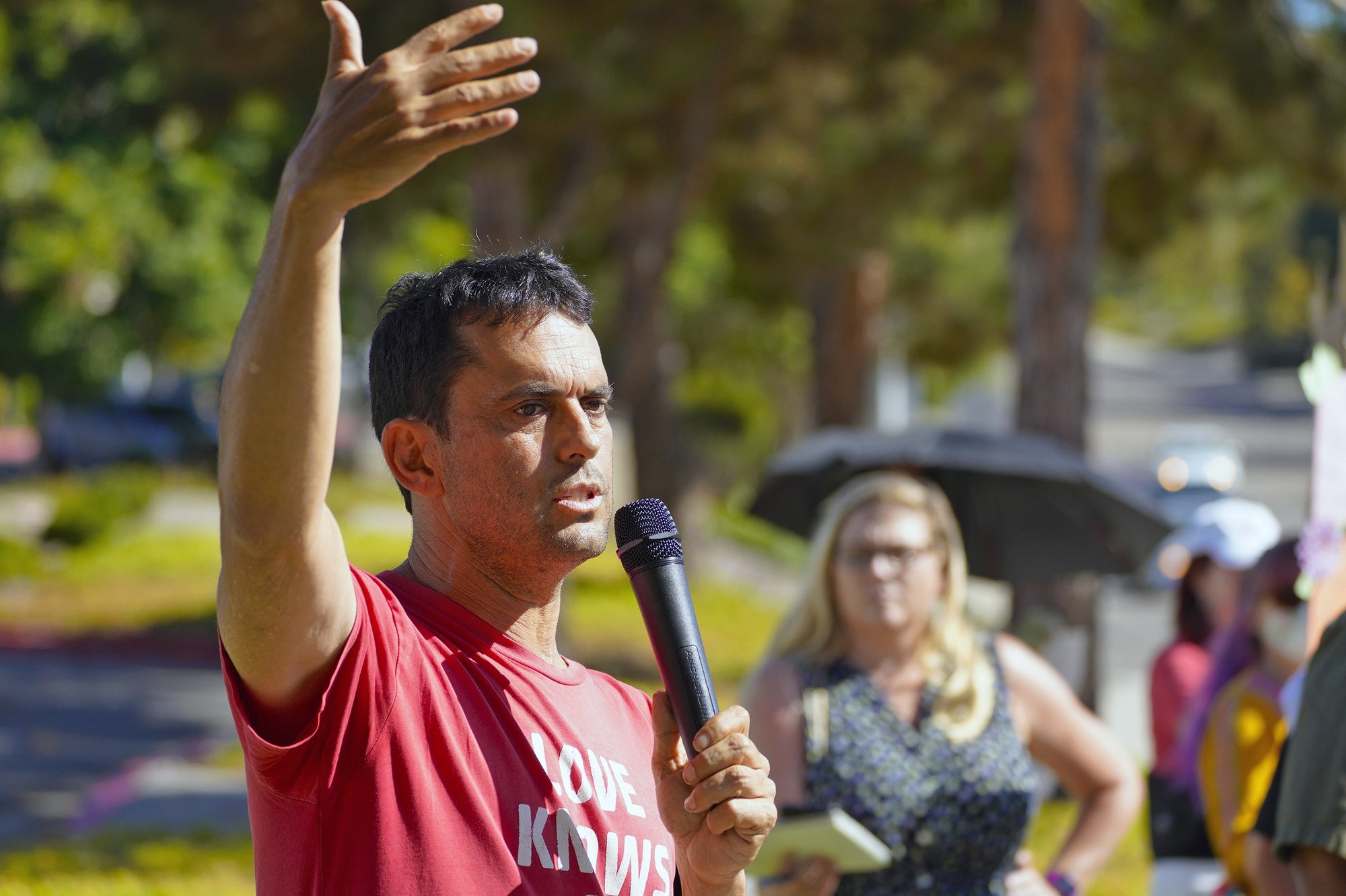
Dan Watman, with Friends of Friendship Park, speaks during a demonstration in front of the U.S. Customs and Border Protection – San Diego Border Patrol Sector Headquarters in 2022 in Chula Vista, California. (Nelvin C. Cepeda / The San Diego Union-Tribune via Getty Images)
How is Earthjustice fighting back?
For years, Earthjustice has worked successfully to protect border communities, wildlife, and public lands from the Trump administration’s reckless wall construction agenda.
When the first Trump administration declared a national emergency to justify building more miles of border wall in Texas, a move that would have destroyed a historic chapel and cemetery, we sued on behalf of the families whose loved ones were buried on the threatened site, successfully delaying the construction. The Biden administration ultimately withdrew the emergency declaration, saving the site.
We are now supporting a lawsuit filed by the Center for Biological Diversity to stop the Trump administration from using waivers to sidestep federal laws in its relentless push to construct border wall infrastructure in and around Big Bend National Park in Texas.
Disregarding vital environmental and public health regulations to build roads and other barriers here would have far-reaching, irreparable impacts on the park’s ecosystem and the local communities that have long relied on the economic and cultural benefits it provides.
In October, the district court took emergency action and blocked wall construction throughout the entire Big Bend region while the legal case continues.
This is a major victory, but our work is not over: The Trump administration has now asked the Supreme Court to intervene.
Earthjustice will not rest in this fight to protect one of the world’s most biologically rich and diverse ecosystems.