

Defend coal ash safeguards. How to participate in EPA's virtual hearing on federal coal ash protections.
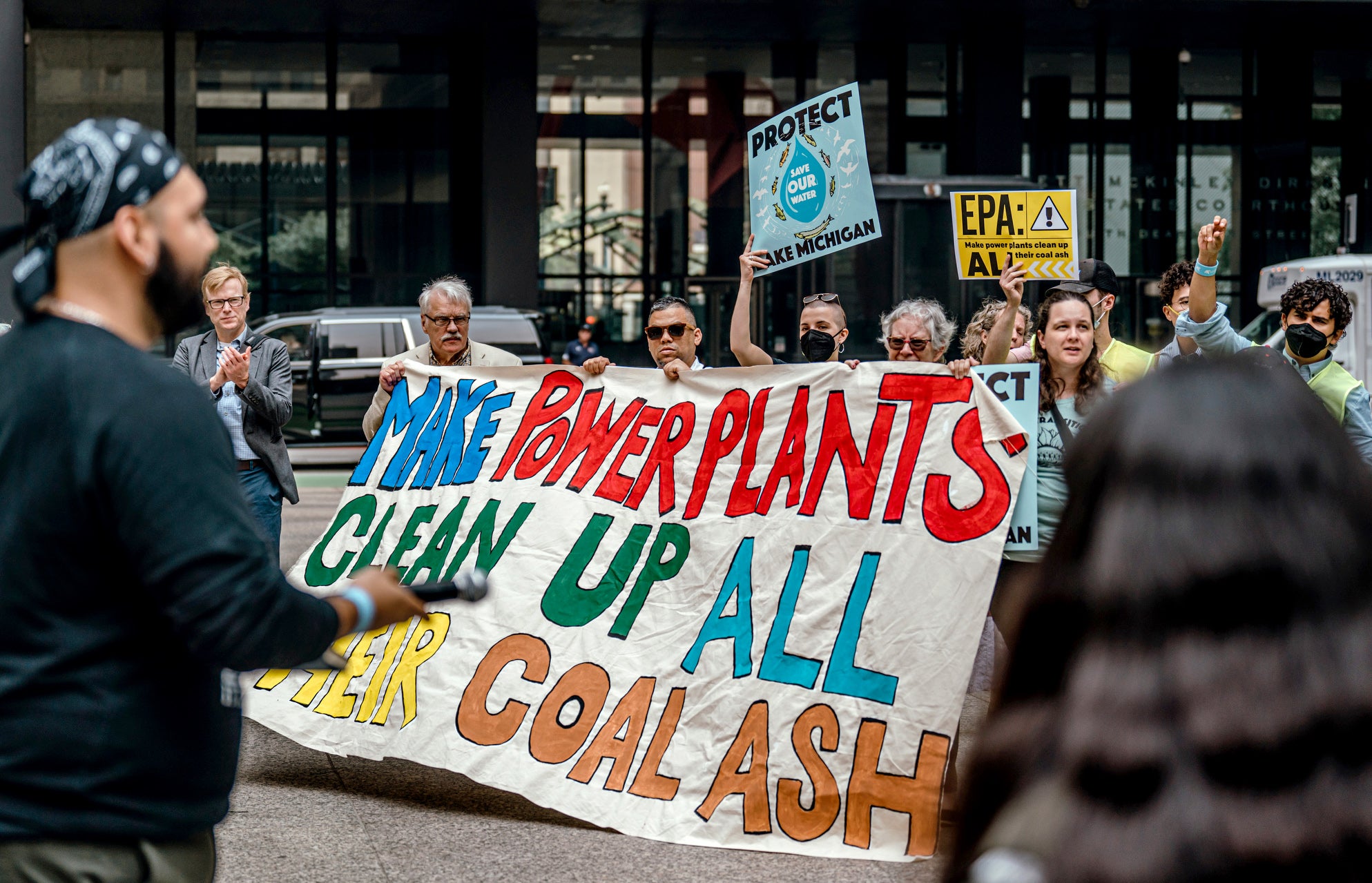
On Thurs., May 28, 2026, the U.S. Environmental Protection Agency will hold a virtual public hearing on its proposal to weaken federal coal ash protections.
This is our chance to speak directly to the EPA and demand strong safeguards for our water, health, and communities.
After decades of advocacy and litigation, communities won major federal protections in 2015 and again in 2024. Now, the EPA is proposing to roll back key safeguards and allow polluters to avoid cleanup responsibilities.
Industry voices will be there pushing for weaker rules.
Public testimony helps show that communities across the country are paying attention and demanding accountability.
You do not need to be a lawyer, scientist, or policy expert to participate. Personal stories and community concerns matter.
Quick Start: How to Participate
Step 1: Register for the EPA hearing
- Register as soon as possible (deadline: Thurs., May 21, 2026). Speaking slots may fill up.
EPA Virtual Public Hearing
Thursday, May 28, 2026
9:00 a.m. to 6:00 p.m. ET
Step 2: Prepare your testimony
Your testimony can be short and simple. You can:
- Read directly from prepared notes
- Speak conversationally
- Share personal concerns
- Use the talking points below
- Combine personal experience with broader concerns
Testimony is limited to 5 minutes, but even a short statement can make a difference. A good rule of thumb:
- 1 minute ≈ 150 words
- 5 minutes ≈ 750 words
Step 3: Deliver your testimony virtually
You can testify from:
- Your computer
- Your phone
You do not need to stay for the entire hearing.
During the hearing:
- You will likely wait in a virtual queue until your name is called
- Your microphone will be muted until it is your turn
- You may simply read your prepared remarks aloud
Step 4: Send us your testimony
Once you prepare your testimony, please send us a copy so we can better understand how supporters are engaging and help track participation.
We are incredibly thankful for your effort in this work. Thank you.
We’ll also send reminders and additional details as the hearing approaches.
What the EPA is Proposing
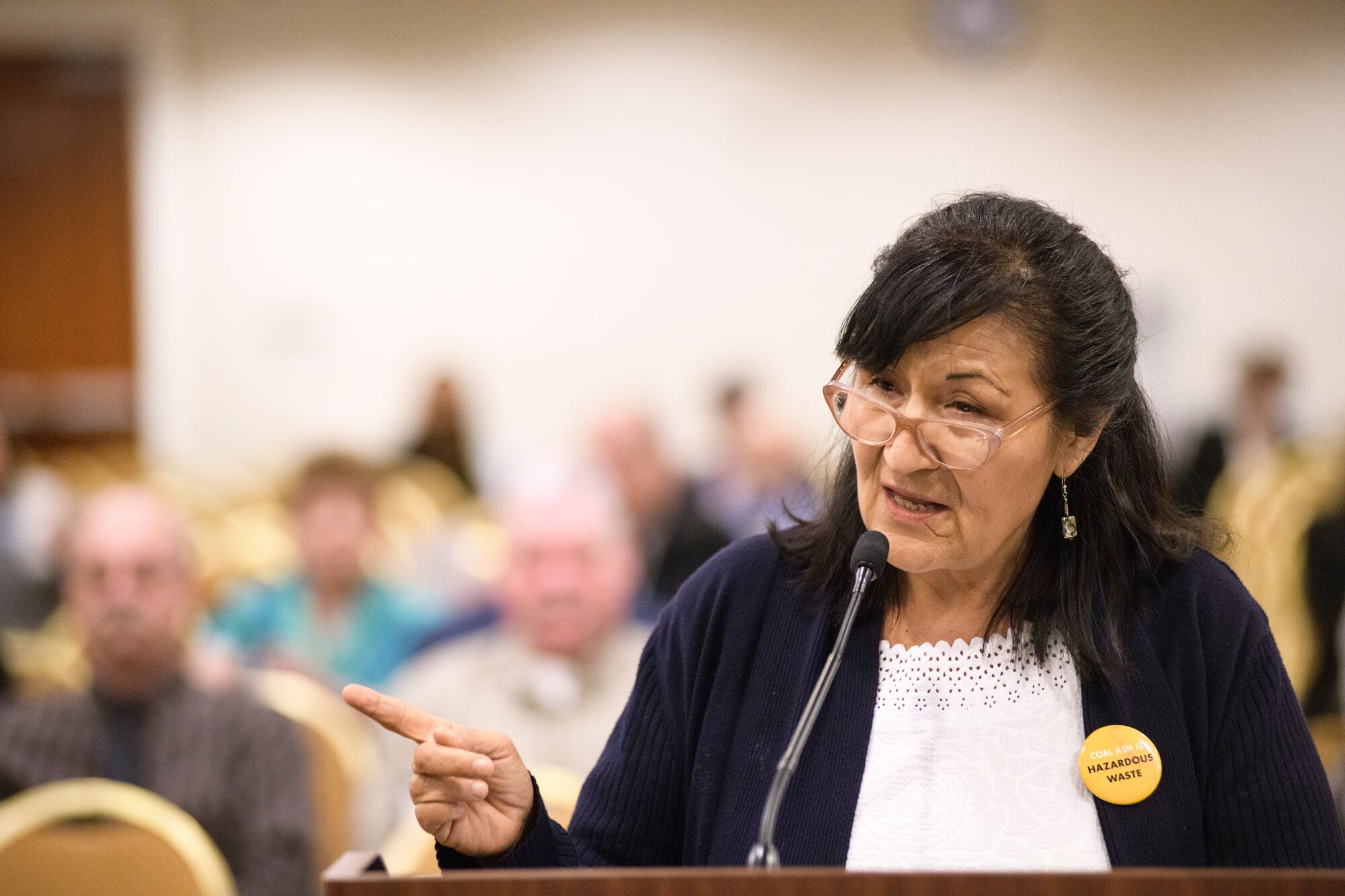
The EPA is proposing to weaken federal coal ash safeguards in ways that would allow more toxic contamination and less cleanup accountability.
Among other changes, the proposal would:
- Exempt hundreds of dangerous coal ash dumps from regulation
- Allow more toxic pollution in groundwater
- Permit companies to leave coal ash sitting in groundwater
- Delay cleanup requirements at many sites
- Remove safety standards for large coal ash waste piles
- Weaken monitoring and cleanup requirements
- Allow toxic coal ash to be used as fill material with fewer restrictions
These changes would disproportionately impact working-class communities and communities of color already burdened by pollution.
Why Your Testimony Matters
Public testimony helps:
- Demonstrate widespread opposition to the rollback
- Build a strong public record
- Show the EPA that communities are paying attention
- Elevate the experiences and concerns of people affected by pollution
- Push back against industry pressure for weaker safeguards
Coal companies and utilities have spent years trying to delay cleanup responsibilities.
Communities deserve clean water and real accountability, not more loopholes for polluters.
Key Talking Points
Choose the points that matter most to you. You do not need to use all of them.
Coal ash is dangerous toxic waste.
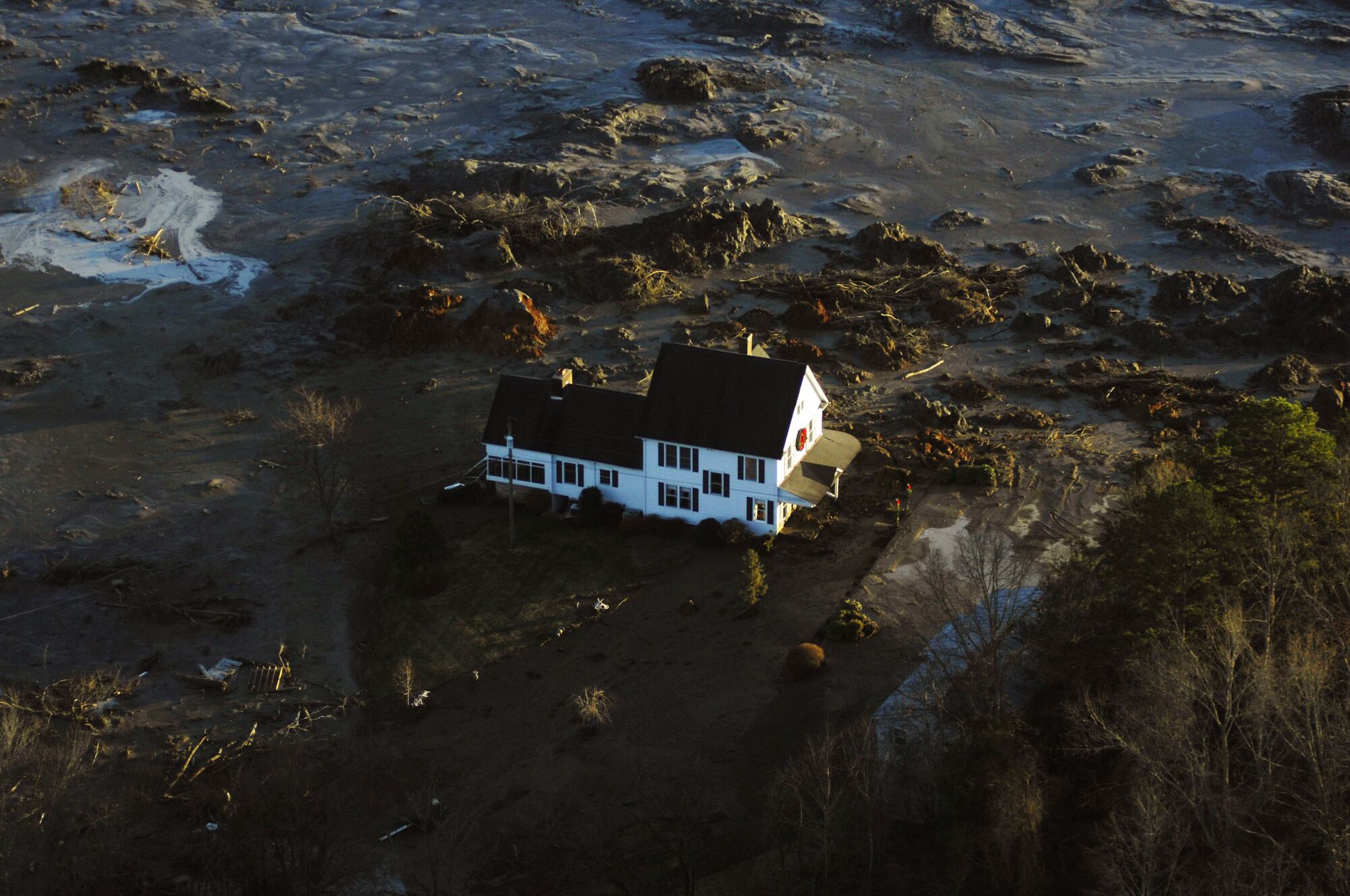
Coal ash contains hazardous pollutants including arsenic, boron, cobalt, chromium, lead, lithium, mercury, radium, selenium, and more. These contaminants are linked to cancer, neurological damage, reproductive harm, and other serious health impacts.
Coal ash contamination is widespread.
Groundwater contamination has been documented at nearly every coal plant in the country. Toxic pollution threatens drinking water, rivers, lakes, and streams.
Communities fought for these protections.
The 2015 and 2024 coal ash rules were the result of years of scientific study, public pressure, litigation, and advocacy from impacted communities. Utilities have already had years to comply. Weakening the rules now rewards delay and non-compliance.
Coal companies must clean up their mess.
Companies profited from burning coal for decades. They should be responsible for cleaning up the toxic waste left behind instead of shifting the burden onto taxpayers and communities.
This is an environmental justice issue.
Coal ash disposal sites are disproportionately located near low-income communities and communities of color. Weakening protections means these communities will continue bearing the greatest burden of pollution and health risks.
Leaving coal ash in groundwater is not safe.
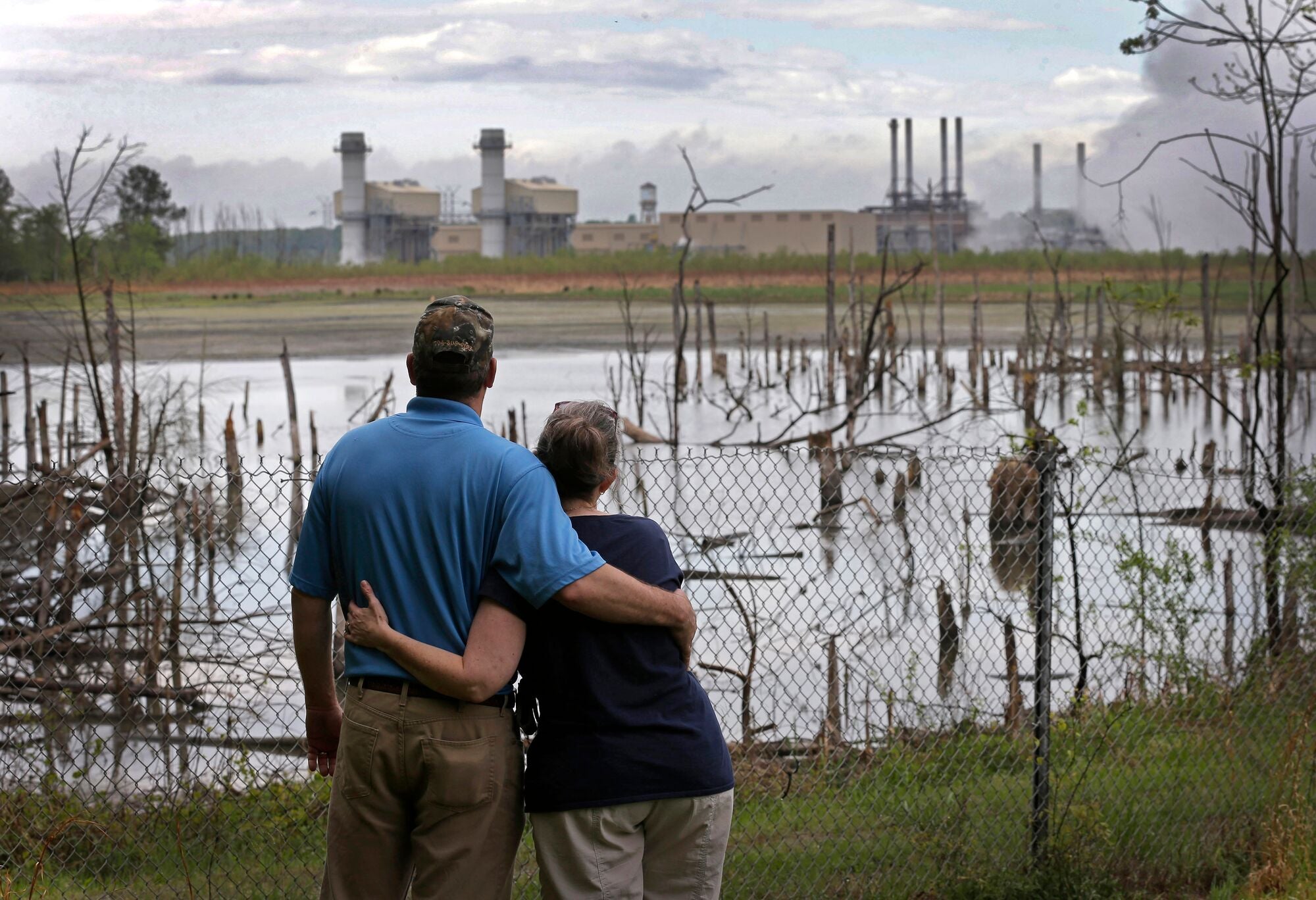
Coal ash that remains in contact with groundwater continues leaking toxic chemicals indefinitely. Communities deserve real cleanup, not permanent contamination.
Tips for Strong Testimony
Make it personal.
You do not need technical expertise for your testimony to matter. You can talk about:
- Concerns about drinking water
- Health impacts on communities
- Pollution in rivers, lakes, or streams
- Environmental justice concerns
- Accountability for polluters
- Your concern for future generations
- Why clean water matters to you
Keep it simple.
A clear and sincere statement is often more powerful than a highly technical one.
End with a clear ask.
Examples:
- “I urge the EPA to reject this proposal.”
- “The EPA must protect communities, not polluters.”
- “Coal companies must be required to fully clean up toxic contamination.”
- “Please preserve and enforce strong coal ash protections.”
Sample testimony structure:
Testimony should flow like this:
“Hi, my name is [name], in [my state].
“I am concerned about [list the reasons you are personally worried — examples can include: the health of my children, contaminated rivers, contaminated sources of drinking water, going boating or swimming, etc.].
“Thank you for listening.”
A Few Final Reminders
You are speaking on your own behalf, not on behalf of Earthjustice.
- You do not need to be an expert to participate.
- Short testimony still matters.
- Personal stories and concerns are powerful.
- Register early because speaking slots may fill up.
Thank you for speaking up for clean water, healthy communities, and environmental justice.
Additional Resources
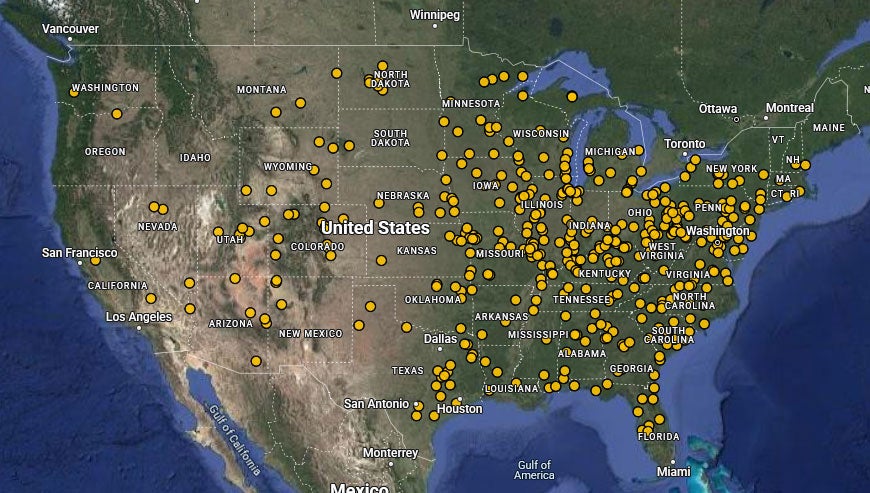
- Interactive map of U.S. coal ash dumpsites: Use this map to understand where coal ash might be stored near you.
- Coal ash state fact sheets: Learn about coal ash dumpsites in 39 states and Puerto Rico
- Coal Ash Primer: Basic information about coal ash, toxicity, and disposal
- Poisonous Coverup: The Widespread Failure of the Power Industry to Clean Up Coal Ash Dumps: A report describing the widespread contamination caused by hundreds of coal plants and their pervasive violation of the cleanup and closure requirements of the federal Coal Ash Rule.
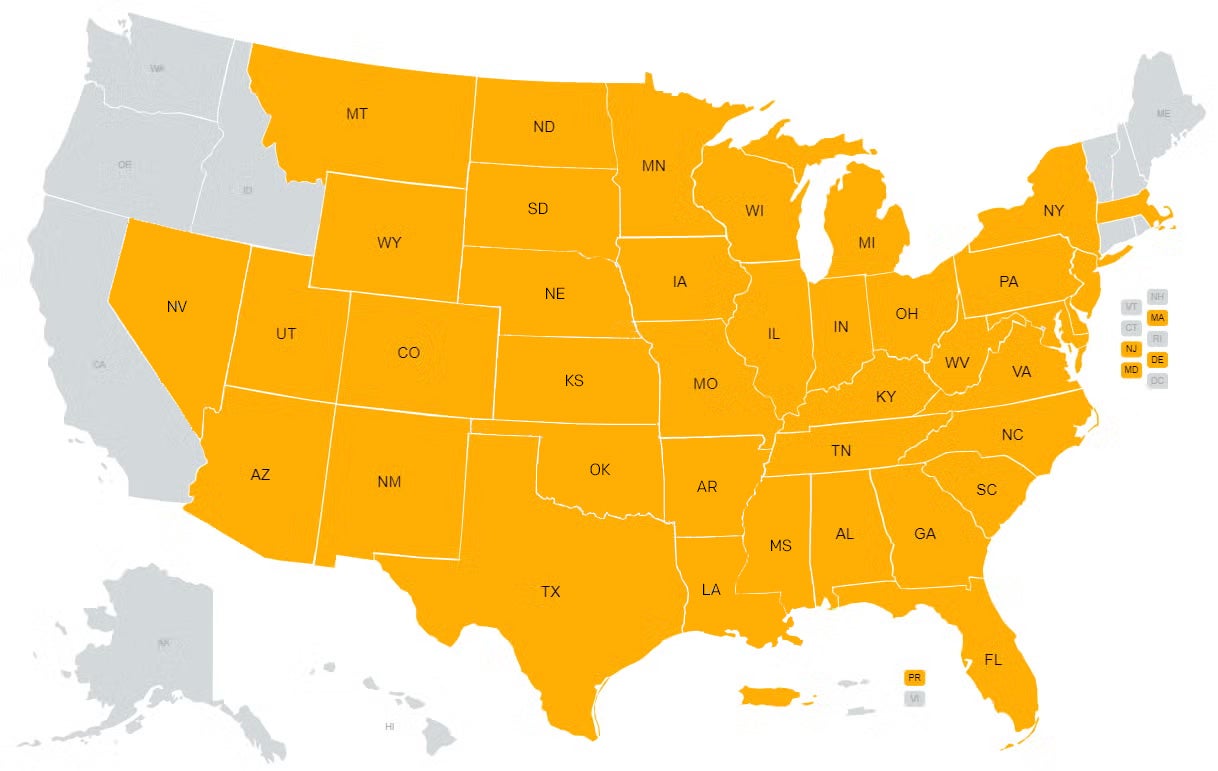
Coal ash remains one of our nation’s largest toxic industrial waste streams. Learn about federally regulated coal ash landfills and surface impoundments (ponds) in 39 states and Puerto Rico, as well as how many coal ash dumps were not regulated by the 2015 Coal Ash Rule.
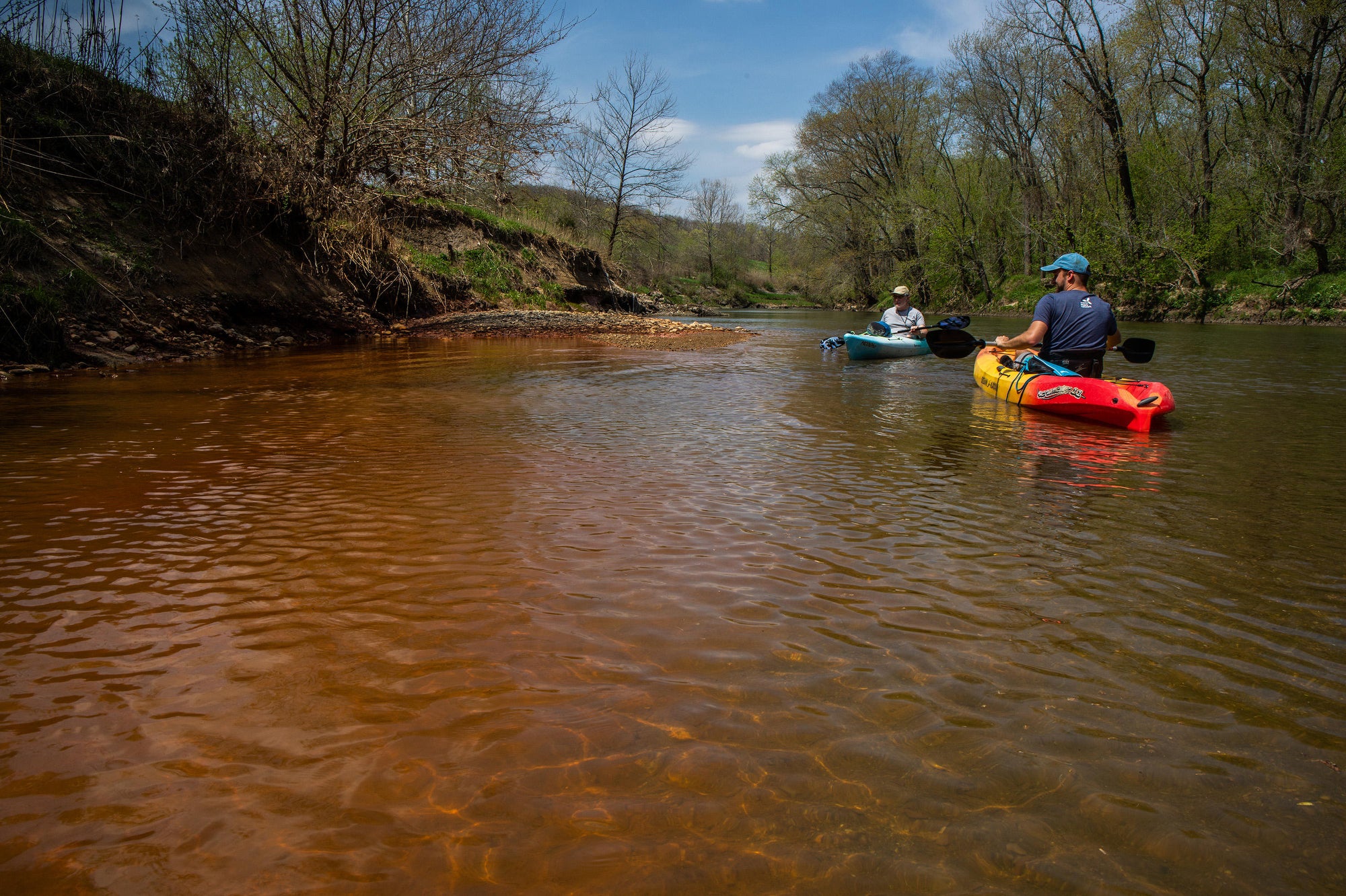
Earthjustice fights in the courts for a long-term solution to the toxic menace of coal ash. And we act on behalf of dozens of clients and over 100 coalition partners to defeat legislative attempts to subvert federally enforceable safeguards of coal ash.
Earthjustice’s Clean Energy Program uses the power of the law and the strength of partnership to accelerate the transition to 100% clean energy.