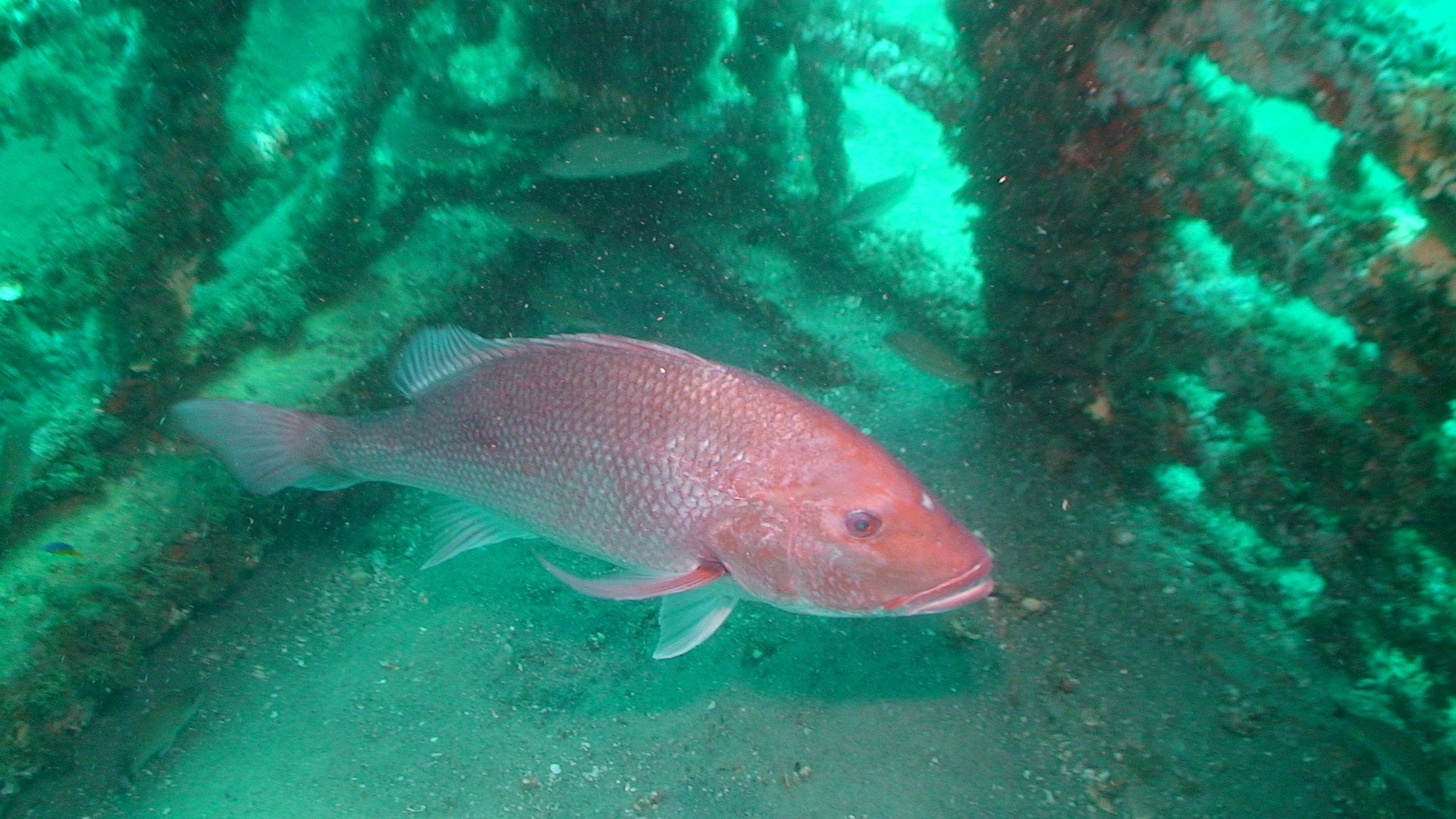

Why We Joined Fishers in a Legal Case to Protect Red Snapper
Overishing nearly wiped out red snapper spawning in the 1990s. A Court granted a preliminary injunction to stop a newly proposed fishing "free-for-all."
Red snapper is one of the most prized fishing catches in the American South, and it’s a key player in the ocean ecosystem.
But in the 1990s, overfishing nearly collapsed red snapper stocks — dropping the spawning population to just 11% of historical levels. That near-collapse was a wakeup call. More scientific research followed, and a more sustainable policy took shape to rebuild the fish stocks so there would be fish available, year after year.
But now, politicians on both the state and federal levels are trying to upend all that work, proposing a “free for all” extended red snapper season in federal waters off Florida, Georgia, South Carolina, and North Carolina that could once again spell doom for the fishery.
In early May, commercial fishers filed suit (Southeastern Fisheries Association v. Lutnick) over the proposal to dramatically expand red snapper season beyond the agreed-upon, science-based fisheries rebuilding plan.
Earthjustice and the Ocean Conservancy filed an amicus brief in the case on May 18.
On May 21, the U.S. District Court of the District of Columbia granted a preliminary injunction in the lawsuit, ruling to stop the fishing free-for-all because the facts in the case are compelling enough to show it will harm red snapper stocks. The court pointed out that, while commercial fishermen trying to protect the snapper population provided analysis to show the proposal would cause substantial overfishing, the Fisheries Service and states refused to provide any numbers to justify the fishing free-for-all.
Some background: Because the red snapper fishery is open-access — meaning there’s no cap on how many people and vessels can catch red snapper — the National Marine Fisheries Service forged an agreement for shorter seasons as part of the rebuilding plan set to last through 2044.
As the stock recovers, anglers are catching more red snapper. But the data show that the fish they’re catching are still too young to reproduce at the rate needed to rebuild populations. Older fish are the backbone of a healthy fish population because they produce more eggs, spawn more reliably, and help stabilize populations during environmental change. Keeping fishing seasons shorter in the near term is necessary to let the fish grow up enough to build a stable population that can support longer, more reliable fishing seasons in the long term.
In this latest move to kick off the fishing free-for-all, the National Marine Fisheries Service used a tactic called “exempted fishing permits” to wipe out annual catch limits for recreational fishers and expand recreational seasons from a couple of days in federal waters off Florida, Georgia, South Carolina and North Carolina to 39 days for Florida and 62 days for Georgia, South Carolina, and North Carolina.
Overfishing like this is illegal under the nation’s 50-year-old federal fisheries law, the Magnuson-Stevens Fishery Conservation and Management Act. In fact, an Ocean Conservancy scientific analysis estimates that the “exempted” permits would cause overfishing to the tune of 20 times the sustainable catch limit. And that’s bad news for the recovering red snapper.
As our amicus brief points out: “Available evidence shows that the one-two punch of drastically expanded recreational fishing seasons paired with lifting annual catch limits guarantees that recreational fishing for red snapper will result in massive overfishing … The Fisheries Service may not escape the Act’s basic, substantive requirements by writing itself ‘get out of jail free’ cards in the form of Exempted Fishing Permits … The Fisheries Service’s actions are arbitrary and capricious, not in accordance with law, and entirely outside the authority given to it by Congress.”
The court’s injunction ruling recognizes that allowing a one summer recreational fishing blowout comes at a huge, multi-year cost to commercial fishing interests, future anglers, and the general public. Folks want longer fishing seasons. Longer fishing seasons require more fish. And the only way to have more fish is to let all those young red snapper live long enough to reproduce and provide a stable, resilient base for the population and its fishing fans.
Earthjustice’s Oceans Program uses the power of the law to safeguard imperiled marine life, reform fisheries management, stop the expansion of offshore oil and gas drilling, and increase the resiliency of ocean ecosystems to climate change.
Julie Hauserman
Public Affairs and Communications Strategist, Earthjustice
jhauserman@earthjustice.org