

Conservation and Law Groups Support Challenge of EPA’s Failure to Regulate PFAS in Sewage Sludge Used as Fertilizer
EPA fails to protect farmers, truck drivers, and families from the harm of toxic sludge
Contacts
Michael Naughton, press@clf.org
Nydia Gutiérrez, ngutierrez@earthjustice.org
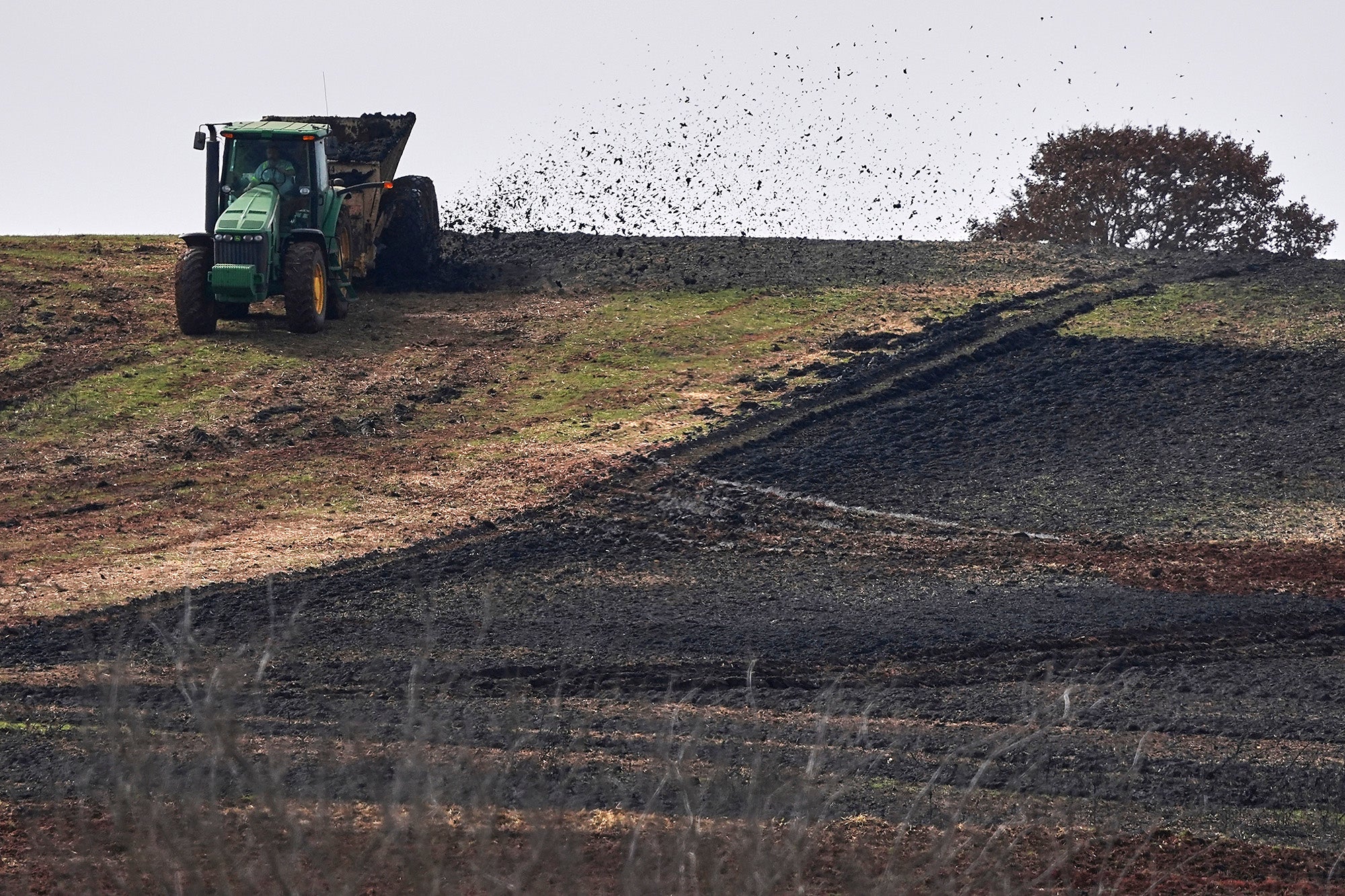
Conservation Law Foundation (CLF) and partner organizations, including the Kentucky Resources Council (KRC) and Earthjustice, have filed briefs in support of an appeal challenging the Environmental Protection Agency’s (EPA) failure to protect communities from PFAS — toxic forever chemicals — in sewage sludge. The appeal — brought by Public Employees for Environmental Responsibility (PEER) — highlights the EPA’s refusal to act despite decades of contaminated sludge being spread on farmland as fertilizer across the country.
CLF and KRC’s brief — filed on behalf of impacted farmers, the Truckers Movement for Justice, environmental and water protection organizations, and an organic trade association — focused on the daily health risks faced by those on the ground.
“Every day, truck drivers haul this sludge, farmers spread it on their fields, and families sit down to eat food grown from that land. None of them should have to wonder if they are being exposed to toxic chemicals,” said Erica Kyzmir-McKeon, director of communities and toxics at CLF. “But right now, that is exactly what’s happening. PFAS are moving through our farms, our water, and our food, and people are paying the price for EPA’s failure to act. Farmers, workers, and communities deserve so much better.”
The Clean Water Act requires the EPA to identify and regulate toxic pollutants in sewage sludge. But the agency has failed to do so for PFAS. As a result, contamination has spread across millions of acres of farmland nationwide. Farmers have lost their land and livelihoods. Truck drivers have been exposed while transporting and applying sludge. And families have faced serious health consequences.
“EPA’s inaction harms farmers, who are using the sludge as cheap fertilizer without a full understanding of the risks to their health and land, but also to communities and wildlife downwind and downstream,” said Ashley Wilmes, executive director of KRC.
Earthjustice, representing the Township of Plainfield, Pennsylvania, the Town of Thurston, New York, and the Town of Cameron, New York, emphasized the burdens imposed on local governments and the communities they serve.
“EPA’s failure to promulgate regulations to control levels of PFAS in sewage sludge fertilizers is leading to devastating consequences for public health and the environment, as well as for the economic well-being of farmers across the country,” said Michael Youhana, senior associate attorney at Earthjustice. “When EPA abdicates its responsibility, local governments are burdened with the difficult and sometimes impossible task of protecting farmland and drinking water at the local level. Earthjustice is honored to represent the Township of Plainfield, Pennsylvania, and the Towns of Cameron and Thurston, New York, urging the Court to order EPA to regulate PFAS in sewage sludge.”
In New England, PFAS contamination linked to sewage sludge has led to farm closures. While some states have begun to address the issue, the lack of federal regulation constrains their ability to fully respond.
The case is James Farmer et al v. Environmental Protection Agency et al.
Additional Resources
About Earthjustice
Earthjustice is the premier nonprofit environmental law organization. We wield the power of law and the strength of partnership to protect people's health, to preserve magnificent places and wildlife, to advance clean energy, and to combat climate change. We are here because the earth needs a good lawyer.