

Federal Agencies Launch Court-Ordered Environmental Study for the Donlin Gold Mine in Alaska
Thanks to last year’s victory in a challenge brought by Southwest Alaska Tribes, the agencies had to supplement the mine’s environmental study to examine the risks of a larger tailings spill
Contacts
Elizabeth Manning, emanning@earthjustice.org
The U.S. Army Corps of Engineers issued a public notice saying it plans to prepare a supplemental environmental impact statement (SEIS) for the Donlin Gold Mine. This SEIS is the result of last year’s legal victory by six Southwest Alaska Tribes, represented by Earthjustice, who challenged the legality of the mine’s federal permits in U.S. District Court in Alaska.
Specifically, the notice posted on Jan. 26, 2026, says the SEIS will “evaluate the impacts of a larger tailings spill” from the permitted gold mine. Following the completion of the SEIS, the federal permitting agencies will decide whether to “modify, reaffirm or rescind” the existing federal permits authorizing the project.
Importantly, the Army Corps announcement is accompanied by a short public comment period that began Jan. 26 and will continue through Feb. 24, 2026.
While the Army Corps’ announcement states that it then may release a draft SEIS before the final supplemental study is complete, the project website says that a draft will be issued along with an associated public comment period, and Donlin has repeatedly stated the same. The Tribes involved in the lawsuit will continue to advocate for a robust public process along with a thorough examination of Donlin’s impacts.
The Tribes have requested government-to-government consultation with the agencies regarding the project and have not yet received a response.
One issue of concern is that this SEIS process may be complete before Donlin Gold LLC finishes updating its feasibility study, expected to be done sometime in 2027. If the project outlined in the new feasibility study is larger than the one currently proposed, as Donlin executives have indicated is likely, the SEIS may not adequately address the full impacts of the project.
Following are statements from some of the Tribes participating in the lawsuit and from Earthjustice.
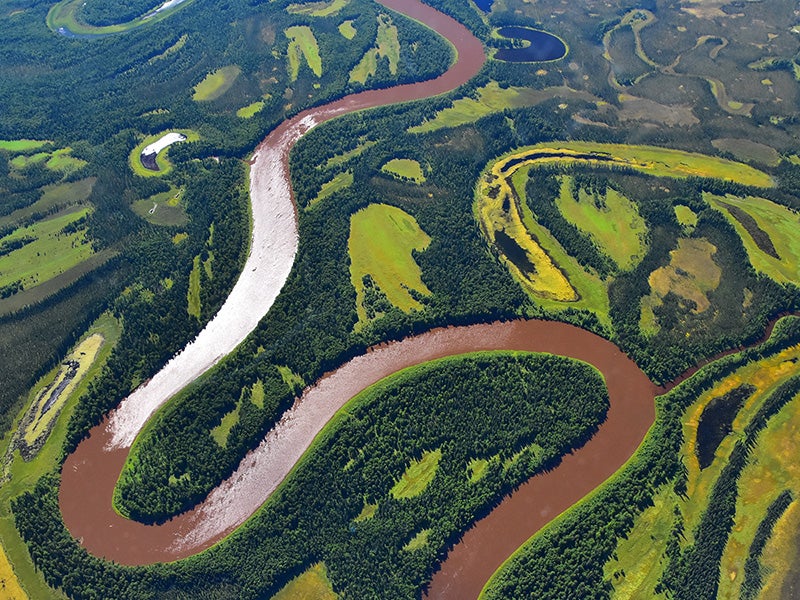
“We need the federal agencies permitting this mine to ensure this project won’t harm the lands and waters within the Kuskokwim River region that we depend on for our subsistence, culture and ways of life,” said Orutsararmiut Native Council Chairman Gage Hoffman. “We’re now coping with a salmon crisis that is stressing our communities. We don’t need the threat of this mine making that crisis worse.”
“We’re glad the federal agencies will be studying the impacts of a larger tailings spill on our region because this has not yet been studied adequately,” said Chevak Native Village First Chief Gabriel Nanok. “Most tribes in our region are deeply concerned about the risks posed to our communities, and our lands and waters, by this mine. Our ways of life for people now and future generations are at stake.”
“With projects across Alaska, we are seeing this administration take shortcuts and block the public from participating in environmental permitting,” said Hannah Foster, Earthjustice Attorney. “While we are glad the agencies are following the court’s direction to study a larger spill at Donlin, we have concerns based on new information that has come to light since the original study was issued. For example, it is inappropriate for this analysis to begin before Donlin’s feasibility study is updated—if the mine is going to be larger, that must be factored in. We will work to ensure that this process is as complete and fair as possible and that the concerns of our clients and the public are heard.”
Background
Donlin Gold LLC is owned by NOVAGOLD and Donlin Gold Holdings, LLC, a company wholly owned by Paulson Advisers LLC. The project as currently proposed is expected to extract approximately 556 million tons of ore to produce at least 30 million ounces of gold over the 27-year life of the mine – and would generate at least 2.5 billion tons of waste rock, some of which would generate acid drainage.
The mine project comprises three main parts – a 316-mile-long buried gas pipeline from Cook Inlet in Southcentral Alaska to the mine site; transportation infrastructure that includes a new port, a port expansion, and a tripling of barge traffic on the Kuskokwim River; and the 14-square-mile mine site itself. The mine site includes an open pit more than two miles long, a mile wide and 1,800 feet deep, plus a processing plant, waste rock and tailings storage facilities, water treatment and power plants, dams and reservoirs, airstrips, and access roads. In all, the mine project would cover 25 square miles.
After the mine ceases operating, a 471-foot tailings dam containing more than 550 million tons of toxic mine waste and a waste rock mountain reaching 1,115 feet tall and spanning 2,500 acres would remain and need to be maintained forever. The open pit would be filled with contaminated water, forming a permanent lake that would never meet water quality standards and would require water treatment in perpetuity. A failure of the tailings dam would cause catastrophic damage to the region.
Additional Resources
About Earthjustice
Earthjustice is the premier nonprofit environmental law organization. We wield the power of law and the strength of partnership to protect people's health, to preserve magnificent places and wildlife, to advance clean energy, and to combat climate change. We are here because the earth needs a good lawyer.