

Groups Intend to Sue Trump Administration Over Flathead National Forest Timber Project
60-day notice states recently-approved West Reservoir Project could harm grizzly bears and bull trout
Contacts
Perry Wheeler, Earthjustice, pwheeler@earthjustice.org
Swan View Coalition and Friends of the Wild Swan today notified the Trump administration of their intent to sue over the recently-approved West Reservoir timber project in Flathead National Forest, which would allow for new roadbuilding that could harm federally-protected grizzly bears and bull trout. The groups claim that the U.S. Forest Service violated the Endangered Species Act by failing to consult with the U.S. Fish and Wildlife Service over impacts to the species, including through 4.7 miles of new road construction. The Forest Service sidestepped the ESA consultation requirements under the guise of an emergency, but conservation groups are confident that the project does not meet the definition of an emergency and consultation is legally required.
“The entire timber sale area already has too many roads and the Forest Service admits this is harming grizzly bears,” said Swan View Coalition Chair Keith Hammer. “Yet the agency is attempting to fake an emergency and build even more damaging roads rather than consult with the Fish and Wildlife Service on how to fix the problem.”
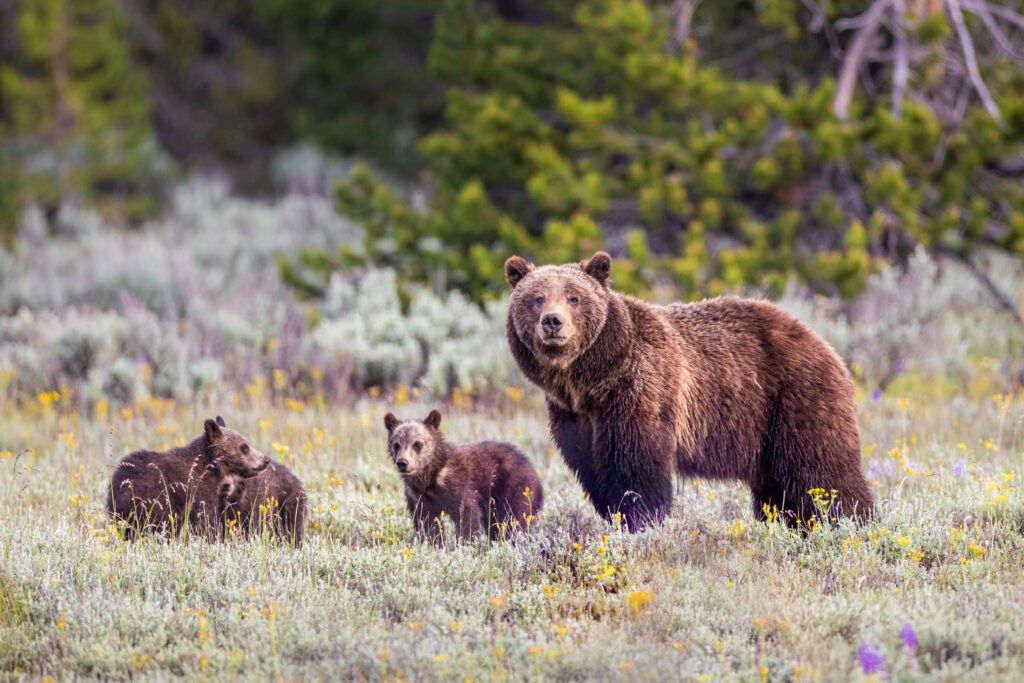
Grizzly 399 (pictured with her three cubs in the fields near Pilgrim Creek, Wyoming) was struck by a car and killed in 2024. Grizzly 399, known as the “Queen of the Grand Tetons,” was an iconic bear matriarch in the Greater Yellowstone region. (Troy Harrison / Getty Images)
The Trump administration approved the project on March 11, 2026, claiming that the West Reservoir Project qualifies as an emergency action. But despite the claim of emergency, the administration offered only a routine justification for the project—that it would purportedly “improve forest health and resilience and reduce potential wildfire impacts to important values at risk,” even though only a few recreational cabins exist anywhere near the project. However, conservation groups contend that there is nothing unique about this timber sale that elevates it to emergency status and allows the Forest Service to bypass the requirements of the Endangered Species Act. This attempt to use emergency authorities is the latest in a series of actions by the Forest Service to shut out the public and circumvent safeguards against forest mismanagement.
“It is outrageous that the Flathead is forging ahead with a project that will impact grizzly bears and bull trout without proper compliance with the court’s order on the Forest Plan while also attempting to sidestep consultation with the Fish and Wildlife Service on West Reservoir,” said Arlene Montgomery, program director for Friends of the Wild Swan. “This is not an emergency; it is a regular timber sale plain and simple – they must follow the law.”
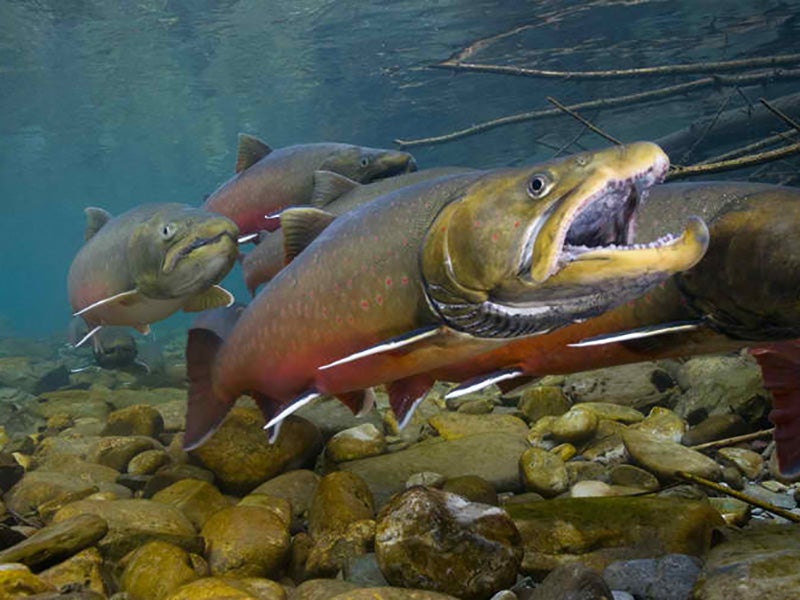
Montana’s cold, clean streams contain some of the last prime habitat in the United States for threatened bull trout, whose historic range has shrunk by half. (Joel Sartore / National Geographic Stock / U.S. FWS)
In 2025, the federal government dismissed its appeal of a District Court decision limiting roadbuilding in grizzly bear and bull trout habitat in Flathead National Forest. In March 2024, the District Court found that the U.S. Forest Service and U.S. Fish and Wildlife Service did not lawfully examine the impacts to federally-protected grizzly bears and bull trout when the agencies greenlit their roadbuilding plan for the national forest. In June of that year, the court recognized additional impacts to grizzlies from existing roadways, including those that don’t receive motorized use. To date, the Forest Service and Fish and Wildlife Service have not satisfied the requirements of the Endangered Species Act by issuing a legally valid biological opinion for the roadbuilding plan.
“The Trump administration’s rushed approval of the West Reservoir Project is about benefiting timber companies, not addressing an actual emergency,” said Ben Levitan, senior attorney with Earthjustice’s Biodiversity Defense Program. “This project was approved without a legally valid biological opinion in place to ensure roadbuilding does not jeopardize the continued existence of grizzly bears and bull trout. If the administration does not remedy its violations within 60 days, we’ll see them in court.”
Grizzly bears have learned to avoid roads — even closed roads — and are often displaced from habitat that features them. Closed roads in the Northern Rockies also receive significant unauthorized use, including trespass by motorized vehicles. Roads and road use also increase sediment in bull trout streams, reducing survival of eggs and embryos, clogging gills, and raising water temperatures in critical habitat for these cold-water fish.
Earthjustice represents Swan View Coalition and Friends of the Wild Swan.
Additional Resources
About Earthjustice
Earthjustice is the premier nonprofit environmental law organization. We wield the power of law and the strength of partnership to protect people's health, to preserve magnificent places and wildlife, to advance clean energy, and to combat climate change. We are here because the earth needs a good lawyer.