

Ocean Conservancy, Earthjustice File Amicus Brief to Prevent Red Snapper Overfishing in South Atlantic
In Florida alone, so-called new “exempted” fishing permits could allow fishing to exceed the annual catch limit by 20 times – threatening ongoing efforts to rebuild fish stocks
Contacts
Andrea Treece, Earthjustice, atreece@earthjustice.org
Lincoln D. Peek, Ocean Conservancy, (907) 621-4315, lpeek@oceanconservancy.org
Today, Ocean Conservancy, represented by Earthjustice, filed an amicus brief in Southeastern Fisheries Association v. Lutnick (D.D.C.), opposing the approval of exempted fishing permits for Florida, Georgia, North Carolina and South Carolina.
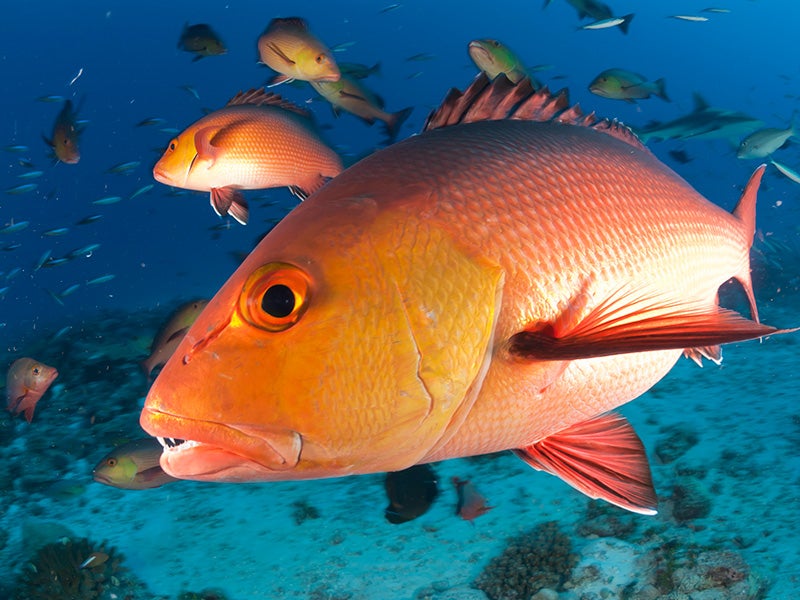
These exemptions, approved on May 1, dramatically extend recreational fishing seasons for red snapper in the South Atlantic and will lead to overfishing, which is prohibited by the Magnuson-Stevens Fishery Conservation and Management Act, the law governing U.S. federal fisheries.
“The purpose of federal fisheries law is to prevent overfishing so that fish populations and marine ecosystems are healthy enough to support future generations,” said Earthjustice Senior Attorney Andrea Treece. “The National Marine Fisheries Service is trying to use these so-called ‘exempted’ fishing permits to create an escape hatch. That threatens the integrity of our fisheries. The law doesn’t allow them to write themselves a get-out-of-jail-free card when they believe that following the law is inconvenient.”
These exempted fishing permits seriously undermine U.S. fisheries law, threatening “grave harm not just to the South Atlantic red snapper population and those who depend on it, but to the rational, lawful operations of federal fisheries management itself,” the legal filing points out.
Ocean Conservancy has used available data to estimate the amount of fish that could be caught with exempted permits. The annual catch limit for the recreational sector is 22,797 fish. A recent two-day red snapper fishing season in Florida alone resulted in 24,885 landed fish, which exceeds that limit. A simple expansion using this Florida landings rate, and ignoring the contribution from other states which will have even longer fishing seasons, suggests that as many as 485,000 fish could be landed in a 39-day season – more than 20 times the annual catch limit and a clear violation of the Magnuson-Stevens Act.
“Opening the red snapper season for two months — when last year it was two days — is fast-tracking the crash of this species,” said Ocean Conservancy’s Senior Director of Fish Conservation Meredith Moore. “There’s just no way the stock can endure this level of fishing pressure so we can continue to fish for red snapper in the long term.”
Currently, the recreational fishery (both for-hire and private anglers) remains open-access, meaning that the only way to prevent overfishing is to set responsible season lengths that keep populations healthy. Regional population growth, combined with increases in available technologies, increase fishing pressure. While anglers are catching more red snapper as the stock recovers, the data shows that the fish are still too young to reproduce at the rate needed to rebuild the stock.
Overfishing drove the red snapper spawning population to just 11% of its historical levels in the 1990s and early 2000s. In response, seasons were reduced as part of a rebuilding plan set to last through 2044. These new exemptions risk undermining the progress made to restore this stock to healthy levels that can support fishing for decades to come.
“It’s not intuitive because we associate fertility with a certain limited age range, but elsewhere in the animal kingdom, that’s not how it works,” said Dr. Michael Drexler, a fisheries scientist at Ocean Conservancy based out of Florida. “Older fish are the backbone of a healthy fish population because they produce more eggs, spawn more reliably, and help stabilize populations during environmental change, so seeing more young fish in the water is a good thing but not the signal we should be looking at for the long term.”
“I cannot wait for the day that we can confidently open the red snapper fishing season for weeks on end, but we’re just not there yet,” said Ocean Conservancy’s director of Florida conservation J.P. Brooker, an avid surfer, diver and fisherman, sixth-generation Floridian and environmental lawyer. “This is about protecting fishing for generations to come, not just this summer.”
Resources:
- Read the amicus brief.
- See frequently asked questions about red snapper exempted fishing permits.
- Read background information on red snapper, exempted fishing permits and the Magnuson-Stevens Act.
Additional Resources
About Earthjustice
Earthjustice is the premier nonprofit environmental law organization. We wield the power of law and the strength of partnership to protect people's health, to preserve magnificent places and wildlife, to advance clean energy, and to combat climate change. We are here because the earth needs a good lawyer.