

Old-Growth Logging Project in the Tongass National Forest Revived
The U.S. Forest Service releases a final environmental impact statement moving forward with the largest old-growth logging project on the Tongass in years
Contacts
Melissa Lewis, Southeast Alaska Conservation Council, melissa@seacc.org, 907-586-6947 x 207
Elizabeth Manning, Earthjustice Communications, emanning@earthjustice.org
Jacqueline Covey, Defenders of Wildlife, jcovey@defenders.org, 630-427-7164
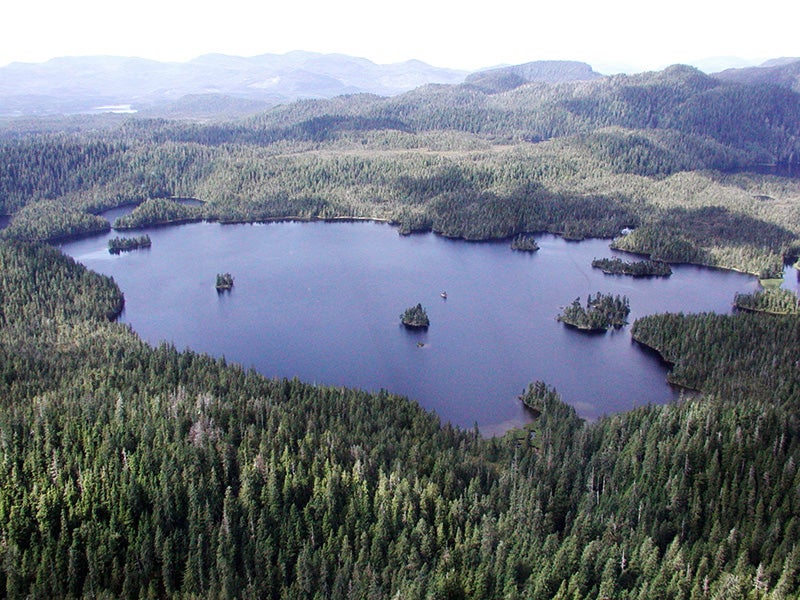
The U.S. Forest Service is reviving a massive old-growth logging project that covers more than 40,000 acres on the southern part of Revilla Island east of Ketchikan in the Tongass National Forest.
The Forest Service has released the final environmental impact statement for the project. The sale is largely the same as what was proposed in 2020. A draft environmental impact statement was prepared for the sale but was shelved due to opposition and lack of industry interest.
The South Revilla sale could be a preview of massive timber auctions to come if a proposal to repeal a key conservation rule moves forward. This year, the Trump administration has made attempts to increase industrial-scale logging nationally and to repeal the Roadless Area Conservation Rule. More large sales like the Revilla project could occur within Alaska’s Tongass National Forest as a result, affecting large swaths of important forest habitat. Forestlands that are currently protected under the Roadless Rule have greater prohibitions against logging and roadbuilding than national forest areas outside designated Roadless areas.
The project would allow for the harvest of about 60 million board feet of old-growth trees covering about 4,300 acres. Old growth is the most critical habitat in the Tongass for carbon storage, wildlife habitat and watershed protection. The project would also allow for the cutting of about 20 million board feet of young growth over a 15-year period and calls for bulldozing 13 to 14 miles of new road and another 30 miles of “temporary” road.
With further fragmentation of the forest, the project could harm important wildlife species including deer, wolves, marten, and black bears. New roads would also impact streams criss-crossing the Tongass – which produce 25 percent of the entire annual commercial salmon harvest for the entire west coast of the United States.
Old-growth forests in the Tongass hold more carbon than any other national forest, and 20 percent of the amount of carbon stored in all U.S. forests.
As critics warned when the project was proposed before in 2020, the costs for planning and preparing the project could well exceed the proceeds, making it a money-losing operation subsidized by taxpayers.
Following are comments from SEACC and some of our partners regarding this proposed sale
“A timber sale of this scale is a loud statement of values: valuing short-term profits for a small number of people over the long term benefits of protected old-growth forests, healthy habitats and thriving communities, and over the best interests of the taxpaying American people who end up subsidizing these sales,” said Maggie Rabb, executive director of the Southeast Alaska Conservation Council. “This sale is also just a taste of what we can expect from the Trump administration’s pro-logging agenda — rescission of the Roadless Rule will allow for more massive sales and more devastation of the Tongass. We’ve seen it all before and we won’t go back.”
“These aren’t just ‘old’ or ‘young’ trees, they are decades- to centuries-old pillars that have been the keepers of species found nowhere else on the planet – like the Queen Charlotte goshawk and the Alexander Archipelago wolf,” said Christi Heun, Defenders of Wildlife senior Alaska representative. “The local public, those who will see the most immediate changes to the Ketchikan area, have repeatedly spoken out against old-growth clearcuts and their impact on Sitka black-tailed deer populations that sustain local communities, both human and wildlife alike.”
“This proposed massive timber sale was a terrible idea five years ago when the first Trump administration first tried advancing it in the thick of a global pandemic, and it remains a terrible idea today. It threatens to destroy world-class salmon streams and carve up critical wildlife habitat for deer and bears, while taking the axe to one of our most important buffers against climate change: old-growth trees,” said Jeremy Lieb, an attorney for Earthjustice, based in Alaska. “We’ll continue working to safeguard the Tongass against reckless commercial logging plans.”
This press release was posted and distributed by the Southeast Alaska Conservation Council.
Additional Resources
About Earthjustice
Earthjustice is the premier nonprofit environmental law organization. We wield the power of law and the strength of partnership to protect people's health, to preserve magnificent places and wildlife, to advance clean energy, and to combat climate change. We are here because the earth needs a good lawyer.