

Deep-Sea Mining, Explained
The industry doesn't exist yet beyond a few small projects. Here's why it should never take off.
Why are people interested in deep-sea mining?
The deep sea holds large quantities of mineral deposits. Some of them exist in potato-sized clumps on the seafloor called “polymetallic nodules,” which have formed over millions of years. These clumps contain manganese, cobalt, nickel, and other elements that go into the construction of electronics, zero-emission vehicles, batteries, weapons, and other technologies. Deep-sea mining is the extraction of these minerals from the ocean floor.
The extremely high financial costs and environmental risks associated with deep-sea mining have prevented the industry from developing, and it does not exist beyond a few small exploratory projects. Experts agree that the clean energy transition can be achieved without risking the destruction of the deep ocean.
However, the existence of these mineral deposits, and the potential value of their metals, makes the highly speculative industry of deep-sea mining attractive to some governments and profit-driven multinational companies with interests in the mineral supply chain.

Polymetallic nodules, misshapen black globes encrusted with coveted metals like cobalt, nickel and manganese, taken from the ocean floor. (William West / AFP via Getty Images)
Is deep-sea mining safe?
No. The environmental threat to the ocean’s ecosystem cannot be overstated. Scientists believe biodiversity loss and habitat destruction will be unpreventable and irreversible if mining using the proposed methods to extract metal-rich mineral deposits from the sea floor were to advance at scale. Even if deep-sea mining were a better financial bet (and it is not; see below), the environmental devastation would be unprecedented.
According to one report, deep-sea mining could cause up to 25 times more damage to the world’s biodiversity than mining on land, resulting in $500 billion of lost value.
Researchers continue to make incredible discoveries about the deep sea, and we’ve learned that it plays a critical role in supporting the planet’s ecosystems. It provides irreplaceable ecological services that stabilize the planet like supporting healthy fisheries and combatting climate change by absorbing carbon from the atmosphere in things like coral skeletons.
The deep sea also teems with vast untapped potential for research that could benefit medicine and other human advancements. For example, sponges that grow on deep-sea coral reefs create a chemical that has been used to fight cancer.
The species and ecosystems in the deep sea have adapted to its unique, extreme conditions and are extremely vulnerable to human disturbances and threats.
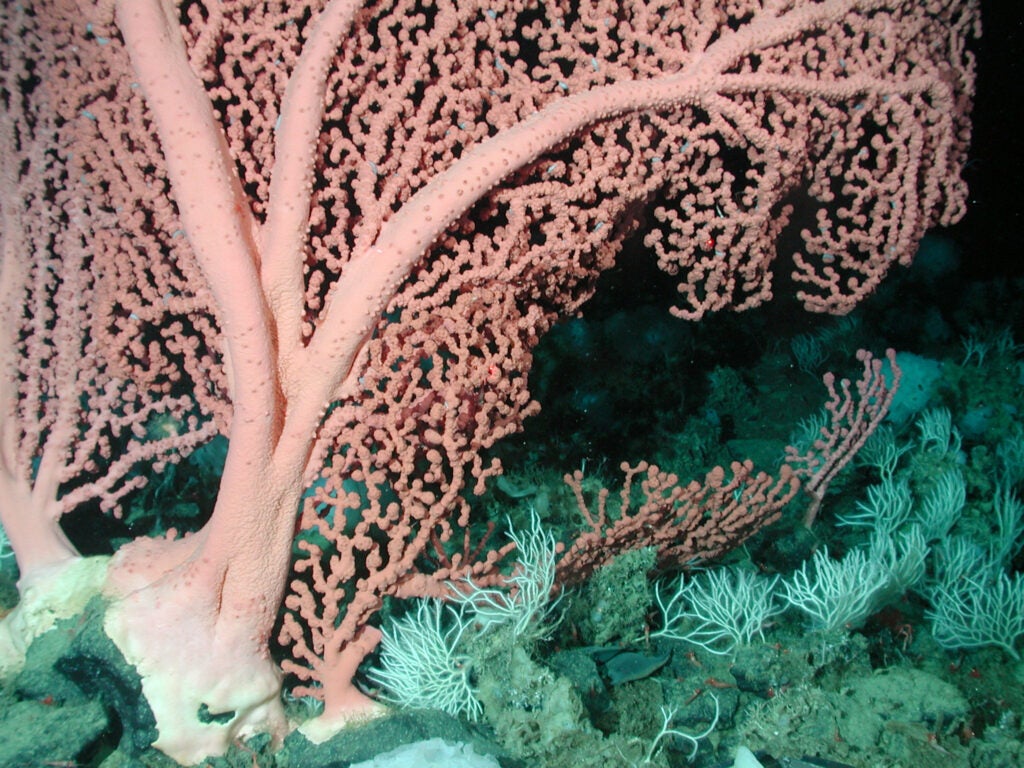
Bubblegum coral in the Davidson Seamount off the coast of California. (NOAA / Monterey Bay Aquarium Research Institute)
Can deep-sea mining damage the ocean outside of the mining area?
Yes. In addition to direct habitat destruction in abyssal plains, deep-sea mining will also generate noise and light pollution, sediment plumes, wastewater, and residual metals that could drift far from the actual mining sites. Scientists also warn that deep-sea mining could disturb some of the largest carbon sinks on the planet, reducing the deep sea’s capacity to buffer us from the worst impacts of climate change.
- Sediment plumes can smother or kill filter feeders and other deep-sea species, disrupt wide-ranging ecosystems, and introduce toxins into the marine food chain. A recent study explored the significant food web disruption that deep-sea mining could cause.
- The noise and light pollution generated from industrial equipment could harm marine life in the water column for thousands of feet from the seabed to the surface.
- Noise pollution disrupts whales and other deep-dwelling and diving animals that use sound and echolocation to communicate and hunt.
Are there alternatives to deep-sea mining?
Yes. Deep-sea mining is an industry that doesn’t currently exist at scale or meaningfully contribute to the economy. We can continue to prioritize:
- innovation in battery technologies that do not require critical minerals and instead use easier-to-source elements;
- circular economy practices like increased recovery, responsible recycling, repurposing, refurbishing, repairing, and reuse;
- and the continued extraction of metals from existing and established sources under greatly improved environmental and social governance rules.
What are the costs of deep-sea mining?
While prodding and discussion by extractive industry about developing deep-sea mining started in the 1960s, a combination of legal, logistical, economic, technological, political, and environmental challenges has shown that the pathway toward commercial mining is less straightforward or inevitable than its advocates claim.
The up-front cost of the mining machines, ships, processing facilities, insurance, and other expenses far outpaces the possible profits of deep-sea mining. The metal markets for the minerals found in the seabed are volatile, and even in the clean energy industry battery technologies are innovating away from them.
A report commissioned by the International Seabed Authority, an autonomous international organization established under the 1982 United Nations Convention on the Law of the Sea, found high uncertainty around prices for commercial metals. If contractors were to eventually begin production, that volatility could lead to deep-sea metals returning little to no profit, especially given the high cost of production.
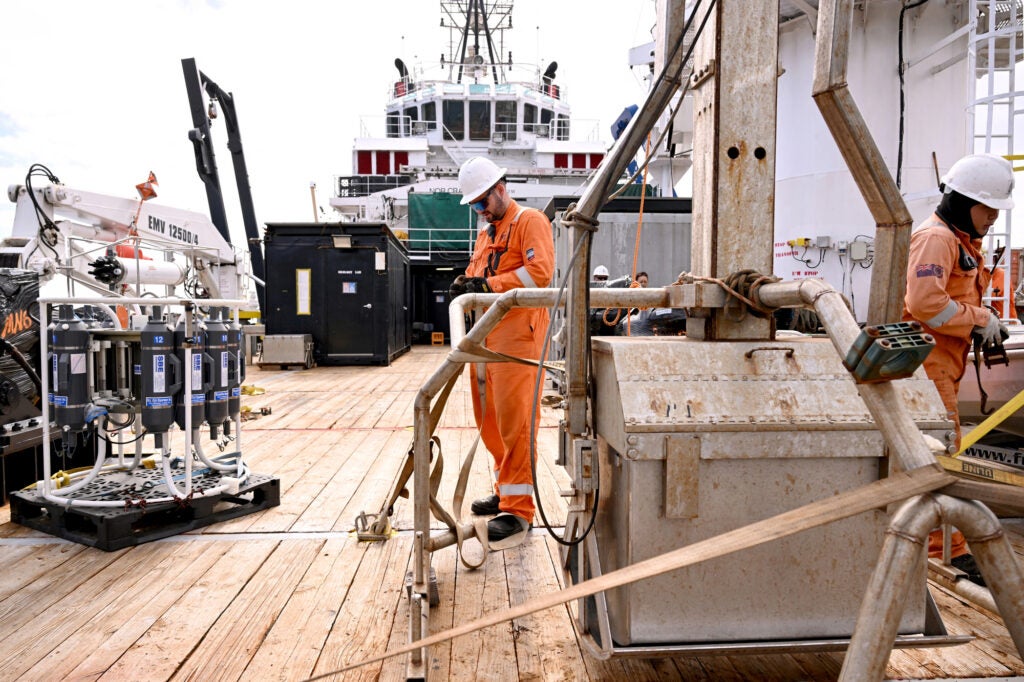
Deep sea mining equipment onboard a mining research vessel in Rarotonga, Cook Islands. The ship is exploring the South Pacific, researching the ability to dredge the tropical waters for industrial deep-sea mining. (William West / AFP via Getty Images)
Have any attempts at deep-sea mining succeeded?
Every government that has tried to support the start of deep-sea mining has been unsuccessful, riddled with delays and opposition from fisheries, scientists, and environmental advocates from Papua New Guinea to Norway because of the environmental and financial risks. There is currently no commercial deep-sea mining happening anywhere in the world. And despite industry claims, reports and experts continue to highlight that deep-sea minerals are not necessary for the clean energy transition.
What is Earthjustice doing about deep-sea mining?
Earthjustice has filed a string of lawsuits challenging recent, reckless attempts by the Trump administration to mine the ocean floor.
These follow an executive order President Trump issued in April 2025 to expedite a process that could bring deep-sea mining to the waters surrounding American Samoa, the Mariana Islands, Alaska, and the mid-Pacific.
Many people are opposed to this proposal, which would be catastrophic for the natural ocean environment and could devastate fishing and tourism. Residents and local government leaders wasted no time organizing their response. For the people of American Samoa, the ocean is inseparably intertwined with their history, culture, and identity.
Earthjustice is fighting the Trump administration’s plan in court on behalf of community groups including including Faleula o le Manu‘atele—the council of matai (chiefs or traditional leaders) from the Manu’a islands—and Fa‘asao Amerika Samoa (FAS) — a community organization whose members include local fishers, matai, religious leaders, residents, and members of the Samoan diaspora.
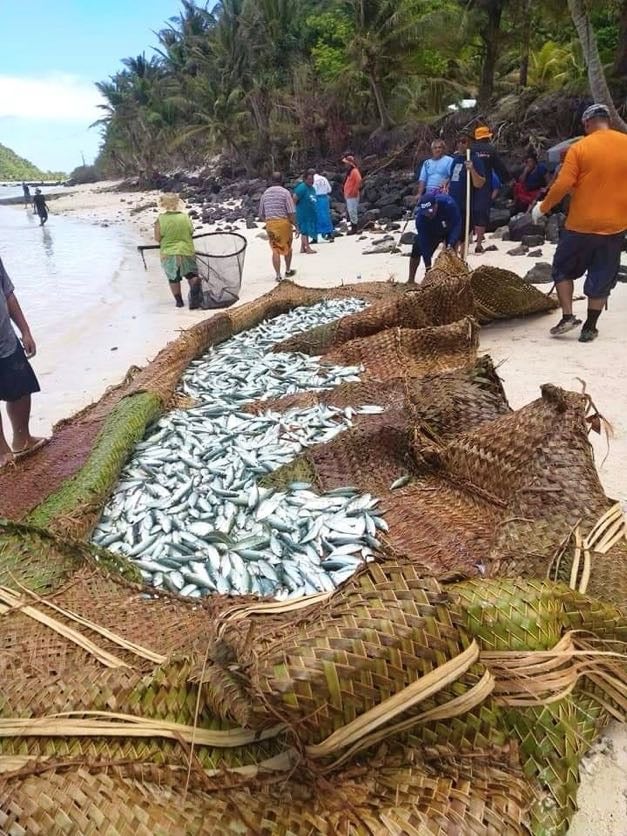
Community members with a catch of fish on the island of Olosega, part of American Samoa. (Manu’a tele Community Worldwide)
Why are groups like FAS opposed to deep-sea mining?
Central to FAS’s response is the Samoan concept of tautua i le gataifale — service to and with the ocean. The people of American Samoa want to preserve not only their oceans, but their traditional fishing practices, such as akule fishing. This communal practice supplements their diets and incomes from the abundant seas while also preserving cultural identity and history.
Opposition to deep-sea mining in indigenous communities reaches far beyond American Samoa: in 2023, Indigenous activists submitted a petition to the International Seabed Authority with over 1,000 signatories from 34 countries and 56 Indigenous groups calling for a total ban on this industry.
Who else opposes deep-sea mining?
Over the past several years, an increasing number of communities, Indigenous leaders, fisheries groups, governments and politicians, businesses, civil society and nonprofit organizations, and financial institutions around the world have been calling for a moratorium or ban on deep-sea mining. Uncertainties about the risks and warnings of dire environmental damage from the scientific community, as well as questions over the capability and accountability of national governments and international mechanisms to properly manage mining contractors and companies, have contributed to their reasoning.
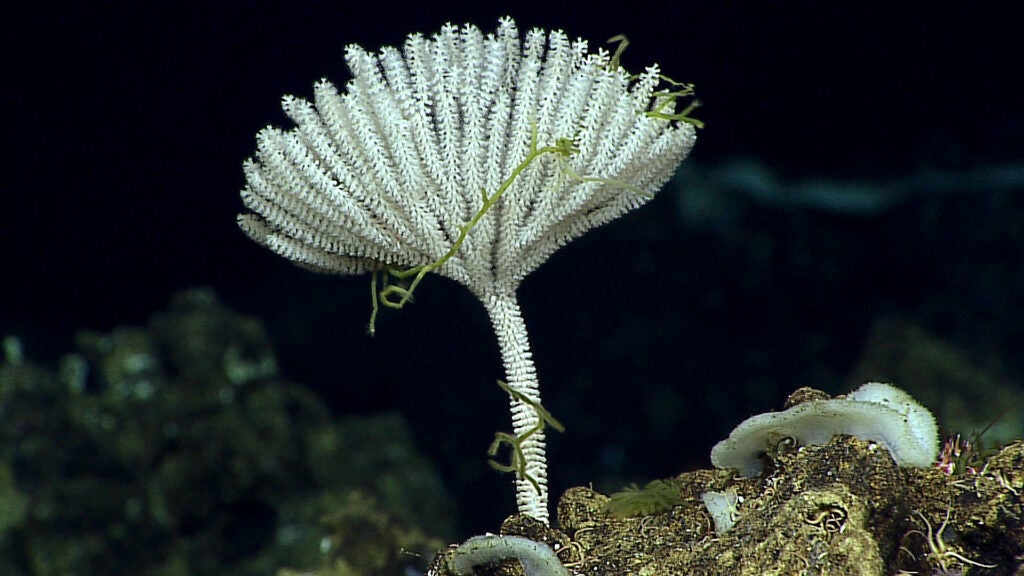
Primnoid coral in the deep sea in the Mariana region of the Pacific Ocean. (NOAA Okeanos Explorer Program)
What is the deep sea, anyway?
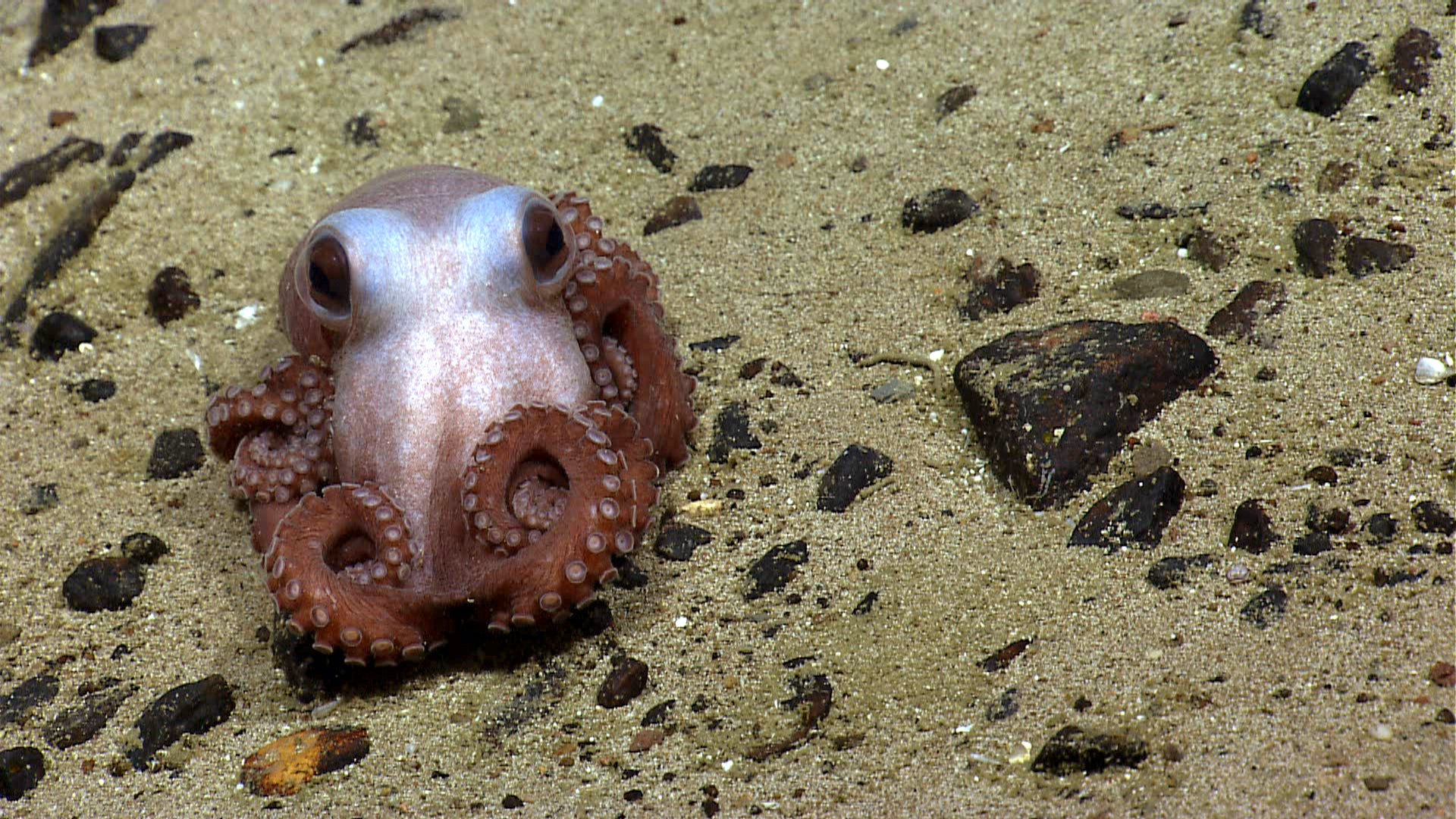
When you picture the ocean, you probably see waves crashing along the shoreline or think of the creatures that live near the sunlit surface like dolphins, whales, tuna, and sharks. As you dive deeper, the ocean becomes darker, colder, and harder to imagine. Beginning 200 meters (656 ft) below the surface, from the twilight zone down to the abyss, the deep sea makes up the Earth’s largest biome, accounting for 90 percent of the ocean. It conceals lesser-known residents like the dumbo octopus, anglerfish, blob sculpin, and bubblegum coral that have evolved to withstand frigid temperatures, crushingly high pressure, and pitch blackness.
Scientists believe there could be as many as 10 million different species in the deep sea, which conceals biodiversity as complex as tropical rainforests. But only a small fraction of these regions has been explored and studied by modern science because they are the most difficult places on the planet for us to reach.
What types of international laws protect the ocean?
There has been a sustained global push to expand protections for international waters. In December 2024, Special Rapporteur Astrid Puentes Riaño published the UN’s first report on the ocean and its interconnection with human rights after gathering submissions from governments around the world and over 60 Indigenous Peoples’ and civil society organizations, including Earthjustice.
The International Program partners with organizations and communities around the world to establish, strengthen, and enforce national and international legal protections for the environment and public health.