

Voters Have Spoken: No Dirty Data Centers
Politicians will be ignoring this key midterm message if they vote for the Bipartisan American Affordability and Jobs Act.
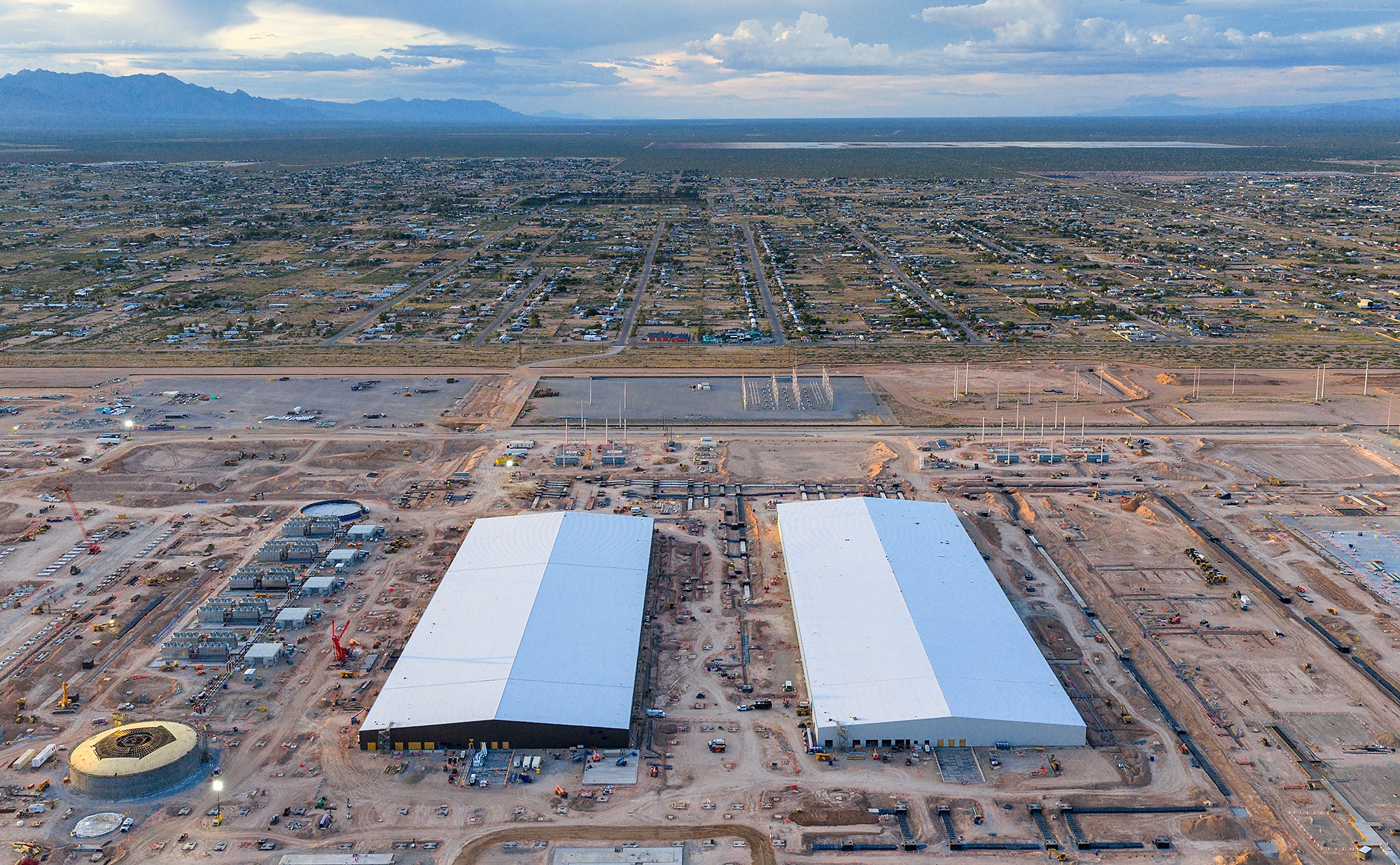
No issue has activated more Americans in this historic election than opposition to the current data center build-out. And the current Congress faces an immediate test next week on whether they got the message.
Voters in at least 38 jurisdictions and counting passed data center bans or restrictions, and exit polling shows that a majority of midterm voters considered artificial intelligence (AI) and data centers to be a major factor in their vote. Data centers were at the center of countless races, including high-profile races like the Texas governorship and the Ohio Senate seat.
This historic election showed that voters are deeply skeptical about the way that data centers are getting built now and how the process is representative of what is not working for people in our country. Secret deals and corporate tricks. Sky-rocketing electricity bills. Air pollution and failures to protect water. Intolerable noise. The sheer scale of industrialization and loss of place. Not least of all: the raw power of the wealthiest companies in the world to speed past anything and anyone in their way.
Going into the election, voters overwhelming wanted more guardrails on data center development. A plurality wanted stronger regulations (39%), and another 25% wanted a moratorium on new data centers in their community; 22% even wanted a permanent ban. Large support for regulations and moratorium was consistent across those who self-identify as Democrats, Independents, and non-MAGA Republicans.
The data center backlash fueled the midterm election results. But before all the new members are sworn in, the old Congress is set to finish up some last-minute business.
A few days from now, the Senate is set to vote on the Bipartisan American Affordability and Jobs Act of 2026 (BAAJA). Without major amendments that appear to be out of reach, a vote for this bill would ignore the message that voters around the county have just sent to Washington, D.C.
BAAJA is being promoted by its most vocal proponents as a bill to build new transmission lines to unleash clean energy, and that is critically important. We need to expand the grid and put it to much more effective use by addressing real transmission and interconnection bottlenecks.
But BAAJA is not only or even mostly a transmission bill. It is a sweeping overhaul of federal law. One very big reason why passing BAAJA is such a high priority for the gas industry is it will enable fast delivery of gas to fuel the data center build-out. The speed-to-power rush for AI has become a rush to gas, and the industry is desperate to meet rising demand and lock in more gas consumption.
With its extremely targeted provisions for gas pipelines, BAAJA delivers a precision strike for developers of dirty data centers. Here’s the package: gutting federal environmental review, including an outright exclusion for pipeline expansions, rubber-stamping permits under the Clean Water Act, blocking interference from States and Tribes, and prohibiting courts from issuing injunctions and other meaningful remedies. What this combination gives to the gas industry is an ultra fast-track for new and expanded gas pipelines that is insulated from court challenges and the kind of public opposition to data centers that is now expanding to associated pipeline projects.
Why does the fast-track matter so much? Some of the industry’s biggest players are poised to bring gas from hubs like the Marcellus Shale and the Permian Basin to fuel bigger and bigger data center complexes with gas. In a recent report with the Better Data Center Project, we identified 177 GW of planned gas capacity to power data centers on site or “behind the meter.” The scale of total and individual proposals is massive. As of August 2026, we identified nine proposed gas projects that are 4.5 GW or larger. If all are built, nine of the top 10 largest power plants in the U.S. would be data center gas projects.
From the perspective of AI hyperscalers, piping in gas for on-site power is the fastest, cheapest path to lock in power on a timeline and on terms that are most in their control. The only risk they have now is reliable gas capacity. BAAJA’s pipeline package would solve that problem for them immediately, sealing many deals that would enable the dirtiest version of the data center build-out to move even faster, while the transmission provisions that could enable more clean energy will take years.
With Tuesday’s election results, voters are clearly asking elected leaders to stop the build-out of dirty data centers. And, maybe more than anything else, people are demanding that government work for them. Instead, this bill gives more certainty to the most powerful AI and oil and gas companies, while dramatically weakening environmental protections and giving President Trump even greater license to drive his dangerous agenda and do damage that a future president will be unable to repair.
Data centers were on the ballot on Tuesday, and they lost. Across the country, voters came out to stop a “speed at all costs” build-out that is hurting communities and increasing costs and pollution. Voters overwhelmingly approved data center restrictions, and elected leaders who ran on ensuring safeguards and accountability for data center development. Super-charging gas-fired mega-data center projects is the opposite of that. Now is the time to make AI developers do better.